← All women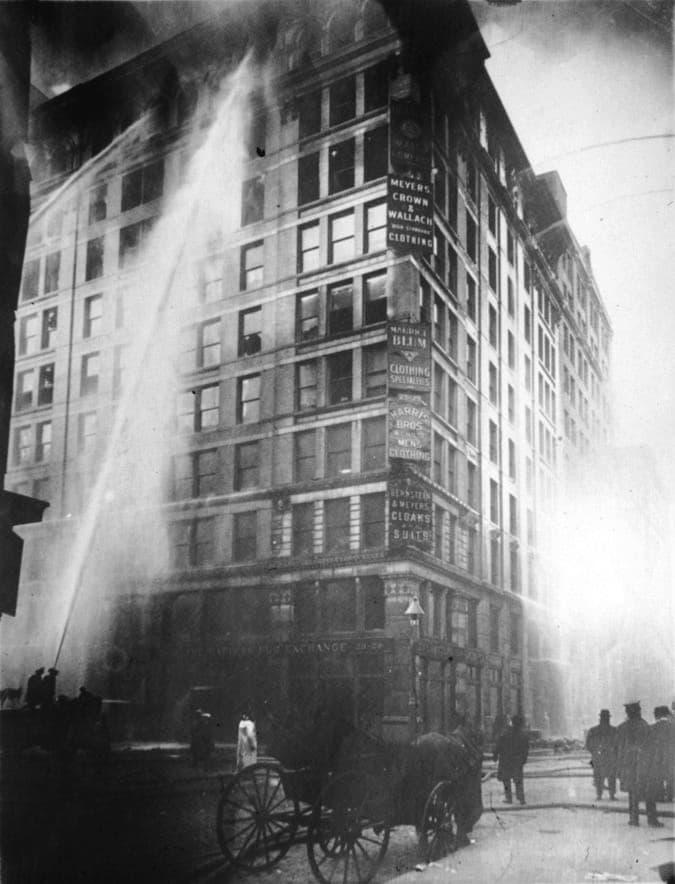
American · Activism · Law
Triangle Shirtwaist Factory Fire
1911 – present
Overview
The Triangle Shirtwaist Factory Fire was a catastrophic industrial disaster that occurred on March 25, 1911, in New York City’s Greenwich Village. The fire killed 146 garment workers, most of them young immigrant women, and became one of the most important turning points in the history of American labor reform. Although the event itself was brief, its political and social consequences were profound. The fire exposed the deadly consequences of unsafe factory conditions, weak regulation, and a labor system that depended heavily on the vulnerability of immigrant women workers.
The tragedy occurred in the Triangle Shirtwaist Factory, located in the Asch Building, where workers produced women’s shirtwaists, a popular fashion item of the era. The factory had cramped work areas, poor fire protection, and locked exits. When flames spread, many workers were unable to escape. Some jumped from windows to avoid being burned or suffocated. The disaster shocked the public and produced widespread outrage, especially because the victims were largely young women and girls whose labor had been essential to the garment industry.
Background and working conditions
The fire cannot be understood apart from the conditions of the early twentieth-century garment industry. New York City was a center of clothing production, and many factories relied on immigrant labor, especially women and girls from Jewish and Italian families. These workers often labored long hours for low wages in overcrowded shops where safety rules were poorly enforced or nonexistent. The Triangle factory reflected those broader conditions. Its owners prioritized speed and output, while the building’s safety features were inadequate for the number of workers inside.
Women workers in this period faced multiple forms of structural disadvantage. They were often excluded from political power, underrepresented in union leadership, and seen by employers as expendable labor. The garment industry employed many of them because it required dexterity and low-paid, highly disciplined labor. The Triangle fire made visible the human cost of that system. It also helped shift public discussion from seeing such deaths as unfortunate accidents to recognizing them as the result of preventable negligence.
The fire and immediate aftermath
On the late afternoon of March 25, 1911, a fire broke out and spread with devastating speed. Firefighters arrived, but their ladders could not reach the upper floors effectively, and workers were trapped behind locked doors and inadequate exits. The death toll reached 146. The scale of the disaster made it impossible to dismiss as a routine industrial accident. Newspapers covered the story widely, and public mourning quickly turned into demands for reform.
The fire also became a dramatic symbol of the broader labor struggles of the Progressive Era. Reformers, union organizers, and social activists pointed to the tragedy as proof that voluntary compliance by employers was not enough. The disaster helped generate pressure for government action, including investigations into factory safety and the passage of new laws governing building access, fire prevention, sanitation, and workplace conditions. The fire became a national reference point in arguments for the regulation of industry.
Labor reform and political impact
The Triangle fire helped spur one of the most consequential reform movements in New York State history. Investigations followed, including efforts by the Committee on Safety and the New York Factory Investigating Commission. Those inquiries documented unsafe conditions in many factories, not only Triangle. In the years after the fire, New York adopted more than 30 labor and safety laws that changed industrial standards and influenced reform well beyond the state.
Among the people deeply affected was Frances Perkins, who later became the first female U.S. Secretary of Labor. The fire left a lasting impression on many reformers, helping shape their commitment to occupational safety, wage protections, and labor rights. The disaster also strengthened the labor movement by underscoring the need for organizing among garment workers, many of whom were immigrant women facing harsh conditions and limited protections. In this sense, the fire was not only a tragedy but also an organizing event that helped redefine the relationship between government, employers, and workers.
Historical significance for women’s history
In women’s history, the Triangle fire is especially significant because so many of the victims were young women. Their deaths illuminated the gendered nature of industrial exploitation in the early twentieth century. These women were not passive victims in historical memory; they became central figures in the story of reform, because their labor and their loss helped expose the human stakes of unsafe workplaces. The tragedy helped build sympathy for women workers and strengthened the case for their protection under law.
The fire also demonstrates the role of immigrant women in shaping American reform history. Many of the victims were recent arrivals or daughters of immigrants who had come to the United States seeking work and stability. Their deaths turned a local workplace disaster into a national moral crisis. Over time, the Triangle fire became a touchstone in discussions of industrial capitalism, women’s labor, immigration, and the duty of the state to protect workers.
Legacy
The Triangle Shirtwaist Factory Fire remains the deadliest industrial disaster in New York City history and one of the most enduring symbols of labor reform in the United States. Its legacy is visible in factory safety codes, fire regulations, labor standards, and the principle that workplace safety is a public concern rather than a private matter. More than a century later, the event continues to be commemorated because it captures a central lesson of industrial history: that preventable deaths can reveal systemic failure and force lasting change.
As a historical event, the Triangle fire occupies a distinctive place in the story of women’s labor. It exposed the vulnerability of women workers, accelerated reform, and helped make visible the political power of their experiences. The fire’s memory persists not only as a record of loss but as a testament to the reforms that followed and to the workers whose lives helped make those reforms possible.
Dated achievements
1 indexed.
- Mar251911Activism
Triangle Shirtwaist Factory Fire
On March 25, 1911, a fire at the Triangle Shirtwaist Factory in NYC killed 146 workers, mainly women.
View details AFL-CIO: Triangle Shirtwaist Fire