← All women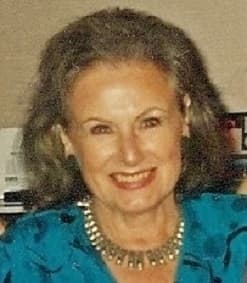
American · Politics · Activism
Tonie Nathan
February 9, 1923 – March 20, 2014
Early Life and Background
Theodora Nathalia "Tonie" Nathan was born on February 9, 1923, in New York City.[1][2][3][5] Growing up in the interwar period, she came of age during the Great Depression and World War II, formative decades in which women’s roles in public life were gradually expanding but remained heavily constrained. Although detailed information about her parents and early family life is sparse in available sources, biographical and archival records consistently locate her origins in New York City and emphasize the later trajectory that led her westward to California and Oregon.[1][2]
Nathan’s early adult years were marked by entrepreneurship and work in communications. Before moving to Oregon, she lived in California, where she owned an insurance agency, a music publishing firm, and a decorating service in the Los Angeles area.[1][2] This combination of business ownership and involvement in music promotion and publishing placed her at the intersection of media, commerce, and creative industries, experience that would later inform both her broadcasting career and her capacity to organize and communicate political ideas.
Her decision, as a mature student, to pursue formal education in journalism further shaped her path. Nathan earned a bachelor’s degree in journalism from the University of Oregon in 1971.[1][2] That achievement came shortly before her entry into national politics and underscores her commitment to professional communication at a time when women were still significantly underrepresented in both journalism and political leadership.
Career Beginnings in Business and Media
Following her move from California to Oregon, Nathan increasingly focused on media work. Sources describe her as a radio and television producer based in Eugene, Oregon.[1][3][4] She worked as a talk radio host and as a talk show host on KVAL‑TV, a local television station.[3] These positions gave her a public platform and familiarity with the practical demands of broadcasting—skills that would later be critical in communicating libertarian ideas and in conducting electoral campaigns with limited resources.
Archival records from the University of Oregon’s Special Collections and University Archives note that as a member of the media, Nathan traveled to Colorado in 1971 to report on the beginnings of a new political organization, the Libertarian Party.[2] Initially attending as a journalist, she soon became directly involved in the party’s formation. Her transition from observer to participant illustrates the porous boundary between media and activism during this period and highlights the role of journalists in giving early visibility to emerging political movements.
In addition to her media work, Nathan’s earlier entrepreneurial ventures—her insurance agency, decorating service, and music publishing activities—demonstrated a strong independent streak and a capacity to manage organizations.[1][2] These experiences helped equip her to navigate the practical challenges of third‑party politics, which often required candidates to organize campaigns with minimal institutional support.
Founding Role in the Libertarian Party
Nathan was among the founding members of the Libertarian Party.[1][2][4] Archival materials document that, while attending an early Libertarian convention, she was not only reporting as a journalist but also became a founding member and active participant.[2] The Libertarian Party emerged in the early 1970s in response to concerns about government expansion, conscription, and perceived erosion of civil liberties, and it sought to advance a platform centered on individual liberty, free markets, and non‑interventionism.
Within this new party, Nathan quickly rose to prominence. At the party’s first national convention in Denver in 1972, she was selected as the Libertarian vice‑presidential nominee, running alongside philosopher and academic John Hospers
Beyond her candidacy, Nathan later served as national vice‑chair of the Libertarian Party, participating in internal party governance and strategy.[4] She also became an influential figure in the development of libertarian feminism, co‑founding the Association of Libertarian Feminists (ALF) in 1973 and serving as its president.[2][4] ALF sought to articulate a form of feminism grounded in libertarian principles, emphasizing voluntary association, individual rights, and skepticism of state power. Nathan’s involvement in ALF situates her at the intersection of women’s liberation movements and emerging libertarian thought in the 1970s. In the 1972 United States presidential election, the Hospers–Nathan ticket represented the Libertarian Party’s first national campaign.[1][3][4] The ticket faced structural challenges: limited ballot access, minimal funding, and low public awareness. According to multiple sources, Hospers and Nathan received only about 3,671–3,674 official popular votes, reflecting the difficulties of a new third party attempting to compete against the entrenched Republican and Democratic parties.[1][3][4] Despite the small popular vote total, the campaign had disproportionate historical impact because of events that unfolded in the Electoral College. The Libertarian ticket appeared on the ballot in only a few states and received scant media coverage, yet the presence of Nathan—a woman and a media professional—on a national ticket challenged the prevailing norm that presidential and vice‑presidential candidates should be drawn from established male political elites. Nathan’s campaign also positioned her as a visible figure within libertarian circles. Her experience in broadcasting enabled her to present the party’s ideas in televised and radio formats, while her business background lent credibility to libertarian calls for market‑oriented policy. Although the ticket did not come close to winning, its existence signaled the arrival of the Libertarian Party as a participant in national elections and set a precedent for future Libertarian tickets, including those featuring notable figures such as Ed Clark, Ron Paul, and later Gary Johnson. The defining moment of Nathan’s political career came on December 18, 1972, when the Electoral College convened following the presidential election. Virginia Republican elector Roger L. MacBride, pledged to the Nixon–Agnew ticket, chose instead to cast his presidential and vice‑presidential electoral votes for John Hospers and Tonie Nathan.[4][7] This act of faithless voting made Nathan the first woman in American history to receive an Electoral College vote.[1][3][4][5][9] MacBride’s decision was rooted in ideological sympathy with libertarian ideas and dissatisfaction with the major parties. His vote did not alter the outcome of the election, which Nixon won overwhelmingly, but it had profound symbolic significance. For the first time, a woman’s name was inscribed in official Electoral College records as a recipient of a vice‑presidential vote, breaking a gender barrier that had existed since the founding of the republic. Several sources also describe Nathan as the first Jewish person to receive an Electoral College vote.[1][4][5][7] This claim reflects her identity as a Jewish‑American candidate in a political system historically dominated by Christian officeholders. However, commentators have noted that Republican nominee Barry Goldwater, whose father was of Jewish heritage, received electoral votes in 1964, complicating the "first Jewish" designation. The consensus in major biographical entries emphasizes the uncontested fact that Nathan was the first woman to receive such a vote, while acknowledging that the religious "first" is subject to historical debate.[4] Nathan herself and later libertarian activists recognized this Electoral College vote as a milestone for both women’s representation and third‑party politics. It demonstrated that minor‑party candidates could penetrate even the most formal mechanisms of presidential selection and that individual electors retained agency to express dissenting political preferences. For women’s‑history scholars, the December 18, 1972 vote is a crucial turning point: more than a decade before Democrat Geraldine Ferraro would become the first woman nominated for the vice presidency by a major party, Nathan had already received an official Electoral College vote. Following her vice‑presidential run, Nathan remained an active candidate for public office. Biographical and archival sources note that she ran for political office at least nine times, campaigning both as a Libertarian and as an Independent.[2] Her campaigns included races for the United States Senate, the U.S. House of Representatives, the Oregon Senate, and positions such as Lane County Commissioner.[2][4] In the 1980 U.S. Senate election in Oregon, Nathan’s candidacy as a Libertarian gave her a rare platform on statewide television. She participated in three televised debates with incumbent Republican Senator Bob Packwood and Democratic state senator Ted Kulongoski, who would later become governor of Oregon.[4] These debates allowed Nathan to present libertarian perspectives on economic policy, civil liberties, and government size before a broad audience, illustrating the capacity of third‑party candidates to inject alternative viewpoints into mainstream political discourse. Nathan did not win these races, but her repeated campaigns contributed to building the Libertarian Party’s presence in Oregon. She is often referred to as the "mother" of the Oregon Libertarian Party, a phrase that reflects her foundational role in organizing, recruiting, and representing the party over several decades.[2] Her persistence as a candidate, despite the structural disadvantages faced by minor parties, underscores both her personal commitment and the broader difficulties women and third‑party activists encountered in seeking elected office. Beyond candidacies, Nathan played a key role in developing libertarian perspectives on women’s rights. In 1973, she helped to found the Association of Libertarian Feminists (ALF) and served as its president.[2][4] ALF aimed to reconcile the goals of the women’s movement with libertarian principles, arguing that true liberation required protection of individual rights, freedom of association, and limits on state power rather than extensive government programs. ALF members, including Nathan, engaged in public debates over issues such as equal opportunity, reproductive rights, and anti‑discrimination laws, often taking positions that differed from those of more statist feminist organizations. Nathan’s leadership in ALF placed her at the forefront of a distinct current within feminism—one that sought to critique both patriarchal structures and expansive government authority. Her involvement in libertarian feminism also highlights the diversity of ideological approaches within the broader women’s movement of the 1970s. While some feminists pursued strategies through major parties and state institutions, Nathan and her colleagues worked through minor‑party channels and intellectual networks. This work broadened the conceptual landscape of women’s rights advocacy and ensured that libertarian critiques of state power were articulated by women as well as men. Nathan’s professional identity remained deeply rooted in media. She worked as a radio‑television producer in Eugene and held roles as a pundit, talk radio host, and television talk show host on KVAL‑TV.[3][4] These positions enabled her to comment on politics, public policy, and social issues from a libertarian perspective, reaching local and regional audiences beyond formal campaign seasons. Her skill as a communicator was recognized within the Libertarian Party. At the 2012 Libertarian National Convention, decades after her historic Electoral College vote, Nathan was invited to speak and to announce Gary Johnson as the party’s presidential nominee.[1][4] This honor reflected the esteem in which she was held as an elder stateswoman of the party and underscored her continuing relevance to libertarian activists in the twenty‑first century. Media coverage in later years, including local television segments and online tributes, frequently highlighted her unique place in presidential history as the first woman to receive an Electoral College vote.[9] These accounts helped ensure that her story remained part of public memory and that the significance of her 1972 achievement did not fade amid the more widely known narratives of major‑party campaigns. Archival records provide some insight into Nathan’s personal life. She married Charles "Chuck" Nathan, a composer and member of the American Society of Composers, Authors and Publishers (ASCAP), who wrote several top‑ten hit songs during the 1950s.[2] Her marriage connected her to the world of popular music and further entwined her personal life with creative and media industries. The couple’s life in Los Angeles and later Oregon appears to have been characterized by shared involvement in music, business, and public affairs. While detailed information about children or extended family is not prominent in the available sources, records emphasize that Nathan balanced her roles as a business owner, media professional, party activist, and candidate—a multifaceted life that reflected both the opportunities and constraints facing women in mid‑twentieth‑century America. Later biographical notes mention that Nathan suffered from Alzheimer’s disease in her final years.[5] This detail, while medically personal, is historically relevant in understanding the circumstances of her later life and the challenges she faced as she aged, even as her earlier achievements continued to be recognized within political and archival communities. Nathan’s most widely recognized "honor" is not a conventional award but the historical distinction of being the first woman to receive an Electoral College vote.[1][3][4][5] This achievement is repeatedly cited in biographies, obituaries, and institutional profiles, including the Cato Institute’s remembrance, the Carrie Chapman Catt Center for Women and Politics directory, LPedia’s party history, and the University of Oregon’s archival description.[1][2][3][4][5] Within libertarian circles, Nathan has been celebrated as a pioneering figure and as the "mother" of the Oregon Libertarian Party.[2] Her leadership in ALF, her role as national vice‑chair of the Libertarian Party, and her repeated candidacies have been recognized as foundational contributions to the party’s development. Although there is no record of major national awards or government honors, the continued citation of her Electoral College first in scholarly and journalistic sources functions as a form of historical recognition. Institutions documenting women’s political history, such as the Catt Center, include Nathan alongside major‑party candidates, underscoring the importance of third‑party figures in the broader story of women’s access to high office.[1] Nathan’s legacy is multifaceted. In constitutional and electoral history, she is remembered primarily as the first woman to receive an Electoral College vote in a U.S. presidential election, a milestone that predated major‑party breakthroughs by more than a decade.[1][3][4][5][9] This achievement carved out a space for women in the formal structures of presidential selection and demonstrated that minor‑party candidates could have lasting impact even without winning large numbers of popular votes. In the history of the Libertarian Party, Nathan stands as a founding figure, early national candidate, party officer, and ideological leader. She helped shape the party’s identity in the 1970s and 1980s, particularly in Oregon, where she is often described as the "mother" of the state party.[2] Her repeated campaigns, media presence, and internal leadership contributed to the normalization of Libertarian participation in electoral politics. Within women’s history, Nathan’s story highlights the role of women in third‑party and ideological movements. While major‑party breakthroughs, such as Ferraro’s nomination in 1984 and Hillary Clinton’s 2016 candidacy, have received extensive attention, Nathan’s earlier, less publicized milestone illustrates that women were challenging exclusion from the highest offices well before they were embraced by the main parties. Her work in libertarian feminism further underscores the diversity of feminist thought and the presence of women at the forefront of debates about liberty and the state. Her legacy also encompasses the broader impact of media professionals who enter politics. Nathan’s movement from journalism and broadcasting into candidacy and party leadership exemplifies a recurring pattern in modern democracies, where communication skills are critical assets in political advocacy. Her life shows how a woman trained in journalism could use those skills to build a minor party, articulate a distinct ideological stance, and secure a place in constitutional history. In her later years, Nathan remained engaged with libertarian politics and public discourse. Her appearance at the 2012 Libertarian National Convention, where she announced Gary Johnson as the party’s presidential nominee, symbolized continuity between the party’s earliest presidential ticket and its contemporary campaigns.[1][4] This event occurred four decades after her own vice‑presidential run and underscored the enduring respect she commanded among Libertarian activists. Nathan lived in Eugene, Oregon, where she had long worked in media and politics. On March 20, 2014, she died there at the age of 91.[1][2][3][4][5][7] Obituaries and memorial articles from libertarian organizations, independent political news sites, and the Cato Institute emphasized her historic Electoral College vote, her founding role in the Libertarian Party, and her numerous campaigns for office.[4][7] Reports note that she died after experiencing Alzheimer’s disease, a condition that affects memory and cognitive function.[5] Despite the challenges of her final years, her earlier achievements continued to be documented and preserved, particularly through the Tonie Nathan papers held at the University of Oregon, which include materials relating to her media work, campaigns, and party leadership.[2] Today, Nathan’s life is documented in academic archives, party histories, and women’s‑political biographies. Her story remains a key entry in editorial almanacs of women’s history: a testament to how a pioneering woman in a minor party, working largely outside the main currents of national attention, nonetheless achieved a constitutional first and helped expand the boundaries of women’s participation in American political life.The 1972 Vice‑Presidential Campaign
First Woman to Receive an Electoral College Vote
Continued Political Campaigns and Public Service
Association of Libertarian Feminists and Ideological Work
Media, Commentary, and Public Presence
Personal Life
Awards, Honors, and Recognition
Legacy and Historical Impact
Later Life and Death
Dated achievements
4 indexed.
- Feb091923Politics
Birth of Tonie Nathan
Born on February 9, 1923, in New York City, Theodora Nathalia "Tonie" Nathan.
View details Tonie Nathan - LPedia - Jun171972Politics
Nominated as Libertarian VP candidate
Nominated as the Libertarian Party's vice-presidential candidate in 1972.
View details