← All women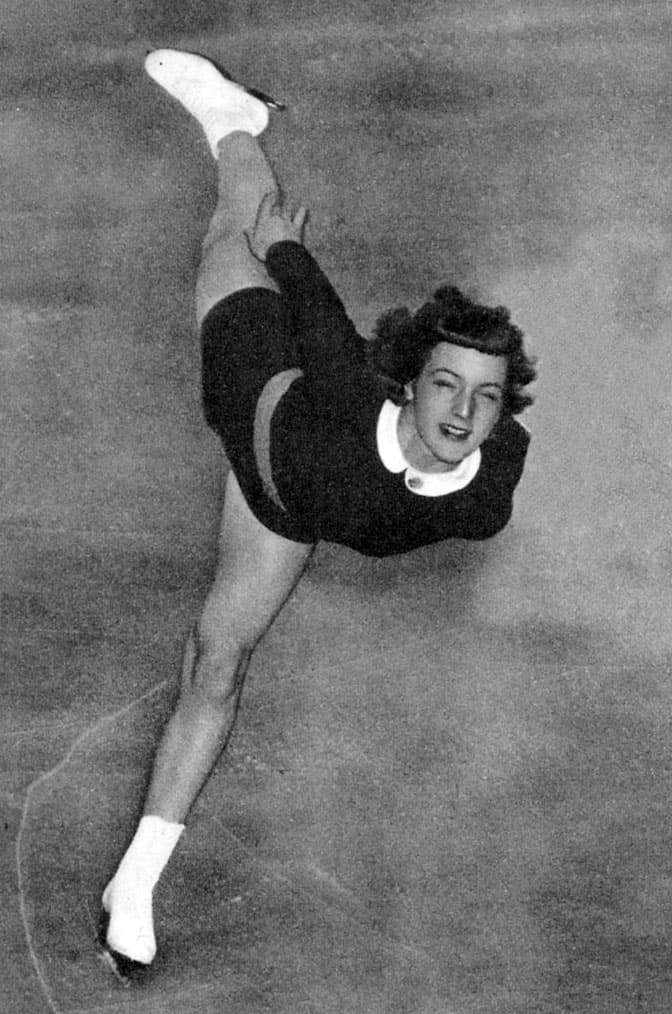
American · Sports · Medicine
Tenley Albright
July 18, 1935 – present
Early Life and Background
Tenley Emma Albright was born on 18 July 1935 in Newton Centre, Massachusetts, a suburb of Boston.[1][2] She grew up in a family deeply rooted in medicine; her father, Dr. Hollis Albright, was a prominent surgeon, and the culture of scientific inquiry and professional dedication at home would later shape her own career path.[3] The proximity to Boston’s academic and medical institutions exposed her early to expectations of high achievement in both intellectual and professional domains.
Albright began skating as a child on a neighborhood pond in Newton Centre, discovering both joy and discipline in the sport.[1][9] She soon joined the Skating Club of Boston, where she received formal coaching and developed the elegant style and meticulous attention to figures that became her hallmark. Skating in the pre–Title IX era, she pursued serious athletic training at a time when opportunities and social support for girls in competitive sport were limited.
Her childhood was dramatically marked by illness. At around age ten, she contracted polio, a disease that temporarily left her unable to walk.[7][9] Physicians encouraged her to use skating as a form of rehabilitation to rebuild muscle strength and coordination. According to later accounts, within months she progressed from rehabilitation to competition, winning the Eastern Juvenile title and beginning a rapid ascent in the sport.[9] This early confrontation with serious illness not only shaped her resilience as an athlete but also deepened her interest in medicine and patient care.
Career Beginnings and Development in Figure Skating
Albright’s competitive skating career developed quickly through the late 1940s and early 1950s. By 1952, she had won her first of five consecutive U.S. national women’s singles championships, dominating the national field through 1956.[1][2][7] Her strengths lay in the compulsory figures, which required painstaking technical precision, and in a musical, restrained free skating style that judges praised for its clarity and control.
Her international breakthrough came at the 1952 Winter Olympics in Oslo, Norway. On 29 February 1952, she competed in the ladies’ singles event and won the silver medal, finishing second behind Britain’s Jeannette Altwegg.[8][9][12] This was her first Olympic appearance and her first major international podium, achieved at age sixteen. The medal signaled that an American woman could contend seriously for top honors in a discipline then dominated by European skaters and marked her transition from promising national champion to bona fide world contender.
Following Oslo, Albright continued to refine her technique and expand her repertoire. In 1953 she captured the World Figure Skating Championship and the North American Championship, confirming her status as one of the world’s leading skaters.[1][2][10] She also repeated as U.S. champion, establishing a pattern of seasonal dominance.
Major Achievements in Figure Skating
Albright’s skating career is distinguished by several historic firsts and a series of titles that redefined expectations for American women in figure skating.
First American Woman World Champion and the Triple Crown (1953)
On 13 February 1953, in Davos, Switzerland, Albright won the World Figure Skating Championship, becoming the first American woman ever to win the world title in figure skating.[2][4][10] Her victory broke European dominance of the event and demonstrated that U.S. women could master the demanding figures and presentation required for success at the highest level.
That same season, Albright achieved what has been called skating’s “triple crown”. By securing the World Championship, the North American Championship, and the U.S. national title, she became the first skater to hold all three major ladies’ titles in a single year.[2][4][10] This unprecedented sweep required consistently high performance across different judging systems and competitive contexts. The triple crown signaled a new era of North American dominance in women’s figure skating and set a benchmark that later champions would be measured against.
Further World and National Titles
Albright continued to accumulate titles after 1953. She won a silver medal at the 1954 World Figure Skating Championships, adding depth to her record of international success.[1] In 1955, she captured her second World Championship and a second North American title, once again pairing these with the U.S. national crown.[1][10] Through the period 1952–1956, she remained undefeated at the U.S. Championships, securing five consecutive national titles.[1][7] This sustained dominance over multiple seasons underscores her technical consistency and mental resilience.
Olympic Gold at Cortina d’Ampezzo (1956)
The pinnacle of Albright’s competitive skating career came at the 1956 Winter Olympics in Cortina d’Ampezzo, Italy. In training shortly before the Games, she caught a rut in the ice, fell, and her left skate blade cut into her right leg, slicing through her boot, severing a vein, and scraping bone.[12] The injury raised serious questions about whether she could compete. Her father, a surgeon, traveled to Italy and treated her wound so that she could skate.[12]
Despite the injury, on 2 February 1956 Albright performed strongly in both the compulsory figures and free skating, earning first-place votes from ten of the eleven judges and winning the gold medal in women’s singles.[9][12] With this victory she became the first American woman to win an Olympic gold medal in figure skating.[2][4][10] Combined with her 1952 silver, the Cortina gold gave her a complete Olympic record and solidified her legacy as a pioneering American champion.
After Cortina, Albright retired from competitive skating. Having achieved national and international dominance and the sport’s highest Olympic honor, she chose to focus on her long-standing aspiration to study medicine.[1][8]
Academic and Medical Career
Parallel to her skating, Albright pursued formal education with equal seriousness. She attended Radcliffe College, then the women’s coordinate institution to Harvard University, where she completed her undergraduate studies.[1][9] In 1957, she entered Harvard Medical School (HMS), at a time when women were still a small minority in medical training. She was reportedly one of only five women in a class of 135 students, highlighting the gender imbalance she faced.[3][13]
Albright graduated from Harvard Medical School in 1961 and trained as a surgeon, following in her father’s professional footsteps.[3][8] She built a career that integrated clinical practice, medical education, and health policy. Over the years, she held several notable positions, including chair of the Board of Regents of the U.S. National Library of Medicine at the National Institutes of Health and director of MIT Collaborative Initiatives, a program focused on systems thinking and interdisciplinary collaboration.[3][8][13]
The National Library of Medicine has profiled her as a physician who leveraged her experience in elite sport to inform her leadership in medicine and public health.[3] She has been recognized for advocating collaborative approaches to complex health and social problems, applying insights from athletic training—discipline, teamwork, and strategic planning—to the design of health systems and interventions.
Leadership in Olympic and Sports Organizations
Albright remained closely connected to the Olympic movement after her retirement from competition. She served on the United States Olympic Committee (USOC) and later as a vice president, becoming the first woman to serve as one of its officers.[4][9] She also served on the International Olympic Committee in various capacities, contributing to governance and athlete advocacy.[4]
According to biographical sources, she became a vice president of the USOC in 1982, marking a significant milestone in the inclusion of women in high-level sports administration.[9] Her leadership roles allowed her to influence policies affecting athletes’ welfare, training environments, and the representation of women in sport. She also participated in ceremonial roles, including serving as an Olympic flagbearer for the United States at the 1980 Winter Olympics
Albright further engaged with youth and community skating programs, serving as a mentor and advocate. Organizations such as Figures Skating in Harlem have highlighted her as a trailblazer whose success and commitment to education and medicine provided a powerful model for young skaters balancing sport with academic aspirations.[7] Albright’s achievements have been recognized by numerous institutions. In 2015, she was inducted into the National Women’s Hall of Fame, which cited her pioneering accomplishments as the first American woman to win both a world figure skating championship and Olympic gold, as well as her groundbreaking career in medicine and sports governance.[1][4] The Hall of Fame also notes her leadership roles within the International Olympic Committee and U.S. Olympic Committee. She has been named among the “100 Greatest Female Athletes” by Sports Illustrated, reflecting her stature in the broader history of women’s sports.[4] The U.S. Olympic & Paralympic Museum has profiled her as a key figure in American Olympic history, emphasizing both her competitive record and her later medical and administrative service.[8] Medical and academic institutions, including the National Library of Medicine, have recognized her as one of the women who have changed the face of medicine, highlighting her dual identity as Olympic champion and surgeon.[3] Her work at MIT Collaborative Initiatives, founded in 2005, has been cited as influential in promoting systems thinking and cross-sector collaboration in addressing complex health and social challenges.[13] Albright’s personal life reflects connections to both the medical and business communities. Olympedia notes that she has been twice married, first to Tudor Gardiner, son of a former governor of Maine.[9] Later, she married Gerald Blakeley, described in secondary sources as a businessman and former Ritz-Carlton hotel owner.[14] These relationships intersected with her professional life, as she balanced family responsibilities with demanding roles in surgery, teaching, and sports administration. Despite the visibility of her athletic and medical careers, Albright has generally maintained a private personal life, with public narratives focusing more on her professional and public service contributions than on domestic details. Her biographies emphasize the continuity between the discipline of her skating years and the rigor of her medical practice and leadership. Tenley Albright occupies a unique place in women’s history as a figure who achieved groundbreaking success in two demanding fields. In sport, she was the first American woman to win the World Figure Skating Championship and the first American woman to win Olympic gold in figure skating, achievements that opened the door for later generations of U.S. champions.[2][4][10] Her 1953 triple crown season and her Cortina victory helped reposition the United States as a leading nation in women’s figure skating and contributed to the sport’s popularity among American girls and young women. In medicine, Albright demonstrated that women could excel in highly competitive academic and clinical environments. Entering Harvard Medical School at a time when women were rare, and going on to a successful surgical career and major leadership roles, she challenged stereotypes about women’s capacities in science and medicine.[3][8] Her advocacy for collaborative, systems-based approaches to health continues to resonate in contemporary discussions about complex public health challenges. Her dual career has often been cited in discussions of the compatibility of elite sport with serious academic pursuits. Albright’s trajectory from Olympic champion to surgeon stands as a counterexample to narratives that present athletic success and intellectual achievement as mutually exclusive. She showed that skills developed in sport—discipline, persistence, strategic thinking—could be transferred effectively to medicine and institutional leadership. Within the broader history of women’s rights, Albright’s life illustrates the incremental expansion of opportunities available to women in the mid-20th century. While she did not primarily identify as a political activist, her visible success in male-dominated arenas—international sport, surgical practice, and sports administration—had an implicit advocacy effect, altering public perceptions of what women could and did achieve. In later decades, Albright has focused on leadership, mentoring, and systems innovation. In 2005, she founded MIT Collaborative Initiatives, working as a visiting scientist to promote collaboration across disciplines and institutions to address complex social and health issues.[13] This work reflects the synthesis of her experiences in sport, medicine, and organizational governance, emphasizing that the kinds of teamwork and strategy required to win championships are also essential in solving systemic problems. She has continued to be honored for her contributions, including her induction into the National Women’s Hall of Fame in 2015.[4] Public appearances and interviews, such as a widely circulated 1991 video interview and later Olympic retrospectives, have allowed her to reflect on her life’s arc—from recovering from polio and learning figures on outdoor ice to becoming an Olympic pioneer and surgeon.[13] As of the mid-2020s, Albright is recognized as a living link to a formative era in both figure skating and women’s advancement in medicine.[1][2] Her story is frequently cited by organizations that support girls in sport and women in science as an example of how talent, perseverance, and access to education can combine to produce transformative careers. She remains an important figure in the collective memory of women’s history, illustrating how breakthroughs in one domain can reverberate across others for generations.Awards, Honors, and Recognition
Personal Life
Legacy and Historical Impact
Later Life and Continuing Influence
Dated achievements
6 indexed.
- Jul181935Sports
Birth of Tenley Albright
Tenley Emma Albright is born in Newton Centre, Massachusetts.
View details Encyclopedia Britannica - Feb291952Sports
Silver medal in women's singles at 1952 Winter Olympics
Albright wins silver in figure skating at 1952 Winter Olympics.
View details