← All women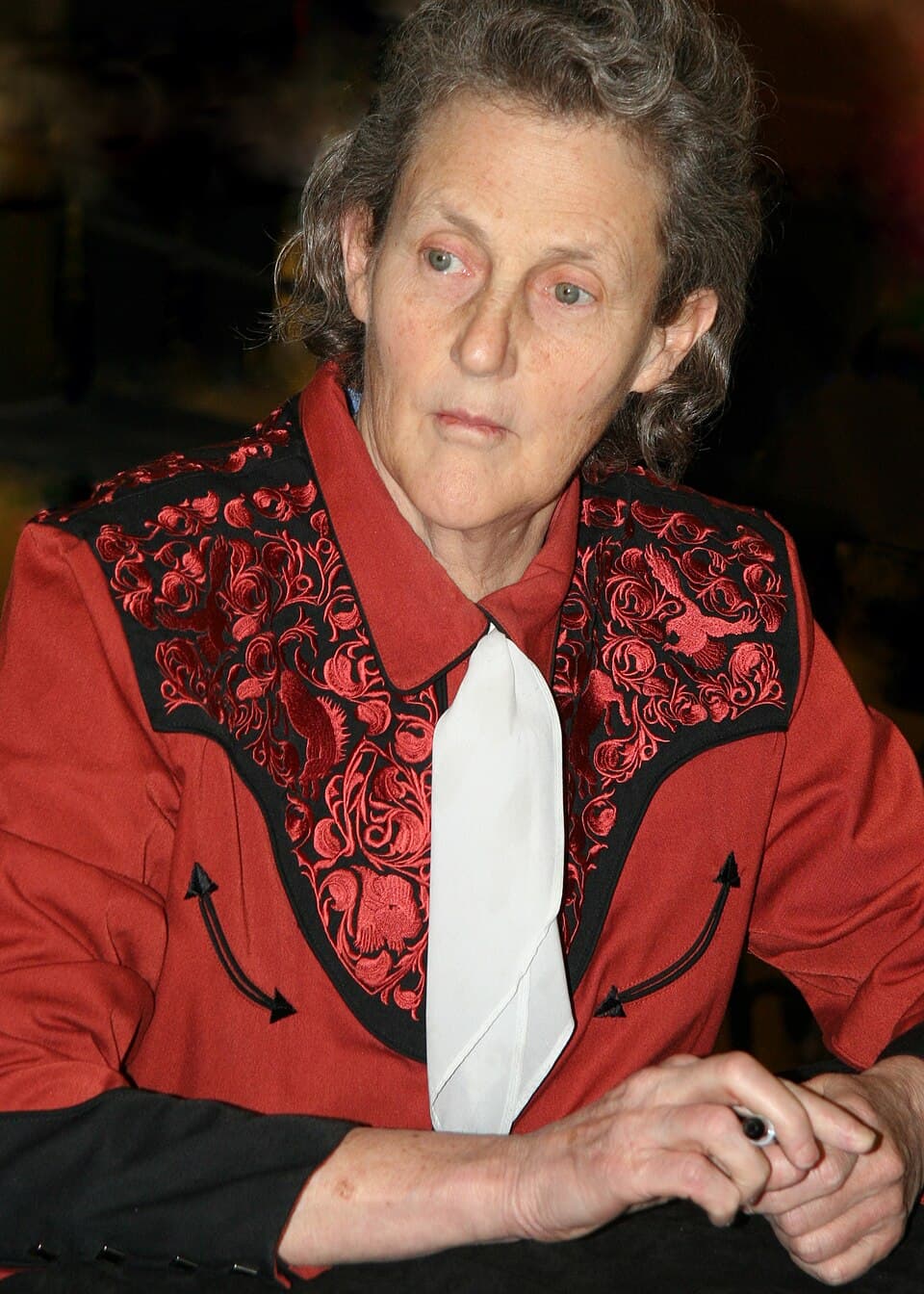
American · Science · Activism
Temple Grandin
August 29, 1947 – present
Early Life and Background
Mary Temple Grandin was born on August 29, 1947, in Boston, Massachusetts, United States.[1][2][3] She was the eldest of four children born to Eustacia Cutler, an actress and later an author, and Richard Grandin, a real estate agent and heir to a business family.[2][3] Grandin grew up in a well‑to‑do household that nonetheless faced the challenges of raising a child whose development diverged sharply from contemporary expectations.
By age two or three, Grandin had no functional speech and exhibited behaviors that clinicians of the 1950s interpreted as "severe" autism.[1][2][5][10] At the time, autism was poorly understood, and prevailing medical advice often recommended institutionalization. One physician urged Grandin’s parents to place her in a facility, a common fate for autistic children in that era.[5][10] Her mother refused, instead arranging intensive speech therapy, occupational supports, and specialized schooling.[5][10] This decision was pivotal: it allowed Grandin’s intellectual abilities to be nurtured rather than suppressed.
As a child and teenager, Grandin experienced sensory hypersensitivity, distress in noisy or chaotic environments, and difficulty with social interaction.[2][6][10] She has described being overwhelmed by sudden sounds and visual clutter, and by the unpredictability of other children’s behavior. In high school, she was subjected to bullying and teasing, which exacerbated her anxiety but also strengthened her resolve to find structured environments where she could excel.[10]
A key formative influence was her time spent on an aunt’s cattle ranch in Arizona during adolescence.[10] There, Grandin observed cattle behavior and found calm in the ordered routines of ranch life. She was mentored by her high school science teacher, William Carlock, who encouraged her interest in engineering and science projects.[10] These experiences fostered her fascination with how animals perceive their surroundings and laid the groundwork for her later focus on humane livestock handling.
Education and the "Squeeze Machine"
Grandin attended a series of private schools, including Deerfield Academy and the Mountain Country School (now Hampshire Country School) in New Hampshire, which were more willing than mainstream schools to accommodate unusual learning styles.[2][7][10] At Hampshire Country School, she encountered the idea of using deep pressure to calm animals and, later, herself. In the mid‑1960s, as a teenager, she designed her first "squeeze machine", also known as a hug machine, inspired by cattle squeeze chutes used for vaccinations.[2][6][7]
Grandin found that the device’s firm, evenly distributed pressure helped reduce her anxiety and sensory overload. She later studied the effects of deep pressure on people with autism and other sensory processing differences, publishing research that influenced therapeutic practices.[2][6][7] Although precise dates for this invention are not documented, the squeeze machine became one of the earliest and most widely discussed examples of an autistic person leveraging their own sensory experience to develop a technical aid.
After high school, Grandin enrolled at Franklin Pierce College (now Franklin Pierce University) in Rindge, New Hampshire. She graduated with a B.A. in psychology in 1970, focusing on behavior and cognition.[1][4][7][10] Her interest in psychology was closely tied to her desire to understand both human and animal minds, particularly the role of sensory perception and fear.
Grandin then pursued graduate study in animal science, motivated by her ranch experience and her growing conviction that better understanding of animal behavior could improve welfare in commercial settings. She earned a master’s degree in animal science from Arizona State University in 1975, where her thesis examined cattle behavior in different types of squeeze chutes and how equipment design influenced stress responses.[1][4][7][10] She later completed a Ph.D. in animal science at the University of Illinois at Urbana–Champaign in 1989, conducting research on cattle behavior and handling in large‑scale facilities.[1][4][7][10]
Career Beginnings and Development
In the early 1970s, while at Arizona State University, Grandin worked as livestock editor for the Arizona Farmer–Ranchman and simultaneously consulted for Corral Industries on the design of cattle handling equipment.[10] These roles gave her practical exposure to ranch operations and introduced her to the challenges of implementing welfare‑oriented designs in cost‑conscious agricultural businesses.
After completing her master’s degree, Grandin continued to develop livestock handling systems that reflected her detailed observations of animal behavior. She noticed that cattle moved more willingly through curved chutes, that solid sides prevented distractions, and that small changes in lighting or flooring could dramatically alter animals’ willingness to proceed.[2][4][11] Her designs sought to minimize factors that triggered fear or panic, such as sharp contrasts, visual clutter, and sudden noises.
By the late 1980s and 1990s, Grandin had become a leading consultant to the livestock industry. She designed and oversaw installation of innovative systems in numerous beef, pork, and lamb plants, including a double rail center track restrainer system for cattle that allowed animals to move single‑file while being gently supported during stunning.[2][4][11] This system, along with her chute and corral designs, came to be used in a large proportion of U.S. and Canadian cattle slaughter plants.[2][4][11]
In 1990, Grandin joined Colorado State University in Fort Collins as a faculty member in the Department of Animal Sciences.[2][4][6][11] She eventually became a professor of animal sciences, teaching courses on livestock behavior, humane handling, and facility design, while supervising graduate students and conducting applied research. Her academic position provided a stable platform from which she could both publish scientific work and consult widely for industry clients.
Throughout these early career phases, Grandin faced skepticism and, at times, overt resistance from meatpacking executives and plant managers. Her proposals often required capital investment and cultural change in environments that had long prioritized speed and efficiency. As a woman and an autistic person in male‑dominated fields—ranching, engineering, and industrial management—she had to establish credibility through rigorous data, practical prototypes, and persistence.[2][4][11]
Major Works, Designs, and Innovations
Grandin’s most influential contributions lie in her humane livestock handling and slaughter designs and her development of welfare auditing systems. She has repeatedly argued that the key to improving farm‑animal welfare is to focus on measurable outcomes, such as the percentage of animals that vocalize, slip, fall, or refuse to move, rather than purely on equipment specifications.[11]
Her curved chute systems for cattle are designed to take advantage of animals’ tendency to follow the herd and to keep the handler’s movements out of the animals’ direct line of sight.[2][4] By eliminating visual distractions and sharp turns, these chutes encourage calm, steady movement, reducing panic and injury. Grandin’s solid‑sided raceways, appropriate lighting, and attention to shadows and reflections further contribute to smoother operations.
The center track restrainer system is another hallmark of her work. This double‑rail conveyor supports cattle in a comfortable position during stunning, reducing struggling and injury.[2][4][11] The system is widely used in North America, and Grandin has reported that approximately half of the cattle slaughtered in the United States and Canada pass through such equipment.[11]
Beyond equipment, Grandin created a simple scoring system for slaughter plants, emphasizing five outcome‑based measures—such as the proportion of animals that are rendered insensible with a single shot or stun and the incidence of falls or vocalizations—that allow independent auditors and corporate buyers to evaluate plant performance objectively.[11] This system has been adopted by major fast‑food and retail companies as part of their supplier welfare audits.
Grandin has also contributed to the technical literature through more than 60 scientific papers on animal behavior, focusing on fear, stress, and handling in cattle and pigs.[2] Her work bridges ethology (the study of animal behavior) and industrial design, showing how insights about sensory perception can be translated into concrete architectural and mechanical features.
A significant formal recognition of her technical innovation came on June 1, 1998, when the U.S. Patent and Trademark Office issued Patent No. 5,906,540 to Grandin for an electric stunning system for livestock.[2] The patent described a system designed to improve the reliability and humaneness of electrical stunning by controlling animal positioning and electrode contact, reflecting her broader commitment to minimizing suffering at the moment of slaughter.
Writing, Public Speaking, and Autism Advocacy
Parallel to her animal science work, Grandin became one of the first autistic people to write extensively about her own experiences for both scientific and general audiences.[2][3][7] Her early articles and books challenged prevailing views that autistic individuals lacked self‑awareness or insight into their condition.
Her memoir Thinking in Pictures explores her visual thinking style and how it shaped her approach to design.[4] In Animals in Translation, she argued that her sensitivity to sensory details and emphasis on concrete thinking help her understand animal behavior in ways that complement conventional scientific methods.[4][11] Animals Make Us Human further elaborated on how environmental design and handling practices can support animals’ emotional well‑being.[4]
Grandin’s books, which have appeared on the New York Times bestseller list, and her frequent lectures at autism conferences, universities, and industry gatherings have made her a prominent public voice.[4][7][11] She explains autism in terms of different cognitive styles—visual thinkers, pattern thinkers, and verbal thinkers—and advocates for education systems that recognize and cultivate these differences rather than trying to force all students into uniform molds.
She has been especially influential in encouraging parents and educators to support autistic children’s special interests as potential career pathways, drawing on her own experience with animals and mechanical design. Her talks often emphasize the importance of early intervention, hands‑on learning, and mentoring, as well as the dangers of overprotective attitudes that limit opportunities for autistic youth.[6][11]
Awards, Honors, and Recognition
Grandin’s work has been recognized with numerous honors across several decades. In 2001, she received the Richard L. Knowlton Innovation Award from Meat Marketing and Technology, acknowledging her transformative impact on meat‑industry handling systems; the award was formally announced on November 29, 2001.[newsmediarelations.colostate.edu]
The cultural impact of her life story was amplified in 2010 with the release of the HBO biographical film Temple Grandin, which premiered in the United States on March 5, 2010.[2] The film won multiple Primetime Emmy Awards, Golden Globe, and Peabody, with several Emmys awarded on August 29, 2010—Grandin’s 63rd birthday.[2][4] These accolades introduced her to a broad television audience and cemented her status as a cultural icon.
In 2010, Time magazine included Grandin in its list of the 100 most influential people in the world.[2][5] The list’s publication was associated with the year’s events surrounding the film and her public advocacy; the recognition was formally noted by Time on February 15, 2011.[2] This honor placed her among global leaders in politics, business, science, and culture, highlighting her unique blend of technical accomplishment and activism.
Grandin has received multiple honorary degrees from universities, including an honorary Doctor of Humane Letters from institutions such as Washington University in St. Louis, where she served as a commencement speaker in 2015 and was described as one of the most accomplished and well‑known adults with autism.[5]
On September 19, 2015, Grandin was inducted into the National Women’s Hall of Fame in Seneca Falls, New York.[womenofthehall.org] The Hall cited her innovations in animal welfare and her role as an advocate for autistic individuals, situating her within the broader narrative of women’s contributions to social and scientific progress.
Her scientific peers have also honored her. In 2017, she was elected a Fellow of the American Association for the Advancement of Science (AAAS), recognizing her contributions to bringing "humanity" to animal science and her work on outcome‑based welfare measures.[11]
Grandin’s sustained influence has continued into the 2020s. On June 23, 2020, she delivered a talk titled "Thinking like the herd" as part of the USPTO Speaker Series, highlighting her experience as an inventor and her humane livestock handling innovations.[USPTO] On May 9, 2024, the Animal Welfare Institute awarded her its prestigious Schweitzer Medal for decades of work improving the treatment of farm animals.[AWI] And on January 6, 2025, the American Veterinary Medical Association announced that Grandin would receive its 2025 AVMA Humane Award, honoring her outstanding contributions to animal welfare beyond the veterinary profession.[AVMA]
Personal Life
Grandin has spoken openly about her personal life, including the ways in which autism affects her relationships. She has never married and does not have children, a choice she has linked to her focus on work and to the challenges she experiences in intimate relationships.[2][3][6] She has emphasized that having a fulfilling life does not require conforming to conventional expectations of marriage and family, especially for neurodivergent individuals.
Her close relationships have often been with mentors, colleagues, and family members who respected her differences while encouraging her ambitions. Her mother’s advocacy and her aunt’s ranch in Arizona were particularly important in her youth.[10] Later in life, she developed strong professional friendships with scientists, engineers, and industry leaders who collaborated on facility designs and welfare audits.
Grandin has described herself as a visual thinker who "thinks in pictures" rather than words, and she continues to manage sensory sensitivities through structured routines and environments.[4][6] She lives in Colorado, near Colorado State University, maintaining a schedule that includes teaching, consulting, writing, and extensive travel for lectures.
Legacy and Historical Impact
Temple Grandin’s legacy is multifaceted, spanning animal science, industrial design, disability advocacy, and public education. In the realm of animal welfare, she is widely credited with revolutionizing livestock handling and slaughter practices in North America and influencing systems worldwide.[2][4][11] Her equipment designs and outcome‑based auditing have become industry standards, demonstrating that humane treatment can align with efficiency and product quality.
Her work has helped shift corporate and public expectations around animal welfare, pushing major food companies to adopt formal standards and third‑party audits for their suppliers. By focusing on measurable outcomes—such as proper stunning, minimal slipping, and reduced vocalizations—she created tools that businesses could use to evaluate and improve their operations.[11]
In disability history, Grandin stands as one of the most prominent autistic academics in the world.[7] Her autobiographical writings and lectures provided early, detailed first‑person accounts of autism from an adult perspective, challenging narratives that portrayed autistic individuals as lacking insight. She has advocated for neurodiversity, emphasizing that different cognitive styles can be strengths and calling for educational systems that support hands‑on learning and specialized interests.[2][6][7]
Grandin’s life story, especially as portrayed in the HBO film Temple Grandin, has had profound influence on public perceptions of autism. The film’s success, including multiple Emmy Awards in 2010, helped normalize the idea that autistic people can be successful professionals and innovators, and that accommodations and understanding can unlock talent rather than simply manage deficits.[2][4]
Her contributions to women’s history are also significant. Grandin has worked in environments—ranching, meatpacking, industrial design—that have traditionally been male‑dominated. She has become a role model for women entering STEM fields and for those challenging entrenched practices in industry through data‑driven reform. Her induction into the National Women’s Hall of Fame in 2015 formally recognized these achievements.[womenofthehall.org]
Grandin’s legacy continues to evolve. She remains active as an author, with recent works such as Visual Thinking: The Hidden Gifts of People Who Think in Pictures, Patterns, and Abstractions, which extends her advocacy for recognizing and cultivating diverse cognitive styles.[4] Her ongoing research, consulting, and public speaking ensure that her influence on both animal science and autism advocacy persists into the present.
Later Life and Continuing Work
As of the mid‑2020s, Temple Grandin continues to serve as a professor of animal sciences at Colorado State University, teaching, mentoring students, and supervising research projects focused on animal behavior and welfare.[4][6][11] She maintains an active consulting practice, working with slaughter plants, feedlots, and ranches to implement and refine humane handling systems.
Grandin remains a sought‑after speaker internationally, addressing conferences on animal welfare, autism, education, and design. Her talks often integrate updated research findings with practical advice for educators, parents, and industry professionals. She has embraced new platforms, including webinars and online lecture series, to reach global audiences.
Her later life has also been marked by continued recognition. Awards such as the Schweitzer Medal from the Animal Welfare Institute in 2024 and the AVMA Humane Award announced for 2025 testify to the enduring relevance of her work.[AWI][AVMA] These honors come decades after her initial designs were implemented, underscoring that their impact on animal welfare and industry practices has not diminished.
Grandin’s ongoing contributions highlight the possibility of a long, productive career for autistic professionals, challenging assumptions that disability necessarily limits professional longevity or leadership. Her work continues to inspire new generations of scientists, engineers, veterinarians, and advocates who seek to align technological innovation with ethical concern for animals and respect for neurodiversity.
Dated achievements
10 indexed.
- Aug291947Science
Birth of Temple Grandin
Mary Temple Grandin was born in Boston, Massachusetts, U.S., becoming a pioneering animal scientist and autism advocate.
View details Wikipedia - Temple Grandin - Jun011998Science
Patent for electric stunning system for livestock
Temple Grandin’s U.S. patent for an electric stunning system was issued, formalizing her humane slaughter innovation.