← All women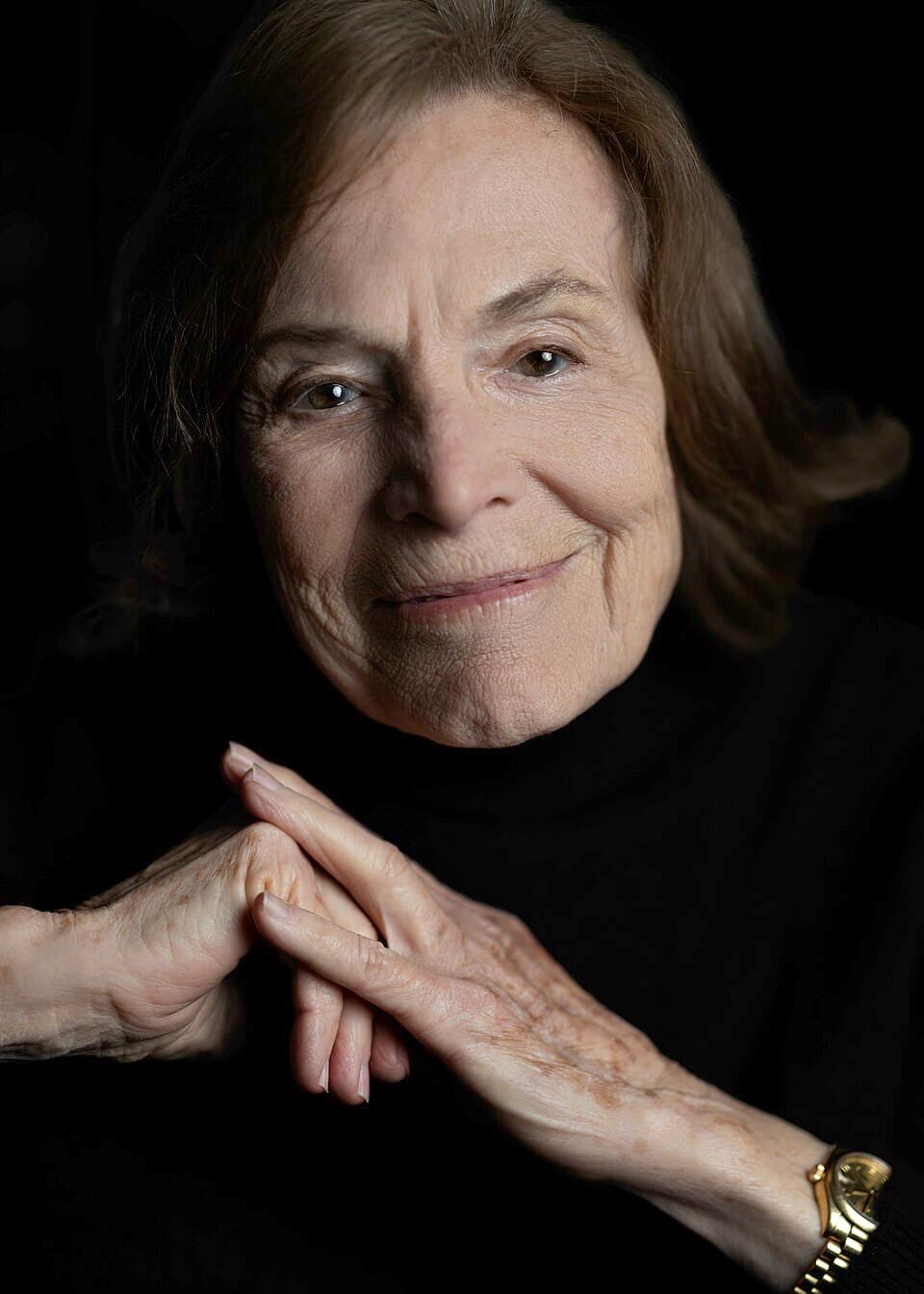
American · Science · Activism · Exploration
Sylvia Earle
August 30, 1935 – present
Early life and education
Sylvia Alice Earle was born on August 30, 1935, in Gibbstown, New Jersey, and grew up on a small farm near Camden with her parents and two brothers. Biographical profiles consistently describe her as having developed an early fascination with the natural world, especially the ocean, in the coastal environment of southern New Jersey. That childhood connection to water would later shape a career that made her one of the most visible oceanographers and explorers of the modern era.
Earle attended Florida State University, where she studied biology and developed a stronger commitment to marine research. She later earned advanced degrees at Duke University, completing her Ph.D. in 1966 with a dissertation on marine algae in the eastern Gulf of Mexico. Her early academic work established her as a serious scientist at a time when women remained underrepresented in oceanography and field-based science. Her training combined laboratory research with a strong interest in direct observation, a pattern that would characterize much of her later career.
In the context of the 1950s and 1960s, Earle’s educational path was notable because women in science often faced skepticism, limited funding, and a lack of access to field opportunities. She entered marine science during a period when deep-sea exploration was expanding rapidly through new technologies such as scuba, submersibles, and saturation diving, but the field still reflected the gender norms of the era. Earle’s determination to work in those environments became one of the defining features of her professional life.
Early career and breakthrough fieldwork
After completing her studies, Earle built a career that blended research, exploration, and public communication. In 1964 she joined a National Science Foundation-supported expedition to the Indian Ocean and became the only woman on the cruise, an early example of the barriers she overcame in a profession dominated by men. The experience foreshadowed the pattern that would recur throughout her career: she entered places, institutions, and roles where women were rare, and then helped redefine expectations about who belonged there.
Her early work on marine algae and ocean ecosystems helped establish her scientific credentials, but she increasingly became known for her willingness to work directly in extreme environments. In 1968 she dived in the bathyscaph Deep Diver while pregnant, an event often noted in biographies because it illustrated both her commitment to field science and the assumptions she had to navigate as a woman scientist. In 1969 she applied to take part in the original Tektite I underwater habitat project but was rejected because the program would not accept mixed-gender teams living together underwater. That exclusion helped set the stage for the more famous all-female Tektite II mission the following year.
In 1970 Earle led the first all-female team of aquanauts in Tektite II Mission 6. Living and working underwater for two weeks, the team conducted scientific tasks in a saturation habitat off Saint John in the U.S. Virgin Islands. The mission became one of the earliest and most visible demonstrations that women could perform demanding work in extreme underwater conditions. It was both a scientific experiment and a challenge to the gender assumptions of the period, and it remains one of the best-known milestones in the history of women in ocean exploration.
Deep-sea exploration and records
During the 1970s and 1980s, Earle became widely known for record-setting dives and for her work with submersible technology. She participated in numerous expeditions and helped expand knowledge of the deep ocean at a time when many marine environments were still poorly explored. Her work as an explorer was closely tied to technological innovation, including the use of one-atmosphere suits and submersibles that allowed scientists to observe deep-sea habitats directly.
In 1979 she performed a celebrated untethered walk on the seafloor off Oahu, Hawaii, at a depth of 1,250 feet in a JIM diving suit. The dive became one of her signature achievements and helped establish her public nickname, “Her Deepness.” It also symbolized her willingness to take on the physical and technological challenges of deep-ocean exploration in order to advance scientific understanding. Later accounts often emphasized that she reached a depth no human had previously matched in that untethered context, which is why the dive remains a landmark in exploration history.
In 1982 Earle co-founded Deep Ocean Engineering with engineer Graham Hawkes, helping develop advanced submersible vehicles. Her interest in engineering was not incidental: the ability to design better tools was central to making the ocean more accessible for science. In later years she continued to participate in deep dives, including record-setting and widely reported descents during the 1980s. These experiences strengthened her reputation as a scientist-explorer who did not merely study the ocean from the surface but entered the underwater world directly.
NOAA leadership and public authority
Earle’s career took a major turn in 1990 when the U.S. Senate confirmed her as Chief Scientist of the National Oceanic and Atmospheric Administration. She was the first woman to hold the post, making her one of the highest-ranking women in U.S. marine science and environmental governance. The position placed her at the intersection of research, public policy, and environmental stewardship, giving her an influential platform on issues affecting oceans, fisheries, and conservation.
Her time at NOAA reflected a broader shift in how government agencies were beginning to integrate environmental science into decision-making. As chief scientist, Earle represented not only scientific expertise but also a new model of public leadership by a woman in a highly technical federal role. The appointment became a defining example of the way her career combined exploration with institutional influence.
National Geographic, writing, and public education
By the late 1990s, Earle had become a widely recognized public figure. In 1998 Time magazine named her one of its Heroes for the Planet, and in the same period she became associated with the National Geographic Society as an Explorer in Residence and later Explorer at Large. These roles reflected her status as one of the world’s leading ocean explorers and as a communicator capable of bringing marine science to a broad audience.
Earle also became an author and documentary contributor, using books, lectures, and films to explain the urgency of ocean conservation. Her work reached audiences far beyond academic marine science. She consistently argued that the ocean is central to life on Earth and that its protection is essential to human well-being. That message was especially important as overfishing, pollution, habitat loss, and climate change became major global concerns. Earle’s communication style combined scientific authority with accessible advocacy, making her one of the most recognizable environmental educators of her generation.
Her books and public lectures helped turn deep-sea exploration into a story about stewardship. Rather than presenting the ocean merely as a frontier to conquer, she framed it as a system to understand and protect. This shift in emphasis became one of her most enduring contributions to modern environmental thought.
Mission Blue and conservation leadership
In 2009 Earle founded Mission Blue, a global conservation initiative devoted to identifying and protecting marine areas called Hope Spots. The organization reflected the culmination of her scientific and advocacy work, uniting research, public education, and policy outreach into a focused conservation campaign. The concept of Hope Spots gave ocean protection a concrete geographic framework and helped connect scientists, activists, and communities around the world.
Mission Blue became one of her most influential legacies. By identifying important marine habitats and encouraging their protection, the organization translated Earle’s lifetime of ocean experience into an actionable strategy for conservation. In 2019 the group announced that Hope Spots had surpassed 100 designated sites worldwide, a milestone that underscored the scale of her impact. The campaign positioned Earle not just as a scientist who studied the sea, but as a movement-builder helping shape the future of marine policy.
Awards and honors
Earle has received numerous honors recognizing both her scientific achievements and her environmental leadership. Among the most significant are the Library of Congress Living Legend designation in 2000 and the UNEP Champions of the Earth Lifetime Achievement award in 2014. These awards reflected a career that had moved well beyond expeditionary science into lasting cultural and environmental significance.
Her honors also include wide recognition from institutions associated with women’s history, oceanography, and exploration. Such recognition matters because it documents the gradual but incomplete opening of elite scientific and exploratory roles to women in the late twentieth century. Earle’s public stature helped normalize the presence of women in deep-sea science, federal scientific leadership, and global conservation advocacy.
Personal life
Earle was married to zoologist and writer John Taylor and later to engineer Richard L. Earle. Sources also identify her with the surname Reade early in life. She has children, and biographical accounts note that her family life coexisted with an unusually demanding career of expeditions, fieldwork, government service, writing, and public speaking. Her ability to sustain that career while also navigating the expectations placed on women in mid-twentieth-century professional life has often been noted by historians and biographers.
Her personal life is frequently discussed in connection with her professional barriers and achievements because her career unfolded at a time when women were often expected to choose between scientific ambition and domestic roles. Earle’s life demonstrated that a woman could be both a mother and a world-class explorer, although the path required extraordinary persistence and resilience.
Legacy
Sylvia Earle’s legacy rests on three connected contributions: scientific exploration, technological innovation, and ocean conservation advocacy. She helped demonstrate that direct human presence in the deep ocean could be scientifically productive, that women could lead extreme-field missions and major scientific agencies, and that public engagement was essential to protecting marine ecosystems.
Her career also changed how the public imagines the ocean. Through her dives, writings, lectures, and institutional leadership, she made the sea visible as both a scientific frontier and a fragile system requiring protection. Few scientists have combined technical achievement, barrier-breaking leadership, and environmental advocacy as effectively. Earle remains one of the most influential women in the history of marine science and one of the most consequential voices in global ocean conservation.
Dated achievements
9 indexed.
- Aug301935Science
Birth of Sylvia Earle
Sylvia Alice Earle was born in Gibbstown, New Jersey, U.S.
View details Britannica: Sylvia Earle Biography - Feb151970Exploration
Leads first all-female aquanaut team in NASA-sponsored Tektite II Mission 6
Earle leads the first all-female aquanaut team in the Tektite II, Mission 6, an underwater habitat.