← All women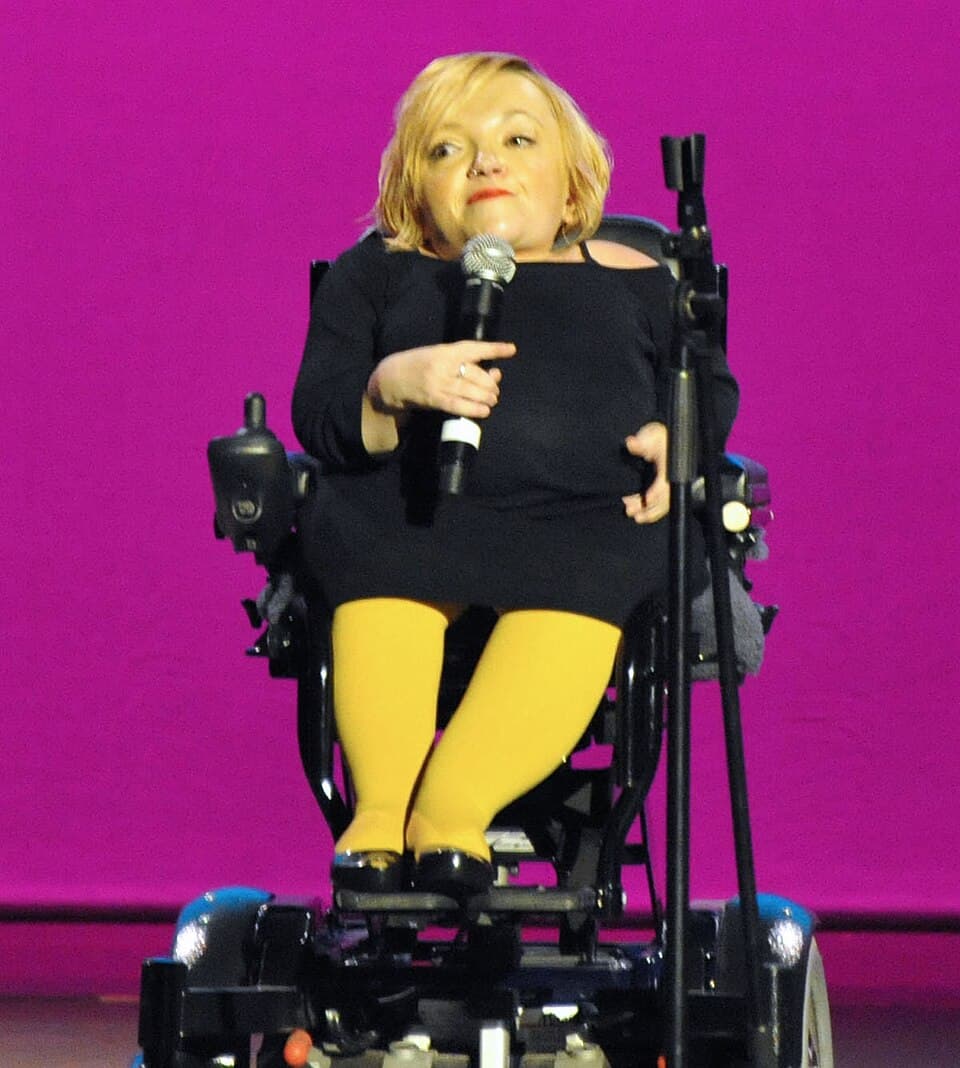
Australian · Activism · Arts · Literature
Stella Young
February 24, 1982 – December 6, 2014
Early Life and Background
Stella Louise Young was born on 24 February 1982 in the small rural town of Stawell, in the Wimmera region of Victoria, Australia. She was born with osteogenesis imperfecta, commonly known as brittle bone disease, a genetic condition characterised by fragile bones that break easily. As a result of her condition, Young used a wheelchair for most of her life and was of short stature.
Growing up in regional Victoria, Young experienced firsthand the physical and attitudinal barriers faced by people with disabilities in a world largely designed without them in mind. She has spoken and written about how, from a young age, she was often treated as an object of pity or as inherently 'inspirational' simply for existing and going about everyday activities such as attending school or shopping. These experiences of being othered, patronised, and excluded would profoundly shape her later career as a commentator, comedian, and activist.
Young attended local schools before going on to study journalism. She developed an early interest in writing and performance, finding in comedy and journalism outlets through which she could challenge the low expectations and stereotypes that surrounded disability in Australian culture. Her education equipped her with the tools to become an articulate and formidable public commentator, while her personal experience of disability gave her insight and authority that few able-bodied commentators on disability issues could claim.
Career Beginnings and Development
Young began her professional life working in disability arts and advocacy organisations, including a period as a director of the Melbourne-based disability arts organisation Arts Access Victoria. This role placed her at the intersection of art, culture, and disability rights, and helped her build networks within Australia's disability community and cultural sector.
She soon expanded into stand-up comedy, becoming a recognised performer on Australia's comedy circuit. Comedy gave Young a platform to speak candidly and humorously about disability, sexuality, and the absurdities of how society treated disabled people, subverting expectations and refusing to be a figure of pity. Her stand-up work was noted for its sharpness, self-deprecation used strategically rather than apologetically, and refusal to let audiences off the hook for their assumptions.
Alongside comedy, Young built a significant career in journalism and broadcasting. She wrote for a range of publications and became a familiar voice on Australian radio and television discussing disability rights, representation, and social policy. Her writing was noted for combining rigorous argument with wit and accessibility, making complex disability rights concepts understandable to mainstream audiences.
Major Works and Accomplishments
Young's most significant professional role was as editor of Ramp Up, a disability affairs website funded by the Australian Broadcasting Corporation (ABC) in partnership with other organisations. Under her editorship, Ramp Up became an influential platform for disability commentary, journalism, and debate in Australia, providing a space for disabled writers to discuss policy, culture, and lived experience on their own terms rather than being spoken about by non-disabled commentators.
Her most famous individual work was her TEDxSydney talk, \"I'm Not Your Inspiration, Thank You Very Much,\" delivered in 2014. In this talk, she introduced and popularised the concept of \"inspiration porn\" — the phenomenon of using images and stories of disabled people accomplishing ordinary tasks as motivational content for non-disabled audiences, often accompanied by captions suggesting that disability is merely a matter of attitude (e.g., \"the only disability in life is a bad attitude\"). Young argued that this framing was fundamentally objectifying: it turned disabled people into props for other people's emotional journeys rather than treating them as full human beings with rights, complexity, and agency.
The talk resonated enormously, both in Australia and internationally, and has been viewed millions of times. It has become a touchstone reference in disability studies, media criticism, and activism, frequently cited in academic papers, journalism ethics discussions, and disability rights training. The term \"inspiration porn\" entered common usage as a critical framework for analysing media representations of disability.
Beyond this landmark talk, Young was a prolific columnist and commentator, writing regularly for outlets such as the ABC and appearing on panel shows including the ABC's You Can't Ask That and other Australian television programs discussing disability rights, sexuality, and social attitudes. She was also known for her television appearances discussing disability representation in media and popular culture, and she had a memorable, brief acting role in the Australian television series Rush.
Awards, Honors, and Recognition
Throughout her career, Young received recognition from Australia's disability and arts communities for her advocacy and cultural contributions. She was a finalist and honoree in various disability sector awards recognising outstanding contribution to disability rights and media representation. Her TEDx talk itself became one of the platform's most-watched contributions related to disability, an achievement that stands as recognition of her impact independent of formal awards.
Her legacy has also been honoured posthumously: she has been remembered in various \"women's history\" and disability history retrospectives, cited as a foundational figure in Australian disability rights discourse of the early 21st century, and her talk continues to be used in educational curricula covering media studies, sociology, and disability studies.
Personal Life
Young was known for being candid and unapologetic about her personal life, including her disability, her body, and her sexuality, subjects that were often considered taboo or uncomfortable for public discussion regarding disabled people at the time. She frequently challenged the desexualisation of disabled people in media and popular culture, insisting on her right to be seen as a complete person including in matters of romance and sexuality.
She lived in Melbourne for much of her adult life, where she was deeply embedded in the city's arts, comedy, and disability advocacy communities. She was known among friends and colleagues for her sharp humour, generosity, and fierce loyalty to the causes and communities she cared about.
Legacy and Historical Impact
Stella Young's influence on disability rights discourse, particularly in Australia but also internationally, has been profound and lasting. Her coining of the term \"inspiration porn\" gave language to a phenomenon that many disabled people had long experienced but had lacked a widely recognised term to describe and critique. This framework has since been adopted broadly in disability studies, journalism ethics, and social media literacy discussions.
Her work as editor of Ramp Up helped establish a platform where disabled writers and commentators could speak in their own voices about policy and culture, contributing to a broader shift toward "nothing about us without us" principles in Australian disability discourse and journalism.
Young's blend of comedy, journalism, and unflinching advocacy created a model for disability activism that resisted both pity and forced positivity, instead demanding recognition of disabled people's full complexity and rights. She is frequently cited as an inspiration (ironically, given her critique of that very framing) to subsequent generations of disability activists and writers, both in Australia and abroad.
Death
Stella Young died suddenly on 6 December 2014 in Melbourne, at the age of 32. Her unexpected death prompted widespread tributes from journalists, politicians, disability advocates, and members of the public across Australia and internationally, reflecting the significant impact she had achieved in a relatively brief public career. Outlets including The Guardian, the ABC, and the BBC covered her death, underscoring her stature as a leading voice in disability rights and media commentary.
In the years since her death, Young's work has continued to be referenced and taught, and her TEDx talk remains one of the most cited and viewed pieces of disability rights media in the world, ensuring her ongoing influence on how disability is understood and represented in mainstream culture.
Dated achievements
3 indexed.
- Feb241982Science
Born in Stawell, Victoria, Australia
Stella Young was born on 24 February 1982 in Stawell, Victoria, with osteogenesis imperfecta (brittle bone disease).
View details Stella Young - Wikipedia - Sep022014Science
Delivers landmark TEDx talk 'I'm Not Your Inspiration, Thank You Very Much'
Stella Young delivered her famous TEDxSydney talk coining the term 'inspiration porn', which went on to be viewed millions of times worldwide.