← All women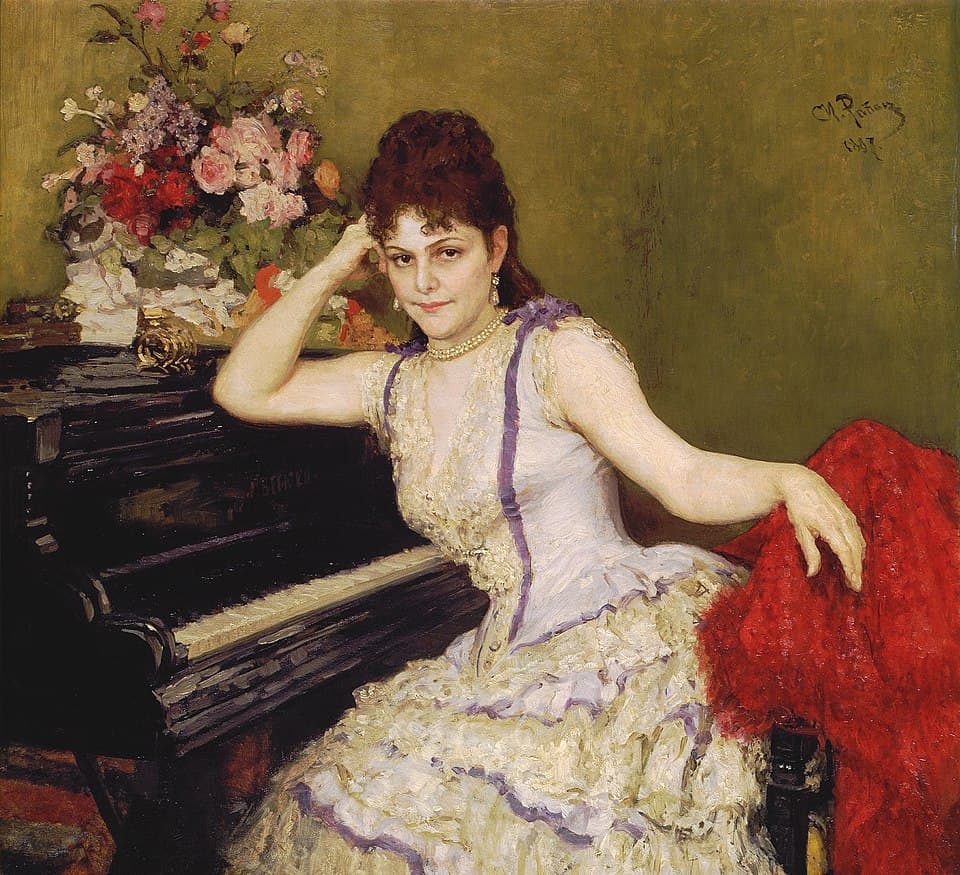
German · Arts
Sophie Menter
July 29, 1846 – February 23, 1918
Early Life and Family Background
Sophie Menter was born on July 29, 1846, in Munich, the capital of the Kingdom of Bavaria. She came from a musical family: her father, Joseph Menter, was a cellist in the Munich court orchestra, and her mother was also musically inclined. This environment gave young Sophie early and sustained exposure to professional musical life, an advantage that was relatively rare for girls of the era, who were more commonly steered toward music as a genteel accomplishment rather than a professional pursuit.
Menter began piano studies as a small child. Her prodigious talent was recognized early, and she received serious instruction rather than the more superficial "finishing" education typically afforded to girls. Her first teachers included local Munich musicians, and she quickly progressed to more advanced instruction, eventually studying at the Munich Conservatory.
Musical Education and Formative Influences
Menter's pianistic development was shaped by some of the most important pedagogues and performers of the mid-19th century. She studied with Friedrich Niest and later with Ludwig Deppe, who was known for his systematic approach to piano technique. Her most consequential period of study, however, came under Carl Tausig, one of Franz Liszt's most brilliant pupils, whose teaching emphasized both technical mastery and expressive depth.
It was through this lineage that Menter came into contact with Franz Liszt himself. She became one of Liszt's favorite pupils, studying with him intermittently over many years, particularly during the 1870s. Liszt was known to praise her extravagantly, reportedly calling her his "musical daughter" and considering her interpretations of his own works, as well as those of other Romantic composers, to be exemplary. This close mentorship placed Menter within an elite circle of pianists directly descended from the Liszt tradition, granting her both technical authority and social/professional legitimacy that few women of her era could access.
Career Beginnings and Rise to Prominence
Menter made her public debut as a pianist in the 1860s and quickly built a reputation for her powerful, orchestral tone and her ability to project both bravura technique and deep musical poetry. Unlike many women performers of the period who were confined to salon performances or roles as accompanists, Menter established herself as a full-fledged touring virtuoso, performing extensively across Germany, Austria, France, England, and notably Russia.
Her career flourished through the 1870s and 1880s. She performed with major orchestras across Europe and was celebrated by critics and audiences alike for a playing style that combined the grandeur associated with Liszt's own pianism with a distinctly personal warmth and lyricism. She was particularly noted for her interpretations of Liszt's concertos and other virtuosic Romantic repertoire, including works by Chopin, Schumann, and Beethoven.
Association with Tchaikovsky and Russian Musical Circles
One of the most historically significant aspects of Menter's career was her close association with Russian musical life, particularly her friendship and professional collaboration with composer Pyotr Ilyich Tchaikovsky. Menter spent considerable time in Russia, where she was highly celebrated, and she held a teaching position at the Moscow Conservatory from 1883 to 1887, at the invitation of Nikolai Rubinstein's circle—an unusual and prestigious appointment for a woman, and for a non-Russian, in that era.
Menter and Tchaikovsky were personally close, and Tchaikovsky assisted her with the orchestration of her piano fantasy on Hungarian themes, "Ungarische Zigeunerweisen" (also known as the "Hungarian Gypsy Fantasy"), a work Menter had composed and for which Tchaikovsky provided orchestral arrangement, reflecting the high esteem in which she was held by leading composers of the day. This collaboration is documented in Tchaikovsky's correspondence and is considered a notable point of intersection between Western European virtuoso pianism and the Russian musical establishment during the late Romantic period.
Compositional Work
While primarily renowned as a performer, Menter was also a composer, though her surviving compositional output is modest compared to her performing career. Her best-known composition is the aforementioned "Ungarische Zigeunerweisen" for piano and orchestra, which drew on Hungarian folk idioms fashionable among Romantic composers following Liszt's own use of similar material. She also composed shorter piano pieces. Her compositional work, though limited in scope, demonstrates that she was not merely an interpretive artist but also engaged with the creative and structural aspects of music-making, a dimension of her career less frequently highlighted than her performances.
Schloss Itter and Later Career
In 1878, Menter purchased Schloss Itter, a castle in the Austrian Tyrol, which she transformed into a cultural salon and retreat. The castle became a gathering place for major musicians and artists of the period, including Liszt himself, who was a guest there. This estate later became famous in a completely different historical context during World War II, but during Menter's ownership it functioned as a symbol of her success and cultural stature—remarkable for a woman to have achieved such wealth and independence through her own artistic career in the 19th century.
Menter continued to perform into the 1880s and early 1890s, though she gradually reduced her concert activity. Her tenure at the Moscow Conservatory (1883–1887) marked an important transition toward teaching, and she became increasingly involved in pedagogy in her later years, passing on the Liszt tradition of pianism to a new generation of students.
Personal Life
Menter's personal life included a marriage to cellist David Popper in 1872, a union that connected two prominent instrumentalists of the era; the couple divorced in 1886. She did not have children who continued in public musical life, and her primary personal and professional identity remained closely tied to her concert career and her relationships within elite European musical circles, including her enduring bond with Liszt as mentor and her friendship with Tchaikovsky.
Retirement and Later Years
By the 1890s, Menter had largely withdrawn from public concertizing, settling into a quieter life devoted to teaching, composition, and managing her properties, including her estate at Stockdorf near Munich, where she eventually settled. She remained a respected figure in European musical life, remembered by contemporaries and later historians as one of the last great exponents of the Liszt school of pianism.
Death and Legacy
Sophie Menter died on February 23, 1918, at Stockdorf, near Munich, at the age of 71, during the final months of the First World War. Her death represented the passing of one of the direct links to Franz Liszt's own performing tradition and to the golden age of Romantic virtuoso pianism.
Menter's legacy is significant both musically and historically. As a woman who achieved top-tier international recognition as a concert pianist—rather than being confined to teaching or amateur performance, as was the fate of most female musicians of her era—she stands as an important figure in the history of women in music. Her close relationships with Liszt and Tchaikovsky situate her at the intersection of two major currents of 19th-century Romantic music, and her tenure at the Moscow Conservatory reflects the international esteem in which she was held. Later scholars of women's music history, including researchers at institutions such as the Sophie Drinker Institut, have highlighted her career as an important case study in the possibilities and limitations faced by women virtuosos in the 19th century.
Dated achievements
1 indexed.
- Jul291846Arts
Birth of Sophie Menter
Sophie Menter was born on July 29, 1846, in Munich, marking the beginning of a celebrated career in music.
View details July 29: Birthday of Sophie Menter