← All women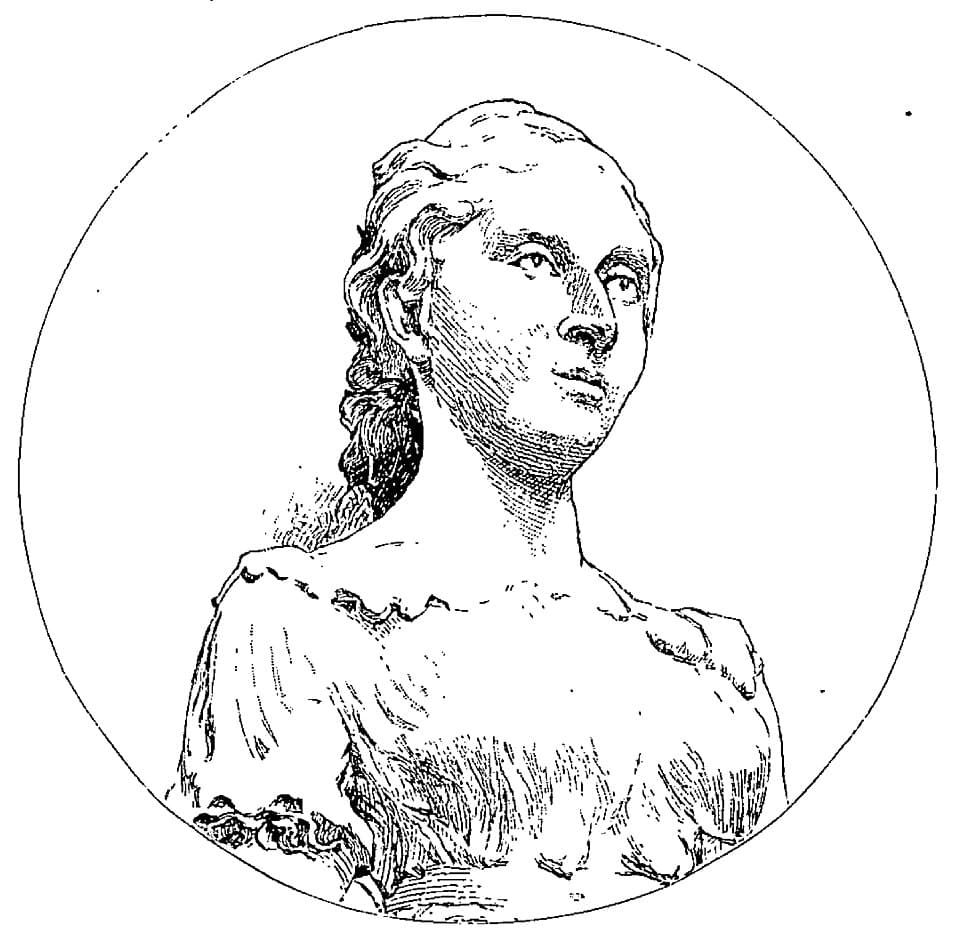
French · Science
Sophie Germain
April 1, 1776 – June 27, 1831
Early Life and Background
Marie-Sophie Germain was born on 1 April 1776 in Paris, France, into a prosperous bourgeois family headed by Ambroise-François Germain, a silk merchant, and his wife Marie-Madeleine Germain.[1][4][5][16] She was the second of three daughters in a household that valued education but adhered to conventional expectations for women.[11][16] Her childhood coincided with the turbulent years leading up to and including the French Revolution, an upheaval that profoundly shaped her intellectual development.[4][9]
Germain’s fascination with mathematics reportedly began around the age of thirteen, when she read an account of the mathematician Archimedes in a history of the revolution.[4][5] The story of Archimedes being killed by a Roman soldier while absorbed in his work sparked her curiosity about the subject that had so captivated him.[4] Confined indoors by political unrest in Paris, she turned to her father’s library, teaching herself from works by authors such as Euler and Newton.[12][16]
Her parents initially opposed her intense studies, concerned that mathematical pursuits were inappropriate and unhealthy for a young woman.[4][11] According to later biographical accounts, they tried to restrict access to candles and warm clothing to discourage her working late into the night, but she persisted, studying in secret.[4][16] This determined self‑education laid the foundation for her later achievements: Germain would remain largely self‑taught throughout her life, never holding a formal academic position.
Self-Education and Entry into Mathematical Circles
The founding of the École Polytechnique in Paris in 1794 created a new center for advanced mathematical and scientific training, but women were barred from admission.[7][12] To circumvent this restriction, Germain adopted the male pseudonym Antoine-Auguste Le Blanc (often rendered "Monsieur Le Blanc") and began obtaining lecture notes from the school.[5][7][12] Under this name, she studied course materials in analysis and mathematical physics and submitted work to professors.
Between roughly 1794 and 1799, Germain sent mathematical results to Joseph-Louis Lagrange, one of the leading mathematicians teaching at the École Polytechnique.[7][10][12] Lagrange initially believed he was corresponding with a male student, but when he learned her true identity, he continued to support her and encouraged her studies.[4][7] This episode marks Germain’s early entry into advanced mathematical circles despite formal exclusion; it also established a pattern of anonymous or pseudonymous correspondence that she would follow with other mathematicians.
Germain extended her network by writing to Adrien-Marie Legendre, Jean-Baptiste Fourier, and later Carl Friedrich Gauss, often still using the name Le Blanc.[5][7][9] Her letters typically contained detailed critiques of their work and original observations. Although she lacked formal credentials, her analytical skill earned their respect. Legendre, in particular, became a sustained interlocutor, exchanging ideas with her about number theory.[3][7][13]
Work in Number Theory and Fermat’s Last Theorem
Germain is best known in number theory for her contributions to the study of primes and for a theorem related to Fermat’s Last Theorem.[5][11][17] During the early 19th century, the theorem—stating that there are no nontrivial integer solutions to \(x^n + y^n = z^n\) for \(n > 2\)—remained unproven, but it attracted significant research attention. Germain focused on the case of odd prime exponents, investigating conditions under which solutions would be constrained.
Her key insight, now called Sophie Germain’s theorem, established that for an odd prime exponent \(p\), if there exists an auxiliary prime \(\theta\) (now often written as \(q\)) such that no two nonzero consecutive \(p\)-th powers are congruent modulo \(\theta\) and \(p\) itself is not a \(p\)-th power modulo \(\theta\), then in any solution to Fermat’s equation one of the integers \(x, y, z\) must be divisible by \(p^2\).[5][11][17] This result provided a powerful constraint for attempts to prove the theorem in the so‑called "first case" (where \(p\) does not divide \(xyz\)).
Germain communicated these number‑theoretic discoveries in correspondence with Legendre and Gauss.[7][9][17] In his 1823 work on number theory, Legendre explicitly credited her theorem and partial results, acknowledging her role in advancing the field.[3][6][13] Historians of mathematics regard her as one of the few early 19th‑century mathematicians to achieve substantial progress on Fermat’s Last Theorem, long before its eventual proof by Andrew Wiles in the late 20th century.[9][11]
Beyond Fermat, Germain studied properties of prime numbers, including what are now called Sophie Germain primes—primes \(p\) for which \(2p + 1\) is also prime—though the modern terminology arose later.[5][11] Her work helped shape the theory of primes and contributed to the development of algebraic and analytic methods in number theory.
Elasticity Theory and the Paris Academy Prize
In parallel with her number‑theoretic research, Germain made pioneering contributions to the mathematical theory of elasticity.[5][7][11] The immediate impetus came from experiments by the German physicist Ernst Chladni, who had produced intricate patterns on vibrating plates and sought a theoretical explanation.[4][7] The Paris Academy of Sciences announced a prize competition in 1809 for a mathematical theory that would account for Chladni’s figures.[3][6]
That year, Germain submitted her first memoir, "Mémoire sur la courbure des surfaces", to the Academy’s competition.[3][6][12] Although judges Lagrange and Legendre recognized her originality, they found the work incomplete. Undeterred, she submitted a second, revised memoir in 1811, improving her earlier treatment but still not fully satisfying the Academy.[3][6][12] Importantly, she remained the only entrant to attempt a systematic mathematical analysis of the problem.
When the Academy renewed the prize competition in 1813, Germain prepared a third and much more comprehensive memoir, "Recherches sur la théorie des surfaces élastiques".
On 8 January 1816, the Academy awarded her the grand prize for this work, judging it the best solution to the Chladni problem.[3][5][7] Her analysis introduced fundamental ideas that would later be incorporated into what is called the Germain–Lagrange plate equation, describing the vibration of elastic plates.[5][7][11] While subsequent mathematicians refined and corrected aspects of her theory, Germain’s work established a crucial bridge between experimental acoustics and mathematical physics.
The award made her the first woman ever to win a prize from the Paris Academy of Sciences and the first woman to receive an official mathematical accolade from that institution.[3][7][9][11] At the same time, the Academy granted her the right to attend its sessions—an unprecedented privilege for a woman.[3][7] These recognitions marked a rare institutional acknowledgment of a woman’s mathematical research in early 19th‑century Europe.
Later Research and Publications
Germain continued to refine her ideas on elasticity and to explore broader themes in analysis and number theory. In 1821"Essai sur l’Analyse des Équations aux Inconnues Nombreuses" (Essay on the Analysis of Equations with Several Unknowns).[3][5][6] This work reflected her ongoing interest in the structure of equations and their solutions, extending her analytical approach beyond specific problems.
Her contributions in elasticity did not end with the Academy prize. In 1829, she published a paper in the Annales de Chimie et de Physique, further elaborating the laws governing motion and equilibrium in elastic solids.[3][15] Historians of science have noted that her formulations influenced later developments in continuum mechanics and engineering, including the theoretical foundations that would ultimately support major architectural projects. UNESCO has emphasized that her work on elasticity had long‑term implications for structures such as the Eiffel Tower, constructed decades after her death.[7]
Throughout these years, Germain remained outside conventional academic employment. She worked largely from home, supporting herself through family resources and dedicating her time to reading, calculation, and correspondence. Her status as an "amateur" in the institutional sense contrasts with the professional sophistication of her research.[9][10]
Awards, Honors, and Recognition
The 1816 Paris Academy prize for elasticity stands as Germain’s most visible contemporary honor.[3][5][11] Awarded in a male‑dominated scientific milieu, it publicly acknowledged her as a serious mathematician. The accompanying right to attend Academy sessions, while limited, symbolized a degree of inclusion otherwise denied to women.
During her lifetime, she did not receive a university degree. However, she gained the esteem of leading mathematicians. Carl Friedrich Gauss, upon discovering that "Monsieur Le Blanc" was a woman, expressed admiration for her courage and ability, noting that her talents were extraordinary given the "prejudices" that excluded women from mathematical study.[7][9][16] Near the end of her life, Gauss reportedly recommended that the University of Göttingen award her an honorary doctorate, a degree she was due to receive but did not live to see granted.[16]
Posthumous recognition grew over time. In 1879, the École Polytechnique inscribed her name on a monument honoring great mathematicians, a significant distinction given that the school had once barred her from admission.[3][9] Biographical works, research articles, and commemorations in the late 19th and 20th centuries further consolidated her reputation as a pioneering woman in mathematics.
Personal Life
Compared with her intellectual career, relatively little is known in detail about Germain’s personal life. Biographical sources agree that she never married and had no children, choosing instead to devote herself to mathematical study.[4][11][16] Her social circle appears to have been limited, and many accounts emphasize her somewhat withdrawn character as a child and adult.[2][11]
Germain’s daily life was shaped by the constraints of her gender and class. As a woman of the bourgeoisie, she had no need to earn an income but was expected to conform to domestic and social roles. Her decision to pursue mathematics, often in solitude, deviated sharply from these norms. The tensions with her parents in her youth over late‑night study sessions illustrate the broader cultural resistance to women’s intellectual ambitions.[4][16]
There is no strong evidence of romantic relationships or extensive social engagements in the surviving historical record; instead, her most substantial relationships were intellectual, conducted through correspondence with mathematicians such as Lagrange, Legendre, Fourier, Cauchy, and Gauss.[4][7][9] These letter exchanges—sometimes under a pseudonym—formed the primary channel through which she participated in the mathematical community.
Legacy and Historical Impact
Sophie Germain’s legacy is multidimensional, encompassing scientific contributions, institutional breakthroughs, and symbolic significance for women in science. In number theory, her theorem on Fermat’s Last Theorem and her exploration of prime numbers provided tools and perspectives that influenced later work.[5][11][17] Even though Fermat’s Last Theorem remained unproven in her lifetime, number theorists have praised her for proposing one of the first realistic strategies for addressing the problem.[17]
In elasticity, Germain is widely regarded as one of the pioneers of elasticity theory.[5][7][12] Her attempts to model vibrating plates bridged experimental physics and mathematical analysis, contributing to the emergence of a more systematic theory of elastic bodies. Subsequent advances in continuum mechanics and structural engineering built on groundwork to which her research belongs.
Institutionally, her 1816 prize from the Paris Academy and the permission to attend its sessions marked early cracks in the exclusion of women from high‑level scientific institutions.[3][7][9] Although these changes were modest—she was not made a member, and women in general remained largely shut out—they demonstrated that exceptional work by a woman could force acknowledgment even in resistant structures. Her story has therefore become emblematic in histories of women in mathematics, featuring in educational materials, museum exhibits, and scholarly analyses.[7][9][16]
Later commemorations reflect this symbolic role. Biographies and essays have described her as the "Princess of Mathematics" and highlighted the obstacles she faced as a self‑taught woman researcher.[10][16] Modern organizations and projects dedicated to women in science frequently cite her as an early figure who "defied societal and familial doubts" in order to pursue mathematical work.[7][9]
Her name lives on in mathematical terminology—Sophie Germain primes, Sophie Germain’s theorem, and the Germain–Lagrange plate equation—ensuring that students encounter her legacy in both pure and applied mathematics.[5][7][11] Beyond technical results, her life illustrates how intellectual determination can partially overcome structural barriers, even if full institutional equality remains unrealized.
Later Life and Death
In her later years, Germain continued to work despite declining health. Biographical accounts report that she learned in 1829 that she was suffering from breast cancer
On 27 June 1831, she died in Paris at the age of fifty‑five.[1][4][5][16] Although some secondary sources have erroneously given 26 June as the date, major reference works—including Britannica, the MacTutor History of Mathematics, and multiple language editions of Wikipedia—agree on 27 June 1831.[1][4][5][6][15][16] Her death initially passed with limited public notice, reflecting both the modest visibility of "amateur" mathematicians and the broader marginalization of women in science. Germain’s burial in Paris closed a life of quiet but intense intellectual labor. In the decades after her death, mathematicians and historians gradually reconstructed her contributions from letters, prize submissions, and publications. Institutional honors such as the École Polytechnique inscription in 1879 and continued scholarly interest have elevated her status in the historical record.[3][9] Today, Sophie Germain is recognized as one of the earliest women to produce substantive original research in mathematics and as a figure who, through persistence and intellectual skill, challenged the gendered boundaries of her era’s scientific institutions.[5][7][9][16] Her life and work remain central to educational and historical narratives about women’s participation in mathematics and the sciences.
Dated achievements
4 indexed.
- Apr011776Science
Birth of Sophie Germain
Marie-Sophie Germain was born in Paris into a wealthy bourgeois family during the French Revolution.
View details Wikipedia: Sophie Germain - Jan081816Science
First woman to win a prize from the Paris Academy of Sciences
Sophie Germain became the first woman to win a prize from the Paris Academy of Sciences for her work on elasticity.