← All women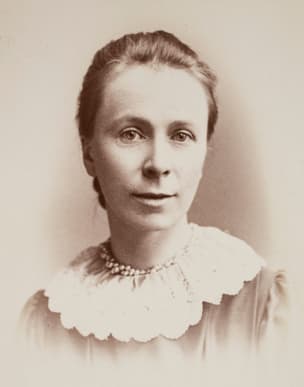
Irish, British · Science · Activism · Literature
Sophie Bryant
February 15, 1850 – August 28, 1922
Early Life and Background
Sophie Bryant, born Sophie Willock on 15 February 1850 in Sandymount, near Dublin, Ireland, grew up in an intellectually stimulating household that would prove decisive for her extraordinary career. Her father, Reverend William Alexander Willock, was a Church of Ireland clergyman and mathematician who held a fellowship at Trinity College Dublin. Unusually for the period, he took a direct hand in his daughter's education, tutoring her personally in mathematics, logic, and classical languages — subjects almost universally denied to girls in mid-nineteenth-century Britain and Ireland.
The family later moved to London, where Sophie continued her education against the backdrop of a society only beginning to grapple with the question of formal schooling for women. She enrolled at Bedford College, London, one of the earliest institutions offering higher education to women, and immersed herself in mathematics and the sciences. Her academic gifts were evident early, and she pursued her studies with a rigor that would soon set her apart from most of her female contemporaries, who had few avenues for advanced intellectual development.
Career Beginnings and Education Reform
Bryant's career began in earnest when she took up a teaching post at the North London Collegiate School (NLCS), an institution founded by the pioneering educator Frances Mary Buss, herself a towering figure in the movement for girls' education. Bryant quickly distinguished herself as a gifted teacher and administrator, and in 1875 she succeeded Buss's associates to become headmistress of the school — a position she would hold for an extraordinary 33 years, until 1918.
Under her leadership, North London Collegiate School flourished as a model of rigorous academic education for girls, emphasizing science, mathematics, and classical studies alongside more traditionally "feminine" subjects. Bryant believed passionately that girls were fully capable of the same intellectual achievements as boys, and she structured the curriculum to prove it, sending increasing numbers of her pupils on to university study at a time when such paths were only just opening to women.
Academic Achievements and Doctorate
Parallel to her work as an educator, Bryant pursued her own advanced studies with remarkable persistence. In 1881, she earned a Doctor of Science (D.Sc.) degree from the University of London — becoming one of the first women in the United Kingdom to achieve this distinction. Her doctoral work focused on mathematics and moral philosophy, reflecting the breadth of her intellectual interests, which spanned pure mathematics, formal logic, ethics, and education theory.
She published numerous scholarly papers throughout her career, including significant work on Euclidean geometry, the philosophy of education, and moral psychology. Her 1887 paper "Euclid's Elements" and her broader writings on the teaching of geometry contributed meaningfully to contemporary mathematical pedagogy. She was also deeply engaged with questions of curriculum design, arguing for the inclusion of rigorous mathematics and science in girls' education at a time when many still believed such subjects were unsuitable or even harmful for female students.
Bryant's scholarly reputation led to her election to several learned and professional societies that had historically excluded women, marking significant, if incremental, progress in breaking down the institutional barriers to women's participation in academic and scientific life. She was involved with organizations including the Aristotelian Society, where she contributed to philosophical discourse on ethics and psychology.
Advocacy for Women's Suffrage and Higher Education
Beyond her academic and administrative accomplishments, Sophie Bryant was a committed and vocal advocate for women's suffrage and broader social equality. She served in leadership roles within organizations campaigning for women's right to vote, and she used her prominent public position as a headmistress and academic to lend credibility and visibility to the suffrage cause at a time when such advocacy could carry real professional and social risk.
She was also a driving force in the push to open university degrees to women. Bryant was involved with the campaign that eventually led to the University of London becoming one of the first British universities to grant degrees to women on equal terms with men — an achievement she witnessed and helped bring about through decades of advocacy, institutional negotiation, and public argument.
Her feminism was deeply intertwined with her educational philosophy: she believed that intellectual equality had to be demonstrated through rigorous academic achievement, and that access to full civic and political rights, including the vote, was a natural and necessary corollary of women's demonstrated intellectual capabilities.
Personal Life
Sophie Willock married Dr. William Hicks Bryant, a physician, but the marriage was short-lived; various sources indicate that they separated relatively early, and she was widowed later in life. She had one daughter. Details of her personal domestic life remain less thoroughly documented than her public career, in keeping with the biographical conventions of the period, which tended to emphasize women's public achievements less than those of their male counterparts, when documented at all. Bryant largely built her identity around her professional and intellectual accomplishments, choosing to be known by her married name, "Mrs. Bryant," while pursuing an independent and highly public career — itself a notable choice for a woman of her time.
Outside her academic and activist work, Bryant was an enthusiastic and skilled mountaineer, a pursuit she maintained throughout her adult life and continued vigorously into her seventies. This was itself a striking departure from Victorian expectations of feminine physical delicacy, and it reflected the same determined, boundary-defying spirit that characterized her professional life.
Legacy and Historical Impact
Sophie Bryant's legacy rests on several pillars. As headmistress of North London Collegiate School for over three decades, she educated and shaped the intellectual development of generations of young women, many of whom went on to university study and professional careers previously closed to women. Her insistence on a rigorous, academically demanding curriculum for girls helped establish a template that influenced girls' education across Britain.
As one of the first women to earn a Doctor of Science degree in Britain, she stood as living proof against the prevailing prejudice that women lacked the intellectual capacity for advanced scientific and mathematical study. Her scholarly publications in mathematics, logic, and moral philosophy contributed to academic discourse in fields almost entirely dominated by men.
Her activism for women's suffrage and for equal access to university degrees helped advance the broader movement for women's civil and political rights in Britain, contributing to incremental but crucial victories that paved the way for full suffrage, achieved in stages in 1918 and 1928.
Later Life and Death
Bryant retired from the headmistress position at North London Collegiate School in 1918, having overseen the school through more than three decades of growth and reform, including the upheaval of the First World War. She remained intellectually and physically active in her retirement, continuing to write, lecture, and pursue her passion for mountaineering.
On 28 August 1922, at the age of 72, Sophie Bryant died in a mountaineering accident in the French Alps near Chamonix. Her death, while engaged in the strenuous physical pursuit she loved, was seen by many who knew her as fitting testament to a life lived with courage, vigor, and a refusal to accept the limitations society sought to place upon her, whether in the classroom, the laboratory, the political sphere, or the mountainside.
She is remembered today as a pioneering figure in the history of women's education, mathematics, and the suffrage movement — a woman whose achievements helped dismantle, piece by piece, the formidable barriers that stood between Victorian women and full intellectual and civic participation in British society.
Dated achievements
3 indexed.
- Feb151850Science
Birth of Sophie Bryant
Sophie Willock (later Bryant) was born in Sandymount, near Dublin, Ireland, on 15 February 1850.
View details MacTutor History of Mathematics: Sophie Bryant - Jun161904Science
Elected first female member of the Council of the Royal Statistical Society (context varies by source)
Sophie Bryant was among the first women elected as Fellows of the Royal Statistical Society-era institutions recognising women's scholarship.