← All women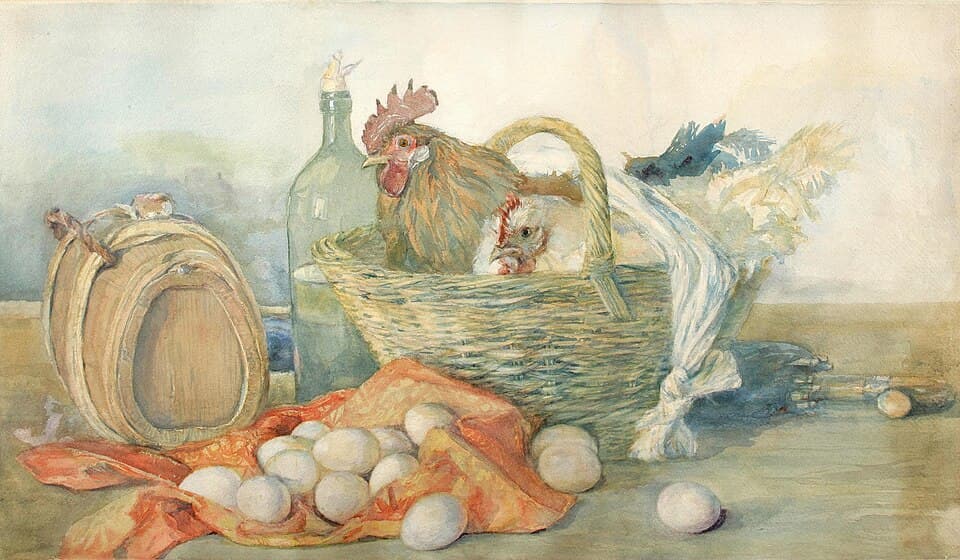
Croatian · Arts
Slava Raskaj
January 2, 1877 – March 29, 1906
Early Life and Background
Slava Raškaj was born on January 2, 1877, in the town of Ozalj, Croatia. Born into a well-off family, Slava was the youngest child, with a father who held a significant position in local administration and a mother who was deeply supportive. From birth, Slava was deaf, a condition that significantly shaped her life and career but did not hinder her creative talents.
Due to her deafness, she initially received education at a school for the deaf in Vienna, where she discovered her passion and talent for painting. This period was formative in honing her skills and setting the foundation for her future as an artist. Her family supported her pursuit of art, which was essential for a woman with disabilities in the late 19th century.
Career Beginnings and Development
Slava Raškaj returned to Croatia from Vienna, and she began working under the guidance of Bela Čikoš Sesija, a renowned painter of the time. Sesija saw potential in her delicate and vivid watercolor paintings, which became her signature style. Her work primarily focused on nature, capturing the essence of Croatian landscapes with a unique sensitivity.
In 1898, she held her first exhibition in Zagreb, which marked the start of her public career. Despite her challenges, she quickly gained recognition for her vibrant depictions of flowers and countryside scenes. Her ability to convey emotion and beauty through her art allowed her to transcend the limitations often placed on her due to her disability and gender.
Major Works, Discoveries, and Accomplishments
Slava Raškaj's portfolio predominantly consists of watercolor artworks that involve a combination of impressionistic styles and her own personal expressions. Notable works include scenes from her hometown of Ozalj, as well as floral motifs and detailed studies of nature. She was particularly renowned for bringing warmth and life to her paintings, which often exuded a sense of quietude and introspection.
Awards, Honors, and Recognition
Throughout her life, Raškaj's works were exhibited not just in Croatia but also in international expositions, where they received acclaim. The exhibitions helped bolster her reputation beyond national boundaries, significantly contributing to her posthumous recognition as a pioneering figure in Croatian art.
Personal Life
Despite her achievements, Raškaj's personal life was marked by solitude. The norms of the time made it challenging for a deaf woman to integrate seamlessly into society. Outside the artistic community, she led a relatively secluded life, immersing herself in creativity as an outlet for expression and connection with the world.
Legacy and Historical Impact
Slava Raškaj's legacy lies in her pioneering role as one of Croatia’s leading female artists and one of the first in her country to develop watercolors as a serious medium. Her work inspired future generations of artists, particularly women, to pursue artistic careers despite societal constraints. She remains an essential figure in the Croatian art scene, celebrated for her resilience and talent.
Later Life and Death
In the early 1900s, Raškaj's mental and physical health began to decline, leading to her institutionalization. She passed away on March 29, 1906, at the young age of 29. Her death was a significant loss to the art world, but her influence continues through her preserved works and the path she paved for future artists.
Dated achievements
2 indexed.
- Jan021877Arts
Birth of Slava Raškaj in Ozalj, Croatia
Slava Raškaj, later celebrated as Croatia's foremost watercolorist, was born on 2 January 1877 in Ozalj, then part of the Austro-Hungarian Empire.
View details Slava Raškaj - Wikipedia - Mar291906Arts
Death of Slava Raškaj in Stenjevec, Zagreb
Slava Raškaj died on 29 March 1906 at the Stenjevec psychiatric hospital near Zagreb, aged just 29, having produced her greatest works in her final years.