← All women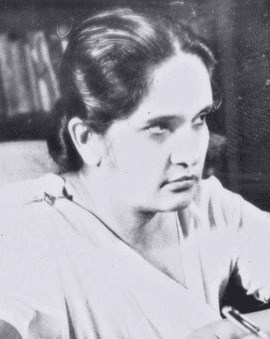
Sri Lankan · Politics
Sirimavo Bandaranaike
April 17, 1916 – October 10, 2000
Early Life and Background
Sirima Ratwatte, later known globally as Sirimavo Ratwatte Dias Bandaranaike, was born on 17 April 1916 in Ratnapura, in southern Ceylon (now Sri Lanka).[1][8][12] She was the eldest child of Barnes Ratwatte, the Disawe (regional chieftain) of Sabaragamuwa, and Mahawalathenne Kumarihamy (Rosemund Ratwatte), members of a traditional Kandyan aristocratic family that held substantial land, social prestige, and local political influence.[6][12] Her upbringing in this Sinhala Buddhist elite milieu exposed her early to the networks of notables that mediated between colonial authorities and rural populations.
She received her schooling at Ferguson High School in Ratnapura and later at St. Bridget’s Convent, a leading Catholic girls’ school in Colombo.[12] These institutions were among the few that offered relatively advanced education for girls in the early 20th century, and her attendance reflected both her family’s status and the gradual expansion of women’s access to formal education. Sources emphasize that she was not raised as a political activist but as a member of the landed upper class whose primary expected roles were those of wife, mother, and patron of religious and charitable activities.[1][12]
Her early life coincided with the late phase of British colonial rule in Ceylon, when constitutional reforms slowly broadened local participation but retained ultimate imperial authority. The Ratwatte family’s position within Kandyan society meant that Sirimavo grew up at the intersection of traditional hierarchies and emerging representative institutions. This background would later enable her to translate social prestige into electoral support, particularly among rural Sinhala Buddhists.
Marriage and Family
In 1940, Sirima Ratwatte married Solomon West Ridgeway Dias (S.W.R.D.) Bandaranaike, a Western‑educated elite politician who had broken from the conservative United National Party (UNP) to found the Sri Lanka Freedom Party (SLFP)Sunethra, Chandrika, and Anura, all of whom would later be active in public life; Chandrika Kumaratunga eventually became president of Sri Lanka in the 1990s.[1][4]
During her husband’s early political career, Sirimavo remained largely in the background, fulfilling the expected role of a political wife in mid‑20th‑century South Asia—hosting functions, engaging in religious philanthropy, and supporting social welfare initiatives, particularly through Buddhist organizations and rural women’s groups.[12] Contemporary accounts stress that she showed limited interest in direct political participation and had no formal training in governance or party organizing.[12] Her transformation from private figure to head of government would be triggered by tragedy.
Entry into Politics After Assassination (1959)
S.W.R.D. Bandaranaike became prime minister in 1956, leading a wave of Sinhala‑Buddhist populism that implemented the controversial "Sinhala Only" language policy and expanded the role of Buddhism in public life.[1] On 25 September 1959, he was assassinated by a Buddhist monk, plunging the country into crisis and leaving the SLFP without its charismatic leader.[12] In the aftermath, party elders and family members turned to Sirimavo as a unifying figure who could inherit the mantle of her husband’s leadership.
In 1959, she formally entered politics, becoming leader of the Sri Lanka Freedom Party.[1][11][13] This move was remarkable given her lack of prior political office and the patriarchal nature of Sri Lankan and broader South Asian politics. Many observers initially viewed her as a symbolic or "grieving widow" candidate whose primary asset was her association with her late husband, rather than her own political experience. Nonetheless, her leadership proved decisive in rebuilding the SLFP’s organization and electoral appeal.
Path to Power and First Premiership (1960–1965)
Two general elections were held in 1960. The March election produced no clear majority, but the July 1960 general election saw the SLFP, under Sirimavo’s leadership, win a decisive victory, positioning her to become prime minister.[1][13][14] On 21 July 1960, she was sworn in as Prime Minister of Ceylon, becoming the first woman in the world to hold the office of prime minister and the modern world’s first female head of government.[1][2][5][7][13]
At the same ceremony, she assumed the portfolios of Minister of Defence and Minister of External Affairs, making her one of the first women anywhere to oversee a nation’s military and foreign policy.[1][8] International media quickly recognized the significance of this breakthrough. A report in The Guardian on 22 July 1960 described her as "the world’s only woman Prime Minister," underscoring her unique status.[13] Later, the John F. Kennedy Presidential Library and other institutions would affirm her as "the first woman in the history of the world to hold the office of Prime Minister."[10]
Her first term (1960–1965) was marked by a continuation and deepening of her husband’s populist and socialist‑oriented policies. Her government pursued nationalization of key economic sectors, expanded state control over foreign‑owned plantations and enterprises, and increased spending on education and social welfare.[1][12] She maintained a strongly non‑aligned foreign policy, aligning Sri Lanka with the Non‑Aligned Movement that sought to navigate between the United States and the Soviet Union during the Cold War.[1]
Domestically, her administration faced mounting ethnic tensions between Sinhala and Tamil communities, economic difficulties, and opposition from business interests and segments of the urban middle classes. While she consolidated her image as a maternal leader among rural Sinhala Buddhists, critics accused her government of economic mismanagement and exacerbating communal divisions.[12] In 1965, her coalition lost power to the UNP, and she left the premiership.
Leader of the Opposition (1965–1970)
From 1965 to 1970, Sirimavo served as Leader of the Opposition in Parliament, maintaining a central role in national politics despite no longer holding executive office.[1][4][6] This period was characterized by continued contestation over economic policy, language, and constitutional arrangements. As opposition leader, she opposed what she saw as UNP attempts to reverse nationalization measures and dilute the Sinhala‑Buddhist orientation of the state, while also engaging with leftist parties that would later form part of her United Front coalition.
Her sustained presence in Parliament during these years helped normalize the idea of a woman in a senior parliamentary role and allowed her to refine her political skills beyond the initial aura of widow‑hood. She traveled extensively within the country, reinforcing her ties with rural constituencies and Buddhist organizations, and positioned herself and the SLFP as the primary alternative to UNP rule.
Second Premiership and Republican Constitution (1970–1977)
In the 1970 general election, the United Front coalition led by the SLFP secured a strong mandate.[1][6] On 3 June 1970, Sirimavo Bandaranaike was sworn in again as Prime Minister of Ceylon, returning to the helm "after six years" as reported in The Hindu.[1][7] Her second term would be one of the most transformative—and controversial—in Sri Lanka’s post‑colonial history.
Between 1970 and 1972, her government oversaw the drafting of a new Republican Constitution.[1] The 1972 constitution declared Sri Lanka a republic, severed formal ties with the British Crown, and established a new institutional framework that strengthened the role of the prime minister and entrenched Buddhism’s "foremost place" in the state.[1][4] It also codified aspects of the Sinhala‑Buddhist identity of the nation, which critics argue marginalized minority communities.
Economically, her second term intensified socialist measures. The government nationalized plantations, banks, and insurance companies, introduced land reforms to redistribute estates, and imposed extensive state control over imports and trade.[1][12] These policies were designed to reduce foreign economic domination and enhance social equity but contributed to shortages, declining growth, and bureaucratic inefficiencies. Sri Lanka experienced rising inflation and widespread discontent, particularly among urban youth and professionals.
The early 1970s also saw increased internal security challenges. A major youth insurrection by the Janatha Vimukthi Peramuna (JVP) in 1971 forced the government to deploy the armed forces and tighten security, highlighting the tensions between her populist rhetoric and the realities of state coercion.[1][12] As defence minister, Sirimavo had direct responsibility for managing these crises.
Her government’s policies on language, education, and employment further reshaped the social landscape. The emphasis on Sinhala and the expansion of university admissions among Sinhala youth created expectations that the state struggled to fulfill, feeding radicalization. By the mid‑1970s, economic difficulties and disillusionment eroded support for the United Front, and in 1977 her coalition suffered a heavy electoral defeat, ending her second premiership.[1]
Years Out of Office and Second Period as Opposition Leader (1977–1994)
After 1977, Sri Lanka was governed by the UNP under J.R. Jayewardene and his successors, who introduced liberalization and a strong executive presidency. Sirimavo remained a prominent figure but faced new challenges. In 1980, she was stripped of her civic rights and expelled from Parliament following a controversial resolution that found her guilty of abuse of power during her previous administration, effectively disqualifying her from political office for several years.[1][12]
Despite this setback, she retained influence within the SLFP and in Sinhala‑Buddhist political networks. With the restoration of her civic rights, she returned to elected office and from 1989 to 1994 again served as Leader of the Opposition, representing the Gampaha district in Parliament.[1][4][16] During these years, Sri Lanka was engulfed in civil war between the government and the Liberation Tigers of Tamil Eelam (LTTE), and the political landscape was increasingly dominated by the new executive presidency.
Within the SLFP, leadership gradually transitioned to the next generation. Her daughter, Chandrika Kumaratunga, emerged as a key figure, eventually leading the party and forming the People’s Alliance coalition. Sirimavo’s continued presence in Parliament and party councils during this period ensured continuity of the Bandaranaike legacy and provided a link between earlier populist politics and new attempts at peace and reform.
Third Premiership Under Her Daughter’s Presidency (1994–2000)
In 1994, the People’s Alliance coalition led by Chandrika Kumaratunga won national elections, and Chandrika became president.[1][4] Sirimavo Bandaranaike, then in her late seventies, was appointed Prime Minister of Sri Lanka for a third term, serving from 1994 to 2000.[1][4][6][12] This unique arrangement placed mother and daughter at the apex of the state: a president‑daughter and prime minister‑mother combination that highlighted the dynastic dimension of Sri Lankan politics.
Her third term was shaped by the realities of civil war and the changed constitutional framework. Under the executive presidential system, the prime minister’s role was less powerful than in her earlier premierships, but she remained an important figure in cabinet deliberations and parliamentary management.[1] The government pursued negotiations and military campaigns against the LTTE, and attempted to implement constitutional reforms aimed at devolution and conflict resolution, with mixed success.
Economically, the 1990s saw greater openness to foreign investment and market‑oriented policies compared to her earlier socialist programs, reflecting both global trends and the priorities of younger leaders. Sirimavo, by then an elder stateswoman, symbolized continuity and stability rather than radical transformation. Her presence in office reinforced the image of the SLFP as a party rooted in long‑standing leadership and family legacy.
Awards, Honors, and Recognition
While detailed lists of formal awards are less prominent in available sources than accounts of her offices, Sirimavo’s primary "honors" were political and historical. She is consistently described in encyclopedias and academic summaries as the first woman prime minister in the world and the modern world’s first female head of government.[1][2][3][5][7][12] This designation functions as a de facto global recognition of her trailblazing status in women’s political history.
International media and educational platforms, including the BBC World Service and various research guides, have produced programs, articles, and teaching materials celebrating her pioneering role.[2][5][10] Within Sri Lanka, she is frequently referred to as the "Grand Old Lady" of politics—a title highlighting both respect and the longevity of her career.[14] Biographical entries in major reference works, such as Britannica and Encyclopedia.com, emphasize her historical first and her impact on Sri Lanka’s political development.[1][12]
Personal Life and Character
Sirimavo Bandaranaike’s personal style in politics drew heavily on gendered expectations. She was often portrayed as a "mother of the nation," combining the image of a caring matriarch with that of a firm, sometimes austere, leader.[12][14] Her widowhood and religious devotion—particularly to Buddhism—contributed to an aura of moral authority among supporters. She maintained strong ties to temple networks and rural communities, and was known for her adherence to simple dress, often wearing the traditional Sri Lankan sari, which visually distinguished her from Western‑oriented elites.
Family life and politics were deeply intertwined. The Bandaranaike household became a political center, and the involvement of her children—especially Chandrika and Anura—in public life reflected the quasi‑dynastic nature of the SLFP. Although she did not come from a feminist activist background, her very presence in the highest offices challenged patriarchal norms and expanded possibilities for women in public roles.
Legacy and Historical Impact
Sirimavo Bandaranaike’s legacy is complex and multifaceted. On one level, she is universally remembered as a pioneer for women in politics. By becoming the first woman prime minister and modern female head of government in 1960, she altered global perceptions of women’s political capabilities and provided a powerful precedent for subsequent women leaders.[1][2][5][7][10][12] Her story is frequently cited in comparative studies of gender and politics and in educational materials that trace the evolution of women’s leadership worldwide.
On another level, her impact on Sri Lanka’s internal development is debated. Supporters credit her with asserting national sovereignty through the republican constitution, expanding education and social welfare, and challenging foreign economic dominance via nationalization.[1][4][12] Critics argue that her policies contributed to economic stagnation, fueled ethnic tensions, and entrenched a Sinhala‑Buddhist majoritarian framework that made reconciliation with minorities more difficult.[1][12]
Her career also exemplifies the entanglement of family dynasties and democratic politics in South Asia. The Bandaranaike family’s long hold on power, through S.W.R.D., Sirimavo, and Chandrika, shaped Sri Lankan politics for half a century. Scholars point to her trajectory—from reluctant widow to three‑time prime minister—as a case study in how personal tragedy, party strategy, and structural gender norms can combine to produce unexpected forms of female leadership.[12][14]
Globally, her pioneering role influenced perceptions of women leaders in countries such as India, Israel, the United Kingdom, Pakistan, and Bangladesh, where Indira Gandhi, Golda Meir, Margaret Thatcher, Benazir Bhutto, and Khaleda Zia would later serve as heads of government. Sri Lanka’s early appointment of a woman prime minister demonstrated that smaller post‑colonial states could precede larger Western democracies in breaking the gender barrier at the top.
Later Life and Death
In the late 1990s, Sirimavo’s health declined, and she gradually reduced her day‑to‑day political activity, though she remained formally in office as prime minister until 2000.[1][4] On 10 October 2000, after casting her vote in Sri Lanka’s parliamentary elections, she suffered a heart attack and died later that day at age 84.[1][8][9][12] Accounts note that she collapsed after leaving the polling station and was taken to hospital, where she passed away, marking the end of a career that had spanned more than four decades.[9]
Her death prompted widespread reflection in Sri Lanka and abroad. Obituaries and retrospectives emphasized both her historic first as a woman leader and the controversial aspects of her governance. She was buried with honors, and her life continues to be discussed in Sri Lankan political discourse, women’s history scholarship, and popular media.[1][12][14] For many, the image of an elderly prime minister voting shortly before her death encapsulated her lifelong engagement with electoral politics.
Today, Sirimavo Bandaranaike remains a central figure in narratives of women’s political history and Sri Lanka’s post‑colonial evolution. Her achievements and shortcomings continue to be reassessed, but her status as the world’s first woman prime minister and modern female head of government is firmly established across reputable sources and language communities.[1][2][3][5][7][12]
Dated achievements
8 indexed.
- Apr171916Politics
Birth of Sirimavo Bandaranaike
Sirimavo Bandaranaike was born in Ratnapura, Sri Lanka.
View details Sirimavo Bandaranaike - Wikipedia - Jul211960Politics
World’s first woman prime minister sworn in
Sirimavo Bandaranaike becomes the world's first woman prime minister.
View details