← All women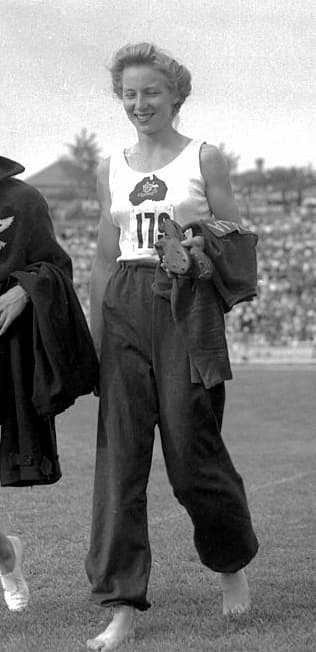
Australian · Sports · Activism
Shirley Strickland
July 18, 1925 – February 11, 2004
Early Life and Background
Shirley Strickland de la Hunty was born on July 18, 1925, in Guildford, Western Australia. Raised in a family with strong athletic and academic roots, Strickland was influenced by her father, Dave Strickland, who had been a talented runner and a mounted patrol officer. She excelled in academics and sports from an early age, attending Northam High School where she first displayed her athletic prowess.
Education and Early Career
After high school, Strickland pursued a degree in physics at the University of Western Australia, where she also participated in athletics. Her natural talent and dedication quickly became apparent as she broke into competitive athletics, marking the beginning of her promising career.
Career and Accomplishments
Strickland's Olympic career began at the 1948 London Games, where she secured a bronze medal in both the 100 meters and 80 meters hurdles. Her achievements continued in the 1952 Helsinki Games, where she won gold in the 80 meters hurdles and was part of the silver-winning 4x100 meters relay team.
Her most triumphant moment came during the 1956 Melbourne Games, on home soil, where she solidified her legacy by winning two more gold medals, in the 80 meters hurdles and the 4x100 meters relay, setting a world record in the latter.
Awards and Honors
Strickland was awarded the Member of the Order of the British Empire in 1957, recognizing her contributions to athletics. She was later made an Officer of the Order of Australia in 2001 for her services to the sport and as a role model.
Advocacy and Personal Life
Beyond her sporting life, Strickland was a fervent advocate for women in athletics, emphasizing the importance of fairness and equality in sports and education. She was married to Laurence de la Hunty, with whom she had four children, balancing her career and family life with grace and determination.
Legacy and Impact
Shirley Strickland's influence extended beyond her medals; she was a pioneering figure for women's participation in professional sports. Her legacy is enshrined in the annals of Australian athletics, celebrated for her breakthroughs during a period when female athletes faced numerous societal barriers.
Later Life and Death
After retiring from active competition, Strickland remained involved in sports administration and advocacy. She left a lasting impact through her contributions to various organizations centered on nurturing athletic talents and promoting women's sports. Shirley Strickland de la Hunty passed away on February 11, 2004, but her legacy endures, inspiring generations of athletes worldwide.
Dated achievements
3 indexed.
- Jul181925Science
Born in Guildford, Western Australia
Shirley Barbara Strickland (later de la Hunty) born on 18 July 1925 in Guildford, Western Australia.
View details Wikipedia: Shirley Strickland - Aug021948Science
Wins first Olympic medals at London 1948
At the 1948 London Olympics, Strickland won bronze in the 100m and 80m hurdles, and silver in the 4x100m relay.