← All women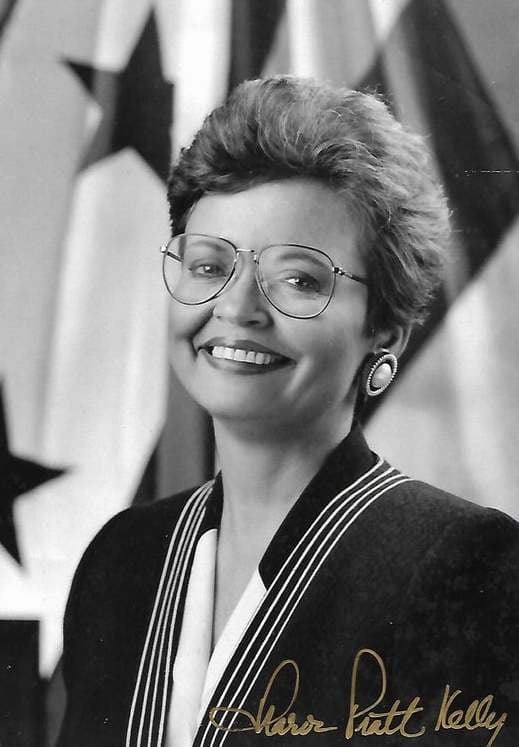
American · Politics · Law · Activism
Sharon Pratt
January 30, 1944 – present
Early Life and Family Background
Sharon Pratt (later known as Sharon Pratt Dixon and Sharon Pratt Kelly) was born on January 30, 1944, in Washington, D.C., into a family deeply rooted in the civic life of the nation’s capital.[1][2] She is a third‑generation Washingtonian, a fact that would later acquire symbolic importance when she became the first mayor of the District of Columbia born in the city since the mid‑19th century.[1][4] Her parents were Mildred Petticord and Carlisle Edward Pratt, a respected jurist who served as a judge on the District of Columbia Superior Court.[2][3] Pratt lost her mother before the age of five and was raised, along with her sister, primarily by her grandmother, in a household that combined strict expectations with a strong belief in education and public service.[3]
Growing up in segregated Washington during the 1940s and 1950s, Pratt experienced firsthand the contradictions of living in the nation’s capital without full voting representation in Congress or control over local affairs. Her father’s career in law and the judiciary profoundly influenced her, encouraging her to consider a similar path and to view legal training as a tool for civic improvement.[2][3] These formative experiences—early bereavement, exposure to legal institutions, and the political marginalization of D.C. residents—shaped her later commitments to justice, self‑governance, and ethical public administration.
Education and Formative Influences
Pratt attended Roosevelt High School in Washington, D.C., graduating in 1961.[2][11] She then enrolled at Howard University, one of the nation’s leading historically Black universities, where she studied political science.[2][11] Howard’s environment of Black intellectual life, civil rights activism, and debates over decolonization provided a crucial training ground. Pratt earned her B.S. in political science in 1965.[2] During her undergraduate years she was inducted into the National Political Science Honor Society and served as a Falk Fellow, focusing on issues of home rule and statehood for the District of Columbia.[11] These experiences deepened her understanding of constitutional structures and sharpened her interest in expanding democratic participation for D.C. residents.
Pratt continued at Howard University School of Law, earning her Juris Doctor (J.D.) in 1968.[2][11] Law school coincided with turbulent years of the civil rights movement, urban unrest, and nationwide debates over racial inequality, all of which left a mark on her political development. Her legal education equipped her with analytical skills that she would later apply in corporate practice, public policy, and municipal governance.
Early Career in Law, Teaching, and Policy
After law school, Pratt embarked on a diverse early career that combined legal work, public policy, and teaching. From 1970 to 1971, she worked as in‑house counsel for the Joint Center for Political Studies, a Washington‑based think tank that focused on expanding Black political participation and analyzing policy issues affecting African American communities.[2] In this role she gained experience in research, advocacy, and the legal dimensions of public policy.
From 1971 to 1976, Pratt was an associate at the law firm Pratt & Queen, P.C., where she practiced law and further developed her legal skills.[2] During this period she also began an important chapter in legal education: in 1972, she joined the faculty of the Antioch School of Law in Washington, D.C., serving as a professor until 1976.[2][11] Antioch’s law program was known for its emphasis on public interest law and experiential learning. Pratt’s teaching there connected her to a new generation of lawyers committed to social justice, and reinforced her reputation as a thoughtful legal educator and mentor.
In the early 1970s, reflecting her growing prominence, Speaker of the U.S. House of Representatives Thomas P. "Tip" O’Neill appointed Pratt as vice chairperson of the D.C. Law Revision Commission.[5] In that capacity she helped review and modernize the legal code governing the District, an essential step in updating outdated statutes and aligning local law with contemporary needs. Her work on the commission tied her more closely to the processes of law reform and the broader struggle for effective governance in Washington.
Corporate Career at PEPCO
In 1976, Pratt transitioned from academia and private practice to corporate law, becoming Associate General Counsel for the Potomac Electric Power Company (PEPCO), the main electric utility serving the region.[2][11] Her move into the utility sector marked the beginning of a significant corporate career in a field where few African American women held senior positions.
By 1979, Pratt had risen to vice president of consumer affairs, taking responsibility for customer relations and consumer issues at PEPCO.[6] In 1983, she was promoted to vice president for public policy, and multiple sources note that she was the company’s first African American woman vice president.[5][3][11] At the corporate level, Pratt became a central figure in navigating regulatory frameworks, community concerns, and strategic planning for the utility.
The combination of legal expertise, policy knowledge, and executive experience gained at PEPCO proved crucial for her later political career. She became, in the words of one profile, "the first woman elected an officer" at the company, a notable feat in a male‑dominated industry.[11] Her corporate leadership strengthened her credentials as a manager capable of overseeing large budgets and complex operations—skills highly relevant to municipal governance.
Rise in Democratic Party Leadership
Alongside her corporate career, Pratt steadily built influence within the Democratic Party. On January 3, 1977, she began serving as the Democratic National Committeewoman for the District of Columbia, a post she would hold through 1990.[1][2][5] In this role she represented D.C. within the Democratic National Committee (DNC), participating in party governance, platform discussions, and national electoral strategy.
Her party work culminated in a historic election on February 2, 1985, when she was chosen as treasurer of the DNC.[2][5] Pratt was both the first African American and the first woman to hold the treasurer’s post.[5][3] As treasurer, she oversaw finances, compliance, and fundraising during an era in which Democrats were seeking to rebuild after losses in presidential elections and to strengthen coalitions of urban, minority, and labor voters.
Pratt’s leadership within the DNC enhanced her national visibility and connected her to leading Democratic politicians. During the mid‑1980s she became known as an advocate for ethical standards and a critic of patronage and corruption, themes that later defined her mayoral campaign. Her party work also provided practical experience in budget oversight and institutional reform, which would prove invaluable when she confronted the fiscal and administrative challenges of governing Washington, D.C.
Early Political Ambitions in Washington, D.C.
Pratt’s first major foray into electoral politics came in 1982, when she participated in an effort to support Patricia Roberts Harris’s challenge to incumbent Mayor Marion Barry.[6] Although Harris’s campaign was unsuccessful, Pratt’s involvement positioned her among reform‑oriented Democrats critical of Barry’s administration and deepened her understanding of the city’s political landscape.
By 1988, Pratt announced that she would challenge Barry in the 1990 Washington, D.C., mayoral election, signaling her willingness to confront entrenched power structures in the capital.[2] At that time Barry’s administration faced mounting criticism for mismanagement, and the city struggled with high crime rates and fiscal stress. Barry’s subsequent arrest on drug‑related charges in 1990 dramatically altered the political environment, increasing demand for a candidate seen as untainted by corruption.
The 1990 Mayoral Campaign and Election
Pratt’s 1990 mayoral campaign was built around a powerful reform message. She argued that Washington needed more than cosmetic change, symbolizing her stance with a shovel—rather than a broom—on campaign materials and lapel pins, implying that corruption and mismanagement had to be dug out at the roots.[6] She ran as a candidate of integrity and competence, drawing on her reputation from PEPCO and the DNC.
On September 11, 1990, Pratt won the Democratic primary for mayor, defeating prominent rivals including D.C. Council Chair David Clarke and aligning herself with voters’ desire for a break from past politics.[1] Given the District’s overwhelming Democratic majority, this victory virtually guaranteed her success in the general election.
In the general election on November 6, 1990, Pratt was elected mayor of Washington, D.C., becoming the city’s first woman mayor and widely recognized as the first African American woman elected mayor of a major American city.[1][4][7][12][13] Her victory was a milestone in American urban politics and in women’s history. Commentators noted that an African American woman had not only managed a major urban campaign but won executive office in the nation’s capital itself.
Mayor of Washington, D.C. (1991–1995)
Pratt was inaugurated on January 2, 1991, becoming the first woman to serve as mayor of Washington, D.C. and the first African American woman to head the government of a major U.S. city.[1][6][5] She also became the first mayor born in the District since Richard Wallach assumed office in 1861.[1] Her inauguration came at a time when the District faced severe fiscal and administrative difficulties, including budget deficits, deteriorating public services, and strained relations with Congress.
Immediately after her election, Pratt asked for the resignation of all 170 political appointees from the outgoing administration, signaling that she intended to dismantle patronage networks and raise performance standards.[6] She pledged to stabilize the city’s finances, improve basic services, and rebuild public trust. Her administration sought to implement cost‑cutting measures and managerial reforms. However, these changes often proved unpopular, particularly when they affected city workers or visible municipal programs.
Pratt’s term coincided with continuing debates over D.C. statehood and home rule. She advocated for a stronger voice for District residents in national decision‑making and brought attention to the structural disadvantages faced by a city whose budget and laws remained subject to congressional oversight. Her efforts to reform the bureaucracy faced resistance from entrenched interests and were complicated by the city’s limited revenue base and legal constraints.
By the mid‑1990s, Pratt’s reform agenda, combined with the lingering effects of the city’s fiscal problems, eroded her political standing. In the 1994 mayoral election, she lost her bid for re‑election to former mayor Marion Barry, who returned to office in early 1995.[1][2] Pratt’s term officially ended on January 2, 1995.[1] Although she served only one term, she remained a historic figure as the first woman and first African American woman to lead Washington, D.C.
Honors, Recognition, and Public Roles
Pratt’s achievements have been recognized in various biographical and historical works. Britannica describes her as a "political activist" and the "first African American woman to head the government of a major city," summarizing her significance in U.S. political history.[6] She has been profiled by The HistoryMakers, which documents her contributions in law, corporate leadership, and electoral politics, and highlights her work as a trailblazer for African American women.[2]
Her tenure as DNC treasurer and as mayor brought numerous speaking invitations, media appearances, and opportunities to serve on boards and commissions. She has appeared in C‑SPAN coverage dating back to her time as DNC treasurer in 1985 and extensively during her mayoralty, reflecting her role as a national voice on urban policy and governance.[10]
Later Career and Consulting
After leaving the mayor’s office, Pratt remained active in business and public affairs. From 1997 to 2001, she served as president of @ The Center, described as a start‑up electrical marketplace focused on Africa, which aimed to support economic development through energy and infrastructure initiatives.[2] In 2002, she founded Pratt Consulting, a firm specializing in strategic planning around homeland security and emergency management for governmental and corporate clients.[2][7]
Pratt has also held executive roles in private enterprises, including serving as Executive Vice President for BI Solutions, and has continued to speak and write about governance, security, and the empowerment of African American communities.[2] In more recent years, she became the Founding Director of the Institute of Politics, Policy and History (IPPH) at the University of the District of Columbia, a role highlighted in public interviews and lectures.[8][11] Through IPPH, she works to connect academic research with practical politics and to illuminate the history of D.C. governance for new generations.
Personal Life
Pratt’s personal life has also intersected with her public career. While an undergraduate at Howard University, she met Arrington DixonAimee A. Dixon and Drew Williams.[2][7] She gave birth to her first daughter in 1968, the same year she completed law school.[3] Dixon became a prominent D.C. politician, serving on the City Council, and the couple’s shared involvement in local politics further tied Pratt to the city’s political fabric.
Shortly after her election as mayor, Pratt married David Kelly, adopting the name Sharon Pratt Kelly in official contexts.[5][7] This marriage ended in divorce in 1999.[7] The HistoryMakers notes that Pratt is divorced and has two children, and that she is also a grandmother.[2] Her family relationships, including her role as a mother and grandmother, are frequently mentioned in biographical sketches as part of the broader narrative of a woman balancing public service with personal responsibilities.
Legacy and Historical Impact
Sharon Pratt’s legacy is defined by a series of "firsts" that mark her as a pioneering figure in both political and corporate arenas. She was the first African American woman vice president at PEPCO, breaking gender and racial barriers in a major utility company.[5][3][11] She became the first African American and first woman treasurer of the Democratic National Committee, placing a Black woman at the heart of national party finance and strategy.[5][2] Most notably, she was the first woman mayor of Washington, D.C. and is widely recognized as the first African American woman elected mayor of a major American city.[1][4][6][7][13]
Her 1990 election and 1991 inauguration altered national perceptions of who could lead major urban jurisdictions and set a precedent for subsequent Black women mayors in cities across the United States. At the same time, her tenure highlighted the profound structural challenges faced by D.C. and by reform‑oriented leaders confronting entrenched patronage systems and fiscal crises.
Beyond the symbolism of her "firsts," Pratt’s career underscores the importance of legal training, corporate experience, and party involvement as pathways to executive political office. She leveraged her work at PEPCO, her years in the DNC, and her early legal and educational roles to construct a unique profile as a reform‑minded leader. Her post‑mayoral work in consulting and at the University of the District of Columbia continues this trajectory, emphasizing the connection between governance, security, and historical awareness.
In the broader context of women’s history, Pratt stands as a key figure in the expansion of Black women’s political and corporate leadership during the late 20th century. Her story is frequently cited in educational materials, biographical dictionaries, and media features as an example of resilience, determination, and barrier‑breaking achievement.[3][7][12]
Later Life and Ongoing Contributions
As of the mid‑2020s, Sharon Pratt remains alive and active in public discourse. Biographical sources and interviews highlight her continuing role as a commentator on politics and policy, particularly regarding urban governance, homeland security, and the historical struggles of Washington, D.C. for self‑government.[2][8][11] Her work at the Institute of Politics, Policy and History at the University of the District of Columbia aims to cultivate informed leadership and to preserve the stories of D.C.’s political past for new generations.
While she no longer holds elective office, Pratt’s experiences as mayor, party leader, corporate executive, and educator continue to inform debates about the challenges facing cities, the importance of ethical leadership, and the potential of Black women to shape public policy at the highest levels. Her life and career remain subjects of scholarly and popular interest, ensuring that her contributions to women’s history and to the political history of the District of Columbia are not forgotten.
Dated achievements
8 indexed.
- Jan301944Politics
Birth of Sharon Pratt in Washington, D.C.
Birth of Sharon Pratt, future mayor of Washington, D.C., in Washington, D.C.
View details Sharon Pratt - Wikipedia - Jan031977Politics
Starts tenure as DNC Committeewoman for the District of Columbia
Sharon Pratt begins service as Democratic National Committeewoman for the District of Columbia.