← All women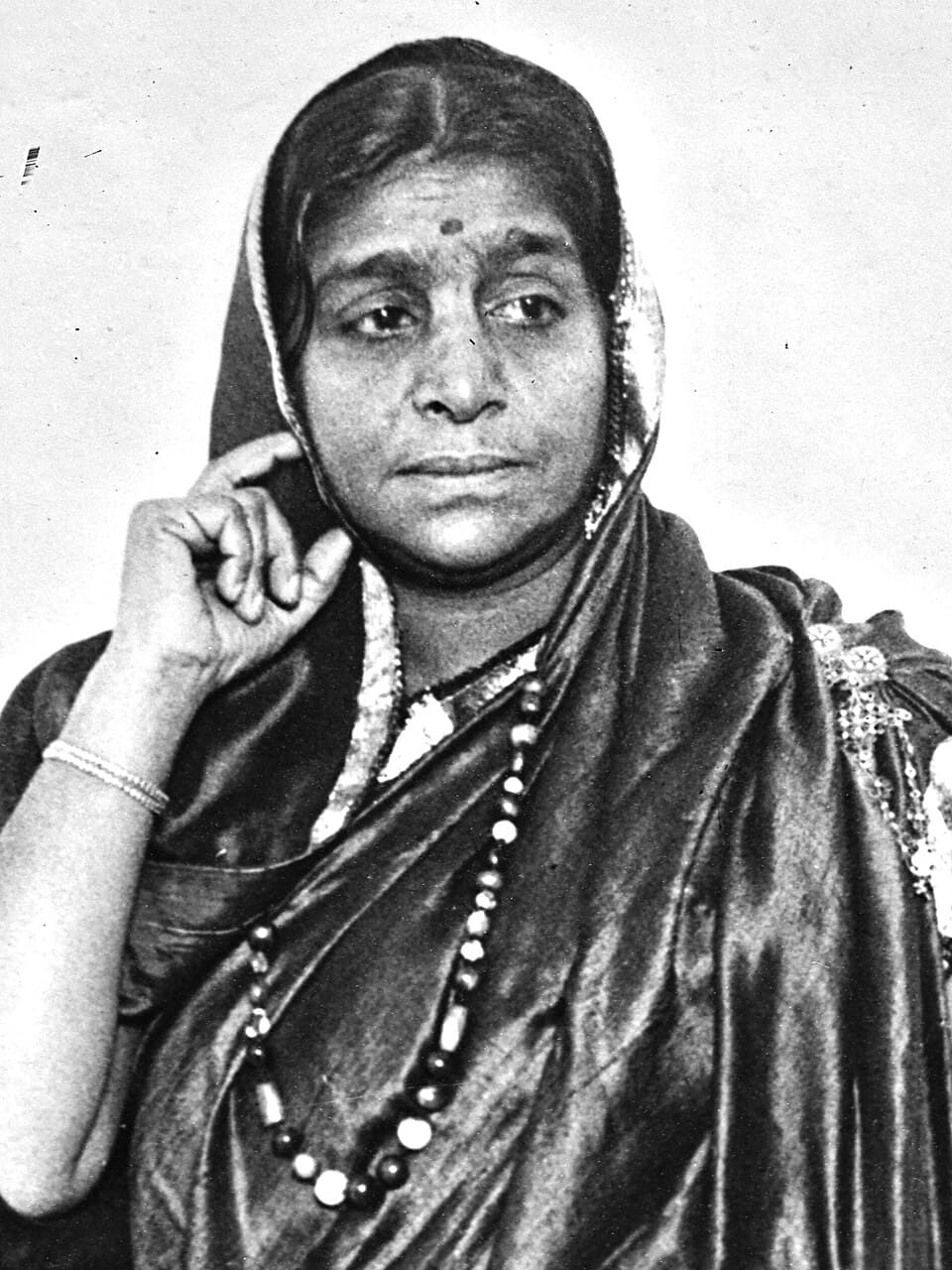
Indian · Politics · Literature · Activism
Sarojini Naidu
February 13, 1879 – March 2, 1949
Introduction
Sarojini Naidu (née Sarojini Chattopadhyay; 13 February 1879 – 2 March 1949) was an Indian poet, political activist, feminist, and one of the most prominent women leaders of the Indian independence movement.[1][2][11] Celebrated by Mahatma Gandhi as the “Nightingale of India” for the lyrical quality of her poetry,[2][7] she became the first Indian woman president of the Indian National Congress and the first woman governor of an Indian state after independence.[1][2] Her life linked English‑language poetry with mass politics, women’s rights advocacy, and the creation of the modern Indian republic.
Early Life and Background
Naidu was born on 13 February 1879 in Hyderabad, then a princely state under indirect British rule.[1][2][4] She was the eldest of eight children in an intellectually distinguished Bengali family that had settled in the Deccan. Her father, Dr. Aghorenath Chattopadhyaya, was a scientist, linguist, and educationist who served as principal of Nizam’s College in Hyderabad and was associated with the reformist Brahmo Samaj.[4][11] Her mother, Varada Sundari Devi, wrote devotional and lyrical poetry in Bengali.[4][11] This combination of scientific rationalism and literary sensibility deeply shaped Sarojini’s development.
From an early age she showed exceptional academic ability and literary talent. She is reported to have passed the matriculation examination of the University of Madras at around twelve, an unusual achievement for an Indian girl in the late nineteenth century.[6][11] She began writing poetry in English as a teenager, drawing on Indian themes, myths, and landscapes, and was encouraged by family friends and mentors who recognized her promise.[1][11] Growing up amid discussions of social reform, nationalism, and women’s education, she absorbed ideas that would later underpin her political work.
Education in India and England
Naidu initially studied at the University of Madras, but her father’s position and her own academic brilliance opened further opportunities.[6][13] She obtained a scholarship from the Nizam of Hyderabad that allowed her to pursue higher studies in Britain in the 1890s.[6][8] She enrolled at King’s College, London, and later at Girton College, Cambridge, one of the first residential colleges for women at Cambridge University.[6][8]
Her years in England broadened her intellectual horizons. She encountered the British suffrage movement and European literary circles, interacted with English writers and intellectuals, and refined her poetic craft in dialogue with both Romantic and late Victorian traditions.[8] At the same time, distance from India intensified her emotional identification with the subcontinent; many of her poems from this period evoke longing for home, Indian landscapes, and cultural motifs.[1][7]
Exposure to suffragists and to anti‑imperialist currents in London and Cambridge helped crystallize her commitment to women’s rights and self‑government for India.[8] This fusion of literary training, political awakening, and cross‑cultural experience proved foundational for her later role as a cosmopolitan yet deeply rooted Indian nationalist.
Marriage and Personal Life
In December 1898, Sarojini married Dr. Govindurajulu Naidu, a South Indian physician from Andhra Pradesh, in what is widely described as a love match that crossed conventional caste and regional boundaries.[11] The marriage, which required the consent of her relatively liberal family, reflected the reformist ethos of the Brahmo Samaj as well as Sarojini’s own willingness to defy social expectations.
The couple settled initially in Hyderabad, where Govindurajulu practiced medicine. They had four children: Jayasurya, Padmaja, Ranadheera, and Lilamani.[11] Their daughter Padmaja Naidu later became a prominent Congress politician and served as governor of West Bengal, extending the family’s political legacy.[11]
Naidu’s personal life blended domestic responsibilities with increasing public commitments. She frequently traveled for speeches, organizing work, and political conferences, yet maintained close emotional ties with her husband and children through letters and visits. Contemporary accounts often note her warmth, humor, and ability to move seamlessly between the roles of poet, mother, orator, and political strategist.[11]
Literary Career and Major Works
Before she became a household name as a nationalist leader, Naidu gained recognition as a poet. She wrote in English but drew extensively on Indian imagery, folklore, and everyday Indian life, helping to shape the emerging canon of Indian English literature.[1][7] Her poetry was praised for its musicality, vivid color, and romantic sensibility, leading contemporaries to associate her with the image of the “Nightingale.”
Her first major collection, The Golden Threshold, was published in London in 1905, with an introduction by the Irish poet Edmund Gosse, who had mentored and championed her work.[1][17] The volume includes some of her best‑known lyrics, such as “Indian Weavers,” “Palanquin Bearers,” and “The Bangle Sellers,” which portray ordinary Indian occupations and rituals with a blend of lyricism and social observation. The book established her as a leading Indian woman poet writing in English and attracted attention in both India and Britain.
In 1912, she published The Bird of Time: Songs of Life, Death and the Spring, further consolidating her reputation.[7] This collection reflects a maturing poetic voice, intertwining love, mortality, and patriotic feeling. A later volume, The Broken Wing: Songs of Love, Death and Destiny, followed in 1917.[7] Across these works, Naidu experimented with forms and meters, but consistently emphasized melody and emotional intensity.
Although her poetic output diminished as her political responsibilities grew, her earlier work continued to circulate widely. Her poetry became part of school curricula and nationalist cultural life, offering an aesthetic counterpart to the political project of imagining an independent India. Scholars have noted that Naidu’s poems helped legitimize English as a medium for expressing Indian identity, long before postcolonial literary theory provided a framework for such endeavors.[1][7][20]
Entry into Nationalist Politics
Naidu’s transition from poet to full‑time political activist began in the first decade of the twentieth century. She joined the Indian National Congress around 1904 and started using her oratorical gifts in the service of the swadeshi (self‑reliance) and home rule movements.[7] Traveling extensively across India, she delivered speeches that combined poetic rhetoric with sharp critiques of colonial rule and calls for Hindu‑Muslim unity.
By 1911, she was also deeply involved in public service, including flood relief and assistance during a plague epidemic in Hyderabad; a contemporary biography notes that she received the Kaiser‑i‑Hind medal in recognition of these efforts, though the exact date of conferment is unclear.[17] Her relief work reinforced her belief that political freedom had to be accompanied by social reform and public welfare.
Naidu quickly emerged as a popular platform speaker in Congress sessions and provincial meetings. Her political apprenticeship brought her into close contact with major nationalist figures, including Gopal Krishna Gokhale, Mohandas K. Gandhi, and Jawaharlal Nehru, who valued her ability to mobilize audiences, especially women.[1][11]
Women’s Rights and the Women’s Indian Association
A committed feminist, Naidu believed that national liberation and women’s emancipation were inseparable. In 1917Women’s Indian Association (WIA) along with Annie Besant and Muthulakshmi Reddy, creating one of the earliest and most influential organizations dedicated to women’s rights in India.[3][17] The WIA campaigned for women’s suffrage, education, and legal reforms, and provided a platform for women to speak on public issues.
That same year she was part of a women’s delegation that met the Secretary of State for India, Edwin Montagu, and the Viceroy, Lord Chelmsford, in London to demand voting rights for Indian women.[3][17] In these meetings she argued that denying women the franchise contradicted both justice and the professed civilizing mission of British rule. Her advocacy contributed to the gradual, albeit limited, extension of political rights to Indian women in subsequent constitutional reforms.
Naidu also worked with and inspired contemporaries such as Kamaladevi Chattopadhyay and Margaret Cousins, encouraging women to enter public life, challenge purdah, and oppose practices such as child marriage and dowry.[3][11] Her speeches linked women’s liberation to broader democratic and anti‑imperialist principles.
Leadership in the Indian National Congress
Naidu’s stature within the Congress grew steadily. She supported Gandhi’s Non‑Cooperation Movement (1920–22), urging Indians to boycott British institutions, titles, and goods.[1][16] She was jailed more than once for her participation in civil disobedience campaigns, which enhanced her moral authority among Congress rank and file.[1][10]
In 1925, she achieved a historic milestone when she was elected President of the Indian National Congress at its session in Kanpur.[1][2] She was the first Indian woman to hold this office; Annie Besant, a British theosophist and Home Rule League leader, had been the first woman president in 1917, but not an Indian citizen.[1][5][8] Naidu’s elevation to the presidency signaled both recognition of her personal contributions and a wider, though still limited, acceptance of women in top political leadership.
As Congress president and senior leader, Naidu focused on building unity across religious and regional lines, defending civil liberties, and articulating a vision of swaraj (self‑rule) grounded in non‑violence and social justice. Her speeches often framed independence not merely as a transfer of power but as a moral and cultural regeneration of India.[1][11]
Salt Satyagraha and Civil Disobedience
Naidu played a conspicuous role in Gandhi’s Salt Satyagraha of 1930, which challenged the British monopoly on salt production and taxation. She is frequently credited with helping persuade Gandhi to allow women to participate fully in the campaign, arguing that women’s involvement would deepen its moral force and mass character.[2][19]
When Gandhi was arrested during the movement, Naidu often stepped into leadership roles, addressing gatherings, inspiring volunteers, and facing arrest herself.[1][10] She was detained during the civil disobedience campaigns, enduring imprisonment under harsh colonial regulations. Her participation underscored the centrality of women to the Gandhian phase of the freedom struggle and provided a model for thousands of Indian women who joined marches, picketed liquor and foreign cloth shops, and courted arrest.
International Representation and Constitutional Negotiations
Naidu also represented Indian interests in international forums. In 1931 she accompanied Gandhi as part of the official Indian National Congress delegation to the Second Round Table Conference in London, convened to discuss constitutional reforms for India.[7][19] There she spoke not only about political self‑government but also about women’s rights and communal harmony.
Her presence at such negotiations highlighted the fact that Indian nationalism included women’s voices at high levels, even though most formal political rights were still restricted. Naidu’s speeches abroad often combined poetic metaphors with precise political demands, helping shape international perceptions of the Indian freedom movement.[7][19]
Work for Women’s Education and Social Reform
Beyond constitutional politics, Naidu was active in organizations devoted to women’s education and social reform. In 1930 she served as the fourth president of the All India Women’s Conference (AIWC), an umbrella body founded in 1927 to coordinate efforts for women’s education and legal reform.[3] Under her leadership, the AIWC campaigned against child marriage, dowry, and rigid purdah, while advocating expanded educational opportunities for girls and women.
She also played a pivotal role in the establishment of Lady Irwin College for Women in Delhi in 1933, an institution focused on home science and higher education for women.[17] The college became an important site for training women in scientific and professional fields, aligning with Naidu’s belief that political rights needed to be underpinned by educational and economic empowerment.
Throughout the 1930s and 1940s, she continued to speak at women’s conferences, universities, and public meetings, linking issues such as health, education, and economic independence to the broader project of nation‑building.[3][11]
Awards, Honours, and Public Recognition
Naidu’s contributions were recognized in various ways during her lifetime. Early in her career she was reportedly awarded the Kaiser‑i‑Hind medal for public service, particularly her work in plague and flood relief and her lectures on social and national progress, although detailed documentation of the exact date is sparse.[17]
Her literary achievements were honored through the patronage of prominent English writers and the sustained popularity of her books on both sides of the imperial divide.[1][7] Gandhi’s affectionate epithet “Nightingale of India” became part of her public identity, reflecting the intertwining of her poetic and political reputations.[2]
The most consequential formal recognition came in the realm of office: her election as Congress president in 1925 and, later, her appointment as Governor of the United Provinces on 15 August 1947, which made her the first woman governor of an Indian state and the first woman to hold gubernatorial office in independent India.[1][2][5] These posts were both honors and platforms from which she continued to influence policy and public opinion.
Role in the Final Phase of the Freedom Struggle
During the 1940s, Naidu remained closely associated with Gandhi and the Congress leadership. She participated in campaigns against wartime repression and supported the Quit India Movement of 1942, although advancing age and ill health limited her direct involvement compared with earlier decades.[1][11]
As independence drew nearer, she advocated for communal harmony amid rising Hindu‑Muslim tensions and the violence that accompanied Partition. Her speeches stressed the need for mutual respect, non‑violence, and constitutional democracy as the basis for a stable future India.[1][11]
Her reputation as a freedom fighter, feminist, and skilled orator made her a natural choice for high office in the new polity. On the day of independence, 15 August 1947, she was appointed Governor of the United Provinces (Uttar Pradesh), a post she held until her death.[1][2]
Governor of the United Provinces and Later Life
As governor from 1947 to 1949, Naidu occupied a largely constitutional and ceremonial office, but she used the position to promote her long‑standing causes. She encouraged educational initiatives, particularly for women, supported efforts to rehabilitate refugees from Partition, and continued to speak out on issues of civil rights and social justice.[1][9]
Witnesses of the period note that she brought a distinct personal style to Raj Bhavan, mixing formal duties with poetry recitations, informal conversations with visitors, and public appearances that underscored the symbolic importance of a woman occupying such a high office in a newly independent nation.[1][9] Despite declining health, she traveled within the province and maintained a demanding schedule.
Naidu died in office in Lucknow on 2 March 1949, reportedly after a heart attack or related cardiac complications.[1][2][12] She was 70 years old.[1][2] Her death prompted an outpouring of tributes from political colleagues, women’s organizations, and literary figures, who emphasized both her role in the freedom struggle and her contributions to Indian letters.
Legacy and Historical Impact
Sarojini Naidu’s legacy spans literature, politics, and women’s history. As a poet, she helped inaugurate a tradition of Indian English lyric poetry that drew deeply on indigenous themes, contributing to a cultural nationalism that paralleled political demands for self‑rule.[1][7] Her poems remain widely anthologized and are studied for their blend of romanticism, nationalism, and gendered perspectives on everyday life.
Politically, she stands out as one of the earliest and most visible women leaders of the Indian National Congress and the Gandhian mass movements. Her election as the first Indian woman president of the Congress in 1925 and her service as India’s first woman state governor broke gender barriers in formal politics and provided precedents for later generations of women leaders.[1][2][5][8]
As a feminist and social reformer, Naidu helped institutionalize women’s activism through bodies such as the Women’s Indian Association and the All India Women’s Conference.[3][17] She championed women’s suffrage, education, and legal reforms, arguing that democracy and national freedom were incomplete without gender equality. Her efforts contributed to the gradual expansion of women’s political rights in colonial India and influenced debates during the framing of the Indian Constitution.[3][11]
Her life also illuminates the cosmopolitan dimensions of Indian nationalism. Educated in both India and Britain, conversant with Western and Indian literary canons, and active in international forums such as the Round Table Conference, she embodied a form of anticolonial modernity that combined global engagement with deep cultural rootedness.[7][8][19]
Historians and biographers frequently emphasize her charisma, wit, and capacity to move crowds with speeches that blended humor, moral exhortation, and poetic imagery.[1][11][16] She served as a bridge figure between elite nationalist leadership and wider publics, especially women, and between the world of letters and the arena of mass politics.
In contemporary India, Naidu is remembered through biographies, school textbooks, academic studies, and institutional commemorations. Her name is associated with universities, cultural centers, and awards, and her birthday is often marked in educational and civic contexts to highlight women’s contributions to the freedom struggle.[1][10][16] For scholars of women’s history, she remains a key figure in understanding how Indian women negotiated colonialism, nationalism, and patriarchy to claim space in both cultural and political spheres.
Assessment
Assessments of Sarojini Naidu’s work and career have evolved over time. Some literary critics have argued that her poetry, written within the conventions of late Victorian and early modern English verse, lacks the formal innovation of later Indian English poets; others contend that this criticism underestimates the constraints she faced and the pioneering nature of her achievement as a colonized woman writing in the colonizer’s language.[1][7][20]
In political history, earlier narratives sometimes relegated her to a symbolic role as the “poetess” of the movement, but more recent scholarship highlights the strategic intelligence and organizational labor underlying her public persona.[11][16] Her work in building women’s organizations, negotiating with colonial authorities, and sustaining mass mobilization across decades suggests a more substantial and complex political figure than stereotypes allow.
Overall, Sarojini Naidu stands as a pivotal figure in women’s and world history: a woman who used the power of language—poetic, rhetorical, and political—to challenge empire, reimagine gender roles, and help lay the foundations of independent India.
Dated achievements
3 indexed.
- Feb131879Politics
Birth of Sarojini Naidu
Born Sarojini Chattopadhyay in Hyderabad, this day marked the beginning of a significant life in literature and politics.
View details Sarojini Naidu - Wikipedia - Aug151947Politics
First woman governor of an Indian state
First woman governor of an Indian state, marking a major milestone for women in Indian politics on India’s Independence Day.