← All women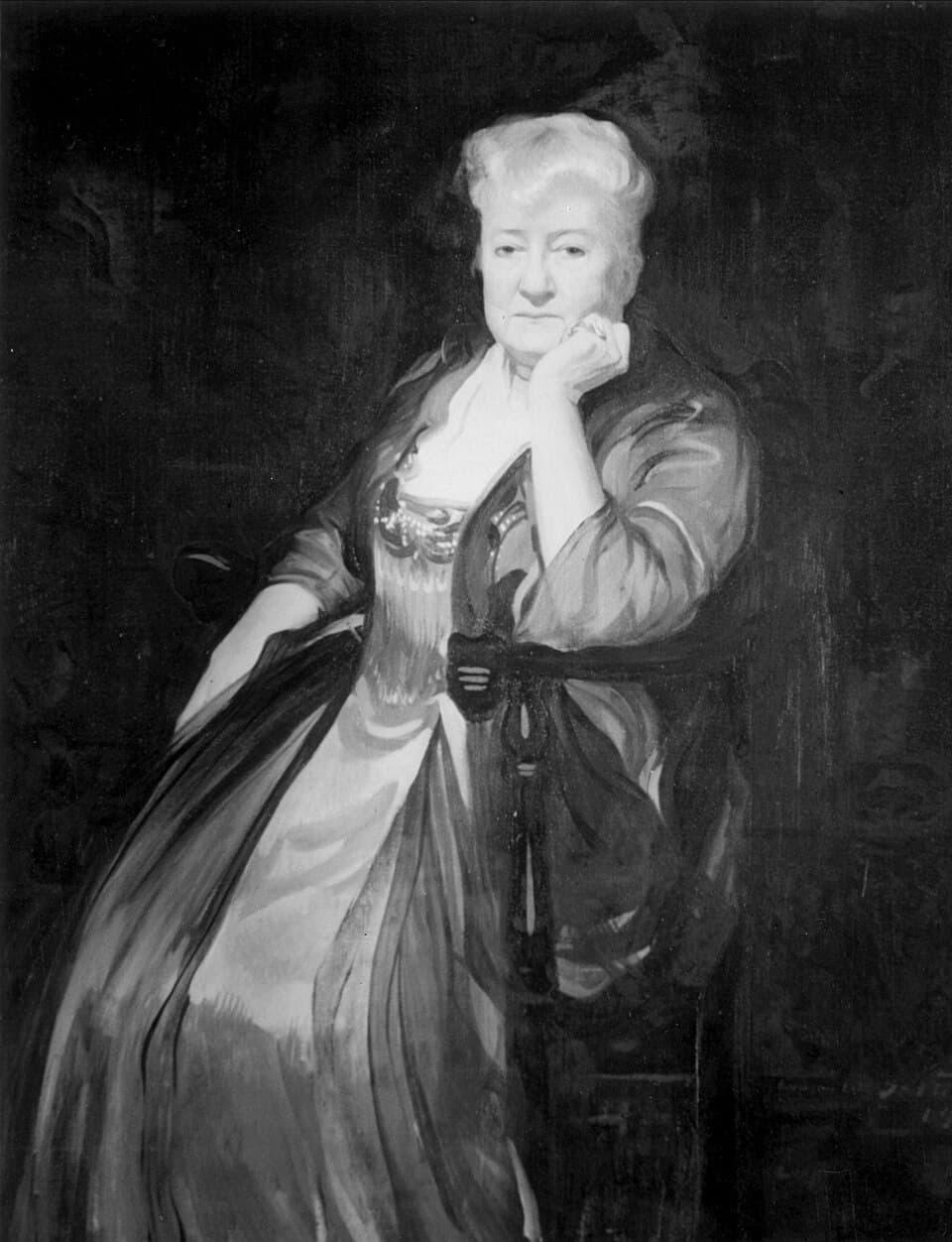
American · Science · Literature · Activism
Sarah Stevenson
February 12, 1847 – November 14, 1921
Early Life and Background
Sara Yorke Stevenson (née Yorke) was born on February 12, 1847, in Paris, France, to American parents. Her father, Edward Yorke, was an American merchant, and her family's international ties meant that Sara spent much of her childhood abroad. During the turbulent years of the French intervention in Mexico in the 1860s, her family relocated to Mexico City, where her father conducted business. This period exposed young Sara to political upheaval, war, and diplomacy at a formative age, and she later documented her experiences of Maximilian's short-lived empire in memoirs that offered a rare firsthand account of that period from an American perspective.
Her unconventional, cosmopolitan upbringing — spent largely in Europe and Latin America rather than the United States — distinguished her from most American women of her generation. She was fluent in French and developed a broad intellectual curiosity that spanned history, politics, and culture. This early exposure to diverse societies and to the machinations of empire building would later inform her scholarly interests in ancient civilizations and comparative archaeology.
Marriage and Move to Philadelphia
In 1870, Sara Yorke married Cornelius Stevenson, a lawyer, and the couple settled in Philadelphia, Pennsylvania. Their marriage placed her within the social and intellectual circles of one of America's leading cities, home to the University of Pennsylvania and a growing community of scholars, collectors, and civic reformers. Philadelphia in the late nineteenth century was experiencing a surge of interest in archaeology and ancient history, spurred by the broader Victorian fascination with Egyptology and classical antiquity following high-profile excavations abroad.
Rather than confining herself to the domestic sphere expected of women of her class, Sara Yorke Stevenson used her position to pursue serious intellectual and scholarly work, an unusual and often difficult path for a woman in this era, when women were largely excluded from universities, learned societies, and professional scientific work.
Career Beginnings: Archaeology and Museum Work
Stevenson's scholarly career began in earnest in the 1880s when she became involved with the newly forming archaeology and Egyptology programs at the University of Pennsylvania. She was instrumental in the founding of the Department of Archaeology and Palaeontology at the university, which would evolve into the University of Pennsylvania Museum of Archaeology and Anthropology (commonly known today as the Penn Museum).
In 1890, she was appointed curator of the Egyptian and Mediterranean Section of the museum, becoming the first woman to hold such a curatorial position in American archaeology at a major institution. This was a landmark achievement: at the time, women were almost universally excluded from professional academic and scientific posts, and Stevenson's appointment represented a significant crack in that barrier. She organized, catalogued, and expanded the museum's growing collection of Egyptian antiquities, working closely with archaeologists conducting excavations in Egypt and the broader Mediterranean world.
Scholarly Contributions and the American Exploration Society
Stevenson was deeply engaged in the intellectual currents of her time regarding ancient Egypt, Nubia, and the broader ancient Near East. She wrote scholarly articles on Egyptian antiquities, ancient chronology, and archaeological methodology, publishing in academic journals and lecturing to learned societies — venues that were rarely open to women as authoritative voices.
She helped found the American Exploration Society, an organization dedicated to funding and organizing archaeological excavations, particularly in Egypt and Nubia, at a time when American institutions were seeking to establish their own presence in a field long dominated by British, French, and German expeditions. Her role in this organization helped position the University of Pennsylvania as a serious center for American archaeological fieldwork abroad, and she helped secure funding and support for expeditions that brought significant collections of antiquities back to Philadelphia.
Stevenson was also a founding member and active participant in numerous learned and civic societies. She served as president of the Philadelphia branch of the Association of Collegiate Alumnae and was deeply involved in early efforts to promote higher education and professional opportunities for women. She was a founder of the Civic Club of Philadelphia, an organization dedicated to municipal reform, and she used her scholarly reputation to advocate for expanded roles for women in education, civic life, and the professions.
Writings and Publications
In addition to her scholarly archaeological writings, Stevenson authored works reflecting on her personal history, including recollections of her time in Mexico during the era of Emperor Maximilian. Her memoirs and articles provide valuable historical testimony on the French intervention in Mexico from the perspective of an American civilian witness, and they remain cited by historians of that period.
She also contributed to popular and academic discourse on Egyptology, helping translate specialized archaeological knowledge for broader American audiences at a time when public interest in ancient Egypt was intensifying due to well-publicized excavations abroad, such as those associated with the Egypt Exploration Fund.
Recognition and Honors
Stevenson's contributions were recognized during her lifetime through her election to leadership positions in academic and civic organizations rarely open to women. She served as president of the Philadelphia Section of the Association for the Advancement of Women and held honorary positions with several archaeological and historical societies, both in the United States and abroad. Her expertise was sought after by fellow archaeologists and museum professionals, and she corresponded and collaborated with prominent Egyptologists of her day.
Her work at the University of Pennsylvania Museum helped establish standards for professional museum curation and collection management in the still-young field of American archaeology, and her role as a female pioneer in this domain has been increasingly recognized by historians of science and of women's history in subsequent decades.
Personal Life
Sara Yorke Stevenson was married to Cornelius Stevenson, a Philadelphia lawyer, with whom she shared a partnership that supported her scholarly ambitions — itself notable in an era when married women were often expected to subordinate personal and professional pursuits to domestic duties. The couple's social standing in Philadelphia afforded Sara access to the philanthropic and academic networks that enabled her unusual career.
Beyond her archaeological work, she remained active throughout her life in civic reform movements, women's education advocacy, and philanthropic endeavors, reflecting a holistic view of public service that combined scholarship with social action.
Legacy and Historical Impact
Sara Yorke Stevenson's legacy endures primarily through her foundational role in establishing the University of Pennsylvania Museum of Archaeology and Anthropology as a major center for the study and display of Egyptian and Mediterranean antiquities. As the first female curator at a major American archaeological museum, she opened pathways for future generations of women in archaeology, museum studies, and academic scholarship — fields that would remain heavily male-dominated for decades after her death.
Her advocacy for women's education and her leadership in civic organizations in Philadelphia also reflect a broader legacy as a reformer who used her scholarly authority to advance social causes. Today, historians of archaeology and of women in science regard her as an important early figure who demonstrated that rigorous scholarly work and institutional leadership were within women's capabilities, at a time when such claims were far from broadly accepted.
Death
Sara Yorke Stevenson died on November 14, 1921, in Philadelphia, Pennsylvania. Her death was mourned by the academic and civic communities she had served for decades, and her contributions to archaeology, museum science, and women's advancement continued to be cited long after her passing. The University of Pennsylvania Museum, which she helped build from its earliest days, remains a lasting monument to her pioneering career.
Dated achievements
2 indexed.
- Feb121847Science
Birth of Sara Yorke Stevenson
Sara Yorke Stevenson was born in Paris, France, to American parents, later becoming a pioneering Egyptologist and archaeologist.
View details Sara Yorke Stevenson - Wikipedia - Nov141921Science
Death of Sara Yorke Stevenson
Sara Yorke Stevenson, pioneering Egyptologist and museum curator, died on November 14, 1921, in Philadelphia.