← All women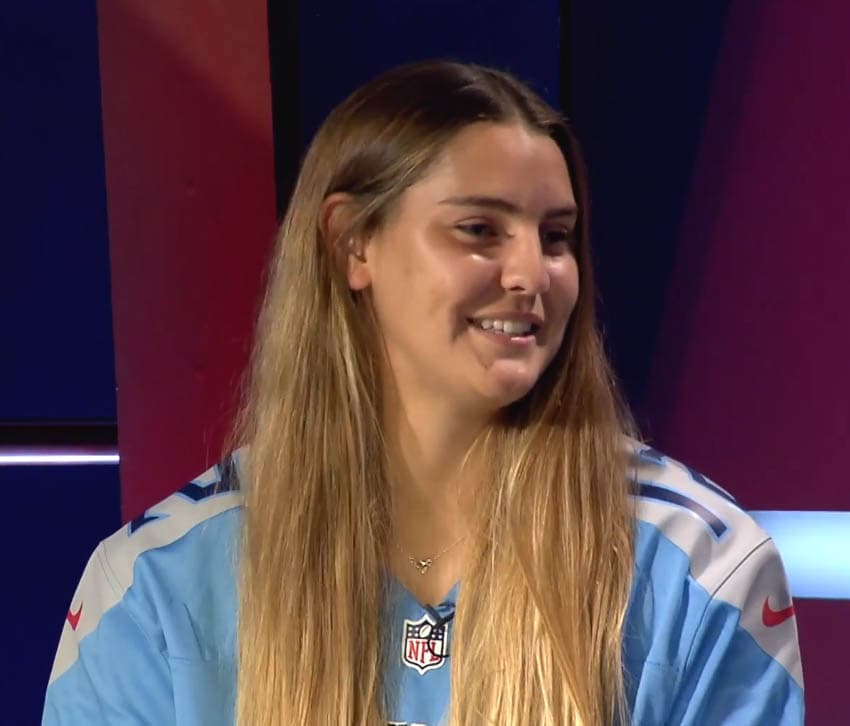
American · Sports
Sarah Fuller
June 20, 1999 – present
Early life and background
Sarah Jessica Fuller was born on June 20, 1999, in Wylie, Texas. She grew up in an era when girls’ and women’s athletics had far more institutional support than in earlier generations, yet elite opportunities in many sports were still shaped by strong gendered expectations. Fuller’s athletic development would eventually lead her to Vanderbilt University, where she became known primarily as a soccer goalkeeper before crossing into college football in one of the most widely discussed gender barrier moments in recent NCAA history.
Publicly available sources identify her as a Texas native and describe her as a former soccer player who came to Vanderbilt through women’s soccer. Her background in goalkeeping mattered because the position demands coordination, composure, and leg strength — skills that would later help her when she was asked to serve as a football kicker. By the fall of 2020, she was a fifth-year collegiate athlete with a championship-caliber résumé, not a newcomer or publicity addition.
Although less is publicly documented about her family life than about her athletic milestones, the available record shows a young athlete whose path was shaped by dedication to soccer and by the opportunities of Division I college sports. Her emergence as a nationally known figure came quickly, but it built on years of training and competition.
College soccer career
Fuller competed for the Vanderbilt Commodores as a goalkeeper. In 2020, she played a central role in Vanderbilt’s women’s soccer success, helping the team win the SEC women’s soccer tournament championship on November 22, 2020, which secured the conference’s automatic berth in the NCAA tournament. That championship was significant both as an athletic accomplishment in its own right and as the immediate prelude to her historic football appearances later that month.
The 2020 season took place under the disruptions of the COVID-19 pandemic, which altered schedules, training routines, and competitive conditions across college sports. Fuller’s ability to contribute to a championship team in that context reflected adaptability and consistency. Vanderbilt and NCAA coverage later emphasized that she was already an SEC champion before entering college football history, a fact that is essential to understanding her public profile.
Her role in goal showed that she was a serious high-level athlete long before national attention focused on her football debut. This background is important because it prevents her story from being reduced to a single symbolic moment. She was part of a winning team and had earned a place in major-conference college athletics through performance, not novelty.
Historic college football firsts
On November 28, 2020, Vanderbilt used Fuller as a kicker against Missouri, and she executed the second-half kickoff. That play made her the first woman to play in a Southeastern Conference football game and the first woman to play for a Power Five program. NCAA and Vanderbilt coverage also described her as the first female student-athlete to appear in a major-conference college football game. These distinctions matter because they identify the scale of the barrier: this was not merely a school-specific novelty, but a breakthrough in one of the most tradition-laden arenas in American sport.
Two weeks later, on December 12, 2020, Fuller kicked two extra points against Tennessee, becoming the first woman to score in a Power Five football game and the first woman to score points on a Division I FBS team from a Power Five conference. The scoring milestone carried even more historical weight than the kickoff because it placed Fuller in the official scoring record of a major-conference football game. It also confirmed that her participation was not merely ceremonial. She had contributed points on the scoreboard, a threshold that made the barrier-breaking nature of her appearance unmistakable.
Her football appearances occurred in a context of emergency roster needs, media attention, and national curiosity. Yet the significance of the moment exceeded the immediate circumstances. Fuller’s role challenged long-standing assumptions about who can appear and contribute in elite college football. The moment was widely reported by Vanderbilt, the NCAA, and other outlets because it marked a visible opening in a sport that had long excluded women from on-field participation at the Power Five level.
National recognition and public role
Fuller’s football milestone quickly moved beyond sports pages and into broader public culture. On January 20, 2021, she appeared in televised inaugural programming and introduced Vice President Kamala Harris. Vanderbilt described the appearance as part of the official celebration recognizing Fuller’s historic role as the first woman to play and score in a Power Five football game. Her inclusion in the inauguration programming reflected how quickly her name had become shorthand for sports barrier-breaking and women’s visibility.
That recognition also demonstrated the symbolic reach of college sports in American life. Fuller’s football firsts resonated not only because they were statistically unprecedented, but because they became part of a wider story about representation. Her appearance alongside national inauguration events linked athletic history to civic history, showing how one young athlete’s breakthrough could be folded into larger narratives of inclusion.
After Vanderbilt
Public sources indicate that Fuller later moved beyond the specific role that made her famous at Vanderbilt and remained involved in athletics and professional pursuits. Her LinkedIn profile identifies her as Chief Athlete Officer @ NOCAP Sports, suggesting a transition into sports-related work after her collegiate career. Because the request is to focus on historically documented facts and the provided sources are strongest for her Vanderbilt years, the clearest verified narrative remains centered on her soccer championship, football firsts, and national recognition.
Her later career illustrates a common pattern for modern college athletes: public fame may be generated by a single landmark moment, but the athlete’s post-collegiate identity often develops in adjacent fields such as sports management, media, or advocacy. Fuller’s professional trajectory appears to reflect that broader trend, though the most authoritative historical material remains her collegiate record.
Personal life
Available sources in the research set do not provide a detailed public account of Fuller’s private family life, marital status, or children, and such details should not be inferred. What is firmly documented is her identity as a collegiate student-athlete from Texas who became a national figure through performance. In editorial terms, her public biography is defined more by her athletic accomplishments than by extensive personal disclosure.
Legacy and historical impact
Fuller’s legacy rests on two intertwined achievements: she was a championship goalkeeper for Vanderbilt, and she became the first woman to play and score in a Power Five college football game. Those milestones were historically significant because they altered expectations within a major American sport, especially at the conference level where football has long carried deep cultural and institutional prestige. Her appearances did not erase gender barriers in football, but they created highly visible proof that those barriers could be crossed.
The importance of her story also lies in its immediacy. Unlike many historic firsts that were recognized only in retrospect, Fuller’s appearances were understood as landmark events as they happened. Vanderbilt, the NCAA, and national media all framed them in terms of firsts and barriers. That contemporaneous recognition helped ensure that her place in sports history was recorded clearly and quickly.
For women’s history, Fuller’s story is a modern example of how individual athletic achievements can become broader cultural signals. She did not simply participate in a game; she helped widen the public imagination of who belongs on a football field at the highest levels of college sport. That makes her one of the most notable barrier-breaking athletes of her generation.
Dated achievements
7 indexed.
- Feb151836Medicine
Birth of educator Sarah Fuller
Birth of educator Sarah Fuller in Weston, Massachusetts, who would become a leading advocate of oral instruction for deaf children.
View details Britannica: Sarah Fuller - Aug011927Medicine
Death of educator Sarah Fuller
Death of educator Sarah Fuller in Newton Lower Falls, Massachusetts, after a long career in deaf education.