← All women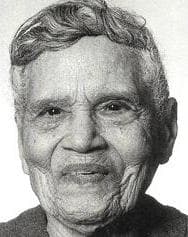
American · Literature · Activism
Sarah Delany
September 19, 1889 – January 25, 1999
Early Life and Family Background
Sarah Louise Delany, universally known by her family nickname "Sadie," was born on September 19, 1889, on the campus of St. Augustine's School in Raleigh, North Carolina. She was the second-oldest of ten children born to Henry Beard Delany and Nanny James Logan Delany. Her father, born enslaved in Georgia in 1858, rose to become the first African American bishop of the Episcopal Church elected by popular vote, a towering figure of Black religious leadership in the post-Reconstruction South. Her mother, Nanny, was of mixed-race heritage and served as the matron of St. Augustine's, an Episcopal school for freed Black Americans.
Growing up on the grounds of St. Augustine's gave Sadie and her siblings an unusually rich, if circumscribed, childhood. The campus functioned almost as a self-contained community, shielding the Delany children somewhat from the harshest realities of Jim Crow segregation while still instilling in them an acute awareness of the racial caste system that governed the American South. Bishop Delany and his wife emphasized education, moral discipline, religious faith, and racial pride, instilling in their ten children (nine of whom lived to adulthood) an ethic of achievement against the odds. All nine surviving Delany children went on to graduate from college and pursue professional careers—an extraordinary feat for a Black family in the segregated South of the late nineteenth and early twentieth centuries.
Education and Migration North
Sadie attended St. Augustine's School itself, receiving a teacher's certificate, and began teaching domestic science in North Carolina's rural Black schools as a young woman. Ambitious and determined to pursue higher education, she moved to New York City in the 1910s, joining the broader wave of African Americans relocating northward in what would become known as the Great Migration.
In New York, Sadie enrolled at Pratt Institute and later at Columbia University's Teachers College, where she earned both a bachelor's degree and a master's degree in education, specializing in domestic science (home economics). Her educational attainment was remarkable for a Black woman of her generation, at a time when access to higher education for African Americans, and especially Black women, was severely restricted by both racial and gender discrimination.
Career as an Educator
Sadie Delany's most historically significant professional achievement came when she became one of the first African American teachers permitted to teach domestic science in New York City's public high schools, breaking a significant racial barrier within the city's education system. She achieved this by cleverly and deliberately avoiding disclosing her race on her application paperwork—a strategy she and her family recounted later in life as an example of the subtle forms of resistance Black Americans employed to navigate discriminatory institutions. When school administrators discovered her race after she had already been hired, they were unable to easily dismiss her, and she went on to have a long, respected career as a New York City public school teacher, eventually teaching at a predominantly white school in Harlem and later elsewhere in the city.
She taught in the New York City public school system for decades, retiring in the 1960s. Throughout her career, she remained deeply committed to the ideals of education as a pathway to Black advancement that had been instilled in her by her parents.
Personal Life and Partnership with Bessie
Sadie never married and had no children, choosing instead a life of career and independence—itself a quietly radical choice for a woman of her era. She lived for most of her adult life with her younger sister, Annie Elizabeth "Bessie" Delany (1891–1995), who became one of the first Black female dentists licensed in New York State. The two sisters shared a home in the Bronx and later in Mount Vernon, New York, remaining inseparable companions for nearly a century. Their sibling bond, forged in childhood and sustained through the deaths of their parents and eight other siblings, became legendary in their later years.
The sisters were active in their community and church throughout their lives, and both lived through—and bore witness to—an extraordinary sweep of American history: from the era of Reconstruction and Jim Crow through both World Wars, the Great Depression, the civil rights movement, and into the late twentieth century.
Literary Fame: "Having Our Say"
Sadie and Bessie Delany achieved unexpected national fame in the early 1990s when journalist Amy Hill Hearth, who had interviewed them for a feature article in The New York Times, proposed turning their story into a book. The result, Having Our Say: The Delany Sisters' First 100 Years, was published in 1993 when Sadie was 103 and Bessie was 101. Structured as an oral history told in alternating first-person voices, the book chronicled the sisters' extraordinary lives, their family's history, and their observations on race, gender, and American society across a century of change.
Having Our Say became a surprise bestseller, spending many months on The New York Times Best Seller list and earning a nomination for the National Book Award for Nonfiction in 1993. Its success led to a Broadway theatrical adaptation in 1995, which was itself nominated for a Tony Award, and a 1999 CBS television film adaptation starring Diahann Carroll and Ruby Dee. The book has since become a staple in African American studies and oral history curricula, praised for its unique intergenerational perspective and its unvarnished portrayal of both racial discrimination and Black achievement in America.
Following the success of the joint memoir, the sisters published a follow-up, The Delany Sisters' Book of Everyday Wisdom (1994), offering reflections and life advice drawn from their century of experience.
Later Life, Bessie's Death, and Sadie's Solo Memoir
Bessie Delany died on September 25, 1995, at the age of 104, leaving Sadie to face life without her lifelong companion for the first time. In 1997, at the age of 107, Sadie published a solo memoir, On My Own at 107: Reflections on Life Without Bessie, co-written again with Amy Hill Hearth. The book reflected on grief, aging, faith, and the process of continuing to live fully and independently in extreme old age.
Sadie remained mentally sharp and socially engaged into her final years, giving interviews and public appearances that further cemented the sisters' status as beloved American elders and witnesses to history. Her reflections offered rare insight into the experience of extreme longevity and the emotional toll of outliving nearly everyone from one's early life.
Death and Legacy
Sarah "Sadie" Delany died on January 25, 1999, at her home in Mount Vernon, New York, at the age of 109. Her death was covered extensively in the national press, including a detailed obituary in The New York Times titled "Sadie Delany, Witness to a Century, Dies at 109."
The legacy of Sadie Delany, intertwined inseparably with that of her sister Bessie, endures as a landmark contribution to American oral history and African American literature. Having Our Say remains widely taught and read as a vivid, personal account of Black American life spanning from the immediate aftermath of slavery to the eve of the twenty-first century. The sisters' story illuminated the quiet but persistent forms of resistance, achievement, and dignity that generations of African Americans practiced in the face of systemic racism, and it gave voice to two women whose professional accomplishments—as an educator and a dentist, respectively—were themselves notable "firsts" often overshadowed by their later literary fame.
Sadie Delany's life, spanning three centuries of American history in living memory (born in the 19th century, dying at the cusp of the 21st), stands as a testament to resilience, the value of education, and the power of storytelling to preserve and transmit history across generations.
Dated achievements
3 indexed.
- Sep191889Literature
Sarah Louise Delany was born
Birth of Sarah Louise Delany on September 19, 1889.
View details Wikipedia - Sarah Louise Delany - Apr011920Science
Became first African American teacher in NYC public school
Sarah Delany became NYC's first African American high school teacher in 1920.
View details