← All women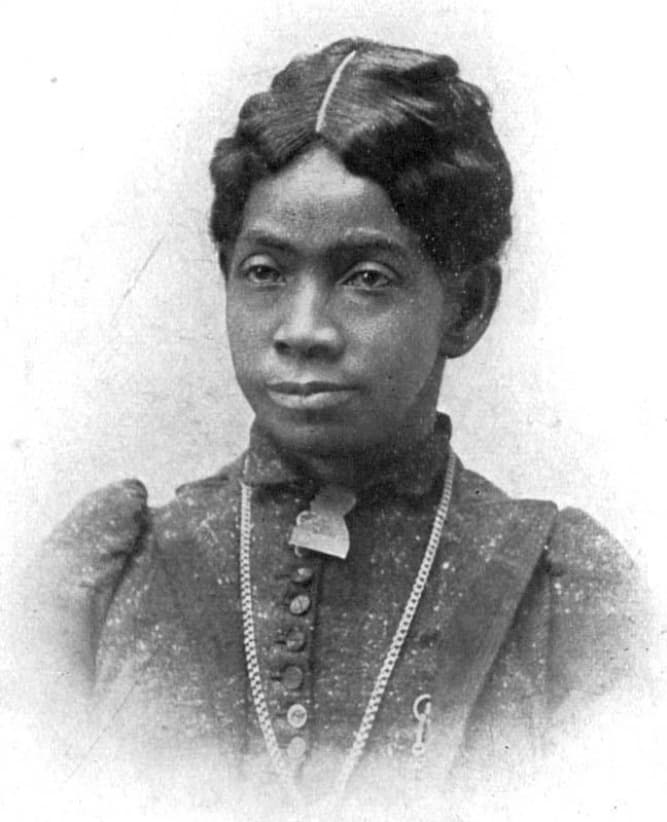
American · Science
Sarah Boone
1832 – 1904
Early Life and Background
Sarah Boone (née Sarah Marshall) was an African American inventor and dressmaker best known for patenting an important improvement to the ironing board in the late 19th century.[1][2] Most scholarly and reference sources give her life dates as c.1832–1904, noting that exact birth and death days have not been verified in primary records.[1][7]
Boone is widely described as having been born enslaved in Craven County, North Carolina, near New Bern.[2][7] As with many enslaved people, documentary records of her early life are sparse, and historians rely largely on later biographical accounts and local histories. These sources agree that she was born under slavery and that her birth name was Sarah Marshall, but they do not provide precise details of her parents, plantation, or childhood experiences.[2][7]
Accounts of Boone’s life emphasize that she had little formal education in her youth, a consequence of both enslavement and restrictive laws that forbade teaching enslaved people to read and write in much of the antebellum South.[2] Several modern narratives note that she learned to read and write as an adult, reportedly around age forty, though the exact year is not documented in primary sources.[2][10] This late acquisition of literacy underscores the substantial barriers she overcame before she could even contemplate preparing a patent application.
Boone’s early years thus unfolded at the intersection of slavery, racialized violence, and gendered restrictions that profoundly shaped the lives of African American women in the United States. Her later achievements as an inventor must be understood against this backdrop of limited rights, scarce educational opportunities, and the constant negotiation of domestic labor under oppressive conditions.
Marriage, Emancipation, and Move to New Haven
At some point in the mid‑19th century, Sarah Marshall married James Boonelate 1840s, often citing approximately 1847, but none provide specific month‑and‑day documentation.[7] After marriage she became known as Sarah Marshall Boone or simply Sarah Boone.
Details of Boone’s path from enslavement in North Carolina to freedom are not firmly documented. Some narratives suggest that she may have obtained her freedom before the Civil War through manumission, purchase, or escape, while others imply that she was emancipated as a result of the war and the Emancipation Proclamation.[2][7] However, there is no widely cited primary record specifying the mechanism or exact date of her emancipation, and serious historians treat these aspects of her biography cautiously.
By the 1860s–1870s, Boone and her family were documented as living in New Haven, Connecticut, where she established herself as a dressmaker.[2][7] This relocation from the South to the urban North fit broader patterns of African American migration during and after Reconstruction, as Black families sought improved economic opportunities and somewhat greater legal protections. In New Haven, Boone entered a growing Black community and a local economy that included both industrial manufacturing and domestic service.
New Haven’s environment likely offered Boone more possibility for economic independence than she had experienced in the South. Dressmaking was one of the few skilled occupations open to Black women, and it allowed her to cultivate specialized expertise in textiles, garment construction, and the finishing processes of pressing and ironing. These skills would eventually inform her inventive work.
Career Beginnings as a Dressmaker
By the late 19th century, Sarah Boone was working as a professional dressmaker in New Haven.[2][3] Dressmaking during this period required mastery of cutting, fitting, sewing, and finishing complex garments, particularly the structured bodices and tight sleeves that were fashionable for middle‑class women. Boone’s clientele would have included women wearing corsets, fitted jackets, and complex sleeve designs that were challenging to press without leaving creases.
Most ironing at the time was done on flat surfaces: a wooden table, a plank laid across chairs, or simple boards without dedicated supports.[3][4] While such arrangements could handle wide skirts, they were ill‑suited for the precise pressing required by narrow sleeves and curved waist seams. Dressmakers and laundresses often struggled to iron inside and outside seams smoothly, especially on tailored garments.
Boone’s work placed her in daily contact with these practical difficulties. As a Black woman in a segregated society, she likely faced not only the physical demands of the job but also economic marginalization, lower wages, and reduced access to formal credit or workshop infrastructure. Yet within this constrained setting, she developed the observational and technical insight that would lead her to redesign an everyday tool.
Her experience confirms the broader historical argument that domestic and textile labor have long been sites of innovation, even when that innovation was rarely recognized in formal scientific or engineering narratives. Boone’s eventual patent would emerge directly from the knowledge embedded in her dressmaking practice.
Invention of the Improved Ironing Board
Sometime in the late 1880s or very early 1890s, Boone conceived an improvement to the standard ironing board.[2][3] Rather than relying on a broad, flat board, she designed a device specifically adapted to the shapes of women’s garments. Her solution was a narrow, curved, reversible wooden board mounted on a hinged support that allowed the board to be raised or lowered and used from different angles.[1][2][7]
In her patent specification, Boone explained that her invention aimed to "produce a cheap, simple, convenient, and highly effective device, particularly adapted to be used in ironing the sleeves and bodies of ladies' garments."[2] Her design allowed a sleeve or bodice to be slipped over the board, which matched the garment’s curvature. Because the board could be reversed, the inside and outside seams could both be pressed without creating new creases.
Some secondary descriptions note that Boone’s board was also padded to prevent unwanted impressions from the wood and collapsible for easier storage, characteristics that align with features of later ironing boards inspired by her concept.[2][3][4] The hinge and support mechanism made it possible to adjust the height and position, further increasing its convenience.
This invention represented a significant functional improvement over existing boards and directly addressed a widespread problem in domestic work. It demonstrates Boone’s ability to abstract from daily dressmaking challenges to generalized mechanical design. Her insight reflects engineering thinking grounded in lived experience rather than formal training.
Patent Application and Grant
On July 23, 1891, Boone filed an application with the U.S. Patent Office for her improved ironing board.[1] The patent document lists her residence as New Haven, Connecticut and identifies her invention simply as an "ironing-board."[1] The application describes the board’s narrow, curved shape, reversible mounting, and movable support, detailing how these features made the device particularly useful for ironing sleeves and fitted waists.
Notably, Boone authored a clear, technically coherent specification in an era when she had only recently acquired literacy according to several biographical accounts.[2][10] Preparing a patent application required not just writing skills but also an understanding of how to explain mechanical improvements in the legalistic language of the patent office—skills seldom available to Black women with limited formal education.
After examination, the U.S. Patent Office granted Boone Patent No. 473,653 on April 26, 1892.[1][2][7] The granted patent confirms that her claims were deemed novel and useful within the context of many prior patents for ironing devices. Regional historians note that hundreds of ironing‑related patents had been issued before Boone’s, but hers addressed a specific and previously unmet need in pressing sleeves and curved waist seams.[7]
The granting of the patent formalized Boone’s status as an inventor and preserved her contribution in the official record of U.S. intellectual property. It also ensured that the technical details of her design would be accessible to later designers, manufacturers, and historians.
Recognition as One of the First Black Women Patent Holders
With the issuance of Patent No. 473,653 on April 26, 1892, Sarah Boone became the first Black woman in Connecticut known to receive a U.S. patent.[7] Connecticut historians emphasize this state‑level milestone in their discussions of local innovation, noting her contribution alongside other regional inventors.
Nationally, Boone is recognized as among the first African American women to receive a U.S. patent.[1][2][7] Different modern commentators disagree on her exact ranking—some identify her as the second, others as the fourth or fifth—but all agree that the overall number of known Black women patent holders in the 19th century is extremely small.[1][2][7][8] Because the enumeration is incomplete and subject to revision, careful historical treatments describe her more generally as one of the earliest Black women to secure patent protection in the United States.
This recognition carries profound significance. The patent system in the 19th century, though formally race‑neutral, was embedded in social structures that made it difficult for African Americans and women to participate. Illiteracy enforced under slavery, limited access to legal counsel, and the economic precarity of Black families all discouraged formal inventive claims. Boone’s success therefore stands as an emblem of resistance to systemic exclusion.
Her achievement has been highlighted by institutions such as the U.S. Patent and Trademark Office, the National Park Service, and state historical societies during Black History Month and in educational programming.[7][20] These commemorations emphasize both her technical innovation and the broader story of Black women’s contributions to American invention.
Commercialization and Use of the Invention
Although Boone’s ironing board is widely described as a prototype of the modern ironing board, historians note that there is little evidence she personally benefited from large‑scale commercialization of her design.[2][3][4] Patent records do not provide direct information on whether she licensed the invention or sold manufacturing rights, and no major manufacturer has been definitively linked to her patent.
Nonetheless, many subsequent ironing boards adopted core elements of her design: a narrow, curved board, often padded and attached to a collapsible support structure.[3][4][8] These features became standard in household ironing boards over the 20th century, especially as ready‑made clothing and fitted garments proliferated.
In domestic contexts, Boone’s innovation helped make ironing sleeves, bodices, and other complex shapes more efficient and precise. For dressmakers and laundresses, it reduced the labor required to achieve smooth seams and polished finishes. In this way, her invention contributed both to the aesthetics of clothing and to the working conditions of women engaged in textile and domestic labor.
While the absence of clear commercialization records underscores the economic vulnerabilities faced by Black women inventors, the long‑term diffusion of Boone’s design ideas demonstrates how marginalized creators can shape everyday technology even when they do not reap direct financial rewards.
Awards, Honors, and Historical Recognition
There is no evidence in the historical record of Boone receiving formal awards or honors during her lifetime, a pattern common among Black women whose work was confined to domestic and local spheres. Her status as an inventor appears to have been largely unrecognized in mainstream national discourse at the time.
In the late 20th and early 21st centuries, however, Boone’s contributions have been increasingly acknowledged in educational and commemorative contexts. Reference works such as Encyclopaedia Britannica, popular history books, and biographical databases now include entries on her life and invention.[2][19] The U.S. Patent and Trademark Office has featured her in its Black History Month materials, highlighting her as an early African American woman inventor.[20]
Regional institutions in Connecticut, including Connecticuthistory.org, have published detailed profiles emphasizing her status as the first Black woman in the state to hold a patent.[7] Sewing and textile arts publications, such as Threads Magazine, have also profiled her as a "sewing history" figure whose inventive thinking emerged directly from dressmaking practice.[4]
These forms of recognition, though posthumous, play a crucial role in revising historical narratives that long neglected Black women’s contributions to technology. They situate Boone within a lineage of African American inventors and help make her story available to students, researchers, and the broader public.
Personal Life
Information about Sarah Boone’s personal life is limited and drawn mainly from reconstructed genealogies and local histories. She is consistently identified as having been married to James Boone, with whom she relocated to New Haven.[7] Some accounts mention that they had children, but detailed records of their names, numbers, and life courses are not consistently cited in major reference sources.
Boone’s work as a dressmaker suggests that she combined wage‑earning or entrepreneurial labor with family responsibilities, as did many African American women of her era. Domestic labor in her own household likely overlapped with the skills she deployed professionally, including sewing, washing, and ironing.
Her reported self‑education in reading and writing around age forty implies a strong personal commitment to learning, possibly pursued in the midst of work and family obligations.[2][10] For a formerly enslaved woman to undertake literacy training later in life attests to resilience and determination, qualities that resonate with her subsequent effort to navigate the patent system.
Beyond these broad outlines, the historical record does not provide rich detail on her daily life, community involvement, religious practice, or social networks. The absence of such information highlights both the incomplete archival preservation of Black women’s histories and the importance of cautious interpretation when reconstructing their lives.
Later Life and Death
After securing her patent in 1892, Sarah Boone appears to have continued living in New Haven, Connecticut, likely maintaining her work as a dressmaker.[1][7] There is no widely cited evidence of her pursuing additional patents, though some commentators mention that she remained active in her trade.
Most reference works give the year of her death as 1904, noting that she died in New Haven.[1][7][19] However, they do not provide an exact date, and no primary documentation of the month and day has been broadly disseminated. As a result, careful historical treatments list her death year as 1904 while acknowledging the incomplete nature of the record.
Boone’s later years would have coincided with significant transformations in American life, including the consolidation of Jim Crow segregation, the rise of industrial labor, and increasing mass production of household goods. Her ironing‑board design fits within this broader transition from ad hoc domestic tools to standardized manufactured appliances, even if her own participation in commercial manufacturing remains unclear.
The limited documentation of her final years and death illustrates a frequent pattern in the historical record: while institutions preserved her patent, they did not preserve detailed accounts of her personal and community life. Nevertheless, the survival of her patent file provides a tangible artifact linking her name to a specific technical contribution.
Legacy and Historical Impact
Sarah Boone’s legacy rests primarily on her 1892 patent for an improved ironing board and her status as one of the first African American women patent holders.[1][2][7] Her invention directly addressed the practical needs of dressmakers and household workers who ironed increasingly complex garments in the late 19th century.
Technologically, Boone helped shape the evolution of the ironing board from a simple flat surface to a specialized, ergonomic tool. Features of her design—a narrow, curved board matching garment contours, reversible mounting, and a dedicated support—foreshadowed the standardized boards that became ubiquitous in the 20th century.[3][4][8] Many modern ironing boards still incorporate these principles, demonstrating the enduring relevance of her insight.
Historically, Boone’s story contributes to a broader reappraisal of Black women’s roles in science, technology, engineering, and domestic innovation. Her life illustrates how expertise developed in domestic and textile labor can yield formal inventions, challenging older narratives that equated technological progress solely with male, formally trained engineers.
Her recognition as a pioneer has influenced educational curricula, public history projects, and popular media. Articles, museum exhibits, and videos now feature Boone alongside other Black inventors, using her narrative to highlight the intersection of race, gender, and intellectual property.[2][7][10] She serves as a role model for students interested in engineering and design, particularly those from marginalized communities.
Boone’s legacy also underscores the importance of archival research and historical reconstruction. The partial nature of the record—limited details of her birth, emancipation, and death—reminds scholars of the need to critically examine sources and resist speculative embellishments. In this way, her story not only enriches the history of invention but also informs methodological debates in women’s and Black history.
Historiographical Issues and Source Debates
Modern scholarship on Sarah Boone confronts several historiographical challenges. One concerns the exact chronology of her life events. While 1832 and 1904 are widely cited as her birth and death years, these are approximations rather than precisely dated entries.[1][7] The absence of primary birth and death records in major databases encourages cautious treatment of these dates.
Another issue involves the ordering of Black women patent holders. Some sources describe Boone as the second African American woman to receive a U.S. patent, following Judy Reed; others position her as fourth or fifth.[1][2][7][8] This discrepancy arises from incomplete identification of 19th‑century Black women inventors and varying criteria for inclusion. In light of this, responsible accounts now emphasize that she was "among the first" rather than assigning a definitive ordinal rank.
There is also debate about the commercial fate of Boone’s ironing board. Popular narratives occasionally suggest that her design directly led to mass‑market boards, but historians note that documentary evidence of licensing, manufacturing, or sales tied specifically to her patent is sparse.[2][3][4] As a result, her influence is best described in terms of conceptual and design precedent rather than demonstrable commercial success.
Finally, some biographical details—such as the precise age at which Boone learned to read and write—appear in secondary narratives without explicit primary citations.[2][10] While these stories provide valuable context about her self‑education, they must be interpreted as plausible reconstructions rather than firmly documented facts.
These historiographical issues do not diminish Boone’s significance; instead, they highlight the careful work required to reconstruct marginalized lives from fragmentary records. Her case has become a teaching example for historians seeking to balance recognition of Black women’s achievements with methodological rigor.
Dated achievements
4 indexed.
- Jul231891Science
Files U.S. patent application for improved ironing board
Sarah Boone filed her U.S. patent application for an improved ironing board, which was a significant innovation for garment care.
View details Sarah Boone Ironing Table Perfected - Apr261892Science
Granted U.S. Patent No. 473,653 for improved ironing board
Boone was granted U.S. Patent No. 473,653 for her redesigned ironing board, enhancing seam and sleeve pressing.