← All women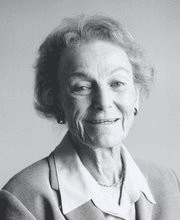
American · Activism
Sally Lilienthal
March 19, 1919 – October 24, 2006
Early Life and Background
Sally Ann Lilienthal, born Sally Ann Lowengart, entered the world on March 19, 1919, in Portland, Oregon, to Jewish parents.[1][3] Her family background, including the experience of growing up Jewish in the United States during the interwar years, exposed her early to questions of persecution, justice, and civic responsibility. When she was still young the family relocated to San Francisco, where she spent most of her life and became a central figure in the city’s civic and cultural affairs.[1]
Details of her formal education are not extensively documented in the readily available sources, but biographical accounts emphasize that she was intellectually curious and drawn to both the arts and public affairs.[1][4] The combination of artistic sensibility and political awareness would later characterize her multifaceted career as a sculptor, arts patron, and activist. Growing up during the Great Depression and witnessing the rise of fascism and the Second World War created a backdrop against which her later commitment to human rights and peace can be understood.[1][4]
Career Beginnings and Development
Lilienthal’s early adult years were marked by engagement with writing and the arts. Jewish Currents notes that she was a writer and sculptor, deeply involved in the arts community of the San Francisco Bay Area.[4] She became associated with the San Francisco Museum of Modern Art (SFMOMA), eventually serving on its board for most of the 1970s.[1][4] In this role she advocated for modern art and helped shape the museum’s institutional development, demonstrating her capacity for leadership in cultural organizations.
Her civic and political activism developed alongside her arts work. Lilienthal became increasingly involved in social justice causes, particularly civil rights and human rights. With her third husband, attorney Philip Eugene Lilienthal, she helped to found the northern California chapter of the NAACP Legal Defense and Educational Fund, bringing the nationally significant civil-rights litigation organization into closer contact with Bay Area supporters and institutions.[4] This effort reflected her belief in using law and philanthropy to combat racial discrimination and inequality.
By the mid-1970s she had taken on a prominent role in the international human-rights movement. In 1977 she served as national vice chairwoman of Amnesty International USA, coinciding with the year that Amnesty International as an organization was awarded the Nobel Peace Prize for its work on behalf of prisoners of conscience.[1][4] Her leadership position placed her at the center of a growing global network dedicated to documenting abuses and pressuring governments to uphold human rights.
Major Works, Accomplishments, and the Ploughshares Fund
Lilienthal’s most historically significant accomplishment came in the realm of nuclear disarmament. In 1981, at the height of the Cold War and just as the Reagan administration took office, she founded the Ploughshares Fund in her San Francisco living room.[1][4] The exact founding day is not specified in available sources, but the year 1981 is consistently cited.[1][4] She established the fund because she believed that the risk of nuclear war "overshadowed everything else," and that ordinary citizens who shared her concern needed new mechanisms to act effectively.[1][4]
Ploughshares was conceived as a public foundation that would raise money from individuals and distribute grants to scholars, advocates, and grassroots organizations working to reduce nuclear arsenals, prevent proliferation, and promote policies aimed at eventual abolition.[1][4] Lilienthal later recalled that the fund started "with nothing" yet managed in its first year to give away about $100,000 to individuals and small organizations studying nuclear weapons and educating the public about the dangers they posed.[4] This model of citizen-funded, expert-guided grantmaking was innovative in the peace movement and helped professionalize the field of nuclear policy advocacy.
Over subsequent decades, the Ploughshares Fund grew into one of the most influential U.S.-based philanthropic institutions in the peace and security arena, ultimately distributing more than $50 million in peacemaking grants.[4] While many others contributed to its growth, Lilienthal’s founding initiative and early leadership were crucial to establishing its credibility and focus. Biographical summaries emphasize that she was widely recognized as a nuclear disarmament activist and that her work with Ploughshares continued well beyond its initial years.[1]
In the broader context of her activism, Ploughshares complemented her longstanding engagement with civil rights and human rights. Her leadership in Amnesty International USA, her support for the NAACP Legal Defense and Educational Fund, and her deep involvement in artistic institutions reflected a coherent vision in which the defense of human dignity required attention to both state violence and social inequality.[1][4] The fund’s name itself—evoking the biblical phrase about turning swords into ploughshares—symbolized her commitment to redirecting resources from war to constructive purposes.
Awards, Honors, and Recognition
Available sources emphasize Lilienthal’s leadership roles more than they list formal awards. However, her position as national vice chairwoman of Amnesty International USA in 1977 came during a moment of global recognition for the organization, which received the Nobel Peace Prize that year.[1][4] While the prize was awarded to Amnesty International rather than to her personally, her role in the group’s U.S. leadership during this period underscores the respect accorded to her within the human-rights community.
In the arts world, her service on the SFMOMA board for much of the 1970s reflected a degree of local prestige and trust.[1][4] Board membership at a major modern-art museum typically implies recognition of an individual’s judgment, patronage, and influence. Lilienthal’s presence on the board suggests that she was acknowledged not only as a donor but as a key figure in shaping the museum’s relationship to artists and the public.
Within the disarmament community, Lilienthal has been memorialized by organizations and commentators as a pioneer in peace philanthropy. The Federation of American Scientists described her as the founder of Ploughshares Fund and noted the impact of her work on nuclear policy debates.[1] Posthumous appreciations, such as the Jewish Currents article marking the anniversary of her death, underline her status as a major figure in late-20th-century activist philanthropy.[4]
Personal Life
Sally Lilienthal’s personal life included several marriages and a large blended family, which coexisted with her demanding public commitments. According to biographical notes and film-industry records, she was married to Arthur (Tom) J. Cohen Jr., George W. Hellyer Jr., and eventually to Philip Eugene Lilienthal, an attorney with whom she shared many civic projects.[1][2][4] IMDb records that her marriage to Philip Lilienthal began on January 23, 1970, and ended with his death on January 4, 1984.[2] Jewish Currents describes him as her "third husband," indicating that her relationships evolved over time.[4]
The couple’s partnership extended into shared activism. Together, Sally and Philip Lilienthal helped found the northern California chapter of the NAACP Legal Defense and Educational Fund, reinforcing their joint commitment to civil rights and legal strategies for social change.[4] Their collaboration demonstrates how her private and public lives were intertwined; family relationships served as a base for their common engagement in justice-oriented causes.
Sources also describe Lilienthal as a mother, though specific details about her children are not elaborated in the major biographical summaries available.[1][4] Her ability to combine family responsibilities with high-level leadership roles in arts, human-rights, and peace organizations is notable in the context of mid-20th-century gender expectations, when women’s public leadership in such domains was still evolving.
Legacy and Historical Impact
Sally Lilienthal’s legacy rests primarily on her role in pioneering citizen-driven nuclear disarmament philanthropy. By founding the Ploughshares Fund in 1981 and nurturing it through its early years, she helped create a durable institution that has continued into the 21st century to support research, advocacy, and public education on nuclear dangers.[1][4] The model she advanced—small donors supporting expert-led initiatives—contributed to a broader shift in how peace and security work is financed.
Her work demonstrated that women could play central leadership roles in fields often dominated by male policymakers and strategists. Lilienthal intervened in high-stakes debates over arms control and nuclear strategy not as a government official or academic but as an activist and philanthropist, bringing a moral and civic perspective to technical policy discussions.[1][4] In doing so, she widened the space for public participation in nuclear policy and illustrated how civil society could influence national and international security agendas.
Beyond nuclear issues, her contributions to civil rights and human rights are equally important. Through her involvement in Amnesty International USA and the NAACP Legal Defense and Educational Fund, she helped strengthen organizational infrastructures that continue to advocate for prisoners of conscience, racial justice, and legal equality.[1][4] These efforts place her squarely within the broader narrative of the postwar human-rights revolution and the U.S. civil-rights movement.
Her arts patronage and role as a sculptor reveal another dimension of her impact. Serving on the SFMOMA board during the 1970s, she influenced the institutional support system for modern art on the West Coast.[1][4] This integration of artistic and political engagement illustrates a holistic vision of culture, in which creativity, justice, and peace are intertwined rather than separate spheres.
Organizations and commentators continue to cite her example. The Jewish Women’s Archive highlights her as an important figure in Jewish and women’s history, emphasizing her activism and leadership.[3] Jewish Currents has used the anniversary of her death to reflect on the continuing work of the Ploughshares Fund and the ongoing need for citizen involvement in nuclear disarmament.[4] Such remembrances situate her legacy within ongoing struggles to prevent war and defend human rights.
Later Life and Death
In her later years, Lilienthal remained involved with the causes she had championed, though day-to-day leadership of organizations gradually shifted to newer generations. The Ploughshares Fund continued to evolve institutionally, broadening its support for a range of projects dealing with nuclear policy, regional conflicts, and emerging security issues.[1][4] Even as she stepped back from operational roles, her founding vision continued to shape the fund’s priorities.
Lilienthal died on October 24, 2006, at California Pacific Medical Center in San Francisco, after a bone infection led to pneumonia.[1][2][4] She was 87 years old.[1][4] Obituaries and memorial articles emphasized her contributions as an anti-nuclear activist, philanthropist, and arts advocate, and they noted the endurance of the institutions she helped create.[1][4] The Los Angeles Times obituary (referenced in secondary sources) and tributes from organizations such as the Federation of American Scientists underscored the respect she commanded across different sectors of public life.[1]
By the time of her death, the Ploughshares Fund had already distributed tens of millions of dollars in grants for peacemaking and nuclear risk reduction, a concrete testament to the infrastructure she had built.[4] Her passing prompted renewed appreciation of how a single individual’s determination—beginning in a living room meeting with "nothing"—could transform citizen concern into sustained institutional power.[4]
In historical perspective, Sally Lilienthal stands out as a key figure in late-20th-century activism whose work bridged the arts, civil rights, human rights, and nuclear disarmament. Her life demonstrates the capacity of women to lead in complex and traditionally male-dominated policy arenas, and her legacy continues in the ongoing efforts of the organizations she shaped to pursue justice and peace.
Dated achievements
2 indexed.
- Mar191919Activism
Sally Lilienthal's birthday
Sally Lilienthal was born on March 19, 1919.
View details Jewish Women's Archive - This Week in History - Oct242006