← All women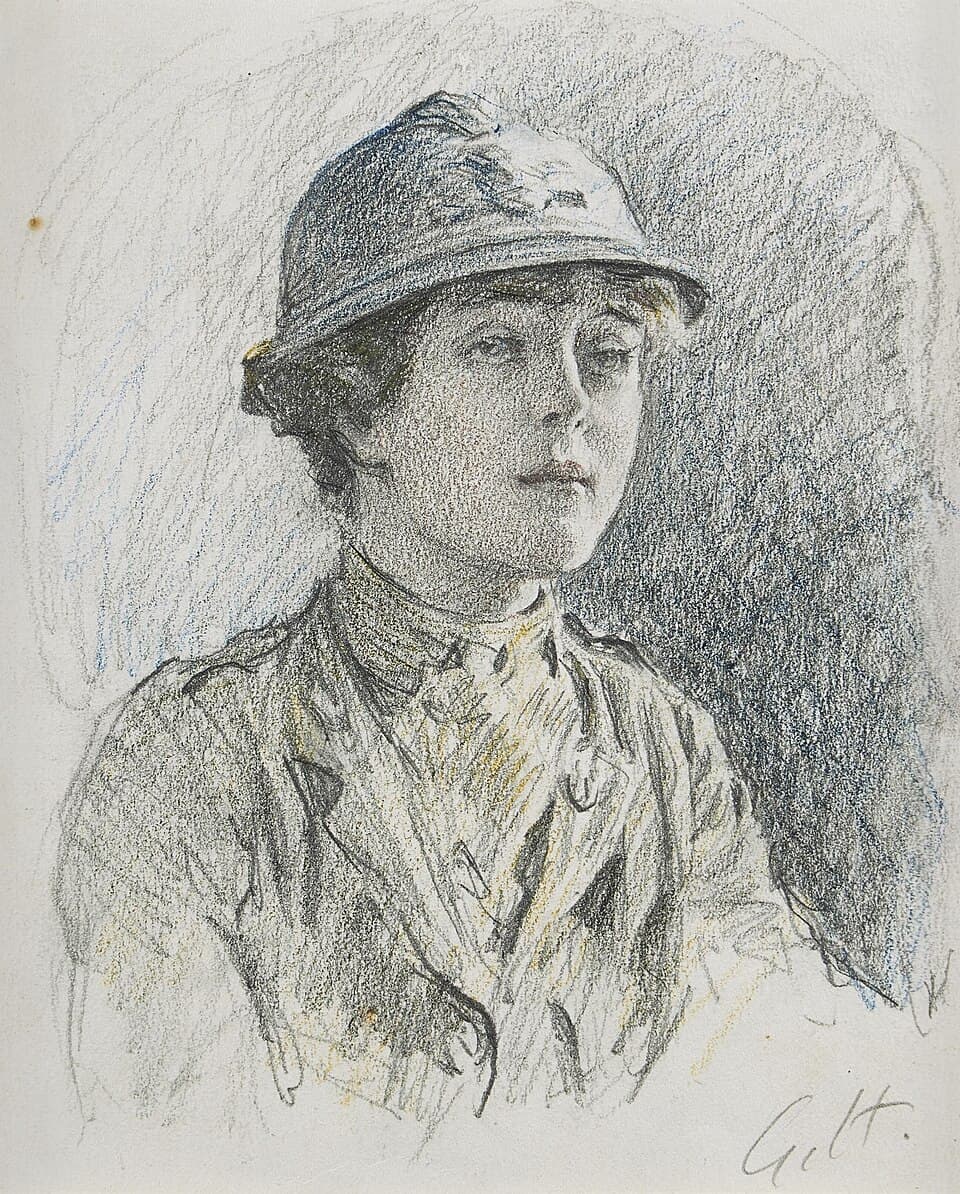
British · Activism · Medicine
Sadie Bonnell
1888 – 1993
Early Life and Background
Detailed biographical records concerning the early life of Sadie Bonnell are limited, as is often the case for women who served in voluntary and auxiliary capacities during the First World War rather than in more publicly documented professional or military roles. She is believed to have been born in Britain in the late Victorian or Edwardian period, into a social class from which many members of the First Aid Nursing Yeomanry were drawn — typically women of some independent means who possessed the resources to volunteer for unpaid, dangerous overseas service. Little is definitively recorded about her family background, education, or the formative influences that led her toward volunteer service, though her later actions suggest a woman of considerable courage, practical skill, and a strong sense of civic duty consistent with the ethos instilled in many young British women of her era who came of age just before or during the outbreak of the Great War in 1914.
The First Aid Nursing Yeomanry and the Outbreak of War
The First Aid Nursing Yeomanry, commonly known as FANY, was founded in Britain in 1907 as a mounted nursing corps intended to provide first aid to wounded soldiers on the battlefield and to bridge the gap between the front lines and field hospitals. By the time the First World War erupted in 1914, FANY had evolved into an organisation whose members drove ambulances, ran field hospitals, and performed a wide range of medical and logistical support duties, frequently operating in close proximity to combat zones — a role highly unusual for women at the time, given prevailing Edwardian attitudes about female propriety and capability.
Sadie Bonnell joined this pioneering organisation, becoming one of the relatively small number of women who chose to serve overseas in a capacity that placed them under direct physical risk. FANY members were notable for being among the first British women to drive motorised ambulances in a war zone, a technically demanding and physically taxing job that required mechanical aptitude, nerve, and stamina — qualities Bonnell evidently possessed in abundance.
Service on the Western Front
As an ambulance driver attached to FANY operations in France and Belgium, Bonnell's duties involved navigating rough, often shelled roads to retrieve wounded soldiers from casualty clearing stations near the front and transport them to hospitals farther from danger. This work exposed her regularly to artillery fire, poor road conditions, mechanical breakdowns, and the psychological strain of transporting critically injured and dying men, often in the midst of ongoing combat operations.
It was in the course of this work that Bonnell distinguished herself through an act, or sustained pattern, of bravery under fire — continuing to carry out her evacuation duties despite direct danger from shelling. Such conduct was the basis for her subsequent decoration. The exact circumstances of the specific incident or incidents that led to her recognition are less thoroughly documented in easily accessible general sources than the fact of the award itself, though local histories and specialist blogs devoted to FANY's service (such as the Great War London project) have sought to preserve and publicize these details for later generations.
The Military Medal
In recognition of her courage, Sadie Bonnell was awarded the Military Medal, a decoration instituted by King George V in March 1916 specifically to reward acts of gallantry by other ranks and, notably, extended to recognise women serving in auxiliary capacities near the front lines. The award to women was rare during the First World War, and each instance represented formal acknowledgment — from a military and governmental establishment otherwise resistant to according women equal recognition — that female volunteers had performed acts of courage equivalent to combat gallantry.
The Military Medal citation and accompanying records, where they survive, generally emphasize the specific bravery displayed by the recipient in the performance of duties under fire, distinguishing the award from lesser forms of recognition given for simple diligent service. Bonnell's award places her among a distinguished, if numerically small, group of women singled out during the Great War for direct battlefield courage rather than administrative or nursing merit alone.
Legacy and Historical Significance
Sadie Bonnell's story exemplifies the often under-recognised contribution of women's voluntary organisations to the Allied war effort during the First World War. The FANY, and volunteers like Bonnell, helped establish precedents for women's participation in frontline support roles that would later expand significantly in the Second World War, when FANY units performed intelligence, communications, and covert operations work, including support for the Special Operations Executive (SOE).
Her Military Medal stands as physical evidence contradicting popular narratives that confine women's wartime experience solely to home-front industrial or nursing labour far from actual danger. Instead, Bonnell's service demonstrates that some women actively chose, and were permitted, to work within a few miles of the front lines, exposed to the same artillery bombardments that killed and wounded soldiers, and that at least a select few received formal military recognition for courage under those exact conditions.
Contemporary historians and enthusiasts of women's history in the First World War, including bloggers and independent researchers such as those behind the Great War London project and Inspirational Women of WW1, have worked to recover and publicise Bonnell's story and those of her FANY colleagues, ensuring that these women's contributions are not lost to the more male-centred historical memory of the conflict.
Later Life and Death
Detailed records of Sadie Bonnell's life after the First World War, including her later personal life, any marriage, or subsequent career, are not well documented in readily available public sources. It is possible that, like many FANY veterans, she returned to civilian life following the Armistice in November 1918, carrying with her the experience and decoration earned through her wartime service. Specific information about the date and circumstances of her death has not been definitively established in accessible historical records reviewed for this profile.
Despite the gaps in the documentary record regarding her personal biography, Sadie Bonnell's Military Medal and her documented service with FANY on the Western Front secure her place in the history of women's contributions to the First World War, standing as a testament to individual courage during one of the twentieth century's defining conflicts.
Dated achievements
1 indexed.
- Sep011917Activism
Awarded the Military Medal for bravery under fire
Sadie Bonnell, a British First Aid Nursing Yeomanry (FANY) ambulance driver, was awarded the Military Medal for her courage while evacuating wounded soldiers under shellfire near the Western Front.
View details Sadie Bonnell: Bravery in the Field