← All women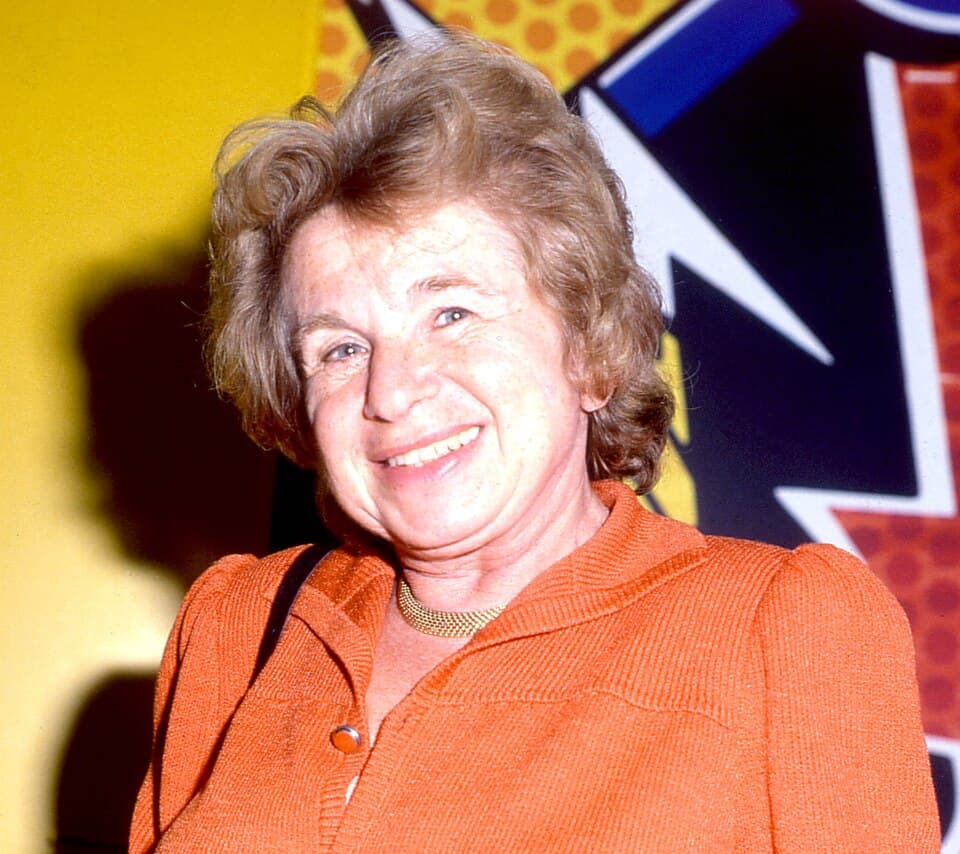
German, American · Medicine · Activism
Ruth Westheimer
June 4, 1928 – July 12, 2024
Early Life and Background
Karola Ruth Siegel, later known as Dr. Ruth Westheimer, was born on June 4, 1928, in Wiesenfeld, Germany, into a Jewish family that soon faced escalating antisemitism under the Nazi regime.[1][2][9] She spent much of her childhood in Frankfurt am Main, where her father worked as a textile merchant.[3][8][19] The trauma of the Holocaust defined her formative years. After the November 1938 pogrom known as Kristallnacht, her father was arrested and deported to a concentration camp, and her mother and grandmother arranged for Ruth, then about ten, to be sent on a Kindertransport to a children’s home in Switzerland to save her life.[7][8][19]
In Switzerland, Ruth lived in an orphanage run by a Jewish charity, receiving basic education and developing a strong sense of self-reliance.[7][8][19] She later learned that her parents and much of her extended family had been murdered in the Holocaust.[8][14][19] This loss and displacement profoundly shaped her later outlook: she often spoke of her commitment to joy, intimacy, and life as a conscious response to surviving genocide.
While still a teenager, she began to develop intellectual interests and a commitment to Jewish communal life. The experience of living in a communal children’s home, under wartime conditions, fostered a deep resilience and capacity to bond with others. She later reflected that these years taught her the importance of emotional support and the need for honest education about human relationships, themes that would become central to her career as a psychosexual therapist.[8][14]
Migration to Palestine and Wartime Experience
After the Second World War, Ruth left Switzerland for Palestine, then under British mandate.[7][8] In her late teens she joined the Haganah, the Jewish paramilitary organization that fought for the establishment of the State of Israel.[7][8] She served as a scout and sniper, an unusual role for a young woman at the time, and took part in the tumult of the 1947–1949 war.[7][8]
During her service, Ruth was seriously injured in a bomb attack when the building in which she was stationed was shelled, leaving her with long-term scars and physical limitations.[7][8] The injury ended her military career but reinforced her determination to pursue education and to build a life centered on helping others. Her experience as a female fighter and survivor of both Nazi persecution and war in Palestine later contributed to her public image as a tough, resilient figure who spoke frankly and without embarrassment about difficult topics.
Studies in Paris and Move to the United States
After recovering from her injuries, Ruth moved to Paris, where she studied at the Sorbonne.[7][8] There she completed coursework in psychology and sociology and supported herself by teaching kindergarten.[7] Her years in France marked a transition from wartime youth to aspiring intellectual. She was exposed to European debates on psychoanalysis, education, and social science, which provided a foundation for her later work in sexuality and relationships.
In 1956, Ruth emigrated to the United States, settling in New York City.[7][8] She enrolled at the New School for Social Research, a university known for its émigré scholars and progressive curriculum, and earned a master’s degree in sociology, focusing on family and intimate relationships.[7][10] As a young immigrant and survivor, she worked various jobs to support herself and her daughter, combining practical experience with academic study.
Ruth continued her education at Teachers College, Columbia University, where she earned an Ed.D. (Doctor of Education) in 1970.[7][2] Her doctoral work drew on research in human sexuality, family dynamics, and cross-cultural attitudes, connecting clinical inquiry with public education. This academic credential, alongside later training in sex therapy, would underpin her authority as "Dr. Ruth" in media appearances.
Career Beginnings in Sex Education and Therapy
Ruth’s path into sex education began with her employment at Planned Parenthood in New York, where she worked as a researcher and educator in the late 1950s and 1960s.[3][8] There she encountered clients’ questions about contraception, sexual communication, and reproductive health, and realized the need for accessible, nonjudgmental guidance.
Her work at Planned Parenthood inspired her to specialize in psychosexual therapy. She undertook advanced clinical training, including postdoctoral work in human sexuality, and began a private practice as a psychosexual therapist in New York.[7][10] In this role, she treated individuals and couples facing issues such as sexual dysfunction, lack of desire, communication problems, and the impact of trauma on intimacy.
Ruth also started teaching at academic institutions. Over the years she lectured and taught courses at colleges and universities including Lehman College, Brooklyn College, Adelphi University, Columbia, Yale, Princeton, and the United States Military Academy at West Point.[7][10] Her dual commitment to classroom teaching and clinical work positioned her as a bridge between scholarly research and everyday concerns about relationships and sexuality.
Media Breakthrough: "Sexually Speaking" and Television
Ruth’s transformation into a media figure came about somewhat by chance. After a guest appearance on a New York radio show, where she spoke candidly about sexual problems, she was invited to host her own program.[8][16] In September 1980, she began a fifteen-minute late-night radio show called "Sexually Speaking" on New York’s WYNY, in which callers asked anonymous questions about sex and relationships.[16][3]
Her matter-of-fact tone, cheerful demeanor, and willingness to discuss taboo topics in plain language quickly attracted a wide audience. The show expanded to one hour and became nationally syndicated by the mid-1980s.[3][16] As "Sexually Speaking" grew, Ruth developed a signature style: she emphasized mutual respect, communication, and consent; encouraged women to claim sexual pleasure; and rejected shame-based approaches to education.
The radio success led to a series of television programs, including "The Dr. Ruth Show" and other talk shows and specials in the United States and abroad.[1][2][7] She appeared frequently as a guest on major network programs and late-night shows, bringing frank discussions of sexual literacy into mainstream media. Critics and supporters alike noted that a small, middle-aged, German-accented woman talking openly about orgasm, contraception, and intimacy represented a major cultural shift in how sexuality could be addressed on air.
Major Works and Publications
Beginning in the late 1970s and especially through the 1980s and 1990s, Dr. Ruth authored numerous books on sex, relationships, and family life. Her first widely recognized book, "Dr. Ruth’s Guide to Good Sex", was published in 1983 and helped cement her reputation as a leading public educator on sexuality.[1][3] The book offered accessible explanations of anatomy, sexual response, communication, and problem-solving, aiming to reduce anxiety and guilt.
Over the course of her career, she wrote or co-wrote more than forty books, covering topics such as sexual techniques, dating, marriage, aging and sexuality, and family communication.[3][7][10] Title examples include popular guides and the autobiography "All in a Lifetime", which recounts her journey from Holocaust orphan to international media figure.[12][16]
Her publications were often accompanied by advice columns in newspapers and magazines, reinforcing her role as a trusted source. She tailored her writing to different audiences, including young adults and seniors, and repeatedly emphasized that sexual health was an integral part of overall well-being.
Awards, Honors, and Recognition
Dr. Ruth received widespread recognition for her pioneering work in media-based sex education. Universities and organizations honored her for both her scholarship and her impact on public discourse. She was awarded honorary doctorates, including from the University of Ottawa, which cited her leadership in "media psychology" and sexual literacy.[7]
She served as a frequent lecturer on college campuses in the United States, where she was twice named "College Lecturer of the Year," reflecting her popularity among students and faculty.[7] Professional groups in psychology, sex education, and media studies recognized her efforts to bring evidence-based, compassionate advice into popular culture.
Her status as a Holocaust survivor, Israeli veteran, and outspoken Jewish figure led to additional honors from Jewish organizations and Holocaust memorial institutions. The USC Shoah Foundation and museums such as the Museum of Jewish Heritage publicly commemorated her contributions, noting how her life embodied resilience and the transformation of traumatic experiences into public service.[14][19]
Personal Life
Ruth married three times. Her first two marriages ended in divorce, reflecting the challenges of building relationships in the context of migration, education, and postwar recovery.[2][3] In 1961 she married Manfred "Fred" Westheimer, an engineer.[2][13][15] This third marriage lasted until his death in 1997 and provided the stable partnership that accompanied her rise as "Dr. Ruth."
The couple had two children, and Ruth often drew on her experiences as a mother and wife when giving advice about family and intimacy. She spoke publicly about the importance of balancing professional life with domestic responsibilities and emphasized that sexual fulfillment was intertwined with emotional connection.
Despite enormous fame, she maintained a relatively modest lifestyle in New York City. She was known for her humor, love of teaching, and active participation in Jewish communal life. Her identity as a Holocaust orphan remained an important part of her personal narrative; she regularly engaged in remembrance activities and worked with organizations promoting Holocaust education and combating antisemitism.[14][18][19]
Legacy and Historical Impact
Dr. Ruth Westheimer’s historical significance lies in her role as a pioneer of mass-media sex education. At a time when discussions of sex in mainstream American culture were often sensationalistic or moralizing, she offered a model of frank, compassionate, and scientifically informed advice.[1][3][8] Her work helped normalize the idea that ordinary people could ask questions about pleasure, dysfunction, contraception, and orientation without shame.
She was particularly important for women’s history. As a female expert speaking authoritatively about sexual pleasure and rights, she challenged stereotypes that relegated women either to silence or objectification. Her insistence that women deserved satisfying, consensual, and safe sexual relationships contributed to broader feminist conversations about bodily autonomy and equality.[5][8][14]
Ruth’s style—combining warmth, humor, and precision—showed that sexual literacy could be treated as a public health and educational issue rather than mere entertainment. Scholars of media and sexuality often cite her programs as central examples of "media psychology," where therapeutic principles are adapted for mass audiences.[1][7][10] Her influence can be seen in later advice formats, from call-in shows to online platforms, that aim to destigmatize sexual problems.
Her life story also stands as a testimony to the resilience of Holocaust survivors and refugees. She turned personal trauma and displacement into a commitment to help others build joyful, connected lives. Jewish organizations and Holocaust memorials have highlighted how her message of intimacy and connection serves as a counterpoint to the dehumanization she survived.[14][19]
Later Life, Documentaries, and Cultural Presence
In her later decades, Dr. Ruth remained active as a writer, lecturer, and commentator. She continued her private practice while appearing on television and radio, adapting her advice to changing contexts such as the HIV/AIDS crisis, evolving attitudes toward LGBTQ+ identities, and the impact of digital technologies on relationships.[1][3][14]
Her life and work became the subject of cultural treatments. She was the focus of the documentary "Ask Dr. Ruth", which explored her biography and influence.[7][16] A one-woman play, "Becoming Dr. Ruth", dramatized her journey from German childhood to American celebrity, emphasizing both her vulnerability and humor.[7] She also produced documentaries and educational materials that extended her reach beyond traditional talk shows.
Even into advanced age, she embraced new media. She participated in interviews, podcasts, and online content, bringing her philosophy of "sexual literacy" to younger generations.[7][14] Institutions like the University of Ottawa cited her continued productivity and influence when honoring her in the 2010s and 2020s.[7]
Death
Dr. Ruth Westheimer died on July 12, 2024, at her home in New York City, at the age of ninety-six.[1][2][3][5][9][15] Obituaries in major outlets such as The Guardian and encyclopedic biographies recounted her journey from Wiesenfeld and Frankfurt through Switzerland, Palestine, Paris, and New York.[1][5][8] They emphasized her status as a German-born Holocaust survivor who became one of America’s most recognizable sex therapists and cultural icons.
Her death prompted tributes from academic institutions, Jewish organizations, and media commentators, who praised her courage in addressing taboo subjects and her enduring impact on public understandings of sexuality, relationships, and survivor resilience.[14][18][19] Many noted that contemporary openness about intimate topics in mainstream media owes a significant debt to the path she carved.
Today, Dr. Ruth’s legacy lives on through her books, recorded shows, and the ongoing work of educators and therapists influenced by her example. Her life illustrates how a woman who began as a refugee child, separated from her family by genocide, could reshape cultural norms and offer millions of people a language for intimacy grounded in respect, pleasure, and mutual care.
Dated achievements
2 indexed.
- Jun041928Medicine
Birth of Ruth Westheimer
Born in Wiesenfeld, Germany prior to World War II.
View details Ruth Westheimer Biography - Britannica - Jul122024