← All women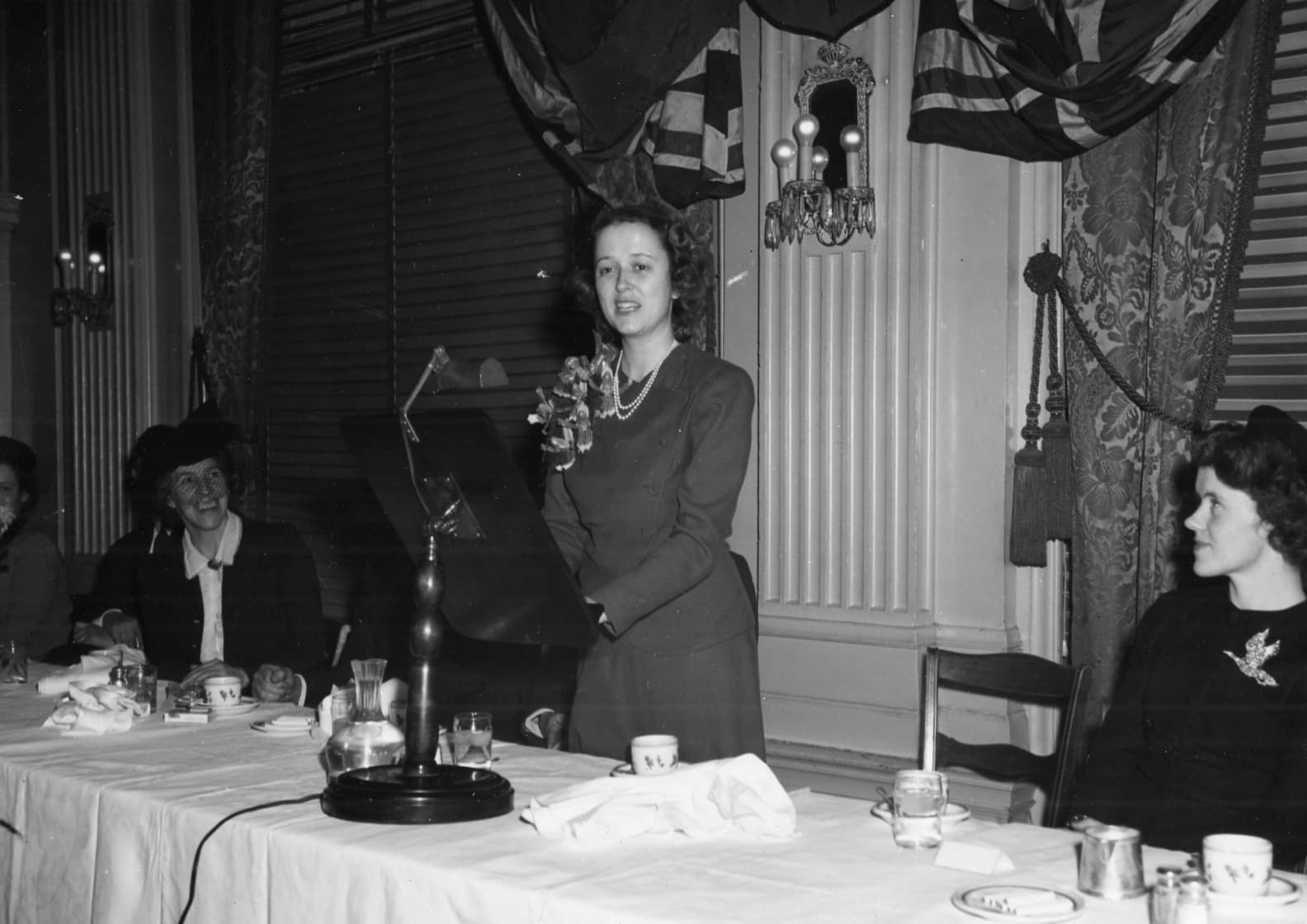
American · Science · Politics
Ruth Amonette
January 1, 1917 – present
"
Early Life and Education
Ruth Leach Amonette was born in the United States in the early twentieth century, a period when opportunities for women in business and corporate leadership were severely limited. She pursued higher education at a time when relatively few women attended college, and she distinguished herself academically before entering the business world. Her early intellectual promise and determination set the stage for a career that would break significant barriers for women in American corporate life.
Career Beginnings at IBM
Ruth Leach joined International Business Machines (IBM) in the 1930s, a period during which the company, led by the formidable Thomas J. Watson Sr., was rapidly expanding its influence in the emerging field of business machines and data processing. She began in a role that allowed her to demonstrate her exceptional communication skills, organizational abilities, and understanding of the business landscape. Watson, known for his eye for talent, recognized her capabilities early on and gave her increasing responsibilities within the company.
During this era, women in corporate America were almost universally relegated to secretarial or clerical positions, with executive suites remaining an almost exclusively male domain. Leach's rise through IBM's ranks defied these entrenched norms, and she became known for her poise, intelligence, and ability to represent the company effectively to external audiences, including the press and public officials.
Becoming IBM's First Woman Vice President
In 1943, in the midst of World War II, Ruth Leach was elected vice president of IBM — making her the first woman to hold such a position in the company's history. This was an extraordinary achievement, not only for IBM but for corporate America broadly, as very few women held vice-presidential titles at major national companies during this period.
Her elevation to this role came during a time of significant social transition. With many men serving overseas during the war, women were increasingly stepping into industrial and clerical jobs, but the executive tier of corporations remained largely untouched by this shift. Leach's promotion was thus a rare and notable exception, and it attracted national media attention as a sign of changing possibilities for professional women.
As vice president, she took on a highly visible role, representing IBM at public functions, in press interactions, and in shaping the company's public image. She was frequently sought after as a speaker and commentator on business affairs and women's roles in the corporate world, using her platform to advocate implicitly and explicitly for greater opportunities for women in business.
Later Career and Public Life
Following her groundbreaking tenure at IBM, Ruth Leach continued to be involved in business and public affairs. She later married and became known as Ruth Leach Amonette, and she remained active in civic and professional circles, often speaking about her experiences as a pioneering woman executive. She was known for mentoring and inspiring younger women who aspired to leadership positions in business, drawing on her own experience of navigating a male-dominated corporate environment.
Throughout her later career, she maintained connections with IBM and continued to be recognized as a trailblazer whose career opened doors for the generations of women who followed her into corporate leadership. She often reflected on the unique challenges she faced — including skepticism from colleagues, limited institutional support for women, and the burden of being a highly visible symbol for women's capabilities in business.
Personal Life
Ruth Leach married and adopted the surname Amonette, by which she became more widely known in the later parts of her life. Details of her personal life, including her family and domestic circumstances, are less thoroughly documented than her professional achievements, but she was known to balance her public visibility as a corporate pioneer with a private personal life. She remained a figure of interest to historians studying the evolution of women's roles in American business throughout the twentieth century.
Legacy and Historical Significance
Ruth Leach Amonette's legacy endures as an important milestone in the history of women in American business. Her appointment as IBM's first woman vice president in 1943 is frequently cited in business histories, women's studies literature, and corporate retrospectives as an early and significant crack in the glass ceiling that historically kept women out of executive suites.
She is remembered not only for the achievement itself but for the way she carried the responsibility of being a visible pioneer — using her position to advocate, mentor, and demonstrate the capability of women in leadership roles at a time when such demonstrations were rare and highly scrutinized. Institutions such as IBM have referenced her career as part of their own historical narrative regarding diversity and inclusion in corporate leadership.
Later Life
In her later years, Ruth Leach Amonette continued to be recognized and referenced in discussions of pioneering women in business. She lived to see significant, though still incomplete, progress in the representation of women in corporate leadership, and her story continued to be told as an inspiration to new generations of businesswomen. Her life and career remain a subject of interest for historians examining the slow, uneven progress toward gender equity in the American corporate world.
"Dated achievements
1 indexed.
- Sep011943Science
Elected First Woman Vice President of IBM
Ruth Leach became the first woman to serve as a vice president of IBM, one of the earliest women to hold such a rank in a major American corporation.
View details IBM History: Ruth Leach