← All women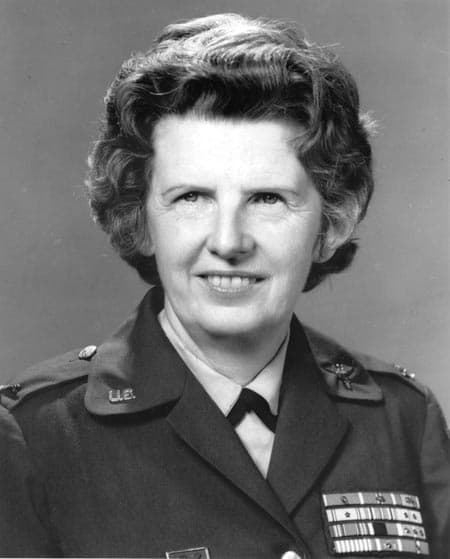
American · Medicine
Ruby Bradley
December 19, 1907 – May 28, 2002
Early Life and Background
Ruby Grace Bradley was born on 19 December 1907 near Spencer, in Roane County, West Virginia, to farmers Fred O. Bradley and Bertha Welch Bradley.[3] Growing up in rural Appalachia in the early twentieth century, she experienced a childhood shaped by hard physical work, limited resources, and the modest horizons that typically confronted girls in small farming communities. Yet her family valued education, and Bradley displayed early academic promise.
Bradley attended local schools and went on to college, graduating in 1926 and initially working as a teacher.[1] Teaching was one of the few professional paths widely open to women at the time, but she soon felt drawn to nursing, a field undergoing rapid professionalization and expanding opportunities in public health and hospital care. Her decision to leave teaching for nursing reflected both personal ambition and an emerging belief that women could contribute centrally to modern medicine.
To obtain formal training, Bradley enrolled in the Philadelphia General Hospital School of Nursing, a respected institution that prepared nurses for both civilian and military practice. She graduated in 1933, entering the profession during the Great Depression, when economic hardship increased demands on health services but also constrained job prospects.[1] Her willingness to pursue nursing amid such uncertainty highlighted her commitment to patient care and public service.
Career Beginnings and Development
After completing her nursing education, Bradley worked as a civilian nurse before deciding to join the military. In October 1934, she entered the U.S. Army Nurse Corps as a surgical nurse.[1][6] According to later biographical accounts, she was commissioned a second lieutenant on 16 October 1934 and assigned to Walter Reed General Hospital in Washington, D.C., where she served until late 1939.[6] At Walter Reed she honed her skills in surgery and perioperative care, working alongside military physicians and gaining exposure to the organizational demands of large hospitals.
Bradley’s early Army service unfolded in a period when women in uniform were few and typically restricted to nursing roles. The Nurse Corps itself was still relatively small, and female officers did not enjoy the same status or advancement opportunities as their male counterparts. Despite these constraints, Bradley built a reputation as a capable and steady surgical nurse, comfortable in high‑pressure operating rooms and attentive to both technical detail and the human needs of wounded soldiers.
In February 1940, she received orders relocating her outside the continental United States to a station hospital at Fort Mills on the island of Corregidor in the Philippines.[1] The assignment placed her within the U.S. Army’s Far East garrison, responsible for defending American interests in the region at a time of mounting tension with Imperial Japan. Life in the Philippines offered new professional challenges and cultural experiences, but it also brought Bradley close to the front lines of a war that had not yet officially begun for the United States.
World War II: Capture and Prisoner-of-War Service
On 7 December 1941, Japanese forces attacked Pearl Harbor and simultaneously targeted American bases in the Philippines.[12] Bradley, stationed in the archipelago, suddenly found herself in a combat zone. As Japanese aircraft bombed military installations and landings threatened the islands, her work shifted from routine surgical operations to urgent wartime treatment of wounded personnel under constant danger.
Within weeks, Japanese ground forces overran key positions. On 28 December 1941, Bradley was captured by the Japanese and interned at Santo Tomas Internment Camp in Manila.[3][7] Santo Tomas, a former university complex, housed thousands of civilian and military prisoners under crowded conditions, chronic food shortage, and growing disease. Bradley remained a prisoner there for approximately thirty‑seven months, until 1945.[2][14]
During her captivity, Bradley continued to practice nursing, becoming one of the central medical figures in the camp. Working with severely limited supplies, she and other American nurses improvised surgical instruments, reused scarce dressings, and managed makeshift wards. Multiple accounts credit her with assisting in more than 200 operations and helping deliver numerous babies in the camp.[5][7] Bradley was known for giving away her own meager rations to malnourished children and other vulnerable prisoners, a sacrifice that left her skeletal at liberation but likely saved many lives.[7][14]
Fellow prisoners remembered Bradley as an “angel in fatigues”, a phrase that captured both her professional competence and her moral courage under extreme duress.[3][11] She faced constant risks: disease outbreaks, malnutrition, punishing labor, and the threat of violence from guards. Yet she maintained the discipline of a functioning infirmary and protected the dignity of patients in conditions that stripped most people of basic comforts.
When U.S. forces returned to the Philippines, Santo Tomas was liberated in early 1945, ending Bradley’s long captivity. She emerged a seasoned surgical nurse who had tested the limits of what medical practice could accomplish with almost no supplies. Her wartime record would later underpin many of the decorations she received and firmly establish her reputation as one of the most heroic nurses of World War II.
Postwar Service and Korean War Leadership
After World War II, Bradley remained in the Army Nurse Corps. Rather than leaving the service, as many wartime nurses did, she chose a full military career. In the late 1940s she held various assignments in the United States and overseas, applying lessons from the war to peacetime medical organization and readiness.[8][9]
With the outbreak of the Korean War in 1950, Bradley again moved close to combat. Sources indicate that by 1951 she had been appointed chief nurse for the Eighth Army, the principal U.S. field army fighting in Korea.[5][10] In that capacity she supervised more than 500 Army nurses scattered across the theater, including frontline mobile army surgical hospitals (MASH units), evacuation hospitals, and rear‑area facilities.[5]
Her work as Eighth Army chief nurse involved complex logistical and leadership responsibilities: assigning personnel to units, ensuring training and preparedness, coordinating supply needs with medical commands, and maintaining professional standards under the pressure of high casualty rates and difficult terrain. She visited field hospitals near the front lines, demonstrating that senior female officers could and did share the risks of combat zones. Under her guidance, nurses expanded their roles in triage, emergency surgery support, and postoperative critical care, reinforcing the model of the nurse as a central figure in trauma medicine.
Bradley remained in Korea until 1953, the year the armistice ended major hostilities.[7][10] As she departed the country that year, the Army staged a full‑dress honor guard ceremony in her honor. Contemporary accounts identify this as the first time a woman received such a salute upon leaving a combat theater, underscoring the respect she commanded among soldiers and officers.[7] Although the exact day of the ceremony is not documented in available sources, its occurrence marked an important symbolic recognition of women’s contributions to warfighting and leadership.
Promotion to Colonel and Later Military Career
Bradley’s sustained excellence and leadership culminated in her promotion to colonel on 4 March 1958.[1][7] The Army Medical Department later described her as the third woman in Army history to attain the rank of colonel and one of the first Army nurses to hold it permanently, rather than as a temporary wartime grade.[2][7] This promotion placed her among the highest‑ranking women in the U.S. Army at the time.
In her final years of military service, Bradley held senior administrative roles. One documented assignment was as Director of Nursing Activities at Brooke Army Medical Center, Fort Sam Houston, Texas, beginning in June 1961.[6] In that position she oversaw nursing practice in a major teaching and research hospital, influencing clinical protocols, staff development, and patient‑care standards.
Bradley retired from the Army in 1963, after roughly three decades of service.[2][9] Sources differ slightly on the exact date of retirement; some note March 1963, while others specify 31 March or 1 April 1963, reflecting the administrative closure of her final assignment.[1][6][8] What is consistent is that she left the service with a record of 34 decorations, medals, and citations for bravery and meritorious service.[1][2][4][5][7][9]
Awards, Honors, and Recognition
Over the course of her career, Ruby Bradley received an extraordinary array of honors that made her, by many accounts, the most highly decorated nurse in Army history and one of the most decorated women in U.S. military history.[2][4][14] While individual presentation dates are not consistently recorded, her award list includes:
- Two Legion of Merit medals, recognizing exceptionally meritorious conduct and outstanding services and achievements.[1][4][7]
- Two Bronze Star Medals, awarded for heroic or meritorious achievement or service in a combat zone.[1][4][7]
- Army Commendation Medals, cited for sustained acts of heroism or meritorious service.[1][5]
- Presidential Unit Citations (Presidential Emblems), reflecting her service with units that displayed extraordinary heroism in action.[7]
- The World War II Victory Medal and United Nations Service Medal, among other campaign and service medals associated with World War II and the Korean War.[4][7]
- The Florence Nightingale Medal of the International Red Cross, the organization’s highest international honor for nurses, awarded to those who demonstrate exceptional courage and devotion in times of war or peace.[1][4][5][7]
Collectively, these awards acknowledged not only her bravery under fire and in captivity but also her leadership in developing and maintaining high‑quality nursing care in combat zones. The Florence Nightingale Medal, in particular, situated her within a global tradition of exemplary nursing and connected her story to the broader humanitarian ideals championed by the International Red Cross.
Personal Life and Civilian Career
Detailed information about Bradley’s personal life is limited in publicly available sources. There is no strong evidence that she married or had children; biographical accounts focus almost exclusively on her professional and military roles, suggesting that her career may have been her primary life commitment.[3][5][7] This emphasis reflects both the historical record and the way public memory has cast her as a figure of vocational dedication and self‑sacrifice.
After retiring from the Army in 1963, Bradley returned to her home state and continued working in nursing. She served for about two decades as a civilian nurse supervisor for a private‑duty nursing service in Roane County, West Virginia, from approximately 1963 to 1980.[1][6] In this role she supported community health care, bringing the discipline and expertise of a senior military nurse to local patients and families.
Her post‑military career underscores a consistent pattern: Bradley did not view nursing solely as wartime service but as a lifelong vocation. Whether in a POW camp, a combat theater, a major Army medical center, or a small West Virginia county, she applied the same standards of professionalism, compassion, and organizational skill.
Legacy and Historical Impact
Ruby Bradley’s legacy operates on several interrelated levels: as a model of heroic nursing in war, as a pioneering female military leader, and as a symbol of resilience under captivity.
First, her work in Santo Tomas Internment Camp during World War II has become emblematic of what nurses can accomplish under extreme conditions. The surgeries she supported, the babies she helped deliver, and the food she surrendered to others are repeatedly highlighted in accounts that frame her as an “angel in fatigues” whose care sustained both physical survival and morale.[3][5][7][14] These stories are frequently used in nursing education and military history to illustrate the ethical core of the profession: placing patients’ needs above one’s own, even at significant personal risk.
Second, Bradley’s leadership in Korea and her subsequent promotion to colonel made her a trailblazer for women in the U.S. Army. As chief nurse of the Eighth Army, supervising hundreds of nurses across a vast and dangerous theater, she demonstrated that women could manage complex medical and logistical operations at the highest levels of responsibility.[5][10] Her advancement to colonel in 1958, as the third woman to reach that rank in Army history, set a precedent that contributed to the gradual expansion of senior leadership roles for women, including later female generals and corps chiefs.[2][7][14]
Third, the sheer number and prestige of her decorations made her a visible figure in public discussions about women’s wartime contributions. Organizations such as the U.S. Department of Veterans Affairs, the Army Medical Department, and veterans’ groups have highlighted her as the Army’s most highly decorated nurse and one of the nation’s most decorated female veterans.[2][4][14] These recognitions help counter historically persistent narratives that minimized or overlooked women’s combat‑zone service.
Bradley’s story has also been preserved and disseminated through institutional and cultural channels. The Army Medical Department Office of Medical History features an essay she wrote reflecting on her POW experiences.[2] The American Freedom Museum and other museums present exhibits about her life.[9] A full‑length biography titled "Angel in Fatigues: The Story of Colonel Ruby G. Bradley, the Most Decorated Woman in the History of the United States Army" further anchors her in the historiography of military nursing.[11] Contemporary tributes, including those by veteran‑support organizations, continue to cite her as an inspiration for new generations of service members and health professionals.[14]
Her example has particular resonance for women of color and other under‑represented groups in the military, even though Bradley herself was white. Commentators have noted that her success demonstrated to later pioneers—such as distinguished Army nurse Hazel Johnson‑Brown, the first Black female general in the U.S. Army—that women could rise to the highest levels of leadership in military medicine.[5]
Later Life and Death
In her later years, Bradley lived in Kentucky, while maintaining ties to West Virginia through professional and commemorative activities.[3][4] She remained a respected figure among veterans and nurses, occasionally appearing in historical programs and being honored in state and national contexts.
On 28 May 2002, Bradley died in Hazard, Kentucky, at age ninety‑four, reportedly after a heart attack.[4][7] Some secondary sources have mistakenly listed her death as occurring on 3 July 2002, but more authoritative biographical references—including the West Virginia Encyclopedia, IrishCentral’s detailed profile, and military memorial records—agree on the 28 May date.[3][4][7]
Following her death, Bradley was buried with full military honors at Arlington National Cemetery, joining the ranks of service members whose lives are formally commemorated as part of the nation’s military heritage.[1][4][6][7][14] Obituaries and memorials emphasized her status as a twice‑war veteran, POW survivor, and the most decorated nurse in Army history.
In subsequent years, her story has been featured in Veterans Affairs communications, Army histories, museum exhibits, and public lectures—such as "History Alive" programs devoted to her life—ensuring that her contributions remain part of the evolving narrative of women in war.[1][10] Ruby Bradley’s life, stretching from a small farm in West Virginia to the symbolic ground of Arlington, encapsulates a transformation in both military nursing and women’s roles in the armed forces over the twentieth century.
Dated achievements
5 indexed.
- Dec191907Medicine
Birth of Ruby Bradley
Ruby Bradley was born near Spencer, West Virginia, on December 19, 1907.
View details e-WV: The West Virginia Encyclopedia - Dec071941Medicine
Pearl Harbor attack and wartime service
On December 7, 1941, Japan attacked Pearl Harbor, drawing Bradley into WWII service.
View details