← All women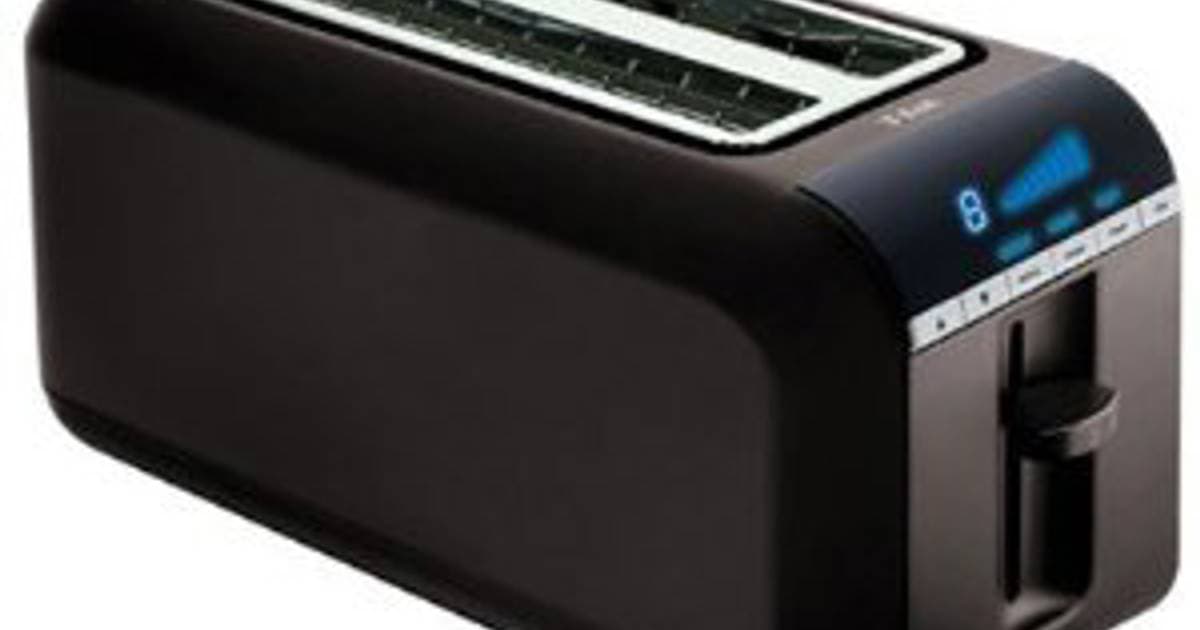
American · Science · Medicine
Ruane Sharon Jeter
September 24, 1951 – April 27, 2026
Early life and background
Ruane Sharon Jeter was born on September 24, 1951, and the available public record indicates that she later built a career in product development and biomedical engineering. The sources supplied for this profile do not document extensive details about her childhood, family background, or early education beyond later biographical references that identify her as a graduate of the Interlochen Arts Academy and the Cleveland Institute of Art at Case Western Reserve University, where she studied industrial design with double majors in product and auto design. Those educational details, when used cautiously, help explain the range and visual sophistication evident in her later work, but the historical record available here is far richer on her patents than on her personal origins.
Jeter’s career unfolded at a time when Black women in engineering and industrial design were still underrepresented and often overlooked in the public record. Her later inventions reveal a designer with an unusually strong grasp of both consumer products and specialized medical devices. That combination suggests formal training in design as well as a willingness to move across disciplines. While the sources do not provide a detailed narrative of her formative influences, the preserved patent record shows a professional who translated everyday observation into workable, marketable technical solutions.
Career beginnings and the Tiltster
Jeter first became widely visible as an inventor in 1987, when she created a toaster with a digital timer that was later commercialized as the Tiltster. In April 1987, she publicly presented the invention, introducing a non-lever toaster concept that replaced the familiar spring lever with a more modern electronic approach. That same year, she received recognition for the design as a notable example of Black women’s inventiveness in consumer products.
Her breakthrough came with the issuance of U.S. Patent No. 4,667,542 on June 9, 1987, for a non-lever toaster assigned to Black & Decker. The patent documented a household appliance that offered electronic timing and a different actuation mechanism from the standard lever-style toaster. In a market where appliance design often evolved slowly, Jeter’s work stood out for its sleekness and for the integration of digital control. The public presentation and the patent together established her reputation and signaled the start of a long inventive career.
Expanding the invention portfolio
Later in 1987, Jeter and Sheila L. Jeter received U.S. Patent No. 4,708,212 on November 10, 1987, for a hand-held, multi-function device in one housing. The concept combined several tools in a compact form and reflected the design logic of convenience and integration. During the late 1980s and early 1990s, Jeter continued to build a portfolio of practical inventions focused on the handling, storage, and use of common objects.
Her next patents included a food pan cover with an elastomeric seal and a tray holder, granted on July 3, 1990 and July 31, 1990, respectively, followed by a container installing system on January 15, 1991. These inventions were grounded in everyday utility: sealing, stabilizing, mounting, and securing. They show Jeter working in the realm of mechanical refinement, where even small improvements can make an object easier to use, safer to handle, or better suited for institutional settings. In each case, the patent record suggests a designer concerned with the entire lifecycle of use rather than with novelty for its own sake.
Transition into medical-device engineering
By the early 1990s, Jeter’s work had shifted increasingly toward medical technology. On March 2, 1993, she received three patents in a single day: a scalpel, a disposable scalpel, and a safety scalpel handle. Together, those inventions reveal a coherent focus on cutting instruments and the reduction of accidental injury. The disposable scalpel responded to infection-control concerns, while the safety handle attempted to build protection into the tool itself. That trio of patents placed Jeter squarely within the history of safer surgical design.
Her medical work continued on July 13, 1993, with patents for a medical waste container and a medical waste disposal container. These inventions addressed the safe handling of sharps and biohazardous waste, an increasingly important issue in healthcare facilities. Jeter then advanced into drug-delivery technologies, receiving a patent on July 19, 1994 for a cartridge for powder and liquid drug, followed by a patent on June 27, 1995 for a drug delivery device having cartridge with enlarged distal end. The progression suggests sustained engagement with patient-administered medication systems and the technical requirements of dosage control.
Late-career medical innovations
Jeter’s most concentrated body of biomedical work came in November 1996, when she was granted three related patents. On November 5, 1996, she received patents for a medical injector with coupled body portions and a container for injection device with injection needle. On November 12, 1996, she received a patent for a self-injection device with multi-position cap. These designs show a sophisticated approach to handheld drug-delivery tools, emphasizing ergonomics, containment, and user safety. They belong to the broader movement toward more accessible self-administration of medication, especially for patients who needed portable and dependable devices outside of a hospital.
Her last documented patent in the supplied material was granted on June 17, 1997, for a combined cabinet with glove box and container for housing medical waste. This design brought together access and containment in a single system, addressing the practical needs of clinics and other medical environments. Taken together, the patents from the 1990s show Jeter building an interrelated body of work around safety, hygiene, and usability in healthcare design.
Recognition and historical significance
Although the available sources do not list major national awards, Jeter’s significance rests in the documentary weight of her patent record and the historical visibility of her inventions. She is repeatedly identified in secondary sources as a Black woman inventor whose work reached from household appliances into medical devices. That range alone is historically notable. She entered fields in which women, and especially Black women, were frequently marginalized, and she produced formal patent evidence across more than a decade.
Her public recognition for the Tiltster toaster also matters in women’s history because consumer-appliance design rarely receives the same attention as high-profile scientific discovery. Jeter’s work reminds historians that innovation often happens at the level of ordinary objects: toasters, trays, containers, scalpels, and injection systems. In those ordinary forms, she addressed real engineering problems and contributed to technologies that improved convenience, safety, and hygiene.
Personal life
The supplied sources do not provide a reliable public account of Jeter’s marriage, children, or broader family life, and no such details are included here beyond what is necessary to identify her collaborators in patent records. Because the editorial standard for this profile is accuracy rather than speculation, personal-life claims are limited to what can be substantiated from the available record.
Later life and death
Ruane Sharon Jeter died on April 27, 2026. The obituary record supplied in the research materials identifies her as Sharon Levonne Jeter and gives her age as 74, confirming that she lived a long life that extended well beyond her documented patenting years. The available public sources do not provide a detailed account of her later-life activities, but her professional legacy remains clear in the inventions that bear her name.
Jeter’s historical importance lies not only in the number of patents attributed to her but also in the breadth of her imagination. From a digital-clock toaster to a family of medical devices and waste-handling systems, she left behind a record of practical innovation that linked domestic convenience with clinical safety. In women’s history, that kind of sustained technical authorship is itself a major legacy.
Dated achievements
17 indexed.
- Apr011987Science
Presentation of the Tiltster digital-clock toaster
Ruane Jeter introduced the innovative Tiltster toaster to the market in April 1987.
View details It Was a Black Woman: Great African American Women Inventors - Jun091987Science
U.S. patent grant for non-lever-driven toaster
Jeter was granted a patent for her non-lever toaster with electronic timing.