← All women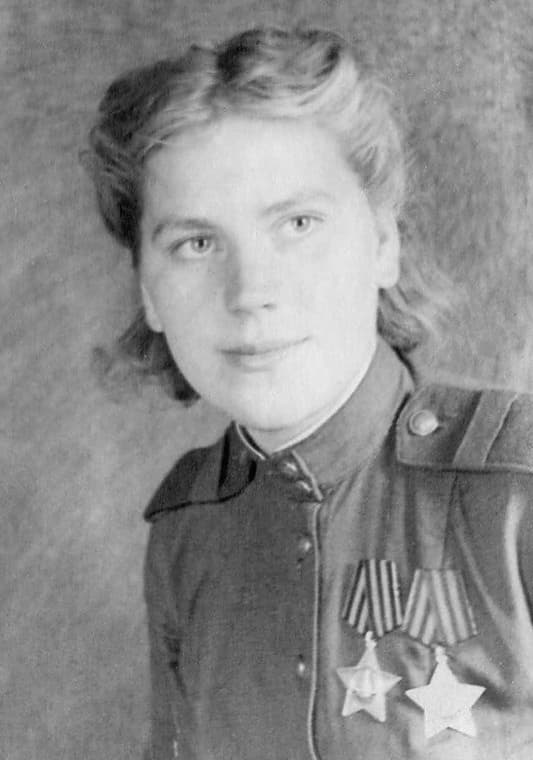
Soviet · Activism · Politics
Roza Shanina
April 3, 1924 – January 28, 1945
Early Life and Background
Roza Georgievna Shanina was born on April 3, 1924, in the small village of Yedma, situated in the Arkhangelsk Governorate in the far north of Russia. She was the second of eighteen children born to Georgi and Anna Shanin, a peasant farming family living in a region known for its harsh climate and difficult agricultural conditions. Of her many siblings, only six survived to adulthood, a grim but common reality for rural Russian families in the early twentieth century.
Roza's childhood was shaped by poverty, hard labor, and the isolation of village life along the Yedma River. Despite these challenging circumstances, she displayed an early independence and thirst for knowledge that distinguished her from her peers. At the age of fourteen, against her father's explicit wishes, she left her home village and reportedly walked over 200 kilometers to the city of Arkhangelsk to pursue further education. This bold and unconventional decision for a young woman of her time and background reflected the fierce determination that would come to define her later life.
In Arkhangelsk, Shanina trained and worked as a kindergarten teacher, and she also enrolled in a pedagogical college, aspiring to build a career in early childhood education. She was reportedly an avid reader and diarist even in her youth, a habit that would prove historically significant later, when her wartime diary became one of the most vivid firsthand accounts of a Soviet servicewoman's experience in World War II.
The Outbreak of War and Path to the Front
The German invasion of the Soviet Union in June 1941, known as the beginning of the Great Patriotic War, upended Shanina's life along with millions of other Soviet citizens. Her older brother Mikhail was killed in action near Leningrad in 1941, a personal loss that profoundly affected Roza and strengthened her resolve to contribute directly to the war effort rather than remain in a civilian teaching role.
Determined to fight, Shanina repeatedly petitioned Soviet military authorities for permission to enlist in a combat role, eventually gaining admission to the Central Female Sniper Academy in Podolsk, near Moscow, in 1943. This academy was part of a broader and historically unusual Soviet program that trained thousands of women as snipers throughout the war, a striking departure from the norms of most other combatant nations, where women were generally excluded from front-line combat roles.
At the sniper academy, Shanina underwent rigorous training in marksmanship, camouflage, battlefield tactics, and psychological endurance. She excelled in her studies, showing a natural aptitude for the patience, precision, and nerve required of an effective sniper. Her instructors noted her calm demeanor under simulated combat stress and her exceptional shooting accuracy, qualities that would soon be tested in real combat conditions on the Eastern Front.
Combat Service and Rise to Fame
Shanina graduated from the sniper academy in 1944 and was assigned to the 184th Rifle Division, part of the 3rd Belorussian Front. She saw her first combat action and recorded her first confirmed kills on April 5, 1944, near Vitebsk in present-day Belarus, marking the start of an extraordinary and highly decorated combat career.
Over the following months, Shanina's skill as a marksman became legendary within her unit and, eventually, throughout the Soviet military and media apparatus. She was credited with an extraordinary number of confirmed kills, ultimately totaling 54 by the time of her death, an exceptionally high count for any sniper, male or female, during the entire war. German soldiers reportedly came to fear her presence on the battlefield, giving her the ominous nickname "the unseen terror of East Prussia," a testament to both her lethal skill and the psychological impact she had on enemy forces.
Shanina's fame grew rapidly as Soviet war correspondents and newspapers, including the prominent military paper Krasnaya Zvezda (Red Star), publicized her exploits, transforming her into one of the most celebrated Soviet snipers of the war and a powerful propaganda symbol of Soviet resilience, patriotism, and the capability of women in combat roles. She became one of the first Soviet servicewomen to be widely photographed and profiled by both Soviet and later Western press, with some of her most iconic images capturing her poised confidently with her sniper rifle.
Notably, Shanina was also one of the first Soviet snipers to be permitted to operate with a degree of independence unusual for the rigid hierarchy of the Red Army; she frequently petitioned commanders to allow her back to the front lines even after being wounded, reflecting both her personal courage and the loosening (if still limited) of restrictions around women's roles in direct combat as the war intensified.
Awards and Honors
Shanina's battlefield achievements earned her numerous decorations, reflecting the Soviet military's recognition of her extraordinary skill and bravery. Among her honors was the Order of Glory, 2nd Class, awarded on January 17, 1945, for exceptional courage and combat effectiveness during the East Prussian Offensive. She had earlier received the Order of Glory, 3rd Class, and was also awarded the Medal for Courage, among other decorations recognizing her frontline service.
These awards placed her among an elite cadre of Soviet snipers, both male and female, who received multiple high-level combat decorations, a rare distinction that underscored the exceptional nature of her service record. Her accumulation of medals, combined with her media prominence, made her one of the most publicly recognized Soviet women soldiers of the war, alongside contemporaries such as Lyudmila Pavlichenko.
Personal Life and Wartime Diary
Throughout her military service, Shanina kept a personal diary, documenting her daily experiences, thoughts, and emotional struggles as a young woman thrust into the brutal realities of frontline warfare. This diary offers a uniquely intimate perspective seldom available from official military records, revealing her ambivalence about the killing she was tasked with, her observations of camaraderie and loss among fellow soldiers, and her reflections on love, duty, and mortality.
Shanina's diary entries reveal a complex, introspective young woman who grappled with the psychological toll of combat even as she continued to excel in her role. She wrote of romantic interests and personal friendships formed and lost amid the chaos of war, providing historians and readers with a deeply humanizing counterpoint to her public image as a fearsome and skilled killer. The diary was later published posthumously and has become an important primary source for understanding the experiences of Soviet women in combat during World War II.
Death and Immediate Aftermath
In January 1945, Shanina's unit was engaged in fierce combat during the East Prussian Offensive, a major Soviet military campaign pushing into German territory. On January 27, 1945, near the village of Ilmsdorf, Shanina was severely wounded by artillery fire while attempting to shield a wounded artillery commander from further injury amid intense shelling. Despite receiving emergency medical care, she succumbed to her wounds in the early hours of January 28, 1945, at the age of just twenty.
Her death came just months before the end of the war in Europe, a poignant and tragic loss given her extensive combat experience and survival through numerous previous close calls. News of her death was reported prominently in Soviet media, and she was mourned as a national hero whose sacrifice exemplified the immense human cost borne by Soviet women in the fight against Nazi Germany.
Legacy and Historical Impact
Roza Shanina's legacy endures as one of the most compelling symbols of Soviet women's contributions to the Allied victory in World War II. Her extraordinary combat record of 54 confirmed kills, combined with her personal diary and extensive wartime media coverage, has ensured her lasting place in the historical memory of the war, particularly regarding the often-overlooked role of women snipers within the Red Army.
In the decades since her death, Shanina has been the subject of numerous books, articles, and documentaries examining the Soviet Union's unprecedented deployment of female combatants during the war. Her story has been used both as a point of national pride within Russia and as a subject of broader historical inquiry into gender, warfare, and propaganda in the twentieth century.
Her wartime diary, published posthumously, remains a valuable historical document, offering rare insight into the psychological and emotional realities faced by young Soviet women thrust into direct combat roles, challenging simplistic narratives of heroism by revealing the deeply human costs and contradictions of her wartime experience. Today, Shanina is remembered not only as a skilled and lethal sniper but as a symbol of resilience, sacrifice, and the complex realities faced by women who served on the front lines of the twentieth century's deadliest conflict.
Dated achievements
2 indexed.
- Apr031924Politics
Birth of Roza Shanina
Roza Shanina was born on April 3, 1924, in Yedma, Soviet Union.
View details Wikipedia: Roza Shanina - Jan281945Politics
Death of Roza Shanina
Roza Shanina died on January 28, 1945, near Königsberg from wounds sustained in battle.
View details