← All women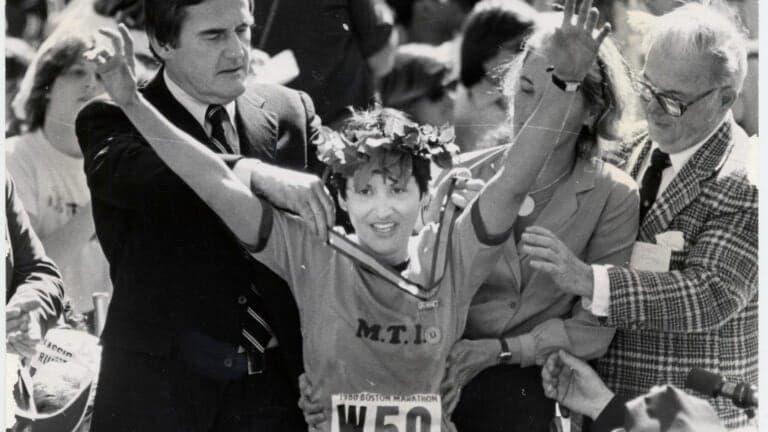
Cuban, American · Sports
Rosie Ruiz
June 21, 1953 – July 8, 2019
Early Life and Background
Rosie M. Ruiz, later known by her married name Rosie M. Vivas, was born on June 21, 1953, in Havana, Cuba.[1][2] She spent her early childhood in Cuba during a period of political turmoil surrounding the Cuban Revolution and its aftermath. Subsequent accounts indicate that she left Cuba for the United States as a child, around the age of eight, becoming part of the broader Cuban diaspora that settled in Florida and other parts of the United States.[10][11]
Ruiz grew up between cultures, navigating both her Cuban heritage and her emerging American identity. Sources describe her as having lived with relatives in Miami, Florida after emigrating, reflecting the common pattern of Cuban families and children relocating to extended kin networks in South Florida during the early 1960s.[10] While detailed records of her primary and secondary education are limited, later biographical sketches and obituaries mention that she studied music, particularly piano, and attended Wayne State College in Nebraska, suggesting that she had at least some college‑level training.[6][10]
There is no evidence that Ruiz was a competitive athlete in her youth or that she received structured training in distance running. Her eventual association with marathon running seems to have developed much later, in the context of adult recreational running during the running boom of the 1970s rather than through a traditional athletic pathway.
Career Beginnings and Life Before the Scandal
Before her name became synonymous with cheating in sports, Ruiz led what appeared to be an ordinary working life. In 1980, at the time of the Boston Marathon, she was employed as a secretary at a commodities trading firm in Manhattan, New York.[9] She had also spent several years living in New York City, after time in the Midwest at Wayne State College and in Florida.
By the late 1970s, mass‑participation distance running had become a popular pastime in the United States, fueled by the running boom and the growing prestige of large city marathons such as New York and Boston. Ruiz entered this world not as a professional athlete but as a self‑described recreational runner. There is no record that she had completed multiple marathons or possessed a long training history consistent with elite marathon performance.
Her personal life included marriage and later relocation. Sources indicate that she eventually settled in Palm Beach County, Florida, by the mid‑1980s, living there for decades until her death.[1][10] A Vietnamese‑language obituary notes that she married Aicardo (or Aicaro) Vivas in 1984 and subsequently divorced approximately two and a half years later, after which she continued to use the surname Vivas in some contexts.[10][12] However, this marriage and later life in Florida were largely overshadowed in public memory by the events of 1979 and 1980.
Entry into Marathon Running and the 1979 New York City Marathon
Ruiz’s documented entry into the marathon world began with the 1979 New York City Marathon, held on October 21, 1979.[3][4] This race later became a crucial piece of evidence in understanding the scale of her deception. According to retrospective reporting and investigations, Ruiz registered for the race and started with the field, but did not complete the full 26.2 miles.
Accounts in the New York Times and other outlets describe how she reportedly dropped out after approximately ten miles, then took the subway, and ultimately walked to the finish area.[6] Despite not running the entire course, she crossed the finish line and was officially recorded as having completed the marathon in 2:56:29, placing 24th among women. This performance, while not world‑class, was more than respectable for a first‑time marathoner and, crucially, it was used as her qualifying time for the 1980 Boston Marathon.[6][13]
At the time, large city marathons were still developing systematic methods to verify that all participants completed the full course. Course marshaling, timing checkpoints, and photographic evidence existed but were less rigorous and comprehensive than they would later become. Ruiz’s apparent New York result passed without serious scrutiny, highlighting the relative trust placed in official finish records and the limited tools race organizers had to detect course cutting or other forms of fraud.
This 1979 race thus set the stage for the events of the following year. Without the seemingly legitimate New York time, Ruiz would not have met Boston’s qualification standards, and her later claim to one of the fastest women’s marathon performances in history would never have been possible.
The 1980 Boston Marathon: Fraudulent Victory
On April 21, 1980, the 84th Boston Marathon took place, drawing elite competitors and thousands of recreational runners along the historic route from Hopkinton to Boston.[13] Ruiz, then a 26‑year‑old New Yorker working as a secretary, appeared on the starting list on the strength of her 1979 New York City Marathon time.[9][13]
In the women’s race, Canadian runner Jacqueline Gareau led much of the way and, by most accounts, was the true front‑runner throughout the course.[9] Yet, as television cameras and spectators focused on the finish line on Boylston Street, another figure emerged first: Rosie Ruiz. She crossed the line as the apparent women’s champion, clocking 2 hours, 31 minutes, and 56 seconds.[1][13]
Her time shocked the running community. It would have been the fastest women’s time ever recorded at the Boston Marathon and the third-fastest women’s marathon time globally up to that point.[1][3][9] For an athlete with no visible record of elite performances, such a result raised immediate questions. Nonetheless, in the minutes and hours after the race, officials treated her as the legitimate winner. Ruiz was awarded the victory laurel wreath, a medal, and a silver bowl, and was celebrated as a surprising champion whose performance seemed to epitomize the romance of the running boom.[1]
Even during these early celebrations, observers noticed anomalies. Ruiz did not exhibit the physical exhaustion typical of marathon finishers and appeared relatively fresh. Many fellow runners reported that they had not seen her on the course at any point, including in key sections where leaders and notable competitors would normally be recognized. Some accounts suggested she had joined the race route around a half mile to a mile from the finish.[1][2][9]
The combination of an unprecedented time, lack of recognition from other runners, and her physical appearance prompted journalists, race officials, and the running community to begin asking whether she had truly covered the full distance from Hopkinton.
Investigation and Disqualification
In the days following the race, the Boston Athletic Association and local authorities conducted an intensive investigation into Ruiz’s performance. Witnesses came forward, including spectators and runners who said they had seen her enter the course near the finish line rather than run the entire route.[9][18]
Media scrutiny added pressure. Reporters examined available video footage and photographs, attempting to track Ruiz’s presence along the course. They found little evidence of her running among the lead or even mid‑pack women for most of the race. Comparisons to Gareau’s documented progress further highlighted inconsistencies.
On April 29, 1980, eight days after the marathon, officials announced that Ruiz was disqualified and stripped of her title.[1][4] The investigation concluded that she had entered the race close to the end without completing the full distance, thereby invalidating her recorded time. The women’s victory was officially awarded to Jacqueline Gareau, who was subsequently honored as the rightful champion.
This decision was significant for Boston Marathon history and for the broader world of endurance sports. It represented one of the most visible and widely reported cases of fraud in a major international sporting event. The scandal exposed vulnerabilities in race logistics and timing practices and led to calls for more robust systems to verify that all runners traversed the entire course.
In the years that followed, marathons increasingly adopted technologies such as electronic timing chips, multiple on‑course checkpoints, and extensive photographic documentation. Ruiz’s case became a key example cited when explaining the need for such measures, particularly as mass‑participation events grew in size and complexity.
Legal Troubles and Later Life
Ruiz’s notoriety was not limited to marathon cheating. Subsequent reporting and retrospective profiles note that she became involved in other fraudulent activities. In the early 1980s, she faced legal charges including embezzlement, which resulted in a brief jail term followed by a suspended sentence, and later involvement in a cocaine‑related case that led to a period of probation.[7] These episodes reinforced the public perception of Ruiz as someone repeatedly entangled in schemes and dishonesty.
By 1985, Ruiz had settled in Palm Beach County, Florida, where she lived for many years.[1][10] She worked in various jobs and largely avoided media attention. Despite repeated efforts by journalists over the decades, she rarely spoke publicly in depth about the Boston scandal and her motivations. Available interviews and comments offer only fragmentary insight, leaving many questions about her inner life and reasoning unresolved.
Her marriage to Aicardo (or Aicaro) Vivas in 1984 and subsequent divorce around 1986, as mentioned in some biographical accounts, indicate a personal life marked by change and movement.[10][12] However, compared with the public record about her marathon fraud, details of her relationships and family are sparsely documented. No reliable sources indicate that she had children, and she did not become associated with organized athletic coaching or formal involvement in the running community after the scandal.
Awards, Honors, and Recognition
Ruiz’s relationship to awards and honors is unusual in that her most prominent recognitions were briefly granted and then rescinded. On April 21, 1980, she received the ceremonial trappings of Boston Marathon victory—the laurel wreath, trophy, and media acclaim. These were revoked after her disqualification on April 29, 1980.[1][4]
She did not receive legitimate sporting honors, world records, Olympic medals, or formal awards for athletic achievement. Instead, her name entered the historical record through negative recognition: as a symbol of cheating in sport and a cautionary tale about the consequences of fraud. Later articles in outlets such as Time, History.com, and Runner’s World treated her story as an emblematic case study of dishonesty, often juxtaposing her actions with the perseverance and integrity of genuine champions like Jacqueline Gareau.[5][13][15]
Legacy and Historical Impact
Despite the absence of authentic accomplishments, Rosie Ruiz’s legacy in sports history is substantial. Her attempted deception—and its eventual exposure—had lasting effects on how marathons and other mass sporting events manage verification, fairness, and public trust.
In the running community, her name became shorthand for cheating. Expressions such as "pulling a Rosie" or "doing a Rosie" came to describe someone who cuts the course or claims an achievement without fully earning it.[1][5][18] This linguistic legacy reflects the depth of her impact on cultural memory: few race cheats achieve such enduring notoriety that their names become generic descriptors.
Institutionally, the scandal accelerated reforms. Race organizers increasingly recognized the need for:
- Multiple timing checkpoints spread along the course;
- Photographic and video documentation at key distances;
- Improved bib and number tracking;
- Clear procedures for investigating suspicious performances.
As marathons grew in size and prestige, Ruiz’s case was repeatedly cited as evidence that even seemingly amateur competitors could stage high‑profile frauds, damaging the reputation of events and undermining the achievements of genuine athletes.[5][18]
From a women’s history perspective, her story illustrates that women’s presence in sport includes not only triumphs and barrier‑breaking achievements but also controversies that reshape governance and ethics. Ruiz’s fraudulent win temporarily overshadowed the genuine success of Jacqueline Gareau, highlighting the importance of accurate recognition and the harms caused when cheating displaces legitimate female accomplishments.
The case has remained a staple of documentaries, articles, and online discussions. Pieces in The New York Times, Time magazine, History.com, and running‑specific outlets have revisited the story over the decades, framing it variously as a curiosity, a moral lesson, and a turning point in marathon administration.[5][9][13][15] Social media and online forums continue to reference Ruiz when new cheating incidents emerge, demonstrating the enduring relevance of the episode.
Later Life and Death
In later years, Ruiz lived quietly in Florida, primarily in Palm Beach County.[1][10] Reports suggest that she battled cancer for an extended period—some sources describe a decade‑long struggle—before her death.[4][11] On July 8, 2019, she died in Lake Worth Beach, Florida, at age 66, according to an obituary and subsequent coverage in outlets like The New York Times, Runner’s World, and local media.[1][5][9][15]
Her death prompted renewed examination of her life and the Boston Marathon scandal. Obituaries and retrospectives emphasized the paradox of her legacy: she never held a genuine major athletic title, yet her name remains one of the most recognizable in marathon history. For many commentators, her story served as a reminder of the importance of integrity in sport and the systems now in place to protect athletes and events from similar fraud.
Ruiz left behind no foundation, official memorial, or publicly documented philanthropic activities. Her impact on history lies almost entirely in the reactions her actions provoked—tightened race safeguards, a strengthened cultural norm against cheating, and increased awareness of how easily unverified claims can distort public narratives of achievement.
In this sense, Rosie Ruiz occupies a distinctive place in women’s sports history: as a figure whose notoriety, rather than achievement, drove change. Her life story underscores how individual actions, even when unethical, can spur institutions to reform and can become embedded in collective memory as cautionary tales for future generations of athletes and organizers.
Dated achievements
5 indexed.
- Jun211953Sports
Birth of Rosie Ruiz
Rosie M. Ruiz was born in Havana, Cuba, beginning her life marked by infamy in sports history.
View details Rosie Ruiz - Wikipedia - Oct211979Sports
Fraudulent qualifying time in NYC Marathon 1979
Ruiz qualified for the 1980 Boston Marathon using a dishonest time in the 1979 NYC Marathon.
View details