← All women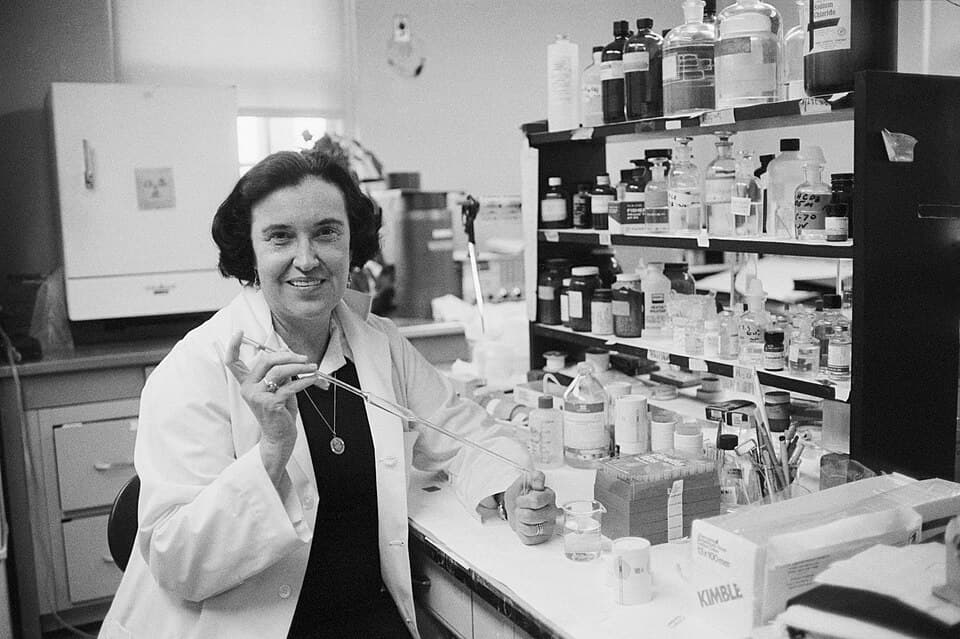
American · Science · Medicine
Rosalyn Sussman
July 19, 1921 – May 30, 2011
Early Life and Background
Rosalyn Sussman Yalow was born on July 19, 1921, in the Bronx, New York, to Simon Sussman and Clara Zipper. Her parents were Jewish immigrants from Eastern Europe. Growing up during the Great Depression, Yalow was encouraged by her parents to pursue education, which was seen as the pathway to a better life. Her interest in science was evident from a young age, and she pursued a bachelor's degree in physics at the City College of New York, followed by a Ph.D. in nuclear physics from the University of Illinois in 1945, a notable achievement during a time when women were underrepresented in the sciences.
Career Beginnings and Development
After completing her doctorate, Yalow returned to New York and took a position at the Veterans Administration Hospital in the Bronx (later renamed the Bronx Veterans Affairs Medical Center). There, she worked in the Department of Veterans Affairs where she met Solomon Berson, a fellow physician with whom she would form a productive lifelong partnership. Her early work focused on the application of radioisotopes in medical research, a field that was both pioneering and contentious due to safety concerns about radiation exposure.
Major Works and Discoveries
Yalow's most famous contribution to medicine came through her co-development of the radioimmunoassay (RIA) technique in the late 1950s and 1960s with Berson. This methodology allowed for the measurement of small quantities of biological substances, such as hormones and drugs, in the blood, revolutionizing the field of endocrinology. The technique was initially used to measure insulin levels, and its success provided insights into insulin resistance, opening new avenues for diabetes research. RIA went on to have wide applications, profoundly impacting both diagnostic and therapeutic practices in medicine.
Awards, Honors, and Recognition
In 1977, Rosalyn Yalow was awarded the Nobel Prize in Physiology or Medicine (which she shared with Andrew V. Schally and Roger Guillemin) for her work in the development of RIA. She was the first American-born woman and the second woman ever to receive this award. Her recognition extended beyond the Nobel Prize; she received numerous honorary doctorates and was inducted into the National Women's Hall of Fame in 1993.
Personal Life
Rosalyn Sussman married Aaron Yalow, a fellow physicist, on June 6, 1943. They had two children together, Benjamin and Elanna. Throughout her life, Yalow balanced her demanding career with family commitments, often overcoming gender-based skepticism in a male-dominated field. Yalow was known for her perseverance and dedication to science, traits she credited to her disciplined upbringing.
Legacy and Historical Impact
Rosalyn Yalow’s career left a profound legacy on the fields of medicine and medical physics. The development of RIA has been hailed as one of the key innovations in medical research and diagnostics, influencing diagnostic techniques used in laboratories worldwide. Yalow herself became a symbol of encouragement for women in science, often speaking on overcoming barriers and advocating for equal opportunities.
Later Life and Death
Yalow continued to work and contribute to scientific research well into her later years. She retired in 1991 but remained a noted figure in the academic and medical communities. Rosalyn Sussman Yalow passed away on May 30, 2011, in the Bronx, New York, at the age of 89. Her life and contributions continue to inspire future generations of scientists and researchers.
Dated achievements
2 indexed.
- Jul191921Science
Birth of Rosalyn Sussman Yalow
Rosalyn Sussman, the future Nobel laureate in Medicine, was born.
View details Rosalyn Sussman Yalow - Britannica - May302011Science
Death of Rosalyn Sussman Yalow
Nobel Prize-winning physicist Rosalyn Yalow passed away.
View details