← All women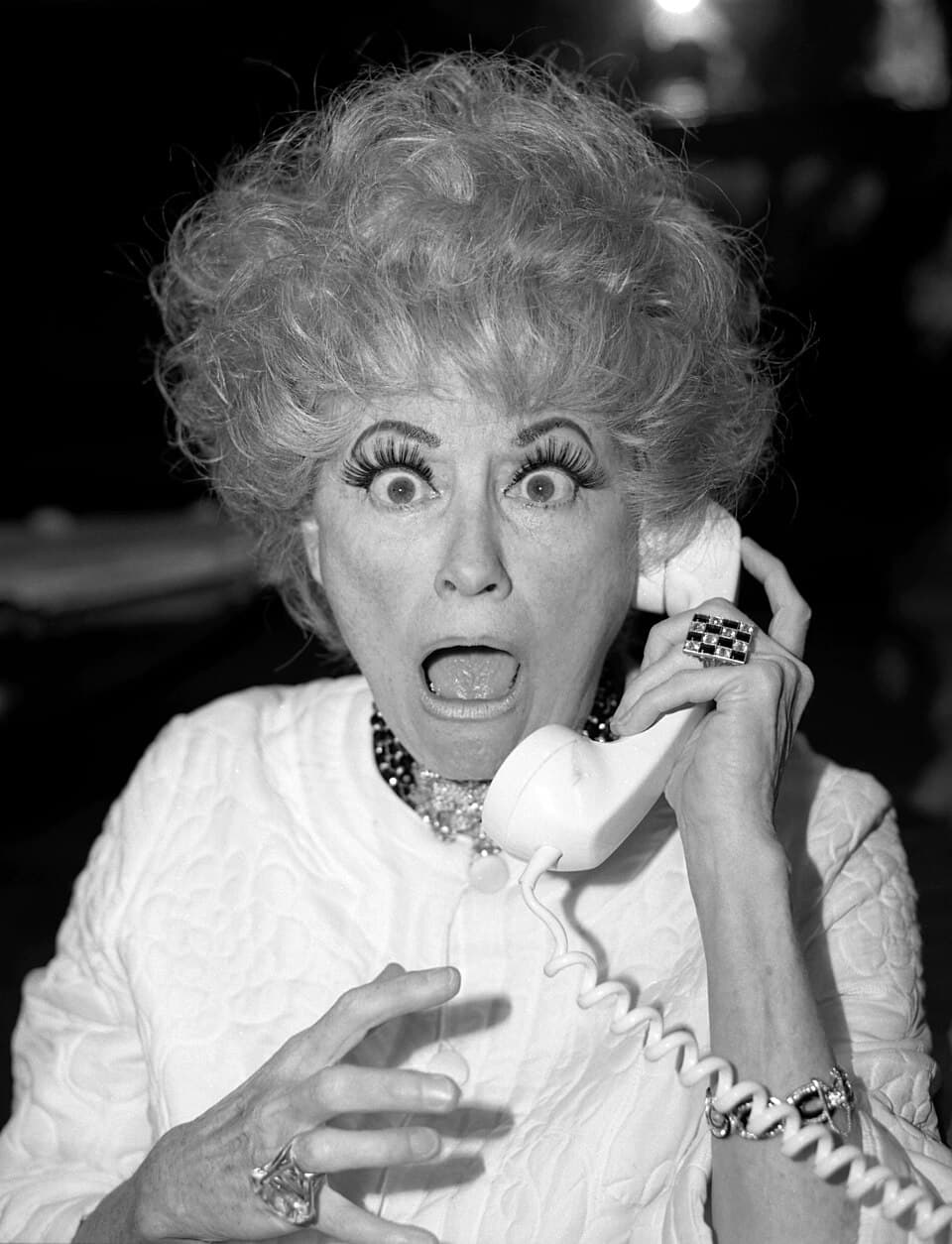
American · Arts
Phyllis Diller
July 17, 1917 – August 20, 2012
Early life and background
Phyllis Ada Driver was born on July 17, 1917, in Lima, Ohio, to Perry Marcus Driver and Frances Ada Romshe Driver. She was an only child, and later accounts of her life describe her as growing up around older relatives, a family environment that she would eventually transform into comic material. Sources from the Smithsonian, Britannica, and other institutional profiles agree on her birth date and place.
Diller’s childhood was shaped by Midwestern middle-class expectations and a conventional view of women’s roles. She attended Lima’s Central High School and later studied at Sherwood Music Conservatory in Chicago before transferring to Bluffton College in Ohio. Although she later became famous for comedy, she initially imagined a life in music; biographical profiles note that she wanted to be a pianist when she was young. That early musical training remained part of her identity, and she later continued to perform and identify as a musician as well as an entertainer.
She married Sherwood Diller and had six children. In later interviews and retrospectives, Diller credited her husband with encouraging her to try stand-up comedy. That encouragement proved decisive because she did not begin her professional comedy career until midlife, after years of domestic labor and family responsibilities. The contrast between her traditional early adulthood and her later career made her success particularly striking in an era when women were expected to remain outside the public spotlight.
Career beginnings
Diller’s path into comedy was unusually late compared with most performers. She launched her life in stand-up in 1955 and soon became one of the most visible female comics in the United States. Institutional histories of her career describe the mid-1950s as the period when she began appearing in clubs and on television, after developing the stage persona that made her famous: a frantic, self-mocking housewife with wild hair, dramatic costumes, and a cackling laugh.
Her early success depended on her willingness to mine material that mainstream American entertainment had often treated as unsuitable for women. She joked about marriage, housework, child rearing, cosmetics, aging, and domestic failure, but she did so with a level of theatrical control that made the persona instantly recognizable. This combination of exaggerated insecurity and sharp comic timing distinguished her from male comics and from the few women who had previously worked in the field.
According to retrospective profiles, a major turning point came after she appeared on You Bet Your Life in 1956, which helped bring her to a national audience. Her 1950s breakthrough also led to appearances on television and in nightclubs, where she developed the performance style that would define her career for the next several decades. Her timing, voice, and stage image made her memorable in a period when television and nightclub circuits were major gates to fame.
Breakthrough and barrier-breaking success
In 1961, Diller became the first female comic to headline a Las Vegas club at the Flamingo, a historically significant milestone in entertainment history. Las Vegas headlining had long been a male-dominated marker of commercial legitimacy, and Diller’s achievement signaled that a woman could carry a major nightclub act on equal footing with men. That same year she made her film debut in Splendor in the Grass, further expanding her visibility beyond the stage.
Her rise accelerated in the early 1960s. Retrospective accounts note a first highly successful appearance on The Tonight Show with Jack Paar in 1962, which helped cement her as a nationally recognized comic figure. In 1963, she published her first book, extending her persona into print. In 1964, she began the first of many appearances on Bob Hope Specials, joining one of the era’s most prominent entertainment franchises. Those appearances mattered because network variety programs were among the most influential entertainment platforms in the country, and Diller’s recurring presence made female stand-up more visible to mass audiences.
Her 1966 television series The Pruitts of Southampton represented another important step, even though the program itself is now chiefly remembered as a short-lived experiment. It showed how networks were willing to build a show around her comic identity, which was rare for a woman in that period. In 1972, she publicly underwent a facelift, an event that drew attention because she often turned aging and appearance into comedic themes. In 1976, she appeared as a judge on the premiere episode of The Gong Show, another example of her continuing mainstream visibility.
Later career, honors, and recognition
Diller’s career was not limited to stand-up. She worked in film, television, publishing, recording, and other performance formats, and biographies note that she was also a visual artist and musician. She became a familiar figure in a wide range of entertainment settings, from club dates to television specials and celebrity roasts. Institutional summaries also emphasize that she appeared in more Bob Hope Specials than anyone except Bob Hope, a sign of her longevity and the confidence major producers placed in her comic persona.
Her achievements received formal recognition as her influence became clearer over time. Later profiles and tributes describe her as a pioneer who opened doors for women in stand-up comedy. The Smithsonian’s decision to create a centennial project around her gag file in 2017 illustrates the extent to which Diller had become an archival and historical subject, not merely a performer remembered for nostalgia. By then, she was being studied as a foundational figure in the history of women in American comedy.
Although she is often remembered for her look and laugh, her impact was more structural than stylistic. She helped normalize the idea that a woman could be loud, self-authoring, commercially successful, and unapologetically comic about domestic life. Her work also made self-deprecation a tool of agency rather than humiliation, allowing her to control how audiences perceived female aging, motherhood, and sexuality in entertainment.
Personal life
Diller’s personal life was closely tied to her public identity. She married Sherwood Diller and raised six children, while also maintaining a career that began after years of family responsibilities. Later biographical accounts emphasize that she was a housewife and mother before becoming a performer, a trajectory that made her later success unusual and influential. Her domestic background was not incidental; it fed directly into the material that made her famous.
Over time, Diller became known for an exaggerated stage version of suburban womanhood, one that blurred the boundary between autobiography and performance. She used the pressures of marriage, parenting, household labor, and self-presentation as comic subjects, which helped audiences read her not simply as an entertainer but as a satirist of postwar domestic expectations. In that sense, her personal history and her act were deeply intertwined.
Legacy and historical impact
Phyllis Diller’s historical importance lies in her role as a pioneer of American stand-up comedy for women. Smithsonian identifies her as widely considered the first woman stand-up comic to perform as a solo act, and multiple tributes describe her as a trailblazer who opened doors for later generations. She did so at a time when comedy clubs, television variety shows, and network institutions were overwhelmingly male in personnel and assumptions.
Her legacy is also visible in the substance of her comedy. She made room for women to joke about the very subjects that had been treated as too ordinary, domestic, or embarrassing to be culturally valuable. By turning those subjects into public performance, she helped expand what audiences expected female comics to say and how they could sound. That influence can be traced in later stand-up traditions that rely on personal confession, domestic satire, and stylized self-presentation.
Diller’s life also demonstrates the importance of late-blooming careers in women’s history. She did not become famous in her teens or twenties; she entered stand-up after marriage and motherhood, then built a national persona from there. That fact makes her career especially significant for women’s history because it complicates narrow ideas about when professional reinvention is possible. Her example remains relevant to studies of gender, performance, and the changing public role of women in twentieth-century America.
Death
Diller died on August 20, 2012, in Brentwood, Los Angeles, at age 95. Her death prompted renewed attention to her role in comedy history, and subsequent memorials continued to emphasize her status as a first-generation female stand-up pioneer. The date marks the end of a life that had spanned nearly a century of dramatic change in American entertainment, gender norms, and media culture.
Even after her death, Diller’s influence remained visible in the historical record. Museum exhibits, institutional spotlights, and biographical profiles continued to frame her as a foundational figure whose work helped women claim space in comedy. Her career illustrates how a single performer, working through wit, timing, and a carefully constructed persona, can alter the boundaries of a cultural field.
Dated achievements
3 indexed.
- Jul171917Arts
Birth of Phyllis Diller
Birth of Phyllis Ada Driver in Lima, Ohio, the future comedian who helped open stand-up comedy to women.
View details Britannica: Phyllis Diller - Jul171917Arts
Recognized as first woman solo stand-up comic
Birth of the performer later recognized by the Smithsonian as the first woman stand-up comic to perform solo.