← All women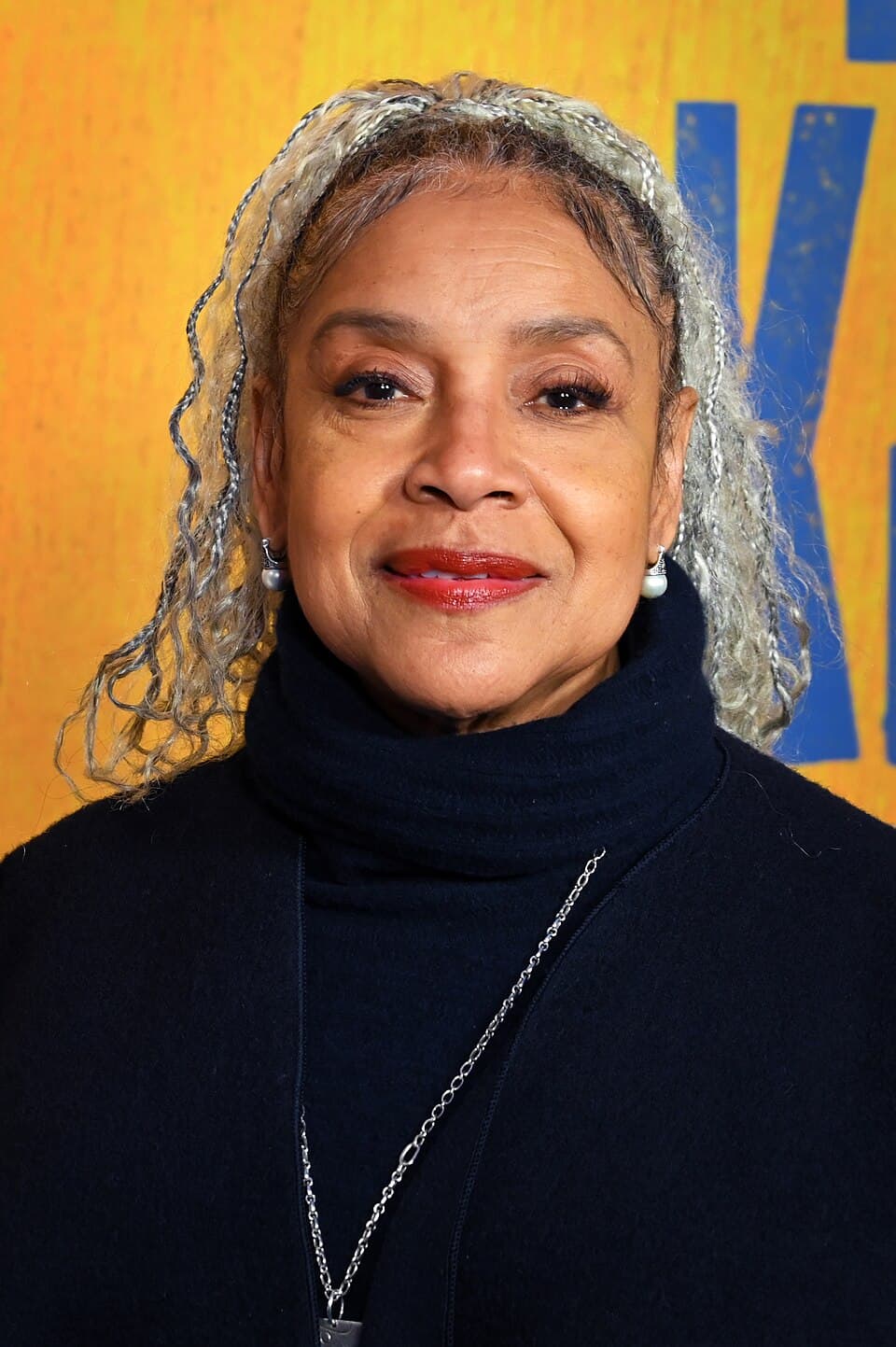
American · Arts
Phylicia Rashad
June 19, 1948 – present
Early Life and Background
Phylicia Rashad (née Phylicia Ayers-Allen) was born on June 19, 1948, in Houston, Texas, into a family that combined professional accomplishment with deep engagement in the arts.[1][2][3][4][12] Her mother, Vivian Ayers, is a poet, scholar, and cultural worker whose literary and educational projects foregrounded African American history and creativity.[3][12] Her father, Andrew Arthur Allen Jr., was a dentist (often described as an orthodontist in popular accounts) who provided a middle‑class professional example.[4][12] Rashad grew up with two siblings: her sister Debbie Allen, who would become an acclaimed dancer, choreographer, director, and producer, and her brother Andrew "Tex" Allen, a jazz musician and composer.[12]
Rashad’s childhood in Houston unfolded during the era of legal segregation and the burgeoning civil rights movement. Her mother’s involvement in literature and education introduced her early to Black intellectual traditions and the importance of cultural self‑definition. The family later spent time in Mexico, where Rashad learned Spanish, broadening her linguistic and cultural horizons and exposing her to life outside the racial dynamics of the United States.[12] These experiences helped cultivate a cosmopolitan perspective and an understanding of how art can cross boundaries.
Rashad showed a strong interest in theatre and performance from an early age. She eventually enrolled at Howard University, a historically Black institution in Washington, D.C., known for producing generations of African American artists and intellectuals. There, she studied theatre and developed her craft under faculty and mentors who emphasized both artistic rigor and social responsibility. She graduated magna cum laude with a Bachelor of Fine Arts in Theatre in 1970.[3][6][11] Howard’s environment, which celebrated Black culture and demanded high standards, gave Rashad a strong foundation for a career in which she would regularly navigate predominantly white institutions while maintaining a connection to Black communities and narratives.
Career Beginnings and Development
After graduating from Howard, Rashad moved into the professional theatre world, taking an apprentice role with New York’s pioneering Negro Ensemble Company (NEC).[5] The NEC was central to the development of modern Black theatre, providing opportunities for Black playwrights, directors, and actors at a time when mainstream stages rarely centered Black stories. Rashad’s work there immersed her in an ecosystem of artists committed to building a new Black theatrical canon and helped her refine her skills in ensemble work and serious drama.
Throughout the 1970s and early 1980s, Rashad built a varied stage career. She appeared in productions on and off Broadway, including early work in Ain’t Supposed to Die a Natural Death, The Wiz, Dreamgirls, Jelly’s Last Jam, and Into the Woods, among others, showcasing her versatility as both actress and singer.[3][11] Her engagement with musical theatre as well as straight drama established her as a performer capable of crossing genres and collaborating with major directors and choreographers.
Rashad also entered television during this period. She had roles in daytime and primetime series, including a notable appearance on the soap opera One Life to Live, which introduced her to a wider television audience.[8] These early TV roles helped her gain experience in serial storytelling and camera work, skills that would be crucial when she later took on one of the most iconic sitcom roles of the late twentieth century.
Breakthrough: Clair Huxtable and The Cosby Show
Rashad’s major breakthrough came with her casting as Clair Huxtable, a sophisticated, high‑achieving attorney and mother, on the NBC sitcom The Cosby Show, which ran from 1984 to 1992.[1][2][6][7] The series depicted an upper‑middle‑class Black family, the Huxtables, living in Brooklyn and challenged widespread media stereotypes that associated Blackness primarily with poverty or criminality. Rashad’s character was central to this reimagining: Clair Huxtable seamlessly combined professional authority with warmth, wit, and firm parenting, presenting an image of Black womanhood rarely seen on network television at the time.
During the run of The Cosby Show, Rashad received multiple award nominations and honors. She earned Primetime Emmy Award nominations in 1985 and 1986 for Outstanding Lead Actress in a Comedy Series.[1][7] She won a People’s Choice Award for Favourite Female Performer in a New Television Program in 1985, and another People’s Choice Award for Favourite Female Television Performer in 1989.[7] The NAACP Image Awards recognized her work with an award for Best Actress in a Comedy Series in 1988 and later honors and nominations related to both The Cosby Show and her film work.[7][11]
Beyond trophies, Clair Huxtable became a cultural touchstone. Scholars and viewers have noted how Rashad’s portrayal contributed to expanding the representational repertoire of Black women onscreen—depicting them as successful professionals and loving mothers without reducing them to one‑dimensional stereotypes. Her character influenced later representations of Black women in television, paving the way for more complex roles in both comedy and drama.
Stage Work and Major Theatre Accomplishments
While The Cosby Show made Rashad a household name, she continued to work extensively in theatre. Her career on major stages includes appearances in Broadway productions such as Gem of the Ocean, Into the Woods, Dreamgirls, Jelly’s Last Jam, Blue, The Wiz, and Ain’t Supposed to Die a Natural Death, among others.[3][11] She also worked at Lincoln Center in productions of Cymbeline and Bernarda.[3] These roles allowed her to demonstrate range across musical theatre, contemporary drama, and classical adaptations.
A central pillar of her stage legacy is her association with playwright Lorraine Hansberry’s landmark 1959 play A Raisin in the Sun. Rashad first took on the role of Lena Younger, the family matriarch, in a Broadway revival that opened at the Royale Theatre on June 9, 2004.[1] Her performance received wide critical acclaim for its emotional depth and moral presence, bringing new life to a role that had long been central to Black theatre.
On May 16, 2004, Rashad’s work in A Raisin in the Sun was recognized with the Drama Desk Award for Outstanding Actress in a Play (shared award) at the 49th Drama Desk Awards, honoring her among New York’s theatre community.[1][4] Then, on June 13, 2004, she achieved a historic milestone: at the 58th Annual Tony Awards, Rashad won the Tony Award for Best Performance by a Leading Actress in a Play for her portrayal of Lena Younger, becoming the first Black woman to win the Tony Award for Best Actress in a Play.[1][2][7][10]
This groundbreaking achievement has been widely noted in theatre and women’s history. For decades, Black actresses had delivered standout performances on Broadway but faced systemic barriers to recognition in major award categories. Rashad’s 2004 Tony win marked a turning point, signaling greater, though still incomplete, openness within the American theatre establishment to honoring Black women’s dramatic excellence.
Her association with A Raisin in the Sun continued when she reprised Lena Younger in a 2008 television adaptation. For this performance, she received the NAACP Image Award for Outstanding Actress in a Television Movie, Mini-Series or Dramatic Special at the 40th NAACP Image Awards on February 12, 2009.[8][5] The award underscored the enduring relevance of Hansberry’s work and Rashad’s interpretation across media.
Rashad has also made notable contributions to contemporary theatre. In Head of Passes, written by Tarrell Alvin McCraney and staged at the Public Theater, she played Shelah, a matriarch confronting grief, faith, and family secrets. Her performance earned her the Lucille Lortel Award for Outstanding Leading Actress in a Play at the 31st Lucille Lortel Awards on May 1, 2016, highlighting her excellence in Off‑Broadway work.[4][6][9]
Another major stage accomplishment came with her role as Faye in Skeleton Crew, a play by Dominique Morisseau about workers at a Detroit auto plant facing closure. For this performance, Rashad received the Drama Desk Award for Outstanding Actress in a Play at the 66th Drama Desk Awards on June 6, 2022, and, days later, her second Tony Award, winning the Tony Award for Best Performance by an Actress in a Featured Role in a Play at the 75th Tony Awards on June 12, 2022.[1][4][10] These honors, nearly two decades after her first Tony, affirmed her continued relevance and power as a dramatic actor.
Alongside her acting, Rashad has built a significant career as a stage director. She has directed plays by August Wilson, including Gem of the Ocean, Fences, Ma Rainey’s Black Bottom, and Joe Turner’s Come and Gone, as well as works by Stephen Adly Guirgis (Our Lady of 121st Street) and Paul Oakley Stovall.[9] Her directing work has been essential to sustaining and interpreting the Black dramatic canon, bringing her interpretive insight to scripts that foreground Black history and community life.
Awards, Honors, and Recognition
Across her career, Rashad has received a wide array of awards and honors that reflect both artistic achievement and cultural impact. Beyond her landmark 2004 Tony Award and 2022 Tony Award, her theatre work has brought Drama Desk Awards (2004 and 2022) and the Lucille Lortel Award (for Head of Passes in 2016).[1][4][6][9]
She has been recognized repeatedly by the NAACP Image Awards, including awards for her work on The Cosby Show, the 2008 A Raisin in the Sun adaptation, and later film roles.[1][5][7][11] In 2020, she won the NAACP Image Award for Outstanding Supporting Actress in a Motion Picture for the film Jingle Jangle: A Christmas Journey, further demonstrating her lasting screen presence.[1]
Rashad’s contributions have also been honored by a wider set of institutions. In 1989, she received an honorary degree from Barber–Scotia College, and in 1991, she was acknowledged by Women in Film with an Outstanding Achievement Award and named honoree of the year by the Harvard Foundation; she also received an honorary degree from Providence College.[7] A Trumpet Award in 1995 recognized her role in advancing African American achievement.[7]
Her stage work in Washington, D.C., has brought Helen Hayes Awards, including a win for Outstanding Lead Actress, Resident Play in 1997 and Outstanding Supporting Actress, Resident Play in 2011.[4] She was nominated for the Tony Award for Best Performance by an Actress in a Leading Role in a Play for Gem of the Ocean in 2005, and for an NAACP Image Award for Outstanding Supporting Actress in a Motion Picture for Good Deeds in 2013.[1][4]
On November 14, 2016, Rashad was inducted into the Theater Hall of Fame at the Gershwin Theatre in New York, an honor reserved for artists who have made lasting contributions to the American stage.[4][6][9] This induction placed her among a select group of theatre figures recognized for long‑term impact.
Rashad has received numerous institutional recognitions in the 2010s and 2020s. She was the first recipient of the Denzel Washington Chair in Theatre at Fordham University, reflecting her stature as an educator and mentor.[5] She has been awarded multiple honorary doctorate degrees, including one from Howard University, acknowledging her contributions to arts and education.[5] In 2014, she received the Mosaic Woman Legend Award from Diversity Woman Magazine, and in 2015, the Spirit of Shakespeare Award from Chicago Shakespeare Theater and the inaugural Legacy Award from the Ruben Santiago-Hudson Fine Arts Learning Center.[9] In 2024, she won the Black Reel Award for Outstanding Guest Performance in a Comedy Series for Diarra from Detroit, underscoring her continued relevance in contemporary television.[1]
Additionally, Rashad was honored with the BET Honors Theatrical Arts Award at a ceremony on February 28, 2015, recognizing her contributions to theatre and performance within a Black cultural context.[1][6] These awards collectively reflect her dual status as a mainstream industry figure and a cherished icon within African American communities.
Film and Television Beyond The Cosby Show
Although The Cosby Show remains her most widely recognized television role, Rashad has sustained a varied career across film and television. She has appeared in movies such as Once Upon a Time…When We Were Colored, For Colored Girls, Creed and Creed II, Black Box, Soul, and Jingle Jangle: A Christmas Journey, often portraying figures of authority, mentorship, or maternal influence.[9][11] These roles have allowed her to bring gravitas and emotional complexity to stories centering Black characters and experiences.
On television, she has appeared in series including This Is Us (where she plays the mother of a character portrayed by Howard alumna Susan Kelechi Watson), Empire, David Makes Man, and others, earning additional Primetime Emmy nominations for guest work.[5][9] She has maintained a steady presence in dramas that explore family, work, and community, often serving as a moral anchor or emotional center.
Educational Leadership and Mentorship
Education and mentorship have been a consistent part of Rashad’s career. After establishing herself as an actor, she returned to Howard University as a drama instructor, sharing professional insights with new generations of students.[4] Her connection to Howard has remained strong over the decades; she has served on boards and in advisory roles, and is often cited as one of the university’s most distinguished alumni.
In the 2020s, Rashad took on a more formal leadership role as Dean of the Chadwick A. Boseman College of Fine Arts at Howard University, a position she held until the end of her three‑year contract in May 2024.[1] As dean, she oversaw curriculum, faculty development, and strategic initiatives aimed at strengthening arts education and fostering pathways for students into professional theatre, film, and television.
Her mentorship extends beyond institutional roles. As a director and senior artist, Rashad has guided younger performers in productions of August Wilson’s plays and other works, encouraging rigorous engagement with text and an understanding of theatre’s social dimensions.[5][9] Her presence in rehearsal rooms and classrooms has helped shape a generation of Black artists who view her as a model of professionalism and artistic integrity.
Personal Life
Rashad’s personal life has intersected with her public career in ways that are historically relevant to understanding Black women’s experiences in the performing arts. She became a mother in 1973, when her son William "Billy" Lancelot Bowles III was born.[14] Balancing motherhood with the demands of a stage and television career required logistical and emotional negotiation, particularly in an industry that has often been unforgiving to working mothers.
In 1985, Rashad married former NFL player and sportscaster Ahmad Rashad, taking his surname, which she continues to use professionally.[14] The couple had a daughter, Condola Phylea Rashad, who has followed in her mother’s footsteps as a successful actress and theatre performer.[14] Rashad’s family life, including her relationships with her children and sister Debbie Allen, has been part of broader narratives about Black artistic dynasties and the transmission of cultural capital across generations.
Her marriage to Ahmad Rashad ended in divorce, and she has generally maintained a relatively private personal life in later years, focusing public attention on her work and mentorship rather than on intimate details. Nevertheless, media accounts and interviews frequently emphasize her role as a mother and sister within a family of highly accomplished Black artists.[12][14]
Legacy and Historical Impact
Phylicia Rashad’s legacy spans multiple domains: television, theatre, film, and arts education. As Clair Huxtable, she helped reshape mainstream conceptions of Black family life and professional Black women, offering a complex, aspirational image that resonated widely in the United States and abroad.[1][2][7] Scholars of media and African American studies often cite her role as pivotal in expanding the representational landscape for Black women on television.
In theatre, Rashad’s 2004 Tony Award as the first Black woman to win Best Actress in a Play stands as a landmark moment in the history of Broadway and of awards recognition for Black performers.[1][2][10] Her continued prominence, including major awards in 2016 and 2022, demonstrates a career not confined to a single era or genre. She has become a symbol of sustained excellence, showing that Black women can occupy center‑stage roles and receive top industry honors over many decades.
As a director and educator, Rashad has contributed to the preservation and evolution of the Black dramatic canon—particularly through her work with August Wilson’s plays—and to the training of new artists.[5][9] Her leadership at Howard University’s College of Fine Arts links her to institutional histories of Black arts education that go back to the mid‑20th century and continue to shape cultural production today.[1][5]
Her influence is also intergenerational. Her daughter, Condola Rashad, is a successful actress, and her sister, Debbie Allen, has a major career in dance and television. Together, they represent a family that has had an outsized impact on American performing arts, especially in diversifying who is seen and celebrated on screen and stage.[12][14]
Later Life and Continuing Work
In her later life, Rashad has remained active across multiple fields. She continues to act in film and television, taking on roles that explore themes of family, work, and community; her performances in projects such as Jingle Jangle, This Is Us, and Diarra from Detroit illustrate her ongoing relevance and adaptability.[1][5][9] Her recognition by awards bodies into the 2020s, including the 2024 Black Reel Award, emphasizes that her career is not only enduring but evolving.
Her tenure as dean at Howard University’s College of Fine Arts, concluding in May 2024, reflects a turn toward institutional leadership and the shaping of structural conditions for future artists.[1] Even beyond formal administrative roles, she is frequently engaged in master classes, public conversations, and mentorship initiatives that align with her long‑standing commitment to education and representation.
As of the mid‑2020s, Rashad remains a living figure whose work continues to influence and inspire. Her story is central to any comprehensive account of women’s history in the performing arts and to analyses of how Black women have navigated and transformed American media and theatre industries. Her achievements—from groundbreaking awards to iconic roles and educational leadership—underscore the importance of sustained, multifaceted contributions in building more inclusive cultural landscapes.
Dated achievements
10 indexed.
- Jun191948Arts
Birth in Houston, Texas
Phylicia Rashad was born in Houston, Texas, becoming the second child of Vivian Ayers and Andrew Arthur Allen Jr.
View details Encyclopaedia Britannica - Jun132004Arts
First Black woman to win Tony Award for Best Actress in a Play
Rashad won the Tony Award for Best Actress in a Play for 'A Raisin in the Sun,' the first for a Black woman.