← All women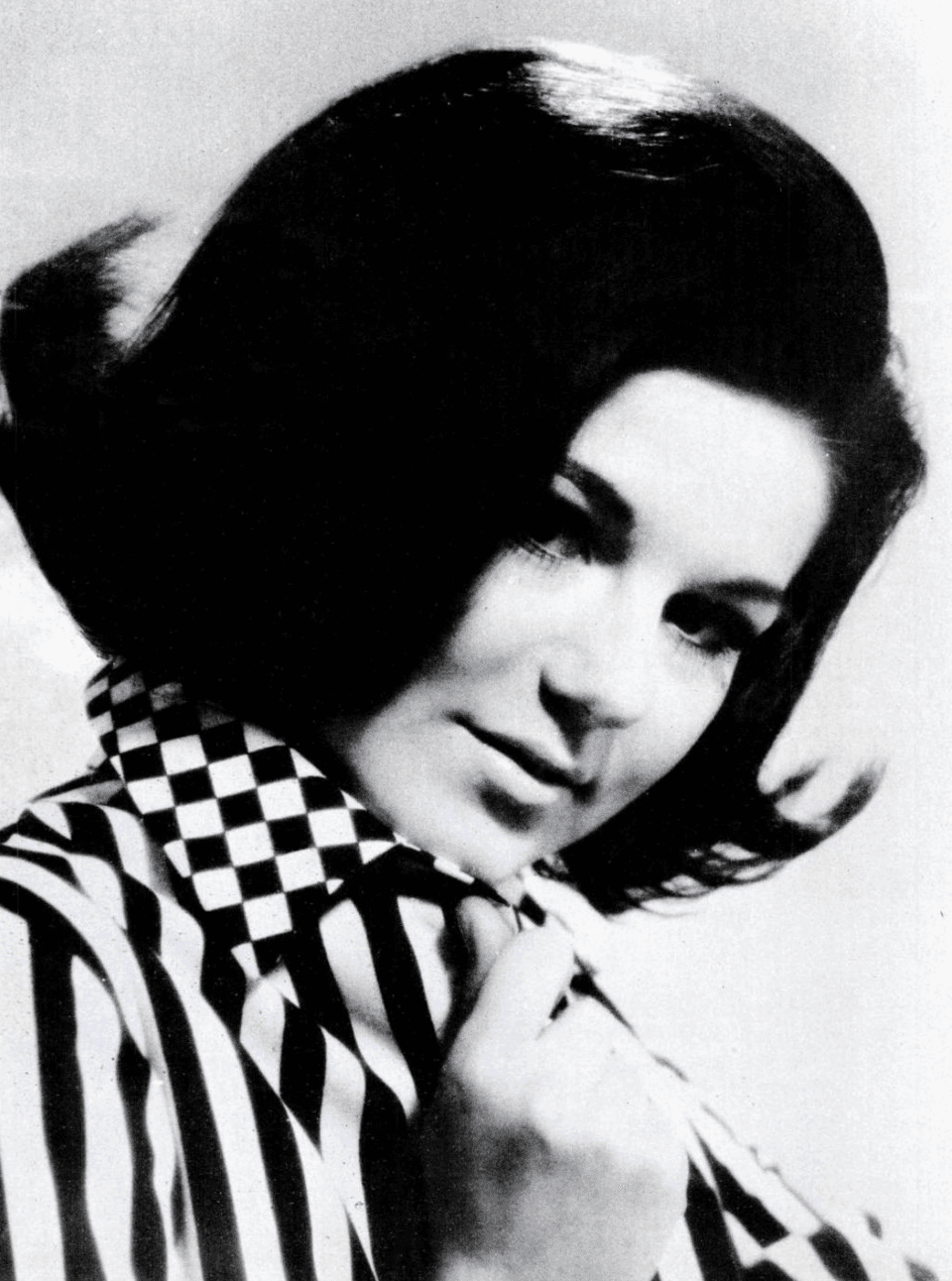
American · Arts
Peggy March
March 8, 1948 – present
Early life and family background
Peggy March was born Margaret Annemarie Battavio on March 8, 1948, in Lansdale, Pennsylvania, to an Italian-American family. Biographical sources consistently place her birth in Lansdale and identify her as the daughter of John and Marguerite Battavio. She later became widely known by the stage name Peggy March, and in early publicity she was often called “Little Peggy March” to emphasize both her youth and her appeal as a teen performer.
March showed musical talent at a very young age. Later biographies and interviews describe her singing in childhood and appearing at family events before she reached her teens. By the time she was still a preteen, she was already performing locally, including on regional television. Her early development took place in the context of a postwar American music industry that increasingly valued young performers who could attract teenage audiences. For a young girl from Pennsylvania, that industry offered opportunity, but also demanded unusual poise, discipline, and professional confidence.
March’s discovery story became part of her legend: she was reportedly heard singing at a cousin’s wedding at about age 13 and introduced to record producers Hugo & Luigi. In a period when many female singers were introduced to the public through heavily managed industry pathways, her early story fit the era’s pattern of talent scouting while also reflecting the limited agency afforded to young women in entertainment. The producers signed her to RCA Victor and helped craft the stage name that would become internationally recognizable.
Career beginnings and breakthrough
March’s first recording efforts began before her signature hit arrived. Her early single “Little Me” appeared in 1962 but did not become a major success. Even so, the release gave her experience as a recording artist and introduced her to the realities of the pop marketplace, where a performer could be encouraged by label support yet still face the uncertainty of commercial reception. That background made the outcome of 1963 especially dramatic.
On January 22, 1963, her single “I Will Follow Him” was released in the United States. The song quickly became the defining record of her career. On April 24, 1963, it reached number one on the Billboard Hot 100, making the 15-year-old March a star almost overnight. The song also reached the top of the Billboard R&B chart, an unusual crossover for a white female solo artist. These combined achievements made her one of the most notable teen-pop figures of the early 1960s and gave her a place in chart history.
On April 27, 1963, contemporary reporting highlighted the historical significance of the moment by noting that March, at 15 years, 1 month, and 13 days old, was the youngest female singer to have a U.S. number-one record. The emphasis on her age reflected the broader culture of the period, when youth itself could be marketed as a commodity. For March, however, the achievement was more than a novelty. It established a benchmark that has remained central to her historical identity and helped define how later generations remember teen stardom in American pop.
International success and European career
Although March’s American chart career was relatively brief, her success expanded significantly in Europe, especially in Germany. On July 20, 1963, “I Will Follow Him” reached number 6 on the German charts, indicating that her appeal extended far beyond the United States. This international reception would prove crucial to the longevity of her career.
During the 1960s and 1970s, March became especially associated with German-language recording. Sources in German-language biographies note her popularity there and identify songs such as “Mit 17 hat man noch Träume” and “In der Carnaby Street” among her better-known recordings. Her success in Germany is historically important because it shows how an American female singer could build a second career in Europe after her initial U.S. fame. In that sense, March’s career illustrates both the portability of pop stardom and the opportunities available to artists who were willing to adapt linguistically and stylistically to new markets.
Biographical accounts also note that March achieved multiple European hits well into the 1970s. Among the year-dated milestones associated with her career are the 1965 German success of “Goodbye, Goodbye, Goodbye”, the 1971 recording of “Once In Love – Always In Love”, and the 1977 success of “Fly Away Pretty Flamingo”. These releases helped her remain visible long after her initial teenage breakthrough and reinforced her standing as a durable continental pop performer rather than a one-hit wonder.
Songwriting, collaborations, and later recording work
In addition to performing, March also became associated with songwriting and collaborative recording. One of her most widely noted later contributions is her co-writing credit on “When the Rain Begins to Fall”, later recorded by Jermaine Jackson and Pia Zadora in 1984. The song became a major European hit and received gold and platinum certifications in some markets. This credit is significant because it shows March’s career extending beyond performing alone and into the creation of commercially successful material for other artists.
Her work across multiple languages and markets demonstrates a flexibility that was not always expected of American pop stars who first emerged as teenagers. Many such artists were vulnerable to rapid career decline once the novelty of youth faded. March’s path was different. She adapted, continued recording, and remained active over decades, making her career a case study in resilience and reinvention within the entertainment industry.
Recognition and honors
March’s career brought recognition in both the United States and Europe. Biographical sources note that she received a Goldene Europa award in Germany for her work as a singer. She was also inducted into the Pennsylvania Music Hall of Fame, an honor that acknowledged her origins and her contribution to popular music. While the exact dates of these honors are not always given in the available sources, their inclusion in her biography underscores the breadth of her recognition across national and regional music cultures.
Even without a long list of mainstream American awards, March’s significance is measured by the durability of her chart records and by her unusually sustained European presence. Her place in music history rests less on trophy counts than on the historical firsts associated with “I Will Follow Him” and on the way she managed to remain professionally relevant over many decades.
Personal life
Available biographical sources state that March was previously married to Arnie Harris. Public summaries of her life note that the marriage ended in divorce. Some biographical pages also mention that she has spoken about the difficulties of early career management and the financial complications surrounding her first hit, though the precise details vary by source.
Her personal life, as preserved in public biography, is often discussed in relation to the pressures of early fame. March became famous as a teenager, at a time when young women in the music industry were frequently managed by others and had limited control over their contracts and earnings. That context is essential to understanding her story, because it helps explain both the intensity of her early success and the challenges that followed.
Later life and continuing career
March remained active in music well beyond the 1960s. Later biographies describe a career spanning more than five decades, with continuing performances, recordings, and public appearances. Her enduring presence is especially notable because many performers who achieved fame as teenagers in the early rock-and-pop era did not maintain a long career. March did.
She also remained closely associated with the legacy of “I Will Follow Him”, a song that continued to define her public image even as she built a broader catalog. That enduring association can be read in two ways: it highlights the extraordinary force of the record’s success, and it shows how a single breakthrough can both elevate and simplify a performer’s historical reputation. March’s later work complicates that simplification by demonstrating that she was more than the singer of one hit.
Legacy and historical impact
Peggy March’s legacy rests on several interconnected achievements. She was a child performer who achieved national fame at 15, a Billboard Hot 100 chart-topper, the youngest female artist to reach number one on that chart, and the first white female solo artist to top the Billboard R&B chart. Those distinctions place her within women’s history as a figure who crossed age, genre, and market boundaries in a highly stratified industry.
Her story also matters because it reveals how transatlantic careers could develop for women in popular music. Where many American teen stars faded quickly, March established a long European career, especially in Germany, where she became identified with Schlager and German-language pop. That longevity gives her historical importance beyond the single hit that first made her famous.
For historians of women’s history, March represents both the possibilities and the limitations of mid-century female stardom. She achieved record-setting success while still a teenager, but she did so in an industry that often controlled young women tightly and valued them primarily for youth and marketability. Her enduring career shows persistence, adaptability, and artistic survival in a demanding era. Her biography therefore belongs not only to music history but also to the history of women navigating public fame in the twentieth century.
Dated achievements
7 indexed.
- Mar081948Arts
Birth of Peggy March
Peggy March was born Margaret Annemarie Batavio on March 8, 1948, in Lansdale, Pennsylvania.
View details Wikipedia: Peggy March - Jan221963Arts
Release of "I Will Follow Him"
Peggy March's single "I Will Follow Him" was released on January 22, 1963, marking her entry into pop stardom.
View details