← All women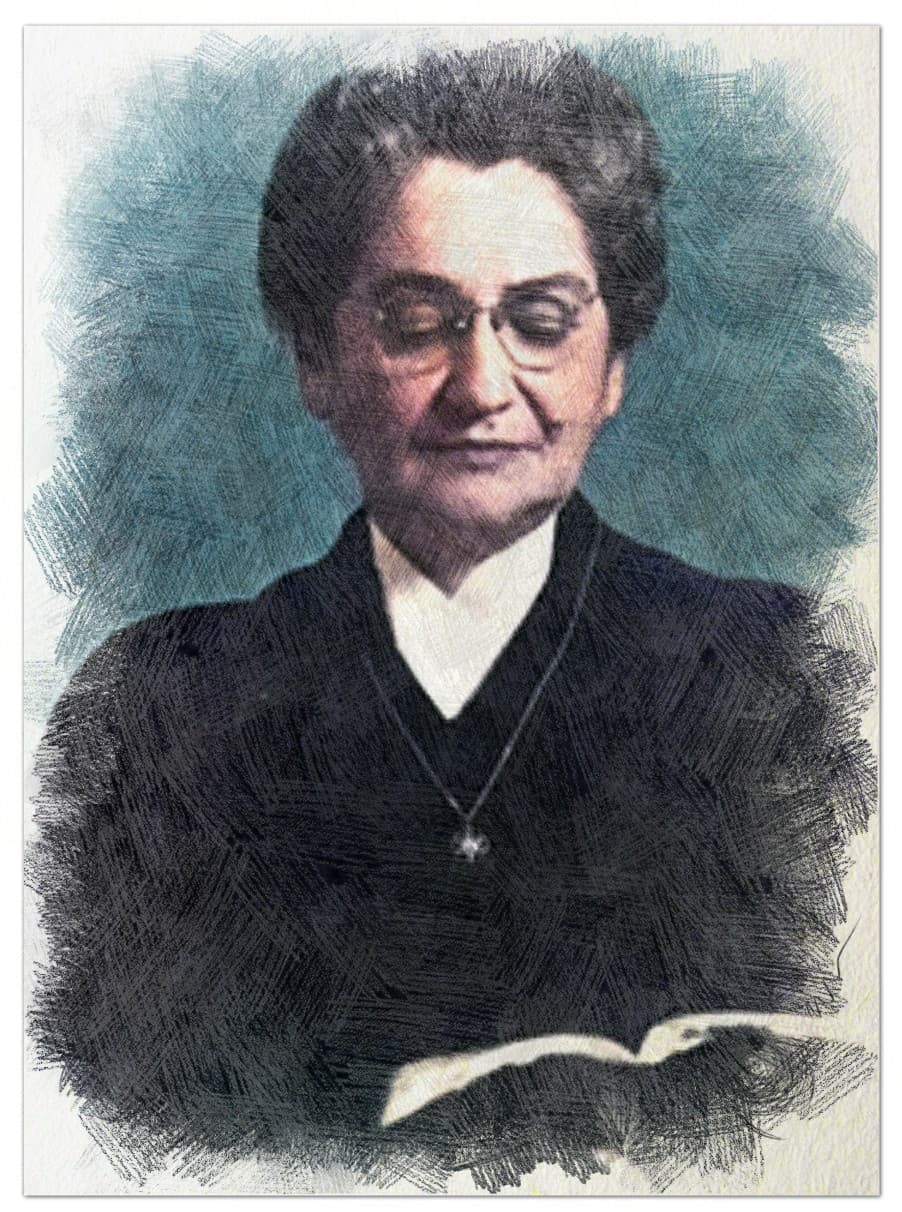
American · Activism
Paula Ackerman
December 7, 1893 – January 12, 1989
Early Life and Background
Paula Herskovitz Ackerman (Hebrew: פאולה אקרמן) was born on December 7, 1893, in Pensacola, Florida, into a family of Jewish immigrants who had settled in the American South at the turn of the twentieth century. Her father, Joseph Herskovitz (also spelled Herschkovitz or Herskovitch), emigrated from Romania, and her mother, Debora (née Lang), came from Germany.[2][3] Growing up in a region with a relatively small Jewish population, Paula’s early experiences reflected both the challenges and opportunities of Southern Jewish life.
The Herskovitz family’s economic circumstances were modest, and Paula’s intellectual talents quickly became an important resource. She attended local public schools and was active in the life of Temple Beth-El, the Reform congregation in Pensacola, where she developed a lifelong relationship with Reform Judaism.[2][3] Her dedication to study was evident early: she graduated from high school in 1911 as valedictorian, an achievement that earned her a scholarship to Sophie Newcomb College, the women’s coordinate college of Tulane University.[3] Despite this offer, Paula declined the scholarship for personal and family reasons, a decision shaped in part by the family’s need for her financial contribution.
To help support her household, Paula became a private music instructor and later a high school teacher
Career Beginnings and Development
By the 1910s, Paula was deeply involved in Pensacola’s Jewish community. Her regular attendance at Temple Beth-El and participation in congregational life gave her an intimate familiarity with Reform liturgy and practice.[2] On November 19, 1919, she married Rabbi William Ackerman, who at that time served as the rabbi of Temple Beth-El.[5][3] The marriage joined her life to that of a professional religious leader, further integrating her into the daily rhythms of synagogue life.
Shortly after their marriage, the couple left Pensacola in pursuit of a better‑paying rabbinic position. In 1919–1920 William Ackerman accepted a call to Temple B’nai Israel in Natchez, Mississippi, and the pair moved there.[3][5] In 1922, they relocated again, this time to Meridian, Mississippi, where William became rabbi of Temple Beth Israel and the couple settled with their 15‑month‑old son, Billy.[3] Meridian would remain the center of Paula’s life and work for many decades.
In Meridian, Paula’s professional identity continued to revolve around education. She taught in the public schools and became a key figure in the synagogue’s religious school, gradually assuming administrative and teaching responsibilities.[1][3] When her husband was ill or otherwise unavailable, she frequently led services at Beth Israel, standing in for him on the bimah and guiding worship.[1] These experiences revealed her competence in liturgical leadership and habituated congregants to her presence as a spiritual figure.
Paula also became involved in national Reform Jewish women’s organizations. She was active in the National Federation of Temple Sisterhoods (NFTS), the national women’s auxiliary of the Reform movement, and eventually led the National Committee on Religious Schools for the Federation.[2][3] Through this work she helped shape religious education policy and practice across many congregations, further establishing her reputation as an expert educator and lay leader.
Major Accomplishments and Pioneering Leadership
Paula Ackerman’s most historically significant accomplishments center on her role as a pioneer in the pulpit—a woman who, without formal ordination, carried out the full duties of a rabbi in a mainstream American congregation.
The turning point came in December 1950, when her husband, Rabbi William Ackerman, died while serving Temple Beth Israel in Meridian.[1][3][8] His death left the 100‑member congregation without an ordained spiritual leader. Because Meridian was a smaller Southern city, attracting a new rabbi on short notice proved difficult. The congregation, already familiar with Paula’s teaching and service leadership, looked to her as the natural successor.
In early 1951, Beth Israel’s president and board formally requested that Paula Ackerman assume spiritual leadership of the congregation. They sought special permission from the Reform movement, making clear that they would accept “no one but Mrs. Ackerman.”[1] Despite institutional hesitation at the national level, the congregation proceeded, and on January 26, 1951, Paula was formally installed as spiritual leader of Temple Beth Israel.[4][5] She did not receive the title of “rabbi,” but her responsibilities were, in practice, rabbinic.
From roughly 1951 to 1953 or 1954, Paula carried out the full range of rabbinical functions at Beth Israel.[1][2][8] She led Shabbat and holiday services, delivered sermons, taught in the religious school, and officiated at weddings, funerals, and other life‑cycle ceremonies. She provided pastoral counseling, visited the sick, and represented the congregation in public settings—activities indistinguishable from those of an ordained rabbi.
Historians and reference works identify her as the first woman to assume spiritual leadership of a mainstream American Jewish congregation and, more broadly, as the first American woman to perform rabbinical functions in such a context.[2][3][8][17] Unlike early nineteenth‑century figures who preached occasionally or led small sectarian groups, Paula’s leadership occurred in a standard, established Reform synagogue that was fully integrated into the American Jewish institutional landscape.
Beyond her work in Meridian, Paula later briefly took on spiritual leadership at Temple Beth‑El in Pensacola, Florida, during the 1960s.[2] Although sources do not document exact dates, they note that she again functioned in an interim, rabbinic capacity, reinforcing her role as a trusted religious authority in multiple congregations. Her national service as head of the National Committee on Religious Schools for the NFTS also stands out as an important contribution to Reform Jewish education across the United States.[2][3]
Awards, Honors, and Recognition
Published sources emphasize Paula Ackerman’s historical recognition more than formal awards. She is widely described as an “American rabbinical pioneer” and as the first woman to assume spiritual leadership of a U.S. mainstream Jewish congregation.[3][8] These descriptors function as honorary titles, acknowledging the barrier‑breaking significance of her work.
While there is no record in standard reference works of major institutional prizes or medals awarded to Paula during her lifetime, the posthumous recognition of her leadership has been substantial. She is profiled in the Jewish Women’s Archive, in Encyclopedia.com’s religion and women’s history entries, and in general encyclopedias of American Jewish history.[1][3][8] These articles highlight her pioneering role, contextualize her within broader movements for women’s religious equality, and ensure that her story is accessible to scholars, students, and the general public.
In addition, her life has been the subject of scholarly analysis, including Ellen M. Umansky’s detailed personality profile, "Paula Ackerman: Pioneer in the Pulpit", which underscores her significance in the evolution of women’s roles in Reform Judaism.[4] The inclusion of her name in lists of notable bearers of the Ackerman surname further signals her accepted place in historical memory as “the first American female rabbi,” a phrase used colloquially to describe her role despite her lack of formal ordination.[17]
Personal Life
Paula’s personal life was closely intertwined with her professional and religious activities. Her marriage to Rabbi William Ackerman in 1919 brought together two people deeply committed to Reform Judaism and communal service.[3][5] The couple’s moves from Pensacola to Natchez and then to Meridian reflected both vocational opportunities and the economic realities of rabbinic life in the early twentieth‑century South.
The Ackermans had at least one child, a son named Billy, who was 15 months old when they moved to Meridian in 1922.[3] Family responsibilities and economic pressures shaped Paula’s choices, including her decision to decline the Sophie Newcomb scholarship and to work as a teacher and music instructor. Her son and husband also formed part of the context in which she developed her capacities as a caregiver and counselor—qualities that would later be essential to her pastoral work.
Within the household, Paula appears to have functioned not only as wife and mother but also as an intellectual and religious partner to her husband. Her leading of services during his illnesses and her role in the religious school suggest a collaborative model of rabbinate and family life. After William’s death, her continued service to the congregation reflected both her sense of responsibility and the strong bonds she had formed with congregants over many years.
Later Life and Death
After stepping down from her role as spiritual leader of Temple Beth Israel in the mid‑1950s, Paula remained active in Jewish communal life and education. She continued teaching, participating in local and national Reform organizations, and mentoring younger women in religious and educational roles. In the 1960s, she briefly took on spiritual leadership at Temple Beth‑El in Pensacola, again serving as an interim religious head for a congregation in need, although precise dates of this service are not recorded.[2]
Throughout her later years, Paula’s story began to be recognized in wider circles as historians and women’s organizations sought examples of early female religious leadership. Her experiences in Meridian and Pensacola were cited in discussions about whether women could and should be ordained as rabbis in the United States. As the Reform movement eventually opened its seminaries to women and ordained its first female rabbi in 1972, Paula lived to see some of the changes she had anticipated through her own work.
Paula Ackerman died on January 12, 1989, at the age of ninety‑five.[2][8] Encyclopedia sources record her death in Mississippi, while other references note Thomaston, Georgia, as the place where she died.[2][8] This discrepancy suggests that she may have had family or care connections beyond the state in which she had long lived, and it reflects the occasional uncertainties that arise in reconstructing the final years of historical figures.
Legacy and Historical Impact
Paula Ackerman’s legacy is most clearly seen in the history of women in the rabbinate and in broader narratives of women’s religious leadership. As the first woman to assume spiritual leadership of a mainstream American Reform congregation, she demonstrated that congregational life could flourish under female guidance decades before official policies allowed women to become rabbis.[2][3][8][1]
Her service in Meridian from 1951 to the mid‑1950s, and her later leadership in Pensacola, challenged entrenched gender norms within both Judaism and American religious culture. At a time when women were expected to confine their religious activity to auxiliary organizations and education, Paula stood on the pulpit, delivered sermons, and performed pastoral and ritual functions that had long been defined as male roles. Her congregation’s insistence on her leadership showed that lay communities could be more progressive than institutional authorities and could serve as laboratories for change.
In the decades following her tenure, scholars of Jewish history and women’s studies have increasingly recognized Paula as a rabbinical pioneer. The Jewish Women’s Archive, Encyclopedia.com, and other reference works have incorporated her biography into their coverage of Jewish women’s activism and religious leadership.[1][3][8] Ellen M. Umansky’s profile and similar studies place her within a trajectory that leads from informal female religious authority to formal ordination and institutional equality.
Paula’s legacy also resides in the less visible impact she had on the women who saw her in the pulpit and the congregants who experienced her pastoral care. For Jewish girls and women in Meridian and Pensacola, witnessing a woman lead services and perform rabbinic duties opened new possibilities for religious identity and vocation. For her congregants, her leadership during a period of transition preserved the continuity of communal life and demonstrated how flexibility and trust could sustain a synagogue.
Today, Paula Ackerman is remembered as a figure who bridged eras: she belonged to a generation of women who worked largely without formal recognition, yet her actions helped make possible the institutional changes that followed. Her combination of educational expertise, communal activism, and courageous acceptance of spiritual responsibility continues to serve as a model in discussions of women’s roles in religious leadership and the evolution of Reform Judaism in the United States.
Dated achievements
5 indexed.
- Dec071893Activism
Birth in Pensacola, Florida
Paula Herskovitz (later Ackerman) was born in Pensacola, Florida, United States.
View details Wikipedia - Dec011950Activism
Death of husband Rabbi William Ackerman
Paula Ackerman’s husband, Rabbi William Ackerman, died in December 1950.
View details