← All women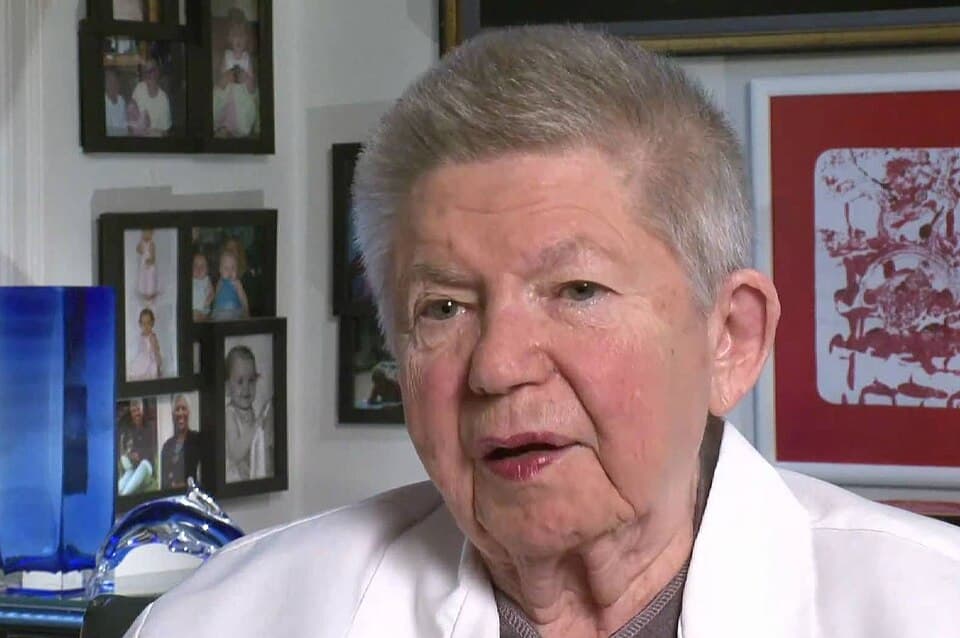
American · Science
Patricia Billings
January 1, 1926 – present
Overview
Patricia Billings (born 1926) is an American sculptor, inventor, and businesswoman best known for creating Geobond, a non‑toxic, fire‑resistant building material that has been promoted as a potential replacement for asbestos.13 Working largely outside formal engineering institutions, she transformed frustrations from her art practice into a multi‑decade research project in materials science, eventually securing a portfolio of patents on fire‑resistant panels, tiles, and other construction components between 1997 and 2008.1716
Early Life and Education
Billings was born in 1926 in Clinton, Missouri, a small city in the American Midwest.1316 According to biographical accounts, she was born to "a farmer and his wife," situating her early life within a rural, working‑class context rather than the urban industrial centers more commonly associated with technical innovation.1 Growing up in Missouri in the interwar period, her formative experiences occurred against the backdrop of the Great Depression and the transformation of American agriculture, although detailed information about her childhood and family beyond these brief references is limited in the available sources.
One of the few documented aspects of her early professional development is her training in both healthcare and art. A patent‑analytics profile states that she began working as a medical technician in 1946, shortly after the end of the Second World War.16 This role would have required technical competence and familiarity with laboratory procedures, skills that later proved valuable in her materials experimentation. In 1956, she turned more directly to her artistic interests by beginning formal study of art.16 The Lemelson‑MIT biography adds that she studied art at Amarillo College in Texas, where she specialized in plaster of Paris sculptures.3 This combination of medical technical work and art education foreshadowed the interdisciplinary character of her later career.
Artistic Career and the Turn to Materials Innovation
Throughout the mid‑twentieth century, Billings worked primarily as a sculptor, focusing on plaster of Paris as her main medium.35 Plaster is inexpensive and widely used but inherently brittle, a limitation that became central to the story of her eventual inventions. According to accounts from Lemelson‑MIT and educational sites on women scientists, a pivotal incident occurred in the late 1970s when one of her sculptures—a swan on which she had worked for months—fell and shattered.35 The loss of the piece was not only a personal and professional setback, but also a catalyst for a long‑term inquiry into how plaster could be made more durable.
Billings reportedly drew inspiration from Renaissance sculptors, who often had to contend with the mechanical limitations of their materials.5 Determined to find a way to keep her works from breaking, she began experimenting with additives that could be mixed into plaster to increase its strength and resilience. Biographical summaries emphasize that she undertook these experiments in her basement, using an improvised laboratory rather than a formal research setting.313 This phase of work lasted approximately eight years, during which she tested a wide range of ingredients and mixtures.35
After this extended period of trial and error, Billings discovered a "milky additive" that acts as a catalyst in mixtures of gypsum and concrete.35 When combined with these materials, the additive produces an indestructible plaster that resists breaking when dropped and exhibits remarkable resistance to heat.3 A scientist friend pointed out the exceptional thermal properties of the new material, noting that it remained only lukewarm after exposure to a 2,000°F flame for four hours.3 This observation prompted Billings to extend her research beyond sculptural durability to fire resistance, leading to another multi‑year phase of experimentation that ultimately produced the material she named Geobond.35
Invention of Geobond
Geobond is described in multiple sources as a non‑toxic, fire‑resistant, and highly durable composite that can be formed into panels, tiles, and other construction elements.135 Its key characteristics include resistance to shattering, significant heat tolerance, and the absence of carcinogenic components. The Lemelson‑MIT profile notes that Geobond products remain only lukewarm after being torched with a 2,000°F flame for four hours, highlighting their potential for fire‑safety applications.3 The material’s non‑toxic composition has been emphasized as making it the world’s first workable replacement for asbestos, though this phrasing reflects promotional language rather than a formal regulatory designation.32
Educational and advocacy sites focused on women scientists recount that Billings’s original motivation was artistic: she wanted a substance that would make plaster "less brittle" and protect her sculptures.5 However, once the heat‑resistant properties were recognized, the scope of her work broadened dramatically. Geobond began to be used not only in sculpture but also in the construction of buildings, bridges, and airplanes, according to these accounts.5 Engineering.com and other outlets describe the material as "indestructible" and emphasize its potential for widespread use in the modern construction industry.13
Billings’s path to innovation is notable for its independence from conventional research institutions. She did not hold an engineering degree and conducted much of her experimentation in a home laboratory. Her work has therefore been cited in discussions of women inventors and non‑traditional pathways into science and technology.37
Patent Portfolio and Business Development
Following the development of Geobond, Billings moved to protect and commercialize her inventions through a series of patents. The English‑language Wikipedia entry and patent‑analytics sources list eight patents associated with her, belonging to five unique patent families.116 These include patents for fire‑resistant building panels, lightweight roof tiles, molded building panels, and heat‑protected construction members.116
Among the patents documented in the sources are:
- U.S. Patent 5,647,180, "Fire resistant building panel," granted in 1997 to Billings and Susan Michalski.116
- U.S. Patent 5,795,380, "Lightweight roof tiles and method of production," granted in 1998 to the same co‑inventors.116
- U.S. Patent 6,230,409 B1, "Molded building panel and method of construction," granted in 2001.116
- U.S. Patent 6,557,256 B2, another "Molded building panel and method of construction" patent, granted in 2003 as part of the same family.116
- U.S. Patent Application Publication 2008/0044648 A1, "Heat protected construction members and method," published in 2008 with Billings and David C. Rada as inventors.116
A finding aid from the University of Missouri–Kansas City (UMKC) Libraries confirms that Billings is "most widely known for inventing Geobond, a non‑carcinogenic fire‑resistant building material," and notes that she "went on to receive several more patents for building materials between 1997 and 2008."7 The UMKC description also identifies her as the founder of Geobond International, Inc., the company established to manufacture and market Geobond‑based products.7
Engineering.com reports that Geobond is manufactured and sold from a Kansas City–based operation and that at the time of its profile, Geobond was being sold in "more than 20 markets worldwide."13 The article portrays Billings as a "great grandmother, artist, and inventor" who remained at the helm of her business empire, underscoring her dual identity as both creative practitioner and industrial entrepreneur.13
Recognition and Public Profile
Billings’s work has attracted media and scholarly attention, particularly in the context of women in science and engineering. The UMKC finding aid notes that she has received "widespread acclaim" for her work from outlets such as Popular Mechanics and the St. Louis Post‑Dispatch, as well as from various books on engineering and inventors, especially those focused on women innovators.7 Although specific article titles and book citations are not enumerated in the finding aid, the statement indicates that her inventions have been discussed in both popular and specialist literature.
The Lemelson‑MIT Program, which documents the work of inventors, features Billings in its resources, emphasizing the revolutionary potential of Geobond as a building material that is "both indestructible and fireproof" and highlighting its non‑toxic nature.3 Educational projects aimed at encouraging interest in science among young people, such as "Discovering Women Scientists" published by Fundación Seneca, include Billings as a case study in persistence and creativity, recounting the story of her shattered sculpture and years of experimentation.5
Similarly, patent‑analytics and innovation websites reference her portfolio as an example of how an individual inventor from a non‑traditional background can build a significant body of intellectual property in a technically demanding field.16 These portrayals contribute to a broader historical narrative that seeks to make women’s contributions to materials science and engineering more visible.
Personal Life
Sources provide limited direct information about Billings’s personal life beyond her professional activities. Engineering.com describes her as a "great grandmother," suggesting that she has children, grandchildren, and great‑grandchildren, but does not supply names or further family details.13 None of the major biographical sources consulted specify a spouse or document her domestic circumstances in detail, reflecting both the privacy of the inventor and the tendency of technical profiles to focus on professional achievements.
Biographical sketches do indicate that she has lived and worked in Kansas City, Missouri, where Geobond International is based.313 Her dual identity as an artist and inventor is frequently emphasized, underscoring that she maintained her sculptural practice even as she became increasingly involved in business and applied research. However, the available sources do not provide enough evidence to reconstruct a fuller narrative of her personal relationships or daily life.
Legacy and Historical Impact
Patricia Billings’s historical significance rests primarily on her role in developing and commercializing Geobond, as well as on her visibility as a woman inventor in the field of construction materials. Her story is often cited to illustrate how persistence and experimentation outside formal institutions can lead to innovations with industrial impact.357
From a materials‑science perspective, Geobond contributes to the ongoing search for asbestos alternatives. Asbestos, once widely used for its fire‑resistant properties, was later recognized as a serious health hazard, leading to bans and restrictions in many countries. By offering a composite that is both fire‑resistant and non‑carcinogenic, Billings’s inventions align with broader efforts to make building materials safer for workers and occupants.325 While Geobond is one among several such alternatives, its origin in an independent, artist‑led research effort makes it distinctive.
In the context of women’s history, Billings’s career complicates conventional narratives about gender and technical expertise. She did not follow the typical path of earning a degree in engineering and joining a corporate research lab. Instead, she drew on her experience as a medical technician and sculptor, used a basement laboratory, and navigated the patent system and construction industry largely on her own.316 Her success in securing patents and building a business has therefore been highlighted in collections and exhibitions that seek to broaden public understanding of who can be an inventor.
Archives such as the UMKC finding aid ensure that documentation of her work—correspondence, technical materials, and publicity—remains accessible to future researchers.7 Educational projects that feature her story help introduce younger audiences to the idea that innovation can emerge from everyday problems and that women can be central figures in fields like materials science and engineering, which have historically been male‑dominated.
Later Life and Status
As of the most recent sources consulted, Billings is consistently described as having been born in 1926, but no publicly available records provide an exact birth date beyond the year.1316 Likewise, none of the biographical materials or obituaries examined attribute a date of death to her, and some present‑day accounts refer to her in the present tense, indicating that she may still be living.137 In the absence of verified documentation, her death date cannot be reliably stated.
The UMKC archival description notes that the materials in its collection span 1983–2009, covering a period in which Billings developed and promoted Geobond.7 Patent records show activity through at least 2008, suggesting that she remained professionally engaged into her eighties.116 Engineering.com’s portrayal of her as a great‑grandmother still at the helm of her Kansas City company implies continued involvement in business operations in the early twenty‑first century.13
Without more recent, authoritative biographical sources, it is not possible to provide a detailed account of her later life beyond these indications of ongoing activity. What can be said with confidence is that her legacy in materials innovation and women’s history is secured by the enduring interest in Geobond and by the archival and educational efforts that document her journey from rural Missouri and basement experiments to international recognition as an inventor.
Dated achievements
5 indexed.
- Jun101997Science
Patent for fire resistant building panel granted
U.S. Patent 5,647,180 granted for a 'Fire resistant building panel.'
View details Wikipedia - Patricia Billings - Sep081998Science
Patent for lightweight roof tiles granted
U.S. Patent 5,795,380 granted for 'Lightweight roof tiles.'
View details