← All women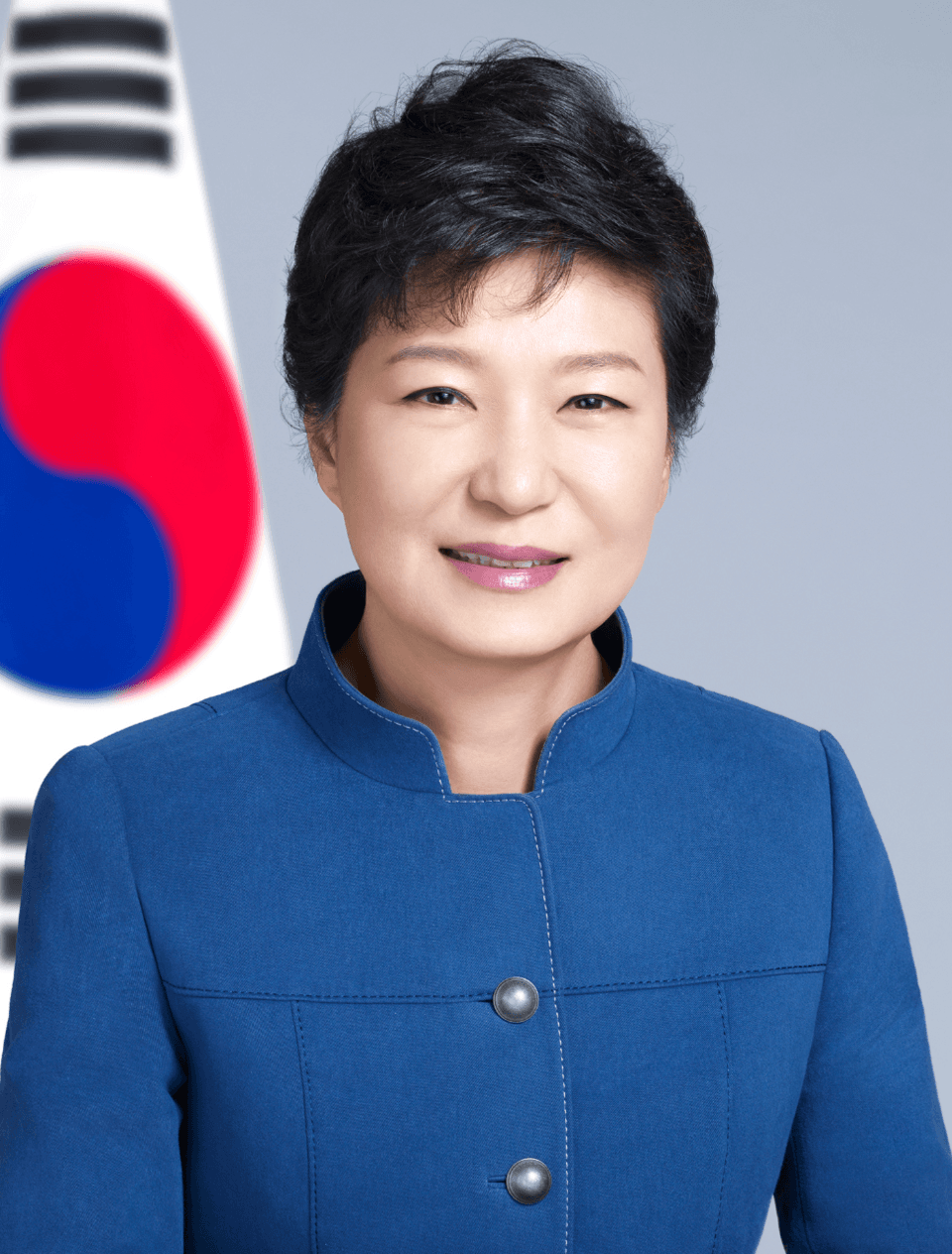
South Korean · Politics
Park Geun Hye
February 2, 1952 – present
Early life and background
Park Geun-hye was born on 2 February 1952 in Samdeok-dong, Jung District, in the city of Daegu, then part of North Gyeongsang Province in South Korea. She was the first child of Park Chung-hee, an army officer who would seize power in a 1961 military coup and go on to serve as South Korea’s president from 1963 until his assassination in 1979, and his wife, Yuk Young-soo, who became a widely respected First Lady noted for her charitable work.[1][2]
Park grew up during a period of rapid industrialization and authoritarian rule. After her father consolidated power in the early 1960s, the family moved to the presidential residence, the Blue House (Cheong Wa Dae). Her childhood and adolescence were spent at the symbolic center of state power, surrounded by high-level officials, foreign dignitaries, and security personnel. This environment exposed her early to the rituals of diplomacy and the language of economic development, while also insulating her from ordinary social life.
She attended elite schools in Seoul, culminating in graduation from Sungshim Girls’ Middle and High School in 1970.[11] That same year she enrolled at Sogang University, a Jesuit institution in Seoul, where she studied electronic (electrical) engineering. She received her bachelor’s degree in 1974, a relatively unusual field of study for a woman in South Korea at that time, reflecting both her academic aptitude and the Park regime’s emphasis on science and technology as engines of development.[3][10]
Park’s formative years were marked by both privilege and insecurity. The Park Chung-hee government delivered dramatic economic growth but also suppressed dissent, imposed emergency decrees, and restricted civil liberties. As the president’s daughter, she became a public figure in her own right, frequently appearing at official functions with her parents. Yet by her own later accounts, she also experienced the constraints of security concerns and the weight of expectations linked to the first family.
Acting First Lady and personal tragedies
Park’s life changed abruptly on 15 August 1974, National Liberation Day, when a gunman attempting to assassinate President Park Chung-hee instead fatally shot Yuk Young-soo during an official ceremony. In the aftermath of the First Lady’s assassination, the 22‑year‑old Park Geun-hye stepped into the role of acting First Lady. She accompanied her father at state functions, hosted visiting dignitaries, and assumed leadership of charitable and social initiatives previously overseen by her mother.[1][3]
From 1974 until 1979, Park effectively served as South Korea’s First Lady. This period deepened her familiarity with protocol, high-level diplomacy, and the inner workings of the authoritarian presidency. It also solidified her public image as a dutiful daughter supporting a leader father. Her presence at her father’s side was widely publicized in the state-controlled media, reinforcing the family-centered symbolism of the regime.
In 1979 she suffered a second major trauma when President Park Chung-hee was assassinated by the director of the Korean Central Intelligence Agency, Kim Jae-gyu, during a dinner at a KCIA safe house. With her father’s death and the end of his government, Park Geun-hye lost both parents to political violence within five years. The collapse of the regime also ended her tenure as acting First Lady and removed her from the center of power.[3]
Following these events, Park largely withdrew from public life for more than a decade. During the 1980s she focused on managing family-related foundations, most notably serving as chair of the Yookyoung Foundation and Yeungnam University, positions she held between roughly 1982 and 1991.[3] In 1995 she became chairwoman of the board of the Jeongsu Scholarship Foundation, a major educational foundation originally linked to assets seized during the Park Chung-hee era. These roles allowed her to maintain influence in educational and philanthropic circles while avoiding direct involvement in partisan politics.
Entry into electoral politics
South Korea’s democratic transition in the late 1980s and early 1990s reshaped the political landscape. After years of relative seclusion, Park gradually re-emerged. In 1997 she joined the conservative Grand National Party (GNP), which drew support from many regions and constituencies that had previously backed her father’s rule.[3]
Park entered the National Assembly in 1998. In a by-election held in the context of the Asian financial crisis, she was elected as a GNP candidate for the Daegu region, a conservative stronghold, and took office on 1 April 1998 as a member of the 15th National Assembly.[3] Her victory brought her formally into South Korea’s democratic institutions and was widely read as the political return of the Park family name.
She subsequently won re-election multiple times, serving four consecutive terms as a constituency representative for Dalseong district in Daegu from 1998 to 2012, and later briefly holding a proportional-representation seat in the National Assembly in 2012.[3][10] Within the GNP she quickly secured a leadership role, becoming a vice president of the party soon after entering parliament. Her energetic campaigning and ability to mobilize conservative voters earned her the nickname "Queen of Elections" among supporters.
Rise to party leadership
Park’s national profile rose sharply in the early 2000s. On 23 March 2004 she was elected chairwoman of the Grand National Party, taking charge at a moment when the party was under intense pressure due to public anger and institutional turmoil surrounding the impeachment of liberal president Roh Moo-hyun.[1][3] Her leadership is credited with helping the GNP regain political footing and avoid electoral collapse in the legislative elections that followed.
As party leader, Park spearheaded organizational reforms, most notably the introduction of a bottom-up nomination system for legislative candidates. Official descriptions characterize this as the first such system implemented by any political party in South Korea.[1][3] The reform was designed to reduce the dominance of central party elites in candidate selection by empowering lower-level party members and local chapters, thereby increasing internal democracy and transparency.
Park’s first term as GNP chair lasted from 2004 to 2006. During this time, the party performed better than expected in the 2004 National Assembly elections, enhancing her reputation as an effective electoral strategist. Her personal popularity, especially in conservative regions, bolstered the GNP’s resilience against progressive rivals.
In 2006 she survived a serious physical attack when an assailant slashed her face with a knife during a local election campaign rally in Seoul. She required emergency surgery and several dozen stitches. The incident, widely televised, generated public sympathy and further deepened her "resolute" image among supporters.[3]
Park later returned to party leadership in 2011–2012, heading the Saenuri Party’s emergency leadership committee after a rebranding of the GNP as the Saenuri Party in early 2012. In that role she guided the conservative camp through legislative elections and positioned herself as the party’s leading presidential contender.[3][10]
Presidential campaign and election
In 2012 Park Geun-hye formally sought the presidency. She won the Saenuri Party’s presidential primary and became its official candidate, running in a competitive race against Moon Jae-in of the Democratic United Party, a former human rights lawyer and chief of staff to the late president Roh Moo-hyun.[3][2]
The campaign centered on issues such as economic inequality, youth unemployment, welfare expansion, and national security, as well as Park’s personal and family legacy. Critics questioned her stance on her father’s authoritarian rule, arguing that she downplayed its human rights abuses. Park responded by expressing "regret" for the suffering experienced during that period while largely emphasizing the economic achievements of the Park Chung-hee era.
Park also foregrounded her identity as a woman, presenting herself as the "first prepared woman president" and promising to promote women’s participation in the workforce and public life.[13] Her candidacy attracted both enthusiasm from supporters who saw her as a symbol of change in a male-dominated political culture and skepticism from those who argued that her dynastic background, rather than gender reform, underpinned her rise.
On 19 December 2012, Park won the presidential election, defeating Moon Jae-in with a turnout exceeding 70 percent. She thus became the first woman elected president of South Korea. Official biographical material from foreign ministries and multiple media accounts describe her simultaneously as the first female president in Northeast Asia, underscoring the regional significance of her victory.[1][2][8]
Presidency (2013–2017)
Park Geun-hye was inaugurated on 25 February 2013 as the 18th president of the Republic of Korea, and the country’s first female head of state.[1][2] In her inaugural address she pledged to build a "people’s happiness" era by revitalizing the economy, strengthening the middle class, and enhancing social safety nets. She also emphasized national security and a "trust-building process" with North Korea.
Early in her term, Park pursued what she called a "creative economy" agenda, aiming to foster innovation, information technology, and cultural industries as new engines of growth. Her government launched policies to support start-ups and reduce reliance on traditional conglomerate-led manufacturing. She also advocated for increased childcare support, flexible work arrangements, and measures to address South Korea’s low birth rate and high youth unemployment, although critics argued that implementation often fell short of rhetoric.[1][2]
On the foreign policy front, Park sought to balance relations with the United States, China, and Japan. She strengthened security ties with Washington, including cooperation on missile defense and responses to North Korean nuclear tests. During a May 2013 visit to the United States, she addressed a Joint Meeting of the U.S. Congress on 8 May 2013, highlighting the evolution of the U.S.–ROK alliance from a security partnership to a "global partnership" based on shared democratic values.[3][10]
Park also pursued engagement with China, meeting President Xi Jinping multiple times, and attended the 2015 military parade in Beijing marking the end of World War II in Asia, a move that drew mixed reactions domestically and abroad. Relations with Japan remained strained over historical disputes, though her administration concluded a controversial 2015 agreement with Tokyo regarding "comfort women," which many survivors and activists criticized as inadequate.
Domestic challenges and Sewol ferry disaster
Domestically, Park’s presidency was marked by ongoing debates over economic reform, welfare policy, and the role of South Korea’s major conglomerates (chaebol). She advocated labor and pension reforms and sought to expand some welfare programs while maintaining fiscal discipline, leading to tensions with both business groups and social advocates.[1][2]
A defining moment of her domestic legacy came with the Sewol ferry disaster on 16 April 2014, when a passenger ferry capsized, killing more than 300 people, many of them high school students. The government’s emergency response was widely criticized as slow, disorganized, and lacking leadership. Park’s own absence from public view in the critical early hours and perceived failures in crisis communication fueled public anger.
The Sewol tragedy severely damaged public confidence in her administration. Although Park issued apologies and promised reforms in disaster management and safety regulation, her approval ratings dropped sharply and never fully recovered. The disaster became a symbol of broader concerns about regulatory capture, lax safety enforcement, and the relationship between the state and large private operators.
North Korea and security policy
North Korea policy was another central feature of Park’s term. Initially she promoted a "trust-building process" on the peninsula, combining deterrence with conditional engagement. However, repeated North Korean missile launches and nuclear tests hardened her administration’s stance. In February 2016, following a nuclear test and satellite launch by Pyongyang, the South Korean government announced the shutdown of the Kaesong Industrial Complex, a symbolically important joint economic zone located just north of the Demilitarized Zone.[1]
The closure ended a key channel of inter-Korean cooperation that had survived previous crises. Supporters of the decision argued that Kaesong provided North Korea with hard currency that could be used to fund its weapons programs, while critics contended that the shutdown removed one of the few remaining mechanisms for engagement and increased tensions. The move illustrated Park’s willingness to take decisive, hardline steps on security issues.
The Choi Soon-sil scandal and impeachment
In late 2016, Park’s presidency unraveled amid revelations that her longtime confidante Choi Soon-sil, who held no official post, had exerted extensive influence over state affairs. Investigative reports and prosecutors’ findings suggested that Choi had reviewed confidential presidential speeches, intervened in policy matters, and helped pressure large corporations into donating vast sums to ostensibly nonprofit foundations under her control.[12]
On 25 October 2016, Park delivered her first televised apology over the scandal, acknowledging that Choi had assisted with some speeches and "public relations" during the early part of her term. The admission, however, did little to quell outrage. Subsequent reports revealed broader involvement, and millions of South Koreans participated in peaceful candlelight demonstrations demanding Park’s resignation, which continued for months.[12]
On 9 December 2016 the National Assembly voted overwhelmingly to impeach Park on charges including abuse of power, coercion, and leaking state secrets. Her presidential powers were suspended pending review by the Constitutional Court. On 10 March 2017, the Court unanimously upheld the impeachment, formally removing her from office and making her the first democratically elected South Korean president to be ousted through impeachment.[1][3][12]
The decision was widely seen as a landmark in South Korean constitutionalism, demonstrating that even the highest officeholder could be held accountable through legal and institutional mechanisms. At the same time, it brought an abrupt end to the tenure of the country’s first female president, raising complex questions about gender, power, and responsibility in public discourse.
Criminal prosecution and imprisonment
Two days after the court’s ruling, on 12 March 2017, Park left the Blue House and returned to her private residence in Seoul, greeted by clusters of loyal supporters.[3] She soon faced criminal investigation. On 31 March 2017 the Seoul Central District Court issued an arrest warrant on charges including bribery, abuse of power, coercion, and leaking confidential information, and Park was taken into custody.[3][12]
In subsequent trials, she was convicted on multiple counts of corruption and abuse of power related to the Choi Soon-sil affair, as well as separate violations of election law. Her sentences were combined into a term totaling 22 years in prison, along with significant fines and forfeiture orders.[12] Park consistently denied wrongdoing and refused to attend some court sessions, asserting that the proceedings were politically motivated.
Her imprisonment continued a pattern in South Korean politics in which former presidents from across the ideological spectrum have faced criminal charges after leaving office. The case intensified debates about prosecutorial power, presidential immunity, and structural corruption involving government and business elites.
Special pardon and later life
On 24 December 2021, the administration of President Moon Jae-in announced that Park Geun-hye would receive a special presidential pardon, citing her deteriorating health and the need for political reconciliation. She was released from prison shortly thereafter, having served nearly five years of her sentence.[9][12]
Reactions to the pardon were mixed. Supporters of Moon emphasized humanitarian considerations and the hope of easing partisan polarization. Critics argued that the decision undermined the accountability established by her impeachment and conviction, and pointed to a recurring pattern whereby former presidents convicted of corruption are eventually pardoned.
Following her release, Park maintained a low public profile, living in her hometown region and occasionally issuing statements through aides. She has not married and has no children, a fact often noted in both domestic and international profiles. Biographical sources describe her as religiously unaffiliated but influenced by both Buddhism and Catholicism.[10] Her later years have been shaped by ongoing debates over her legacy, with some conservative supporters continuing to view her as a victim of political vendetta and others across the spectrum regarding her case as a landmark in the fight against high-level corruption.
Personal life
Park Geun-hye has remained unmarried throughout her life and has no children. This has been a notable feature of her public persona, sometimes portrayed by supporters as evidence of a life devoted to the nation and by critics as a factor contributing to her reliance on a narrow circle of confidantes such as Choi Soon-sil.[10]
Her personal networks were shaped heavily by her experiences as a former First Lady and as the daughter of a long-ruling president. After her parents’ deaths, she maintained close ties to loyalists of the Park Chung-hee era, as well as to figures associated with the foundations she led. These relationships both facilitated her political ascent and became sources of controversy when informal influence was alleged.
International profiles have described her as an intensely private person, disciplined and reserved in public appearances, with a reputation for careful preparation and a strong work ethic. At the same time, critics have pointed to insularity and limited consultation with diverse advisers as weaknesses in her governing style.
Awards, honors, and recognition
Throughout her career, Park Geun-hye received various domestic and foreign honors, particularly during her presidency, including state decorations from countries with which South Korea maintained close diplomatic or economic ties. These typically recognized contributions to bilateral relations, economic cooperation, or mutual understanding. Detailed records of specific orders and medals often appear in diplomatic and state archives rather than general biographical summaries.
Her most significant "honor" in the symbolic sense was her status as South Korea’s first female president and the first elected female head of state in Northeast Asia. Commentators frequently underscored the historical nature of her election, emphasizing its importance in a region where political leadership had long been dominated by men.[2][8][17]
Legacy and historical impact
Park Geun-hye’s legacy is deeply ambivalent and remains the subject of ongoing scholarly and public debate. On one hand, her election and inauguration marked a historic achievement for women’s representation in high office in East Asia. She demonstrated that, within South Korea’s competitive democratic system, a woman could win the presidency and exercise authority at the highest level of the state. Her rise encouraged conversations about gender equality, work–family balance, and women’s leadership, and inspired some younger women to envision broader political horizons.
On the other hand, her presidency ended in unprecedented disgrace. The Choi Soon-sil scandal, the mass protests it triggered, and the impeachment and criminal convictions that followed have led many observers to treat her tenure as a cautionary episode in the dangers of opaque networks of influence, insufficient institutional checks within the executive, and enduring patterns of collusion between political power and corporate interests. For critics, the fact that the country’s first female president departed under such circumstances risked reinforcing negative stereotypes about women leaders, though these critiques are often framed within broader concerns about systemic corruption affecting leaders of all genders.[12]
Institutionally, the impeachment and removal of Park strengthened the role of the Constitutional Court and affirmed the capacity of civil society to hold top officials accountable through sustained, peaceful mobilization. The candlelight protests that preceded her ouster have been described by scholars as a model of democratic civic engagement and have influenced subsequent global discussions on mass protest and constitutional order.[12]
In assessments of South Korea’s modern history, Park is thus situated at the intersection of dynastic politics, democratic consolidation, gender, and governance. She is simultaneously a "first"—the first woman to hold the presidency—and a symbol of both the possibilities and perils of executive power in a rapidly changing democracy. As scholarship and public memory continue to evolve, her life story remains a key case study in the complexities of women’s leadership in contemporary politics.
Dated achievements
12 indexed.
- Feb021952Politics
Birth in Daegu
Born in Daegu, North Gyeongsang Province, South Korea, the eldest daughter of future president Park Chung-hee and Yook Young-soo.
View details Wikipedia - Park Geun-hye - Aug151974Politics
Becomes acting First Lady of South Korea
Assumed role of acting First Lady of South Korea after mother, Yook Young-soo, was assassinated.