← All women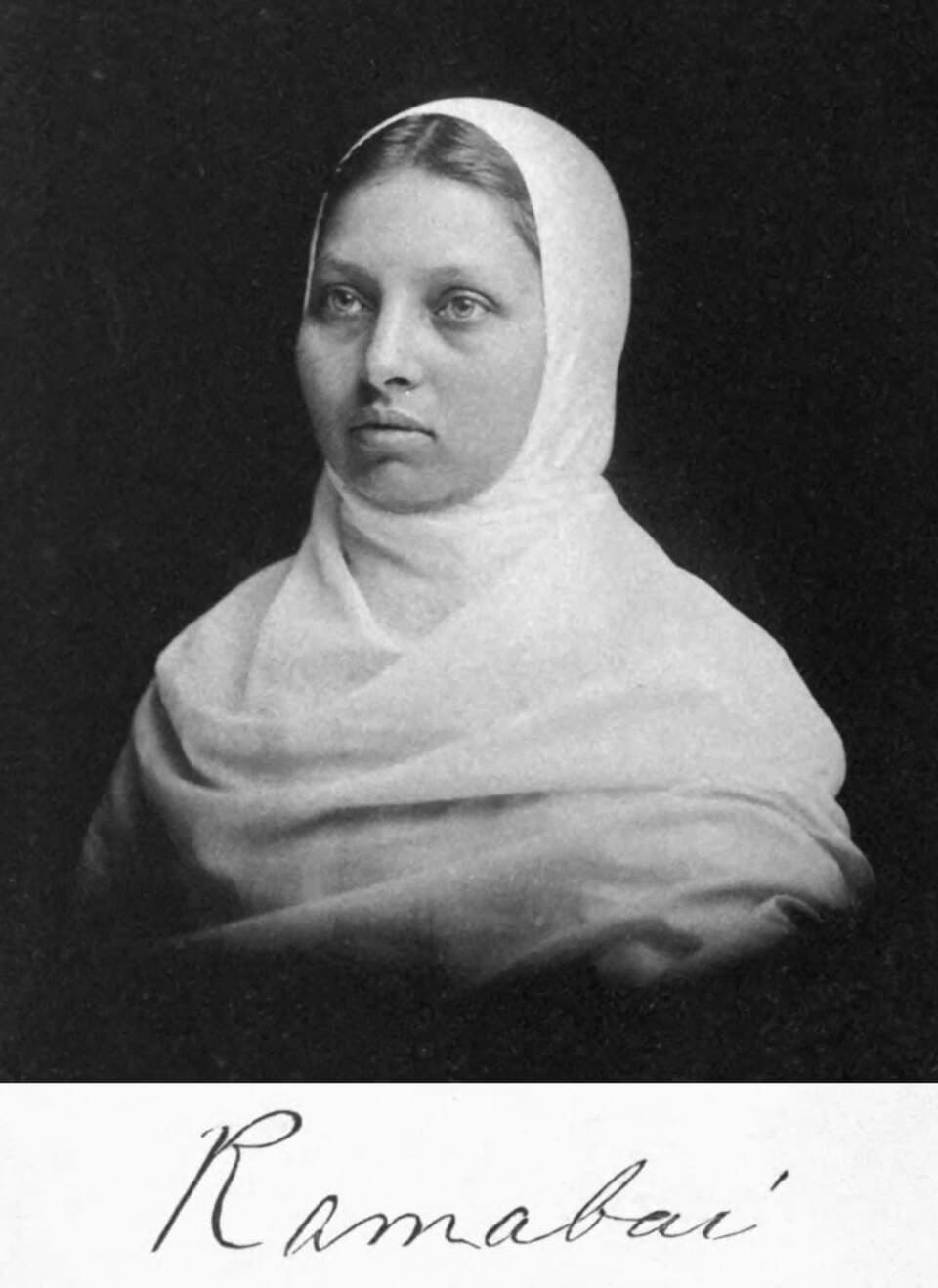
Indian · Activism · Literature · Science
Pandita Ramabai
April 23, 1858 – April 5, 1922
Early Life and Background
Pandita Ramabai Sarasvati was born on April 23, 1858, in a time when India was under British colonial rule. Her family was of the Chitpavan Brahmin caste, and her father, Anant Shastri Dongre, was an erudite scholar who believed in the education of girls, a rare conviction for the era. He taught her Sanskrit extensively from a young age, which laid the foundation for her later work.
Despite facing daunting adversities, including the loss of her parents during a severe famine, Ramabai continued her education and became a renowned scholar. Her brilliance was recognized by the scholars of Calcutta University, who honored her with the title of "Pandita" – a Sanskrit term signifying a wise person.
Career Beginnings and Development
Driven by both a sense of justice and personal experience of the social constraints upon women, Ramabai traveled across India advocating for the women’s education movement. In 1882, she deposed before the Hunter Commission, urging reforms in the colonial education system to include women.
Major Works and Accomplishments
Her major literary contribution, "The High-Caste Hindu Woman," published in 1887, is a powerful critique of the status of women in Indian society. The book had a significant impact on the reform movements in both Britain and India.
- The Mukti Mission: Recognizing the dire need to provide refuge and education to women and widows, Ramabai founded the Mukti Mission in 1897 in Maharashtra, offering shelter, education, and vocational training.
Awards, Honors, and Recognition
Pandita Ramabai was celebrated for her scholarly prowess and her notable advocacy for women's rights. Her contributions were recognized by institutions worldwide, though formal awards during her time were informal.
Personal Life
In 1880, Ramabai married Bipin Behari Medhavi, a Bengali lawyer. Their marriage was short-lived due to his untimely death, leaving Ramabai a young widow with a daughter, Manorama.
Legacy and Historical Impact
Ramabai’s legacy as a pioneer in feminist thought and action is immeasurable. The Mukti Mission continued to operate long after her death, empowering women through education and skill development. Her literary works inspired reformers across the globe and cemented her position as an iconic figure in the women’s rights movement in India.
Later Life and Death
Pandita Ramabai's later years were primarily focused on the expansion of her educational initiatives at the Mukti Mission. She passed away on April 5, 1922, leaving behind a transformative legacy that continues to inspire generations.
Dated achievements
3 indexed.
- Apr231858Activism
Birth of Pandita Ramabai
Pandita Ramabai was born on April 23, 1858.
View details Pandita Ramabai - Wikipedia - Sep011889Activism
Foundation of the Sharada Sadan
Pandita Ramabai founded Sharada Sadan in 1889, a school for widows.
View details