← All women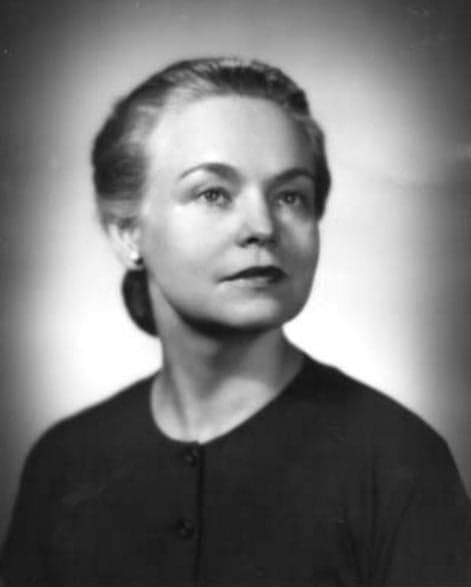
American · Politics · Activism · Law
Oveta Culp Hobby
January 19, 1905 – August 16, 1995
Early Life and Background
Oveta Hoover Culp Hobby was born on January 19, 1905, in Killeen, Texas, the second of seven children of Isaac William (“Ike”) Culp, a lawyer and Texas state legislator, and Emma Elizabeth Hoover Culp, who was active in civic and women’s suffrage causes.[3][10][16] Growing up in a household immersed in law, politics, and public affairs, Hobby absorbed the language of parliamentary procedure and public service from an early age. Her father’s legislative work introduced her to the mechanics of government, while her mother’s activism modeled women’s engagement in public life at a time when women were still fighting for the right to vote.
Hobby attended local schools before enrolling at Mary Hardin–Baylor College for Women in Belton, Texas, where she pursued general studies.[2][10] She later studied law at the University of Texas School of Law. Biographical accounts differ on whether she completed a law degree, but they agree that she received significant legal training and quickly became known for her mastery of parliamentary law.[2][3][13] This combination of legal study and practical experience laid the foundation for a career in which she would navigate legislative chambers, military hierarchies, and federal bureaucracies with unusual confidence.
Career Beginnings and Development
By her early twenties, Hobby had already established herself within Texas politics. Around 1925–1926, she became parliamentarian for the Texas House of Representatives, advising on rules and procedure and earning a reputation for impartiality and technical skill.[2][13] In this role she guided legislators through complex debates, demonstrating a command of procedure rare for someone so young—and rarer still for a woman in the 1920s.
During this period she also served as assistant city attorney in Houston, further grounding her public career in legal work.[2] Her dual roles—as legislative parliamentarian and municipal lawyer—highlighted her ability to flourish within male‑dominated institutions, relying on expertise rather than formal political power.
In 1931, Hobby married William Pettus Hobby Sr., a former governor of Texas and publisher of the Houston Post.[2][3][13] That same year she joined the newspaper as research editor and began a long association with the Post, serving successively as literary editor, assistant editor, vice‑president, executive vice‑president, editor, publisher, and eventually chairman of the board.[3][13] Her work in journalism gave her a public platform and honed her skills in communication, management, and civic leadership.
Hobby’s expertise in parliamentary law led her to write a textbook titled Mr. Chairman, published in 1937.[3][8] The book distilled her practical knowledge of legislative procedure into accessible guidance for presiding officers and participants in meetings. Widely used in Texas and beyond, it reinforced her reputation as a procedural authority and provided a tool for civic organizations and lawmakers seeking more orderly deliberation.
World War II and the Women’s Army Corps
As global tensions escalated in the late 1930s and early 1940s, Hobby’s career shifted from state politics and journalism to the national stage. In 1941, she accepted a $1‑a‑year appointment as director of the Women’s Interest Section of the War Department’s Bureau of Public Relations in Washington, D.C.[2][3][8] In this role she studied the potential contributions of women to the war effort and developed plans for their organized participation.
Following congressional authorization of the Women’s Army Auxiliary Corps (WAAC) in 1942, Hobby was appointed its first director.[2][3][8][13] She oversaw the recruitment, training, and deployment of tens of thousands of women into non‑combat Army roles—including clerical work, communications, motor transport, and logistics—freeing male soldiers for front‑line duty. Under her leadership, the WAAC was later converted into the formal Women’s Army Corps (WAC), bringing women into the regular Army structure.
During World War II, Hobby was commissioned as a colonel in the Army and served as director of the WAC from 1943 to 1945, commanding approximately 100,000 women at more than 200 posts worldwide.[3][13][15] Several secondary sources describe her as the first woman colonel in the WAC and emphasize that she built the corps into a disciplined, professional organization with a strong reputation among commanders. Under her direction, WAC units served in every theater of operations, from Europe to the Pacific, performing vital support functions.
For her wartime service, Hobby was awarded the Army Distinguished Service Medal, one of the highest U.S. military decorations for non‑combat achievement.[2][3][7] Multiple accounts state that she was the first woman to receive this medal, recognizing her extraordinary organizational work and leadership in integrating women into the Army on an unprecedented scale. Her receipt of the medal signaled official acknowledgment that women’s contributions to military effectiveness could be both strategic and indispensable.
Hobby retired from her command of the WAC in 1945, after the end of World War II.[3][8] Having devoted several years to building and leading the corps, she returned to Houston and resumed senior leadership at the Houston Post, but her military work left a lasting institutional legacy and changed expectations about women’s roles in the armed services.
Postwar Journalism and Civic Leadership
After the war, Hobby deepened her involvement with the Houston Post, becoming a central figure in its management and editorial direction. Over the following decades she served as editor, publisher, president, and chairman of the board, helping to transform the paper into a major regional voice.[3][13][16] Her stewardship balanced business decisions with civic responsibility, and the Post under her leadership covered state and national politics, civil rights, and public policy with increasing sophistication.
Hobby was also active on numerous boards and in philanthropic work. She served with organizations such as the American Red Cross, the American Cancer Society, and local Houston institutions, lending her organizational skills and prestige to fundraising and governance.[3][10] Her civic engagement reflected a belief that media leaders should be deeply involved in community life and public service.
Federal Government Service and HEW
Hobby’s national government career resumed in the early 1950s. In 1953, President Dwight D. Eisenhower appointed her Federal Security Administrator, placing her in charge of an agency that oversaw Social Security, public health services, and education programs.[2][13] Later that year, Congress reorganized the agency as the new Department of Health, Education, and Welfare (HEW), and Eisenhower named Hobby its first secretary.
On April 11, 1953, she assumed office as the inaugural Secretary of Health, Education, and Welfare, becoming the first person to hold the post and only the second woman in U.S. history to serve in a presidential cabinet, after Frances Perkins.[1][3][16] As secretary, Hobby oversaw a broad portfolio that included the Social Security Administration, the Public Health Service, the Office of Education, and various welfare programs.
Hobby’s tenure at HEW coincided with major developments in American public health. In 1955, the announcement of Jonas Salk’s polio vaccine created an urgent need for national coordination. As secretary, Hobby played a central role in approving and planning the initial distribution of the vaccine, working with state health officials, medical organizations, and federal agencies to implement mass inoculation programs.[1][3][10][16] This effort helped reduce the incidence of poliomyelitis and demonstrated the capacity of the federal government to manage large‑scale preventive medicine campaigns.
Her leadership at HEW was marked by an emphasis on administrative efficiency, fiscal responsibility, and cooperative federalism—balancing national standards with state implementation. She advocated improvements in hospital construction, mental health services, and other social programs, though she sometimes faced political resistance within the administration and Congress.[2][10]
Hobby resigned as secretary in 1955, returning to Houston to care for her ailing husband and resume full‑time responsibilities at the Houston Post.[2][3] Although her cabinet service was relatively brief, it set important precedents for women’s executive leadership and shaped the early identity of HEW, which would later evolve into the Department of Health and Human Services.
Personal Life
Hobby’s personal and professional lives were closely intertwined. Her marriage to William P. Hobby Sr. in 1931 joined two prominent Texas political and media families.[2][3][13] William Hobby, a Democrat and former governor, brought political experience and newspaper ownership; Oveta brought procedural expertise, legal training, and organizational talent. Together they turned the Houston Post into both a business enterprise and a vehicle for civic engagement.
The couple had two children, William P. Hobby Jr. and Jessica Hobby, and maintained deep ties to Houston’s civic and cultural institutions.[3][10] William P. Hobby Jr. later became lieutenant governor of Texas, extending the family’s political legacy. Oveta balanced her roles as wife and mother with demanding public responsibilities, often framing her work in terms of duty rather than ambition.
Hobby was known personally for her modesty, self‑discipline, and insistence on professionalism. Accounts from colleagues emphasize her quiet but firm leadership style, her capacity to manage complex organizations without seeking public acclaim, and her skill at recruiting and mentoring capable subordinates—her “lieutenants”—both in the WAC and in civilian roles.[7][10]
Awards, Honors, and Recognition
In addition to the Army Distinguished Service Medal for her World War II service, Hobby received numerous honors over her lifetime. She was inducted into institutions such as the National Women’s Hall of Fame, which recognized her pioneering roles in both the military and the federal cabinet.[8] Historical organizations, military museums, and Texas institutions have featured her in exhibits and educational materials, emphasizing her trailblazing status.
The National Museum of the United States Army and various women’s history organizations profile her as a central figure in the history of the Women’s Army Corps, noting her contributions to recruiting, training, and legitimizing women’s military service.[5][10] In Texas, Humanities Texas and related groups have highlighted her as a “Texas trailblazer,” underlining both her national achievements and her deep regional roots.[4][16]
Hobby’s words and example have been memorialized in public spaces. For example, the National Park Service notes that she is the only woman quoted on the stone walls of the World War II memorial area on the National Mall, underscoring her symbolic importance in narratives of wartime service.[12] Her papers are preserved at the Dwight D. Eisenhower Presidential Library, providing a rich resource for scholars of women’s leadership and mid‑twentieth‑century governance.[13]
Legacy and Historical Impact
Oveta Culp Hobby’s legacy spans three major domains: military integration of women, development of federal social policy, and regional journalism. As director of the WAAC and WAC, she demonstrated that women could serve effectively and professionally in a wide range of military roles, beyond nursing and traditional support positions. Her insistence on discipline, training, and adherence to Army standards laid groundwork for later expansions of women’s participation in the armed forces.[3][5][15]
In federal government, her leadership as HEW’s first secretary helped shape the early architecture of the American welfare and health apparatus. Her efforts to coordinate Social Security, public health, and education programs, and to manage the rollout of the polio vaccine, contributed to the normalization of robust federal involvement in social policy.[1][2][10] Her presence in the cabinet as the second woman ever to hold such a post broadened expectations for women’s executive authority and served as a model for later female secretaries.
In journalism, Hobby’s long stewardship of the Houston Post reinforced the role of regional newspapers as engines of civic discourse and watchdogs of government. She combined business acumen with civic responsibility, shaping coverage of Texas politics and national issues and mentoring generations of journalists and executives.[3][13][16]
For women’s history, Hobby stands as an exemplar of mid‑century female leadership that operated within mainstream institutions rather than on their margins. She often framed her work in terms of duty and service, but its cumulative effect was transformative, expanding the range of roles open to women in law, politics, the military, and media. Her trajectory—from Texas parliamentarian to Army colonel to cabinet secretary—illustrates the ways in which women leveraged expertise, organizational skill, and quiet determination to alter public life.
Later Life and Death
After leaving the Eisenhower administration in 1955, Hobby returned to Houston and concentrated on the Houston Post and civic work. She continued to serve as president and later chairman of the board, guiding the newspaper through the rapidly changing media landscape of the 1950s and 1960s.[3][13] She also maintained an active role in philanthropy and local institutions.
In 1964, her husband William P. Hobby Sr. died, and Oveta increasingly assumed the leading public role associated with the Hobby name in Houston.[3][10] She continued to oversee the Post and serve on boards such as the American Red Cross and American Cancer Society, reinforcing her status as a central figure in Houston’s civic life.
Hobby remained engaged in public affairs into her later years, though largely out of the national spotlight. Scholars and institutions gradually began to reassess her contributions, particularly in the context of the women’s movement and renewed interest in women’s roles during World War II.
She died on August 16, 1995, in Houston, at the age of 90.[5][10][11] By then, the WAC had been disbanded and women had been integrated more broadly into the armed services; HEW had evolved into the modern Department of Health and Human Services; and the media landscape was shifting toward new forms. Yet many of the structures she helped build, and the precedents she set for women in leadership, continued to underpin American institutions.
Oveta Culp Hobby is remembered today as a disciplined, effective, and pioneering public servant whose work in the military, government, and media advanced both national policy and women’s participation in public life. Her life story remains a vital case study in the history of women’s leadership in twentieth‑century America.
Dated achievements
3 indexed.
- Jan191905Activism
Born in Killeen, Texas
Oveta Culp Hobby was born in Killeen, Texas.
View details The Handbook of Texas Online - May141942Politics
Assumes leadership of the Women's Army Auxiliary Corps
Appointed first director of WAAC, marking the start of women's significant military roles.
View details