← All women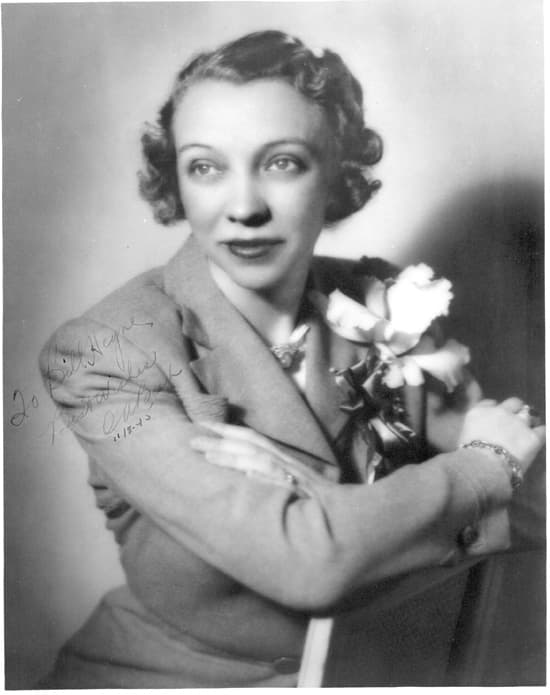
American · Aviation
Olive Ann Beech
September 25, 1903 – July 6, 1993
Early Life and Background
Olive Ann Mellor was born on September 25, 1903, in the small farming town of Waverly, Kansas, the youngest of four children born to Frank Mellor and his wife. Growing up in a modest rural household in the early twentieth-century American Midwest, Olive Ann demonstrated an early aptitude for mathematics, organization, and business that distinguished her from many of her peers. Educational and professional opportunities for women in that period were limited, typically confined to teaching, nursing, or clerical work, but Olive Ann pursued the latter with determination.
After completing her secondary education, she attended Bryant & Stratton Business College in Wichita, Kansas, where she trained in bookkeeping, accounting, and secretarial skills. This practical business education, though modest by later standards, provided her with a rigorous foundation in financial management that would prove essential throughout her career. She began working as a bookkeeper and stenographer in various Wichita businesses, honing her organizational skills in the years following her graduation.
Entry into Aviation
In 1924, Olive Ann took a position as an office manager and bookkeeper at the Travel Air Manufacturing Company, an aircraft manufacturer co-founded by Walter H. Beech, Lloyd Stearman, and Clyde Cessna in Wichita. This was her entry point into an industry that was, at the time, barely two decades removed from the Wright brothers' first flight and still viewed by much of the public and financial establishment as a risky, unproven venture.
Olive Ann quickly distinguished herself within Travel Air through her exceptional grasp of finance, contracts, and administration—skills that were rare and highly valued in the fast-growing but chaotic aviation manufacturing sector. She rose from bookkeeper to a position of significant administrative responsibility, effectively managing the business side of the company while the engineers and pilots, including Walter Beech, focused on design and flight testing. Her relationship with Walter Beech, initially professional, deepened over the following years, and the two married on February 24, 1930.
When Travel Air was sold to the Curtiss-Wright Corporation in 1929, both Walter and Olive Ann found themselves within a larger corporate structure that did not suit their entrepreneurial ambitions. The stock market crash of 1929 and the ensuing Great Depression created enormous economic uncertainty, but the couple nonetheless resolved to strike out on their own.
Founding Beech Aircraft Company
On April 3, 1932, Walter and Olive Ann Beech founded the Beech Aircraft Company in Wichita, Kansas—an audacious decision made at the very depth of the Great Depression, when banks were failing, unemployment was rampant, and few believed a new aircraft manufacturer could survive, let alone thrive. Olive Ann served as secretary-treasurer, a title that understated her actual influence: she managed the company's finances, structured contracts, oversaw personnel matters, and provided the steady business judgment that balanced Walter's engineering-driven, risk-taking instincts.
The company's first major success came with the Beechcraft Model 17 "Staggerwing," a distinctive biplane with negatively staggered wings (the lower wing set forward of the upper wing), which debuted in 1932. The Staggerwing was fast, luxurious, and technologically advanced for its time, appealing to wealthy private owners and corporate customers. It won prestigious air races, including performances in the Texaco Trophy Race, and gained international acclaim, helping establish Beech Aircraft's reputation for quality and innovation despite the dire economic conditions of the era.
Olive Ann's contributions during this founding period were indispensable. She negotiated with banks and suppliers, managed cash flow during lean years, and ensured the company met its financial obligations even when orders were scarce. Her steady hand allowed Beech Aircraft to survive the Depression years and position itself for dramatic growth as war clouds gathered over Europe and Asia in the late 1930s.
World War II Expansion
The outbreak of World War II transformed Beech Aircraft from a niche manufacturer into a major industrial contributor to the American war effort. The company received substantial government contracts to produce training aircraft, most notably the Beechcraft AT-10 and AT-11, used to train thousands of American bomber crews and navigators. At its wartime peak, Beech Aircraft employed over 14,000 workers, and Olive Ann played a central role in managing this massive expansion, overseeing logistics, labor relations, and financial administration for a company operating at an unprecedented scale.
Her wartime leadership earned her the prestigious Award of Merit from the U.S. Treasury Department in 1944 for her contributions to the war bond effort, and she became increasingly recognized within business and government circles as an exceptionally capable executive, notable not only for her gender but for the sheer scope of her managerial competence.
Assuming the Presidency
Tragedy struck on November 29, 1950, when Walter Beech died suddenly of a heart attack. Rather than stepping back or selling the company, Olive Ann immediately assumed the roles of President and Chief Executive Officer of Beech Aircraft Corporation, a decision that startled many in the male-dominated aerospace and defense industry. At the time, it was virtually unprecedented for a woman to lead a major American manufacturing corporation, particularly one engaged in complex engineering and heavy industrial production.
Under her leadership through the 1950s and 1960s, Beech Aircraft flourished. She guided the company through the Korean War, securing lucrative government and military contracts, and diversified the company's civilian product lines with iconic aircraft such as the Bonanza (introduced in 1947, continuing production for decades) and later the Beechcraft King Air, a twin-turboprop business aircraft that debuted in 1964 and became one of the most successful and enduring aircraft in general aviation history.
Olive Ann's management philosophy emphasized rigorous financial discipline, product quality, and employee loyalty. She was known for her direct, no-nonsense leadership style and her insistence on maintaining Beech Aircraft's reputation for engineering excellence. Despite skepticism from some quarters of the traditionally male aerospace industry, she proved an astute and successful executive, expanding the company's revenues, market share, and international reach substantially during her tenure.
Later Corporate Leadership and the Raytheon Merger
In 1968, Olive Ann Beech relinquished the title of President but remained Chairman of the Board, continuing to shape company strategy and represent Beech Aircraft in industry and government circles. In 1980, Beech Aircraft Corporation merged with the Raytheon Company, a major defense and technology conglomerate, in a deal that reflected the growing consolidation trends in the aerospace industry. Following the merger, Olive Ann was named Chairman Emeritus of Beech Aircraft, a role that recognized her enduring influence and legacy even as she stepped back from day-to-day operational control.
Awards and Recognition
Throughout her career and in the years following her retirement from active management, Olive Ann Beech received extensive recognition for her contributions to aviation and American industry. She was inducted into the National Aviation Hall of Fame in 1981, one of the highest honors in American aviation, recognizing her decades of leadership and innovation. She was also honored by the Women in Aviation International Pioneer Hall of Fame and received numerous honorary degrees from American universities in recognition of her business acumen and industry leadership.
She was affectionately dubbed the "First Lady of Aviation" by contemporaries and the press, a title that reflected both her trailblazing status as a female executive and her substantial, lasting contributions to the American aerospace industry. She served on various government advisory boards, including advisory committees related to national security and aviation policy, further cementing her status as a respected voice in industry and government circles.
Personal Life
Olive Ann married Walter H. Beech on February 24, 1930. The couple had one daughter, Mary Lynn Beech (later Mary Lynn Oliver), who would go on to serve on the Beech Aircraft board of directors and continue involvement in aviation philanthropy. Olive Ann was known for balancing her demanding executive responsibilities with her family life, though she was often noted by contemporaries for her intense work ethic and dedication to the company she and her husband built together.
Following Walter's death in 1950, Olive Ann never remarried, instead dedicating the remainder of her professional life to steering the company that bore her husband's name to new heights of success, a testament to the deep partnership—both personal and professional—that had defined their marriage.
Legacy and Death
Olive Ann Beech died on July 6, 1993, in Wichita, Kansas, at the age of 89. Her death marked the passing of one of the most consequential women in the history of American business and aviation. She left behind a legacy that fundamentally challenged prevailing assumptions about women's capabilities in heavy industry, engineering-driven manufacturing, and corporate leadership more broadly.
Beech Aircraft Corporation, though later absorbed into Raytheon Aircraft and eventually Textron Aviation (through mergers with Cessna and Hawker Beechcraft), continued to produce aircraft bearing the Beechcraft name well into the twenty-first century, a testament to the enduring engineering standards and business practices Olive Ann helped establish. Wichita, Kansas—known as the "Air Capital of the World"—owes much of its aviation manufacturing prominence to the foundational work of companies like Beech Aircraft under her stewardship.
Olive Ann Beech remains one of the most celebrated pioneering women in American corporate and aviation history. Her life demonstrates how determination, financial acumen, and steady leadership could overcome significant gender barriers in mid-twentieth-century American industry. She is remembered today through institutions such as the National Aviation Hall of Fame, the Kansas Aviation Museum, and the Wichita State University Libraries Special Collections, which preserve her papers and legacy for future generations of scholars and aviation enthusiasts.
Dated achievements
4 indexed.
- Sep251903Aviation
Born in Waverly, Kansas
Olive Ann Beech was born on September 25, 1903, in Waverly, Kansas, to Frank Mellor and Susan (Mellor) Mellor.
View details Olive Ann Beech - Wikipedia - Apr031932Aviation
Co-founded Beech Aircraft Company
Olive Ann and Walter Beech co-founded Beech Aircraft Company in Wichita, Kansas, during the depths of the Great Depression.