← All women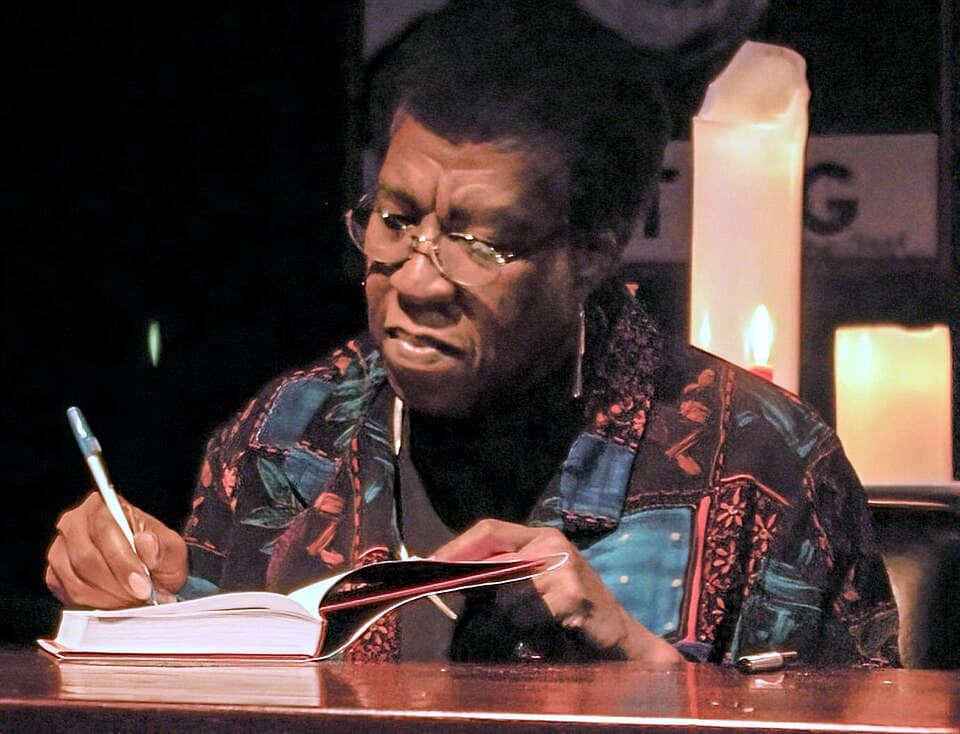
American · Literature
Octavia Butler
June 22, 1947 – February 24, 2006
Early Life and Background
Octavia Estelle Butler was born on June 22, 1947, in Pasadena, California. Raised by her mother after her father’s early death, Butler grew up in a racially diverse, working-class neighborhood. Her mother worked as a maid to support the family, a position that exposed Butler to the inequities of society at an early age. An introverted child, Butler found solace in books and the local public library, which became a refuge throughout her youth.
Despite struggling with dyslexia, Butler exhibited a keen interest in writing early on, penning stories in her notebooks by the age of ten. She attended Pasadena City College, where she earned an associate degree in 1968. Simultaneously, she participated in writing workshops and received critical encouragement from notable figures like Harlan Ellison, which helped shape her future aspirations.
Career Beginnings and Development
Butler's early career was marked by persistence in the face of numerous rejections. Her breakthrough came in 1976 with the publication of Patternmaster, the first novel in the ambitious Patternist series. The series, which includes titles like Mind of My Mind (1977) and Wild Seed (1980), explores telepathy and human evolution, themes that became central to her work.
Major Works and Accomplishments
Butler is perhaps best known for her 1979 novel Kindred, a powerful narrative that explores slavery, temporality, and identity through the lens of speculative fiction. Her Xenogenesis series, later known collectively as Lilith’s Brood (1987-1989), further cemented her status as a powerful voice in science fiction literature. These works tackle controversial themes, including genetic manipulation, coexistence, and what it means to be human and 'other'.
Awards, Honors, and Recognition
In her lifetime, Butler received numerous awards, including multiple Hugo and Nebula awards. In 1995, she made history as the first science fiction writer to win a MacArthur Fellowship, also known as the “genius grant,” which greatly aided her creative freedom. Throughout her career, she continued to earn critical acclaim and recognition from both speculative and mainstream literary circles, drawing attention for her unique narrative voice and profound thematic depth.
Personal Life
Known as a private individual, Butler never married and had no children. She often lived modestly, with a concentration on her work above all other aspects. Her personal challenges, including lifelong shyness and a struggle with self-doubt, provided a stark contrast to the ambition evident in her writings.
Legacy and Historical Impact
Butler’s literary legacy is significant; she is often credited with transforming the landscape of science fiction by introducing robust discussions around race, gender, and social issues. The impact of her work extends beyond literature into cultural discussions and academic studies, making her one of the defining voices of speculative fiction in the 20th century.
Later Life and Death
Butler settled in Seattle, Washington, where she continued to write until her sudden passing on February 24, 2006. Her body of work persists as a beacon of imaginative literature and a guidepost in discussions of diversity and inclusion in storytelling.
Dated achievements
3 indexed.
- Jun221947Science
Birth of Octavia Estelle Butler
Octavia Estelle Butler was born in Pasadena, California, on June 22, 1947.
View details Octavia E. Butler - Wikipedia - Apr011995Literature
Becomes First Science Fiction Writer to Receive MacArthur Fellowship
Octavia Butler became the first science fiction writer to win the prestigious MacArthur 'Genius' Fellowship.