← All women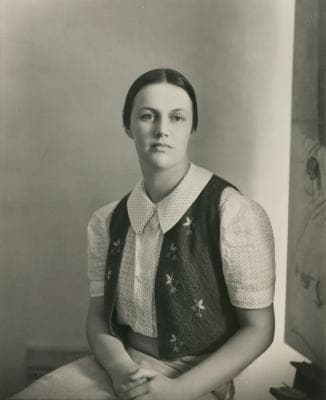
Australian · Arts
Nora Haysen
June 16, 1911 – December 16, 2003
Early Life and Background
Nora Heysen was born on 16 June 1911 in the small township of Hahndorf in the Adelaide Hills, South Australia, the fourth of eight children of the celebrated landscape painter Hans Heysen and his wife Sallie. She grew up at 'The Cedars', the family's expansive property near Hahndorf, an environment saturated with art-making: her father's studio, his network of visiting artists, critics, and collectors, and an atmosphere in which serious discussion of painting was part of daily life. This upbringing gave Nora an unusually rich early art education, but it also meant she grew up permanently in the shadow of one of Australia's most famous and successful painters — a circumstance that would both help and hinder her throughout her career.
From childhood, Nora displayed a precocious talent for drawing and painting, encouraged by her father, who recognised her ability early and provided her with materials, instruction, and access to his professional circle. She was educated privately and later attended art classes in Adelaide, notably at the South Australian School of Arts and under local artist teachers. Even in her teenage years she was producing accomplished still-life and figure studies that attracted attention beyond the family home.
Education and Formative Training
In 1933, seeking to escape the constant comparisons to her father and to develop her own artistic identity, Heysen travelled to London to further her studies. She trained at various London art schools and immersed herself in European art, travelling to Italy and elsewhere on the Continent to study Old Masters and contemporary movements. This period abroad, lasting several years through much of the 1930s, was crucial: it exposed her to a far broader range of technique and subject matter than was available in Australia at the time, and it allowed her to develop the meticulous realist style — combining careful tonal modelling, restrained colour, and psychological attentiveness to sitters — that would define her mature work.
She returned to Australia in 1937, bringing with her a refined technical facility and a determination to establish herself as a professional portrait and still-life painter, at a time when very few women in Australia could sustain a full-time career in fine art.
The Archibald Prize and Early Recognition
Heysen's return to Australia coincided with a rapid rise to national prominence. In 1938 she entered a portrait of fellow artist Madame Elink Schuurman (also referred to as Elink Bull in some records) into the Archibald Prize, Australia's most prestigious and closely watched portraiture competition, administered annually by the Art Gallery of New South Wales. She won — becoming the first woman in the prize's history to do so, a history-making event that generated significant press coverage.
The reception, however, exposed the deep gender bias of the Australian art world and media at the time. Rather than focusing on her technical achievement, numerous newspaper reports fixated on her appearance, her marital status, and whether a "girl" should be capable of such serious work, with some critics suggesting the judges must have been swayed by novelty rather than merit. Heysen bore this scrutiny with characteristic reserve, continuing to paint and exhibit steadily. Strikingly, no other woman would win the Archibald Prize for over two decades, until Judy Cassab in 1960 — a gap that highlights just how exceptional, and how threatening to the status quo, Heysen's win had been.
Official War Artist
With the outbreak of the Second World War, the Australian government began commissioning official war artists to document military and civilian life. In 1943, Nora Heysen was appointed as the first woman official war artist in Australian history, commissioned by the Australian War Memorial. This was a landmark appointment, breaking a long-standing convention that official war art — closely tied to combat, military command, and masculine heroism — was the exclusive domain of male artists.
Heysen's commission, however, was constrained by the norms of the day: she was largely restricted from depicting front-line combat and instead was directed toward documenting the work of servicewomen, nurses, and medical personnel. She served in New Guinea and other Pacific theatres, producing a substantial body of work depicting the Australian Army Nursing Service, medical units, and the day-to-day realities of women's war work — subjects that had previously received little serious artistic attention. Her paintings from this period, held today primarily in the collection of the Australian War Memorial, are valued both for their technical accomplishment and as a rare visual record of women's contributions to the war effort, contributions that were frequently minimised in official narratives at the time.
She continued in the role until the end of the war, navigating difficult conditions, military bureaucracy, and persistent scepticism about a woman's suitability for the position — all while producing a body of work now recognised as historically invaluable.
Personal Life
In 1953, Nora Heysen married Dr Robert Black, a prominent dermatologist, and the couple settled in Sydney. The marriage brought a degree of personal stability, though Heysen continued to face the perennial challenge experienced by many women artists of her generation: balancing domestic expectations with a demanding professional practice. She did not have children, and she continued to paint prolifically throughout her marriage, maintaining a studio and exhibiting regularly. Her relationship with her father remained a defining thread throughout her life — a source of early advantage, ongoing comparison, and, in her own accounts given in later interviews, a complicated mix of gratitude and the desire to be recognised independently of his name.
Major Works and Style
Beyond her Archibald-winning portrait and her war art, Heysen produced an extensive body of still-life paintings, botanical studies, and portraits throughout her career. She was particularly admired for her precise, luminous still lifes of flowers and household objects, rendered with a restrained palette and acute attention to light and texture, as well as for sensitive portraits of family, fellow artists, and public figures. Her style remained largely representational and realist throughout her career, resisting the pull of modernist abstraction that increasingly dominated Australian art discourse from the mid-twentieth century onward — a choice that at times left her somewhat outside fashionable critical currents, even as her technical mastery was never seriously questioned.
Later Recognition and Honours
In the latter decades of her life, as feminist art history began to reassess the contributions of women artists systematically overlooked or diminished by earlier critical traditions, Heysen's reputation grew substantially. Major Australian institutions — including the Art Gallery of New South Wales, the National Gallery of Australia, the Art Gallery of South Australia, and the Australian War Memorial — hold significant collections of her work and have mounted retrospective exhibitions reassessing her career. She was appointed an Officer of the Order of Australia (AO) in recognition of her services to art. Her war art in particular has been the subject of renewed scholarly and curatorial attention for its unique documentation of Australian servicewomen.
Legacy and Historical Impact
Nora Heysen's career is now understood as a pivotal case study in the history of women in Australian art. Her 1938 Archibald Prize win stands as a landmark moment — the first crack in a prize (and an art establishment) that had excluded women from its highest recognitions, even as the ensuing backlash demonstrated how entrenched that exclusion was. Her appointment as official war artist in 1943 similarly broke new institutional ground, and her surviving body of war work remains one of the few substantial visual records of Australian women's wartime service created by a woman.
Throughout her career, Heysen navigated the dual challenge of being perpetually compared to her famous father and being underestimated because of her gender, yet she maintained an independent, technically rigorous practice for over seventy years. Later generations of Australian women artists and curators have pointed to her as a foundational figure whose achievements helped open institutional doors — from major prizes to official government commissions — that had previously been closed to women.
Death
Nora Heysen died on 16 December 2003 in Sydney, at the age of 92. Her death was marked by tributes across the Australian art world, and her work continues to be exhibited, studied, and reassessed as an essential chapter in the history of Australian art and of women's professional advancement within it.
Dated achievements
3 indexed.
- Jun161911Arts
Born in Hahndorf, South Australia
Nora Heysen was born on 16 June 1911 in Hahndorf, South Australia, daughter of celebrated landscape painter Hans Heysen.
View details Nora Heysen - Wikipedia - Jan261938Arts
Awarded the Archibald Prize, first woman to win
Nora Heysen became the first woman to win Australia's prestigious Archibald Prize for portraiture, with her portrait of Elink Bull.