← All women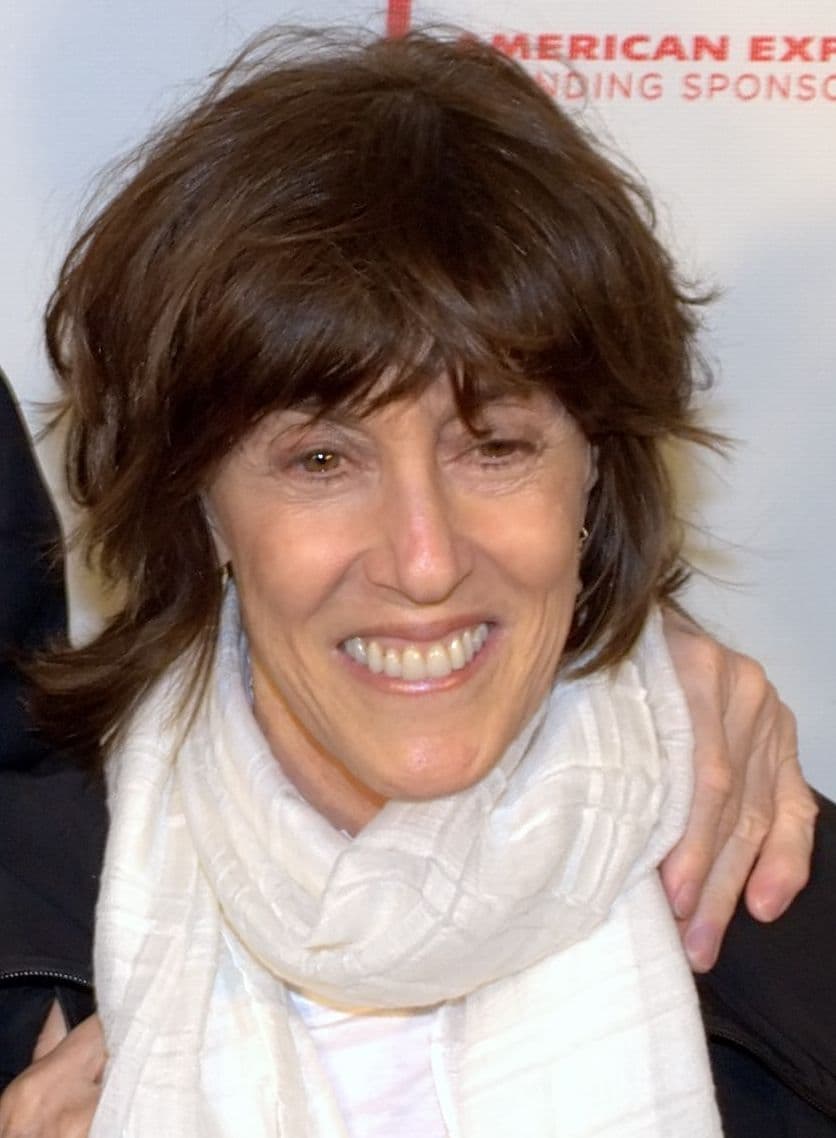
American · Arts · Literature
Nora Ephron
May 19, 1941 – June 26, 2012
Early Life and Background
Nora Louise Ephron was born on May 19, 1941, in New York City, into a Jewish family deeply embedded in the film industry.[1][2][15] She was the eldest of four daughters of screenwriters Henry Ephron and Phoebe Ephron, who worked in Hollywood during the studio era and co‑wrote films such as "Carousel" and "Desk Set."[1][5][15] Her parents’ careers and frequent dinner-table discussions about story structure and dialogue gave Ephron an early, intimate education in narrative craft.
During her early childhood, Ephron lived on Manhattan’s Upper West Side, a neighborhood that would later feature prominently in her films, particularly "You’ve Got Mail."[1][15] When she was three, the family moved to Los Angeles so that Henry and Phoebe could pursue screenwriting opportunities in the film industry.[15][18] Growing up in Beverly Hills, Ephron experienced Hollywood both as a family workplace and a cultural environment, but she often felt like an outsider—a tension that sharpened her critical eye and irony.[18]
Ephron attended Beverly Hills High School and later enrolled at Wellesley College in Massachusetts, an elite women’s institution.[1][7][18] At Wellesley she studied political science and wrote for the student newspaper, beginning the trajectory that would define her early career.[7][18] Her time at Wellesley coincided with rising second‑wave feminism, and although she did not initially identify as a feminist activist, her later essays and films would interrogate traditional expectations placed on women.
Career Beginnings in Journalism
After graduating from Wellesley in 1962, Ephron moved to New York City, hoping to become a journalist.[7][18] She famously began as a "mail girl" at Newsweek, a position that reflected the gendered labor hierarchy of newsrooms in the early 1960s.[17][18] Women were often restricted to researcher or support roles, barred from staff writer positions. Ephron’s ambition and frustration with these constraints were formative, and she later satirized such structures.
Ephron left Newsweek and joined the New York Post, where she worked as a reporter and columnist.[7][18] Her incisive, conversational style quickly distinguished her; she covered city politics, culture, and everyday life with a blend of skepticism and humor that presaged her later essays.[5][13] By the late 1960s and early 1970s, she had become part of the circle associated with New Journalism, a movement that blended literary techniques with reporting.
In 1972, Ephron became a contributing editor and essayist at New York magazine, a hub for experimental, voice‑driven journalism.[5] Her essays examined topics such as feminism, beauty standards, food, and media, often using her own experiences as material. Collections including "Wallflower at the Orgy" (1970) and "Crazy Salad" (1975) established her reputation as one of the sharpest observers of women’s lives and the contradictions of the women’s movement.[5][13] She also wrote for Esquire and other publications, contributing profiles of figures like Helen Gurley Brown and Julia Child.[13]
Transition to Books and Screenwriting
As her journalism flourished, Ephron broadened her output into books. She published essay collections that captured the anxieties and aspirations of educated, urban women in the 1970s, solidifying her status as an important voice in contemporary nonfiction.[5][13] Her work combined self‑deprecation with political critique, dissecting everything from the politics of the kitchen to the cultural meaning of breasts, beauty, and aging.
In the late 1970s and early 1980s, Ephron began to move toward screenwriting. Her first major success in book-length narrative came with the roman à clef "Heartburn", published in 1978Carl Bernstein, co‑reporter of the Watergate scandal, turning personal betrayal into comedy and insight. "Heartburn" was later adapted into a film starring Meryl Streep and Jack Nicholson, for which Ephron co‑wrote the screenplay; this adaptation work marked her increasing involvement in cinema.[1][5][12]
Ephron’s breakthrough in Hollywood screenwriting came with "Silkwood" (1983). She co‑wrote the script with Alice Arlen, telling the story of nuclear plant worker and whistleblower Karen Silkwood.[5][12] The film received critical acclaim and an Academy Award nomination for Best Original Screenplay, establishing Ephron as a serious screenwriter capable of handling political and biographical material.[1][2][18] This recognition opened doors for more high‑profile projects.
Major Works in Romantic Comedy
Although Ephron proved her skill with political drama, she became best known for redefining the romantic comedy. Her screenplay for "When Harry Met Sally...", released in the United States on July 21, 1989, offered a witty, structurally inventive exploration of friendship and love between men and women.[12] Directed by Rob Reiner and starring Billy Crystal and Meg Ryan, the film earned Ephron another Academy Award nomination and is widely regarded as one of the greatest romantic comedies ever made.[1][13][18]
The film’s influence extended beyond box office success. Ephron’s depiction of conversations about sex, intimacy, and neurosis, delivered through fast, intelligent dialogue, set a new standard for romantic comedy writing. The climactic New Year’s Eve scene and the famous diner sequence, in which Ryan’s character demonstrates a fake orgasm, became embedded in popular culture and underscored Ephron’s willingness to discuss female sexuality frankly.
Ephron continued to write and then direct romantic comedies that centered on complex women. "Sleepless in Seattle", released on June 11, 1993, was co‑written and directed by Ephron.[12] Inspired by the classic "An Affair to Remember," the film starred Tom Hanks and Meg Ryan and told the story of a widower and a reporter drawn together through a radio program.[1][2] The film received an Academy Award nomination for Best Original Screenplay and became a cultural touchstone for sentimental yet ironic romance.[1][2][18]
In 1998, Ephron wrote and directed "You’ve Got Mail", released in the U.S. on June 12.[12] Updating "The Shop Around the Corner" for the internet age, the film centers on rival bookstore owners who unknowingly fall in love via email. Its depiction of early online communication and corporate consolidation, set against the backdrop of Manhattan’s Upper West Side, illustrated Ephron’s ability to weave contemporary technologies and economic anxieties into romantic narratives.[1][13]
These films, along with later work such as "Julie & Julia" (2009), in which Ephron wrote and directed a parallel story of Julia Child and a modern food blogger, consolidated her reputation as the patron saint of romantic comedy.[1][13][18] They featured literate, self-aware female protagonists grappling with career, love, and identity—characters that broadened the emotional and intellectual range typically afforded to women in mainstream cinema.
Directing Career and Other Films
Ephron’s move into directing was a significant milestone in a male‑dominated industry. Her first directed feature, "This Is My Life", opened in 1992, with its U.S. release on October 23, 1992.[5][12] The film follows a single mother pursuing stand‑up comedy while raising her children, reflecting Ephron’s interest in women who balance ambition with family responsibilities.
After "This Is My Life," Ephron directed a series of films across genres. "Mixed Nuts", a dark holiday comedy, was released on June 16, 1995, with Ephron as director.[12] The ensemble cast and farcical tone allowed her to explore themes of loneliness and community. "Michael", released on June 28, 1996, featured John Travolta as an unconventional angel and blended fantasy with comedy.[12]
In 2005, Ephron directed and co‑wrote "Bewitched", released in the United States on November 11, 2005.[12] The film’s meta‑narrative about a modern witch cast in a remake of the 1960s sitcom allowed Ephron to comment on Hollywood, typecasting, and evolving gender roles. Though it was less acclaimed than her earlier work, it reinforced her ability to secure and manage large studio productions—an achievement still uncommon for women directors.
Her final feature, "Julie & Julia" (2009), acclaimed for Meryl Streep’s portrayal of Julia Child, intercut the story of Child’s culinary awakening with that of blogger Julie Powell.[1][18] The film linked historical domestic labor, the rise of food media, and contemporary digital self‑expression, themes that resonated with Ephron’s long-standing interest in how women’s everyday lives and creative work intersect.
Books, Plays, and Essays
Parallel to her cinematic career, Ephron continued publishing essays, novels, and plays. Her nonfiction collections, including "Crazy Salad" and later works like "I Feel Bad About My Neck", offered reflections on aging, beauty, motherhood, divorce, and illness.[5][13] These writings combined humor with melancholy and often addressed the compromises and disappointments of middle age.
Ephron also wrote for the stage. Her play "Imaginary Friends" opened on Broadway at the Ethel Barrymore Theatre on November 25, 1981, bringing her storytelling into theatre and exploring literary rivalries between women.[1] In later years, she co‑wrote the play "Love, Loss, and What I Wore", adapted from Ilene Beckerman’s book; the production, made of monologues about clothing and memory, became a popular Off‑Broadway hit and international touring piece, again foregrounding women’s voices and experiences.[1][13]
Her later essays, such as those collected in "I Remember Nothing", confronted mortality and the decline of memory, often with unsentimental candor.[13][16] Even as she privately battled leukemia, she continued to transform personal experience into material, affirming her famous adage, "Everything is copy."
Awards, Honors, and Recognition
Over the course of her career, Ephron received numerous honors. She was nominated for three Academy Awards for Best Original Screenplay: for "Silkwood" (1983), "When Harry Met Sally..." (1989), and "Sleepless in Seattle" (1993).[1][2][4] She won a BAFTA Award for Best Original Screenplay for "When Harry Met Sally..."[1] and received multiple Writers Guild of America nominations, affirming her standing among peers as a master of dialogue and structure.
In 2006, Ephron was awarded the National Humanities Medal by the United States government, recognizing her contributions to literature and film and her role in shaping contemporary American narratives.[1][2] She also received a Tony Award nomination for her theatrical work and was honored by various film festivals and organizations for her achievements as a woman in Hollywood.[1]
Cultural institutions have continued to celebrate her work posthumously. The New York Public Library, among others, has recommended her essays and films as essential reading and viewing for understanding modern romantic comedy and feminist-inflected popular culture.[13] Biographical studies, including Kristin Marguerite Doidge’s "Nora Ephron: A Biography", have further cemented her status as a major figure in American letters and cinema.[8][9][19]
Personal Life
Ephron’s personal relationships were closely intertwined with her work. She married writer Dan Greenburg in 1967; the marriage ended in divorce.[1][5] In 1976 she married Carl Bernstein, co‑author of the Watergate investigation, and their turbulent relationship and Bernstein’s infidelity became the basis for "Heartburn."[1][5][14] The novel and its adaptation transformed personal pain into public narrative, a hallmark of Ephron’s approach to writing.
Later, Ephron married author and screenwriter Nicholas Pileggi, known for his work on crime narratives such as "Goodfellas."[1][5] This marriage was considered stable and supportive; they remained together until her death. Ephron had two sons from her marriage to Bernstein, and motherhood, alongside career, is a recurring subject in her essays and films.[5][18]
Ephron maintained close relationships with her sisters—Delia, Amy, and Hallie Ephron—all of whom became writers.[1][5][15] Collaboration with Delia, especially on scripts like "Sleepless in Seattle" and "You’ve Got Mail," underscored the familial literary tradition. Her social and professional circles in New York and Hollywood included many prominent journalists, editors, and filmmakers, and she was known for hosting dinner parties where conversation and wit mirrored the tone of her writing.[16]
Legacy and Historical Impact
Ephron’s legacy rests on her role as a pioneer for women in both journalism and film. As an early practitioner of New Journalism with a distinctly female perspective, she helped legitimize personal narrative and domestic experience as serious journalistic subjects.[5][13] Her essays broadened the scope of what could be considered political, showing how marriage, cooking, and body image are deeply interwoven with power structures.
In cinema, Ephron reshaped romantic comedy by centering articulate, self-aware women and by insisting that humor and romance could coexist with intelligence and social commentary. Films like "When Harry Met Sally..." and "Sleepless in Seattle" remain reference points not only for screenwriting craft but also for the representation of women as full human beings with desires, flaws, and professional lives.[1][13][18]
Her success as a director was particularly important in an industry where women have historically been excluded from leadership roles. By moving from screenwriting to directing and sustaining that role over multiple films across two decades, Ephron demonstrated that women could exercise comprehensive creative control over mainstream projects.[5][9] She mentored younger women writers and filmmakers, and her public persona—as a sharp, self‑critical, and funny commentator on her own career—offered a model of female authorship that embraced vulnerability without ceding authority.[16]
Scholars and critics have noted that Ephron’s work often blurs the lines between fiction and memoir, and between personal and political, reflecting a broader trend in women’s writing.[16][19] Her insistence that "everything is copy" invites ongoing debates about ethics, privacy, and the use of intimate life as creative material, but it also underscores her belief in the narrative power of lived experience, especially women’s experience, to challenge cultural myths.
Later Life and Death
In her later years, Ephron continued to write essays and to work in film and theatre, even as her health declined. She was diagnosed with acute myeloid leukemia, but she kept her illness largely private, discussing aging and memory loss elliptically in her published work.[1][18] Friends and colleagues were often unaware of the seriousness of her condition.[16]
On June 26, 2012, Ephron died in Manhattan at Weill Cornell Medical Center from pneumonia, a complication of leukemia, at the age of 71.[1][2][3][18] Her death prompted an outpouring of tributes from journalists, filmmakers, actors, and readers worldwide. Obituaries emphasized her singular voice, her influence on romantic comedy, and her contributions to feminist discourse.
Posthumously, her films and essays have remained widely read and viewed. Collections of her work continue to be reissued, and retrospectives of her films are hosted by cultural institutions and streaming platforms.[13][16] For historians of women’s culture, Ephron stands as a key figure in the narration of late 20th‑century American womanhood, bridging journalism, literature, and Hollywood.
Her precise birth and death dates—May 19, 1941, and June 26, 2012—bookend a life that reshaped how women’s stories are told in both print and on screen, securing her place in the editorial almanac of women’s history as a writer and filmmaker who turned the material of everyday life into enduring art.[1][2][18]
Dated achievements
11 indexed.
- May191941Arts
Birth of Nora Ephron in New York City
Nora Ephron was born in New York City, beginning a significant literary and cinematic legacy.
View details Nora Ephron - Wikipedia - Nov251981Literature
Broadway opening of 'Imaginary Friends'
Ephron's play 'Imaginary Friends' opened on Broadway, marking a significant stage success.