← All women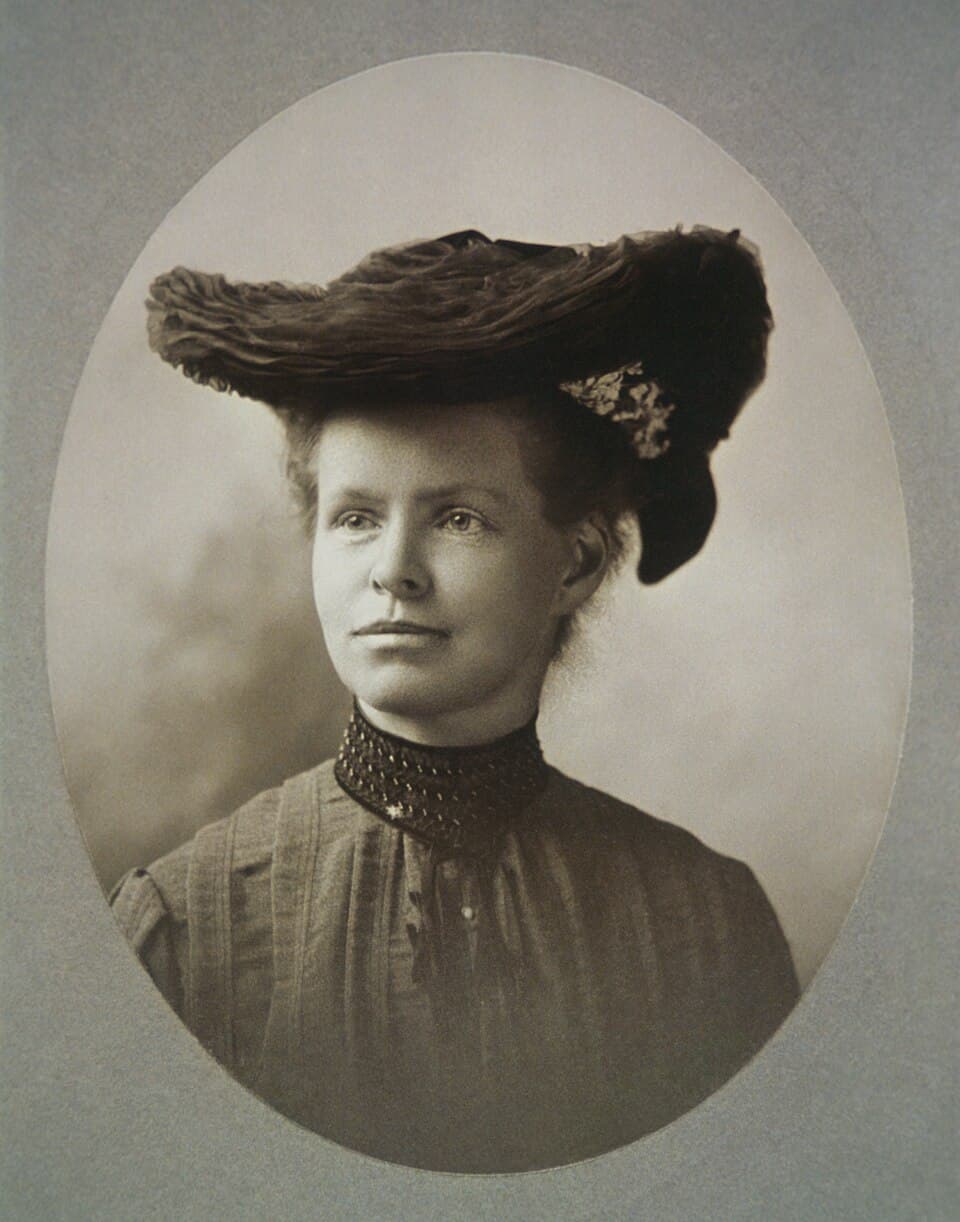
American · Science · Medicine
Nettie Stevens
July 7, 1861 – May 4, 1912
Early life and education
Nettie Maria Stevens was born on July 7, 1861, in Cavendish, Vermont, to Julia Adams Stevens and Ephraim Stevens. She grew up in a rural New England setting at a time when formal opportunities for women in advanced science were limited, but she showed strong academic promise early in life. Her family later settled in Westford, Vermont, and she attended local schools before entering Westford Academy and then Westfield Normal School in Massachusetts, where she prepared for a career in teaching. Her education reflected the practical route available to many intelligent women of her generation: teaching first, then pursuing science through persistence, saving, and later-life study.
After graduating from normal school in 1883, Stevens spent years teaching and supporting herself financially. She also studied during summers, including scientific work at Martha’s Vineyard, an experience that strengthened her interest in biology. Unlike many men who entered scientific research directly through university pipelines, Stevens had to build her education gradually and late. Her path was shaped by the barriers of the era, including restricted access to higher education for women and the expectation that women would remain in subordinate educational roles rather than pursue original research.
In the 1890s, Stevens enrolled at Stanford University, where she earned a bachelor’s degree in 1899 and a master’s degree in biology in 1900. She then pursued graduate study at Bryn Mawr College, an institution that was unusually supportive of women’s advanced scientific education. There she studied cytology under prominent biologists and completed her Ph.D. in biology in 1903. Her doctorate marked the transition from determined student to professional researcher.
Career beginnings
Stevens’s early career is notable because she entered research after years of teaching and after obtaining her education in stages. This delayed route was common for women who sought scientific work in the late nineteenth and early twentieth centuries, but Stevens made unusual use of every opportunity. At Bryn Mawr, she developed strong training in microscopy, cell biology, and experimental observation, all of which were essential to her later work on chromosomes. She also benefited from an intellectual environment shaped by women scientists and educators who believed that women could contribute to original research at the highest level.
Her training coincided with a transformative period in biology. The rediscovery of Gregor Mendel’s work in 1900 helped create the new field of genetics, while cytologists were making rapid progress in understanding the behavior of chromosomes during cell division. Stevens entered this field at exactly the right historical moment, bringing unusually careful observational skill to questions that had not yet been solved.
Discovery of sex chromosomes
Stevens’s most famous work was carried out in the first years of the twentieth century. In 1905 she published the first part of her monograph Studies in spermatogenesis with especial reference to the “accessory chromosome”, based on research on the mealworm Tenebrio molitor. In these experiments she showed that male mealworms produce two kinds of sperm, one carrying a larger chromosome and one carrying a smaller chromosome. When the sperm with the larger chromosome fertilized the egg, female offspring resulted; when the sperm with the smaller chromosome fertilized the egg, male offspring resulted. This was among the first clear demonstrations that sex is determined by chromosomes rather than by environmental conditions or vague developmental forces.
That conclusion was historically profound. It provided strong evidence that a specific chromosomal configuration is associated with biological sex and that inheritance follows a physical mechanism inside the cell. Stevens’s work helped transform sex determination from speculation into a testable genetic problem. It also supported the emerging idea that chromosomes are central to heredity. Her observations helped establish the scientific foundation for the later identification of the X and Y chromosomes.
In 1906 she published the second part of Studies in spermatogenesis, extending her analysis to many additional insect species. By comparing chromosome patterns across taxa, she strengthened the case that sex chromosomes were a general biological principle rather than an isolated curiosity. Her results were part of a parallel set of discoveries also associated with Edmund Beecher Wilson, but Stevens’s work was distinctive in its precision and in the way it tied sex determination to chromosome behavior across numerous species.
Her mealworm studies became especially influential because they gave a concrete, observable mechanism for sex determination. The work is often described as the first strong evidence that sex is determined at fertilization by chromosomes. In modern genetics, that insight is foundational, but in Stevens’s time it was a major conceptual advance that required excellent microscopy, careful experimental design, and the confidence to draw a bold conclusion from biological evidence.
Further scientific work and recognition
Stevens did not limit herself to a single organism or one narrowly defined question. She studied chromosome behavior in a wide range of insects and became one of the first scientists to describe the chromosomal basis of sex determination in detail. She was also recognized as one of the first women to build a serious research career in the biological sciences at a time when the profession was still dominated by men.
Her publication record was substantial. Over roughly a decade, she produced around forty research papers on chromosomes, regeneration, and taxonomy. This output is remarkable not only because of its volume, but because it came from a scientist who had entered research relatively late and worked under the institutional constraints that limited women’s scientific careers. Her success demonstrated that women could contribute to fundamental biological discovery at the highest level.
Stevens received support from the Carnegie Institution of Washington, which funded her postdoctoral research beginning in 1903 and renewed the grant in 1904. Carnegie support was crucial because it gave her resources to continue the chromosome studies that would lead to her seminal papers. In 1905, the same year her research produced decisive evidence for chromosomal sex determination, the Carnegie Institution renewed her grant again, recognizing the importance of her work.
Although she did not receive the formal honors later bestowed on many scientists, her reputation grew within biology. Historians of science now widely regard her as a pioneer of cytogenetics and genetics. She is also remembered for working at the intersection of observation and theory, turning microscopic detail into a major biological principle.
Personal life
Stevens was never married and had no known children. Her personal life, as preserved in the historical record, is less documented than her scientific work, which is itself telling about the period. Women scientists of her generation often left fewer private papers, and the historical attention given to their professional work was frequently limited compared with that granted to male colleagues.
What is clear is that Stevens devoted the latter part of her life to study and research. Her achievements came through sustained labor rather than through inherited status or institutional privilege. She moved from teaching into higher education and then into research, effectively constructing a scientific career at a time when few models existed for women to do so.
Later life, death, and legacy
By 1912, Stevens had earned enough recognition that she was offered a research professorship at Bryn Mawr College, but she died before taking up the post. She died in Baltimore on May 4, 1912, from breast cancer. Her death at age 50 ended a career that had produced one of the defining discoveries of twentieth-century biology.
Her legacy is now especially strong in genetics, cytology, and women’s history. Stevens helped establish that sex is determined by chromosomes and that the Y chromosome is involved in male development. Her work gave biology a mechanism that could be tested, refined, and expanded by later researchers. It also influenced the direction of early genetic research, helping Thomas Hunt Morgan and others interpret chromosome inheritance in experimental organisms such as Drosophila.
She is remembered today as a scientist whose work was both technically sophisticated and conceptually transformative. In a period when women were often excluded from research leadership, Stevens achieved a place among the founders of modern genetics. Her story illustrates both the obstacles women faced in science and the magnitude of what they could accomplish when given access, training, and determination. Her name has become inseparable from the history of sex chromosomes and from the broader effort to recover women whose scientific achievements shaped modern knowledge.
Dated achievements
2 indexed.
- Jul071861Science
Birth of Nettie Maria Stevens
Nettie Maria Stevens, pioneer geneticist, was born on July 7, 1861, in Vermont.
View details Wikipedia - Nettie Stevens - May041912Science
Death of Nettie Maria Stevens
Nettie Maria Stevens died on May 4, 1912, after a short but significant scientific career.
View details