← All women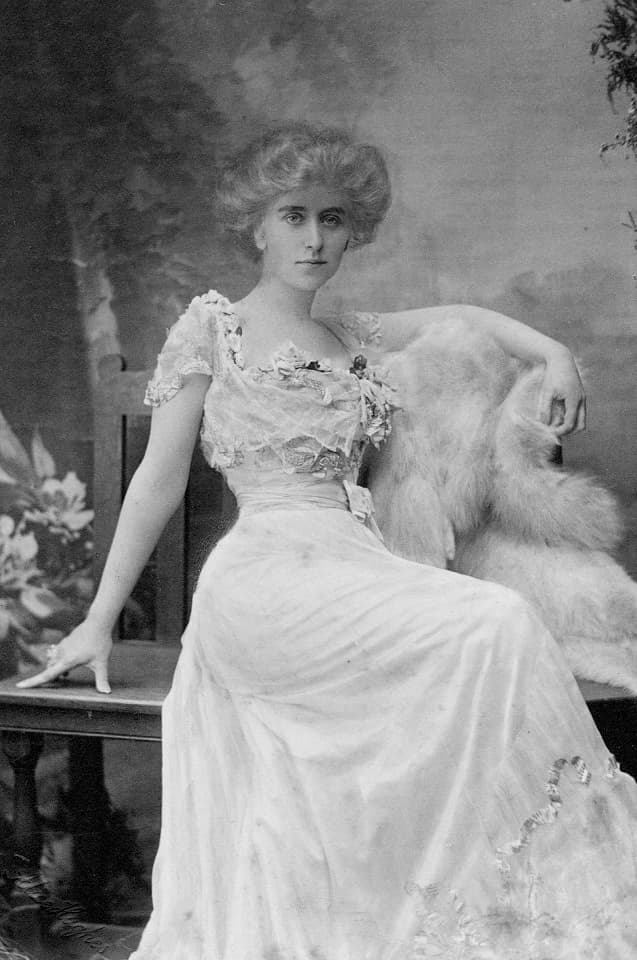
American · Literature · Arts
Natalie Clifford Barney
October 31, 1876 – February 2, 1972
Early Life and Background
Natalie Clifford Barney was born on October 31, 1876, in Dayton, Ohio, into a family of considerable wealth. Her father, Albert Clifford Barney, was heir to a fortune built on railroad-car manufacturing, while her mother, Alice Pike Barney, was a talented painter who studied under artists including James McNeill Whistler and maintained her own ambitions as an artist and patron of the arts. This combination of industrial wealth and artistic sensibility gave young Natalie an unusually cosmopolitan and privileged childhood, split between the United States and extended stays in Europe.
Barney received much of her early education in France, at Les Ruches, a progressive boarding school near Fontainebleau that also educated the future writer Dorothy Bussy and, notably, was later attended by a young Eleanor Roosevelt. This French education proved formative: Barney became fluent in French and developed a lifelong preference for writing in that language, believing it better suited to lyric and epigrammatic expression than English. Her mother's social and artistic connections also exposed her early to painters, writers, and the culture of salons, which she would later replicate and reinvent in her own life.
From adolescence, Barney showed little interest in the conventional path expected of a wealthy young woman—marriage and domestic life. She was aware of her attraction to women from a young age and began, even as a teenager, to see herself as someone who would live openly and unapologetically outside heterosexual norms, a remarkably bold self-conception for a girl of her era and class.
Move to Paris and Literary Beginnings
In 1899, following her father's death and her subsequent inheritance, Barney relocated permanently to Paris, a city that offered far greater personal and artistic freedom than Gilded Age America. She quickly immersed herself in the city's literary and artistic demimonde, beginning relationships with women including the courtesan Liane de Pougy (who fictionalized their affair in the novel Idylle Saphique, 1901) and the poet Renée Vivien, with whom she had an intense, often turbulent relationship and even traveled to Lesbos, hoping to revive a modern Sapphic literary community on the Greek island itself.
In 1900, Barney published her first book of poetry, Quelques Portraits-Sonnets de Femmes, written in French and dedicated to women she loved and admired. The collection was frank in its homoerotic content, an audacious choice given the social and legal risks then attached to depictions of lesbian desire. When her father discovered the book, he reportedly bought and destroyed as many copies as he could find to prevent scandal. Undeterred, Barney continued to write and publish, producing further volumes of poetry, plays, and epigrams over the following decades, including Cinq Petits Dialogues Grecs (1901) and Actes et Entr'actes (1910).
The Salon on Rue Jacob
Barney's most enduring legacy is the literary salon she established and hosted for over six decades, most famously at her home at 20 rue Jacob on the Left Bank of Paris, where she lived from 1909 until her death. Held on Fridays, her salon became one of the great gathering points of European and American modernism, attracting an extraordinary roster of writers, artists, and intellectuals including Colette, Gertrude Stein and Alice B. Toklas, Djuna Barnes, Ezra Pound, T. S. Eliot, James Joyce, Ford Madox Ford, Isadora Duncan, Paul Valéry, Rainer Maria Rilke, Truman Capote, and countless others across generations.
The salon was notable not only for its literary importance but for the visible presence and acceptance of lesbian and bisexual women within it. Barney used her wealth and social position to create a rare protected space where women loving women could exist relatively openly, at a time when such relationships were criminalized or pathologized across much of Europe and America. The garden of her house contained a small Doric "Temple à l'Amitié" (Temple of Friendship), which became an emblem of the salon itself and of Barney's ideals of intellectual and romantic companionship among women.
Barney also championed a project she called the "Académie des Femmes" (Women's Academy), conceived in the 1920s as an informal counter to the all-male Académie française, which did not admit women. Through readings and events at her salon, she sought to recognize and elevate women writers—including Gertrude Stein, Djuna Barnes, Mina Loy, and Colette—who were excluded from more official channels of literary honor.
Major Relationships and Personal Life
Barney never married and lived openly as a lesbian throughout her life, a stance almost unheard of among women of her social standing in the early twentieth century. Her romantic life was extensive and well documented, partly through her own candid memoirs. Her most significant and lasting relationship was with the American painter Romaine Brooks, whom she met around 1915; the two maintained a committed, though famously non-monogamous, partnership for over fifty years until Brooks's death in 1970. Barney and Brooks maintained separate households but were widely regarded as devoted partners, exchanging correspondence and providing mutual support even during Barney's other romantic entanglements.
Other significant relationships included those with the poet Renée Vivien, the courtesan Liane de Pougy, the painter and salonnière Élisabeth de Gramont (Duchesse de Clermont-Tonnerre), with whom Barney also maintained a decades-long partnership alongside her relationship with Brooks. Barney was notably open about practicing what would today be called polyamory, refusing the constraints of monogamy that she associated with patriarchal marriage.
Writing and Literary Output
Beyond her role as a hostess, Barney was a serious, if often underappreciated, writer. Her body of work includes poetry, plays, epigrams, and memoirs, almost all written in French. Notable works include Éparpillements (1910), a collection of aphorisms, and her memoirs Souvenirs Indiscrets (1960) and Aventures de l'Esprit (1929), the latter offering a vivid account of her salon and its famous guests. Her writing style favored brevity, wit, and epigrammatic precision, drawing comparisons to La Rochefoucauld and Oscar Wilde.
Though she never achieved the canonical literary stature of some of her salon guests, scholars of feminist and queer literary history have increasingly recognized Barney's writing—and her life itself—as a significant act of self-authorship and resistance. Her fiction and memoirs offer some of the earliest sustained, unashamed literary treatments of lesbian desire and community in Western literature.
Later Life and Death
Barney remained in Paris through both World Wars, including the German occupation during World War II, a period during which, as a Jewish-descended (through her mother's Pike family lineage, though this is debated) and openly lesbian American, she faced real danger; she spent part of the war in Italy before returning to Paris. Her salon resumed after the war, though its heyday had passed, and she continued to host and correspond with writers into her old age.
She died in Paris on February 21, 1972, at the age of 95, having lived long enough to see the beginnings of the modern gay rights movement she had, in her own singular way, anticipated by decades. She is buried in the Cimetière de Passy in Paris.
Legacy
Natalie Clifford Barney's legacy rests on two intertwined foundations: her role as one of the great salonnières of literary modernism, whose home nurtured and connected some of the era's most important writers, and her status as a pioneering, openly lesbian public figure who refused to hide or apologize for her identity in an era of severe social and legal repression of homosexuality. Biographies, academic studies, and works of queer and feminist history continue to examine her life as a case study in early lesbian visibility, women's cultural patronage, and the possibilities—and limits—afforded by wealth and privilege in resisting social convention.
Her former home at 20 rue Jacob remains a site of literary pilgrimage and scholarly interest, and her papers and correspondence are preserved in archival collections, including at the Bibliothèque littéraire Jacques Doucet in Paris, ensuring her continued presence in the history of twentieth-century letters.
Dated achievements
2 indexed.
- Oct311876Literature
Birthday of Natalie Clifford Barney
Natalie Clifford Barney was born on October 31, 1876, in Dayton, Ohio.
View details Britannica: Natalie Clifford Barney - Feb021972Literature
Death of Natalie Clifford Barney
Natalie Clifford Barney died on February 2, 1972, in Paris, France.