← All women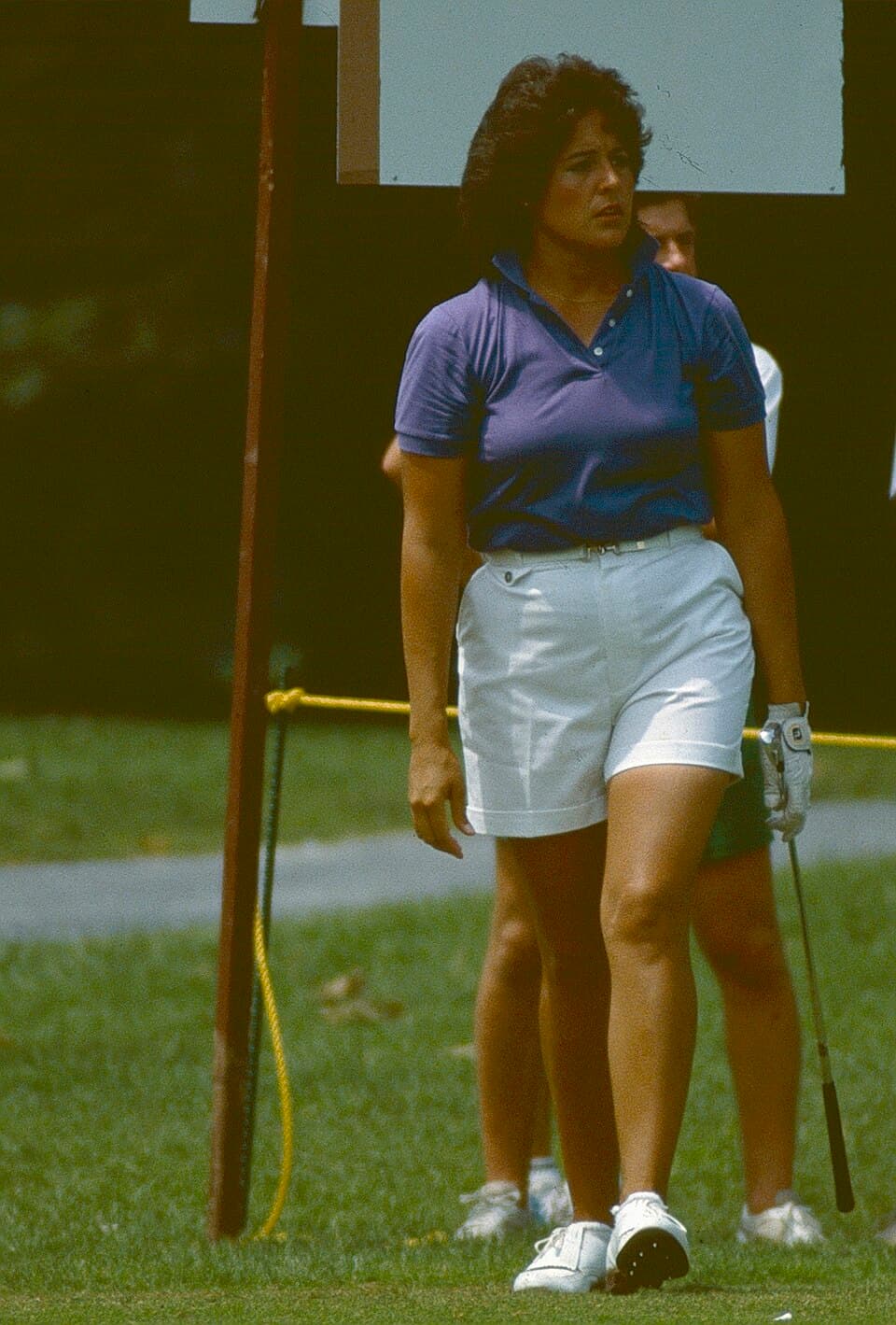
American · Sports
Nancy Lopez
January 6, 1957 – present
Early Life and Background
Nancy Marie Lopez was born on January 6, 1957, in Torrance, California, the second daughter of Domingo and Marina (Griego) Lopez, Mexican American parents who had deep working‑class roots and a strong sense of family.[1][3][7][8] Shortly after her birth, the family settled in Roswell, New Mexico, where Nancy and her older sister, Rosie, were raised.[3][8] Her father worked long hours—often in furniture or auto‑related businesses—yet remained an avid, self‑taught golfer, playing at local public courses and small clubs.[7][17]
Lopez’s introduction to golf came through Domingo, who believed the sport could offer his daughters opportunities he had never had. Around the age of eight, he cut down a set of clubs so she could practice, and began teaching her fundamentals and course etiquette at inexpensive local facilities rather than exclusive country clubs.[5][17] At a time when golf in the United States was still largely associated with white, middle‑ and upper‑class men, this Mexican American family from a small New Mexico city stood well outside the sport’s traditional profile.
From the outset, Lopez showed unusual aptitude and an intense love for the game. She spent countless hours on the range and course with her father, who was both demanding and deeply supportive. As she later recalled, he instilled in her a belief that anything was possible if she worked hard and respected the game. By her pre‑teen years she was already competing in local and regional events, often as one of the youngest players in the field, and quickly developed a reputation as a prodigy.[5][8]
Lopez attended Goddard High School in Roswell, where opportunities for girls in golf were limited. Taking advantage of Title IX‑era shifts but still facing cultural and institutional barriers, she played on the boys’ golf team, frequently competing against male peers and gaining valuable experience in longer, more demanding setups.[5] The unusual step of placing a girl on a boys’ team reflected both her exceptional talent and the scarcity of formal girls’ programs in that period, particularly in smaller communities.
Junior and Amateur Career
Lopez’s rise in competitive golf was rapid. At 12, she won the New Mexico Women’s Amateur Championship, defeating a field largely composed of adults and signaling that she was far more than a promising junior player.[5][7][12] Over the next several years she compiled one of the most decorated junior records in U.S. women’s golf. She won the U.S. Girls’ Junior Championship twice, in the early 1970s, and captured major junior events such as the Western Junior (three times) and the Mexican Amateur.[5][8][12][15] These titles established her as a dominant force among American girls’ golfers.
Lopez also moved quickly into high‑level amateur and open competition. Still a teenager, she began playing in top women’s events, including the U.S. Women’s Open. In 1974, while still in high school, she played the Open and gained national attention simply by qualifying and competing as an amateur.[1][8] In 1975, at age 18, she finished second in the U.S. Women’s Open, an extraordinary result given that she was facing the world’s best professional players.[1][2][8] She would finish runner‑up in the championship again in 1977, just as she was transitioning to the professional ranks.[1][2]
Her amateur record extended beyond individual events. In 1976, Lopez was selected for both the U.S. Curtis Cup team and the U.S. World Amateur team, prestigious appointments that confirmed her status as one of the country’s top amateurs.[1][4][5][12] These international team experiences helped develop her match‑play skills and exposed her to diverse playing conditions, foreshadowing her future role in international professional competitions like the Solheim Cup.
Collegiate Golf at the University of Tulsa
In 1974, Lopez received a golf scholarship to the University of Tulsa, a rising power in women’s collegiate golf.[5] She joined the program at a time when women’s college sports were undergoing significant change following the passage of Title IX, and her presence gave Tulsa an immediate star.
As a freshman in 1976, Lopez won the AIAW National Intercollegiate Golf Championship, the premier women’s college golf title before the NCAA assumed governance.[4][9] She dominated the collegiate season and was named Tulsa’s Female Athlete of the Year, underscoring her impact on the university’s athletic prestige.[4][5] Her collegiate success confirmed what her junior and amateur results had already suggested: she was ready for the highest levels of competition.
Despite her success, Lopez stayed at Tulsa for only two years. After the 1976–77 collegiate season, aware of burgeoning interest from sponsors and buoyed by strong finishes in professional majors, she decided to leave college and pursue a professional career full‑time. This move reflected both her confidence and the limited window of peak performance in elite golf.[1][9]
Transition to the LPGA Tour
Lopez turned professional and joined the LPGA Tour in 1977.[1] In her debut season, she competed in a limited schedule of six events, finishing second in three of them—a rare level of immediate success for a rookie.[5] She also recorded another runner‑up finish at the U.S. Women’s Open that year, again as a newcomer among seasoned professionals.[1][2]
Even before her first official tour win, Lopez attracted significant attention for her smooth, rhythmic swing, confident putting, and approachable demeanor with fans. She signed endorsement deals, appeared frequently in sports media, and was quickly recognized as a potential savior for a tour struggling for television coverage and sponsorships in the 1970s.[6][13] Her Mexican American heritage, coupled with her openness about family and faith, broadened the LPGA’s appeal beyond its traditional audience.
Breakthrough 1978 Season
The year 1978 is widely regarded as one of the greatest single seasons in LPGA history. On February 26, 1978, Lopez won her first LPGA Tour event at the Bent Tree Classic in Sarasota, Florida, clinching victory with a memorable 15‑foot birdie putt on the 17th hole.[8] This breakthrough established her as a closer under pressure and set the tone for the rest of the year.
On June 11, 1978, she captured her first major championship at the LPGA Championship, one of the tour’s most prestigious events.[1][2][9] The win came amid a sustained run of success in which she captured a total of nine tournaments and a record streak of five consecutive victories during the season.[1][9][13][14] Her compelling play and charisma earned her a cover appearance on Sports Illustrated and made her one of the most visible women athletes in the United States.[14]
At season’s end, Lopez accomplished an unprecedented triple sweep of LPGA honors, becoming the first player to win Rookie of the Year, Player of the Year, and the Vare Trophy for lowest scoring average in the same year.[3][5][13][14] Her achievements were widely recognized outside golf: on December 27, 1978, she was named the Associated Press Female Athlete of the Year.[3][5][14] By any measure, her rookie campaign transformed her from rising star to dominant figure and reenergized the LPGA Tour’s profile with fans, sponsors, and broadcasters.
Continued Dominance in the Late 1970s and 1980s
Lopez followed her breakthrough with another stellar season in 1979, winning multiple events and again capturing both LPGA Player of the Year and the Vare Trophy.[3][5][10] Through the early 1980s she continued to pile up victories, winning at least once every year from 1978 through 1984 and often contending in majors and regular events alike.[1][14]
In 1985 she enjoyed one of her best seasons. On June 16, 1985, Lopez won her second LPGA Championship, adding a second major title to her record.[1][2] That year she also led the money list and again secured LPGA Player of the Year and the Vare Trophy, reaffirming her status as the tour’s pre‑eminent player.[1][3][10]
Her third and final major came on June 11, 1989, when she captured the LPGA Championship for a third time.[1][2][9] The victory, more than a decade after her first major, highlighted her longevity and ability to compete at the highest levels despite changes in equipment, course setups, and the rising strength of the LPGA field.
Throughout the 1980s, Lopez also maintained a strong record of consistency, amassing top‑ten finishes and competing effectively even when playing fewer events due to family commitments. She was repeatedly recognized by peers and the golf media for both her performance and her sportsmanship.[8][12]
Awards, Honors, and Hall of Fame Recognition
Beyond tournament victories, Lopez accumulated a substantial list of awards and honors. In addition to multiple LPGA Player of the Year titles and Vare Trophies in 1978, 1979, 1985, and 1988, she led the money list several times and became one of the tour’s top career earners.[1][3][9][10]
On February 15, 1988, the United States Golf Association (USGA) honored Lopez with the Bob Jones Award, recognizing her distinguished sportsmanship and integrity.[8] This award, one of the most prestigious in golf, underscored that her influence extended beyond scoring averages and trophies to the way she represented the game.
Lopez’s competitive achievements led to rapid Hall of Fame recognition. She was enshrined in the World Golf Hall of Fame in 1987, making her one of the youngest inductees in that institution.[9][11][13] On November 15, 1989, after reaching the LPGA’s performance criteria with her 35th official victory, she was inducted into the LPGA Hall of Fame.[3][16] Her 48 LPGA Tour wins and three majors, combined with her awards and contributions to the sport’s popularity, secured her place among the game’s all‑time greats.
In 1997, she received a prominent Hispanic Heritage Award, recognizing her as a pioneering Latina figure in American sports and culture.[1][3][5] This honor highlighted the significance of her visibility and success for Hispanic and Latino communities in the United States.
By the late 1980s and 1990s, Lopez had also accumulated numerous other distinctions, including membership in state and regional halls of fame and honors from golf writers’ associations, reflecting a broad consensus about her historical importance.[12][19][20]
International Team Golf and the Solheim Cup
Lopez’s influence extended into international team competition. Building on her earlier amateur experiences in the Curtis Cup and World Amateur events, she took part in the professional team arena when the Solheim Cup was created.
On November 16, 1990, she played for the United States in the inaugural Solheim Cup at Lake Nona Golf & Country Club in Florida.[13] The event, modeled on the Ryder Cup, pitted American LPGA players against European professionals in a match‑play format. Lopez helped the U.S. team secure victory, giving the new competition a successful launch and linking its early history to one of the LPGA’s most prominent stars.
The Solheim Cup has since become one of the most important events in women’s golf, and Lopez’s role in its first edition is part of her broader legacy in expanding the profile and institutional depth of the women’s game.
Later Career and Retirement from Full‑Time Competition
Through the early 1990s, Lopez continued to compete, though she gradually reduced her schedule as she prioritized family life and managed injuries. She remained a frequent contender in marquee events and continued to draw fans wherever she played.[1][14][18]
By the mid‑1990s she was widely recognized as one of the LPGA Tour’s elder stateswomen, often mentoring younger players and serving as a visible ambassador for the sport. Her last official LPGA Tour victory came in the 1990s, and she continued part‑time competition and special appearances into the next decade.[18]
In 2002, Lopez retired from full‑time LPGA Tour competition, closing a career that totaled 48 LPGA Tour wins, including three major championships, along with nine official LPGA awards and extensive team and exhibition play.[2][4][8][18] She has since remained active in golf through corporate outings, clinics, broadcasting, and design or consulting roles, as well as in charitable and youth‑development initiatives.
Personal Life
Lopez’s personal life has long been intertwined with her public image, particularly her efforts to balance elite sport with family. In 1982, she married Ray Knight, a professional baseball player best known for his tenure with the Cincinnati Reds and New York Mets.[9] The couple had three daughters together.[5][8] Lopez scaled back her playing schedule at times in the 1980s and early 1990s to accommodate pregnancies and child‑rearing, famously demonstrating that a woman could pursue both a high‑level athletic career and family life.
Her willingness to discuss the challenges of motherhood and competition in interviews made her an early, visible example of a female athlete negotiating work‑family balance. She has often credited her parents and husband for supporting her career and has spoken about structuring her schedule around her children’s lives once she had achieved her primary competitive goals.[5][6]
Lopez has also leveraged her fame for philanthropy, supporting youth golf programs, including initiatives connected to The First Tee, and various charitable causes in Georgia and beyond.[5][15] Residing for many years in Albany, Georgia, she became a local civic figure as well as a national sports icon.[3][12]
Legacy and Historical Impact
Lopez is widely regarded as one of the most important figures in the history of women’s golf. Statistically, her 48 LPGA Tour victories and three majors place her among the elite performers of any era.[1][9][18] However, her impact goes beyond numbers.
First, she played a central role in the commercial and cultural growth of the LPGA Tour. Her breakthrough seasons in 1978 and 1979 came at a moment when women’s professional golf needed star power to secure television contracts and sponsorships. Her charismatic personality, expressive on‑course demeanor, and willingness to engage with fans and media made her a compelling figure, helping to raise attendance and viewership.[6][13]
Second, as a Mexican American woman excelling in a sport with limited racial and ethnic diversity, Lopez broadened the image of who could belong in golf’s top ranks. While some popular accounts have described her as the first prominent Latina on the LPGA Tour, comprehensive tour‑wide ethnicity data is limited. Nevertheless, her prominence as a Latina champion has been widely acknowledged in scholarship and media, and she has been credited with inspiring younger Hispanic and Latina golfers to pursue the game.[3][5][7]
Third, Lopez helped normalize the idea that women athletes could both excel at the highest levels and prioritize family life. Her decision to scale back her schedule for motherhood, while still returning to win major titles and awards, offered a high‑visibility example at a time when many female athletes lacked such models.[5][14]
Her recognition with honors such as the USGA Bob Jones Award, the Hispanic Heritage Award, and dual induction into the World Golf Hall of Fame and LPGA Hall of Fame reflects a broad consensus that her contributions encompass sportsmanship, representation, and institution‑building as well as performance.[3][8][11][16][19]
Economic Milestones and Later Honors
Lopez’s success also carried important economic implications. Over the course of her career she earned more than $5 million in prize money, a significant figure given the much lower purses of earlier decades.[3][12][18] In 1988 she became only the fourth player in LPGA history to surpass $2 million in career earnings.[1][10]
By 1997, Lopez achieved a landmark economic barrier when she became the first woman golfer to exceed $1 million in career prize money on the LPGA Tour, a milestone that underscored both her sustained excellence and the growing financial viability of women’s professional golf.[7] In the same general period, she was honored with a Hispanic Heritage Award, recognizing her broader cultural impact.[1][3][5]
These financial milestones, combined with her endorsements and off‑course activities, made her one of the most commercially successful women athletes of her time. They also provided a tangible measure of how far the LPGA had come since the early years when its founders played for minimal purses and little media exposure.
Ongoing Influence
Even after stepping away from full‑time competition in 2002, Lopez has remained an influential presence in golf. She has conducted instructional clinics, participated in pro‑ams and legends events, and served as a highly visible ambassador for the LPGA and women’s sports more broadly.[15][18] Official profiles from the LPGA, the World Golf Hall of Fame, and other institutions continue to highlight her achievements and use her story to promote the game to new audiences.[11][16][18]
Her career is frequently cited in discussions of women’s sports history, Latina representation in athletics, and the evolution of professional opportunities for women in golf. Scholars and journalists alike point to her 1978 rookie season, her multiple major championships, and her Hall of Fame inductions as key reference points in the narrative of modern women’s golf.[3][8][19][20]
As of the mid‑2020s, Nancy Lopez remains alive and engaged with the sport, her legacy firmly established as that of a transformative figure whose talent, charisma, and perseverance reshaped what was possible for women—and particularly for women of color—in professional golf.
Dated achievements
16 indexed.
- Jan061957
- Aug101969Sports
Wins New Mexico Women's Amateur Championship
At age 12, Lopez wins New Mexico Women's Amateur Championship.
View details