← All women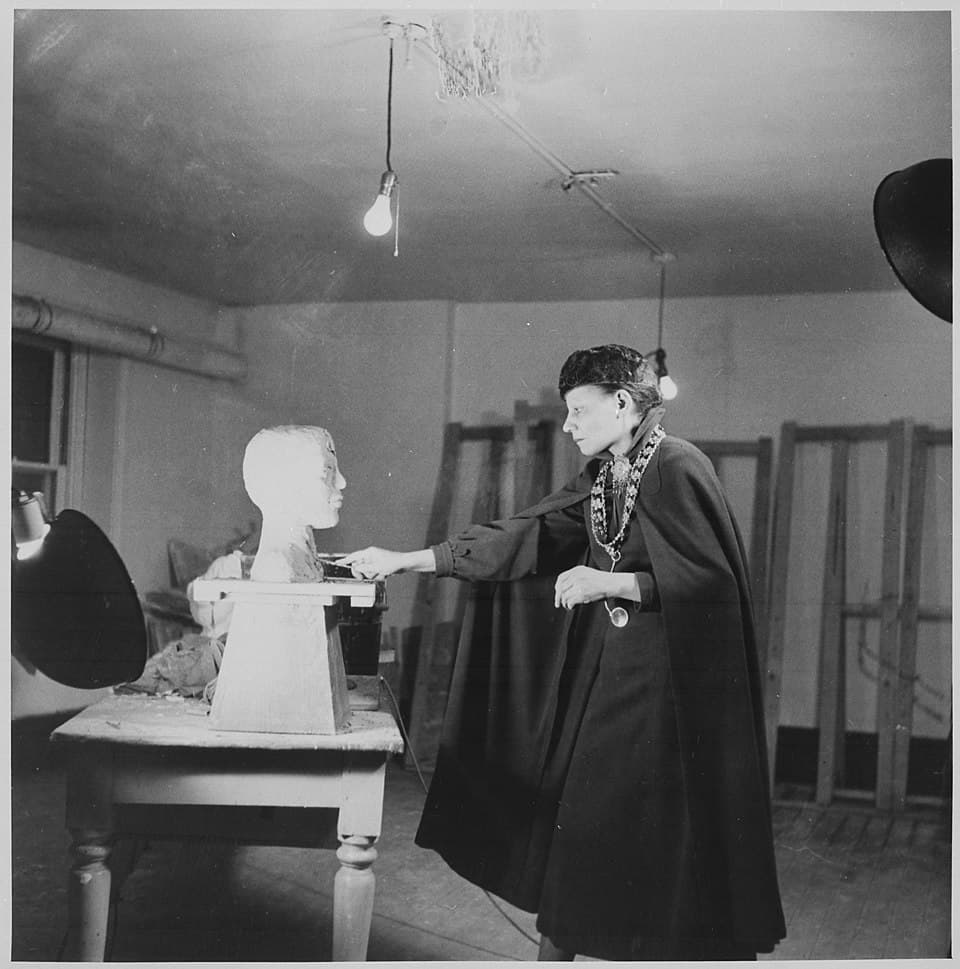
American · Arts
Nancy Elizabeth Prophet
March 19, 1890 – December 13, 1960
Early Life and Background
Nancy Elizabeth Prophet was born on March 19, 1890, in Warwick, Rhode Island. She was the daughter of an African American mother and a Narragansett Indian father, which shaped her unique cultural perspective. Her upbringing in a predominantly white society presented challenges but also instilled a resilience that fueled her ambition to pursue art.
Educational Pursuits
Prophet enrolled at the Rhode Island School of Design (RISD) in 1914, where she was one of the first African American students to attend the institution. She graduated in 1918 amidst the backdrop of World War I. Her time at RISD was crucial in developing her artistic skills and introduced her to a network of artists and patrons that would support her career.
Career Beginnings
After graduation, Prophet moved to Paris in 1922, a city then renowned for its vibrant art scene and more accepting racial climate. She studied under famed sculptor Antoine Bourdelle at the Académie de la Grande Chaumière. Her talent and hard work soon earned her recognition in European art circles.
Major Works and Accomplishments
Prophet's work often reflected her heritage, focusing on themes of African and Indigenous experiences. Her sculpture "Congolais" received critical acclaim at the Salon d'Automne in 1924, showcasing her ability to convey deep emotion and complexity through her work. Her presence in exhibitions alongside major European artists marked her as a notable figure in modern art.
Recognition and Legacy
Although Prophet received limited recognition in the U.S. during her lifetime, her contributions to art have gained appreciation over time. Her works are now celebrated for their emotional depth and technical skill, contributing to the understanding of African American and Native American cultural narratives in art.
Personal Life
During her time in Paris, Prophet married Francis Ford but eventually separated as they pursued different paths. She later returned to the United States in the late 1930s, facing both economic hardship and racial segregation, but continued to advocate for African American artists.
Later Life and Death
Nancy Elizabeth Prophet continued to teach and create art until her death on December 13, 1960. Despite the challenges she faced, her work paved the way for subsequent generations of African American artists, leaving a lasting impact on the art world.
Dated achievements
2 indexed.
- Mar191890Arts
Born in Warwick, Rhode Island
Nancy Elizabeth Prophet was born on March 19, 1890, in Warwick, Rhode Island, to an African American mother and a Narragansett father.
View details Nancy Elizabeth Prophet - Wikipedia (Spanish) - Dec131960Arts
Died in Providence, Rhode Island
Nancy Elizabeth Prophet died on December 13, 1960, in Providence, Rhode Island, largely in obscurity after a groundbreaking career as a sculptor.