← All women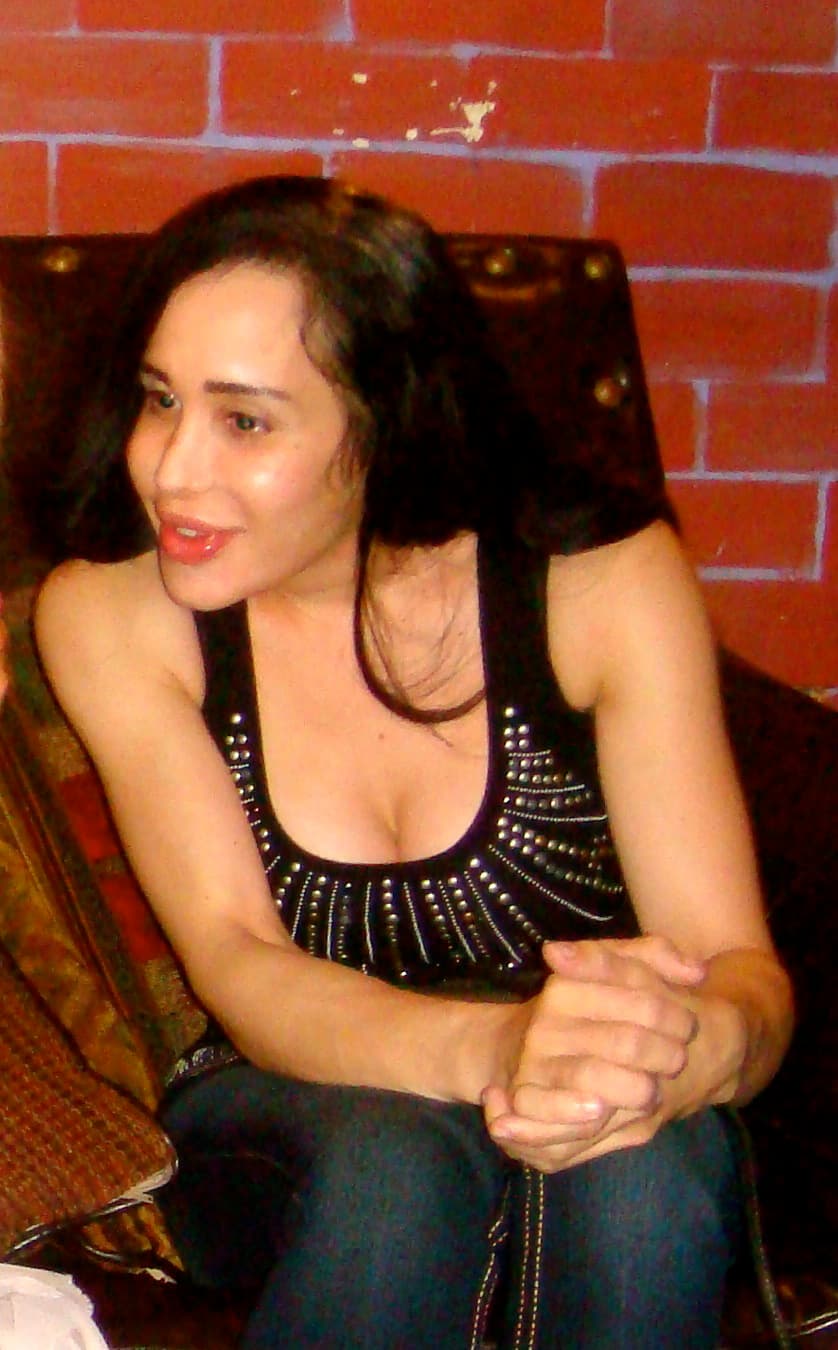
American · Medicine
Nadya Suleman
July 11, 1975 – present
Early Life and Background
Natalie Denise Suleman, born Nadya Denise Doud-Suleman on 11 July 1975, entered the world in Fullerton, Orange County, California.[1][13] Multiple biographical sources list Fullerton as her birthplace and confirm her birth name and later use of the name Natalie Suleman.[1][3] She grew up in a family headed by a father described as a former member of the Iraqi military and a mother who worked as a schoolteacher, placing her within a working‑ to middle‑class milieu shaped by both immigrant experience and public‑sector employment.[4]
As a child and adolescent, Nadya reportedly used the name Natalie Doud, reflecting variations in her family surname and identity that would later appear across official records and media accounts.[4] She attended local schools in the Fullerton area and came of age in the late 1980s and early 1990s, a period when in vitro fertilization (IVF) was expanding but remained controversial and relatively rare in everyday American life.
Following high school, Suleman pursued training that brought her into contact with mental‑health and medical environments. She became a psychiatric technician at Metropolitan State Hospital in Norwalk, California, a large public psychiatric institution.[4] This work exposed her to clinical settings and the realities of patients living with serious mental illness, while providing a modest income and a foothold in the healthcare sector.
In the late 1990s, Suleman’s employment at the hospital ended when she went on disability following a workplace incident; later accounts describe her as having suffered a back injury during a riot at the facility.[4] The shift away from steady hospital work would contribute to the financial precarity that became a central theme in public narratives about her life once her fertility treatments and multiple births drew national attention.
Education and Formative Influences
Alongside her work as a psychiatric technician, Suleman pursued formal education in child development. In 2006, she earned a degree in child and adolescent development from California State University, Fullerton, according to biographical summaries.[4] This course of study reflected a sustained interest in children’s growth, psychology, and welfare, and it provided theoretical grounding for her later claims about understanding the challenges and needs of large families.
Sources indicate that she began but did not complete graduate studies in counseling at the same institution, abandoning those ambitions as her family size grew and her circumstances became more complex.[4] Her academic background, while not leading to a long‑term professional career, shaped how she spoke about motherhood and child‑rearing, particularly in interviews following the birth of her octuplets.
These formative experiences—work in a psychiatric hospital, study of child and adolescent development, and exposure to medical contexts—created a distinctive personal profile: a woman with both practical and theoretical familiarity with care work and human development, but facing economic vulnerability. This combination would later inform how media, medical professionals, and the public interpreted her decision to pursue extensive IVF treatments.
Marriage and Early Family Life
In the mid‑1990s, Suleman married Marco Gutierrez, a marriage that would later feature prominently in discussions of her family arrangements and fertility decisions. IMDb and other biographical sources list the marriage as beginning on 25 December 1996 and ending in divorce finalized on 15 January 2008.[3][8] Other outlets note that the couple separated around 2000 and that Gutierrez filed for divorce several years before the final decree.[9]
Accounts emphasize that Gutierrez did not participate in the IVF decisions that led to Suleman’s large family and that he was not the biological father of the octuplets.[9] Their marital breakdown has been linked in some reporting to disagreements over fertility and the desire for children; one biographical source characterizes the divorce as stemming from difficulties conceiving children and Suleman’s intense focus on IVF.[4]
By the time her story entered global headlines in 2009, Suleman was living as a single mother, relying heavily on her own mother for housing and support while raising several children conceived through IVF.[1][6] The absence of a co‑parent and her limited financial resources became central to media portrayals and ethical debates surrounding her subsequent high‑order multiple pregnancy.
Fertility Treatments and the Birth of Six Older Children
Between 2001 and 2006, Suleman underwent a series of in vitro fertilization cycles with fertility specialist Dr. Michael Kamrava, based in Beverly Hills, California.[1][4] These treatments resulted in the birth of six children prior to the octuplets, all conceived via IVF. Celebrity and popular‑press profiles list the older children as Elijah (born 2001), Amerah (2002), Joshua (2003), Aidan (2005), and fraternal twins Calyssa and Caleb (2006).[9][10]
Sources note that Suleman was deeply motivated by a desire for motherhood and by her attachment to the embryos created in the fertility clinic.[4][18] Over multiple cycles, additional embryos were frozen, creating a reservoir of potential pregnancies that she viewed as morally significant. Her insistence on using all remaining embryos, despite limited financial means, would become one of the most controversial aspects of her later treatments.
By 2006, Suleman was a single mother of six children, living with her own mother in Whittier, California.[6] Public records and interviews describe her relying on student loans, disability payments, and eventually public assistance to support the household.[1][9] Even before the octuplets, her reliance on IVF and her growing family size were unusual, but did not attract broad public attention.
The Octuplet Pregnancy
In 2008, Suleman returned to Dr. Kamrava to have her remaining frozen embryos implanted.[1][4] Later investigations and Suleman’s own accounts indicate that 12 embryos were transferred during this final IVF cycle, a number far exceeding professional guidelines that typically recommended transferring far fewer embryos, especially in a woman of her age and reproductive history.[1][11][14]
All of the implanted embryos reportedly gestated, with two resulting in twins, leading to a pregnancy of octuplets.[4] High‑order multiple pregnancies carry elevated risks for both mothers and infants, including preterm birth, low birth weight, and complications such as respiratory distress and neurological impairment. Suleman’s pregnancy proceeded under close medical monitoring, though much of the prenatal care was not publicized until after the birth.
At the time, Suleman was already caring for six young children and had no stable partner or high income. Her decision to proceed with a pregnancy likely to result in many more children, and Kamrava’s decision to perform the large embryo transfer, would later be criticized by medical ethicists, professional bodies, and the public. Yet Suleman consistently framed her choice as driven by a desire not to "destroy" embryos she viewed as her children.[1][11]
Birth of the First Surviving Octuplets
On 26 January 2009, Suleman delivered eight babies at Kaiser Permanente Medical Center in Bellflower, California, via cesarean section.[1][12] The infants—Noah, Isaiah, Jeremiah, Jonah, Josiah, Makai, Maliyah, and Nariyah—were born at just over 30 weeks’ gestation and weighed between 1 lb 8 oz and 3 lb 4 oz.[18] All required care in the hospital’s neonatal intensive care unit.
The birth was initially expected to involve seven babies; the eighth child surprised medical staff, underscoring the complexity of monitoring high‑order pregnancies.[12] Within days, news outlets around the world reported that Suleman had given birth to the first surviving set of octuplets in history, and Guinness World Records later recognized the case as the record for the most children delivered at a single birth to survive.[1][18]
French‑language sources clarify that while Suleman was the second woman in U.S. history to deliver octuplets, her children were the first set to survive beyond one week, establishing a new global survival record.[2] The birth placed Suleman at the center of an unprecedented medical and media event, with intense attention to both the infants’ progress and the circumstances that had led to their conception.
Immediate Aftermath and Media Sensation
By 2 February 2009, one week after delivery, NBC News reported that "the Suleman eight are already the longest surviving octuplets in U.S. history," noting that all eight children were alive and being monitored.[12][18] This milestone confirmed that Suleman’s octuplets had surpassed the Chukwu octuplets, one of whom had died seven days after birth in 1998.[18]
The story rapidly became a global media sensation. Suleman was dubbed "Octomom" across tabloids, television programs, and online platforms.[1][9] Audiences focused on the dramatic combination of a record‑setting birth, Suleman’s single‑mother status, and her precarious finances. Questions about how she would support fourteen children and whether she had sought publicity deals became central to coverage.
On 17 February 2009, ABC News published a feature framing Suleman’s octuplet birth as one of the events that had "changed history," explicitly recognizing its significance for debates over reproductive technology and social responsibility.[19] The article explored the ethical concerns raised by high‑order multiple births and noted that professional organizations were considering stricter embryo‑transfer guidelines in response.
In the months following the birth, Suleman gave interviews to major outlets, including NBC and ABC, attempting to explain her motivations and defend her decisions. She emphasized that she had not sought government aid intentionally and expressed a desire to become financially independent, though she acknowledged challenges in securing work while caring for fourteen children.[12][1]
Professional Scrutiny and Regulatory Consequences
Suleman’s case prompted swift scrutiny within the medical community. In 2009, the Medical Board of California opened an investigation into Dr. Michael Kamrava’s practice, focusing on his management of Suleman’s fertility treatments and the decision to implant 12 embryos.[1][9] Professional bodies, including the American Society for Reproductive Medicine, reiterated existing guidelines discouraging high‑number embryo transfers.
In subsequent disciplinary proceedings, regulators cited Suleman’s case as emblematic of irresponsible embryo transfer practices. In 2011, Kamrava’s California medical license was revoked, with the decision referencing his treatment of Suleman and other patients as evidence of repeated departures from accepted standards.[1][9] The revocation is often described in commentary as one of the most concrete institutional consequences of the ethical controversy surrounding Suleman’s octuplet pregnancy.
Throughout the 2010s and into the 2020s, Suleman’s case continued to be cited in academic articles, policy discussions, and media reports about IVF, embryo transfer limits, and regulation of fertility clinics.[1][18] Her story helped catalyze tighter guidelines and raised awareness among both practitioners and patients about the serious risks associated with high‑order multiple pregnancies.
Media Work and Public Persona
In the years after the octuplet birth, Suleman’s relationship with the media evolved. Initially, she pursued various forms of publicity to secure income, including interviews, reality‑TV proposals, and entertainment appearances. Biographical listings on IMDb identify her as an actress and note a role in the 2014 horror film "666: The Devil’s Child".[3] She has also been credited in contexts involving image and lighting work and stunt performance.[7][8]
However, Suleman later expressed regret for some of the more sensational media ventures and actively distanced herself from the "Octomom" branding. In interviews and social posts, she has emphasized a desire to protect her children’s privacy and to be known simply as Natalie Suleman rather than by the tabloid moniker.[10][16]
Despite her attempt to step back, her public persona remains shaped by the initial wave of coverage. Many outlets, including People, Us Weekly, and Hollywood Life, continue to refer to her as "Octomom" when revisiting the story of the octuplets and providing updates on the family.[9][10][5]
Legal and Financial Challenges
Suleman’s large family and limited income led to significant financial strain. Reports note periods during which she relied on public assistance, including food stamps and disability payments, to support her children.[1][9] As her case became a symbol in debates about welfare and personal responsibility, her benefits and income streams drew close scrutiny.
In one widely reported incident, Suleman was charged with welfare fraud after failing to disclose more than $26,000 in earnings while receiving public assistance.[9] She ultimately pleaded no contest and received a sentence including 200 hours of community service, a fine, and two years of probation.[9] The case further complicated public perceptions of her, reinforcing narratives that alternately portrayed her as irresponsible or as a struggling mother navigating complex systems.
Suleman has described the difficulty of finding stable employment compatible with the demands of raising fourteen children. Over time, she has indicated that she prefers modest, less public work and tight budgeting to support her family, rather than continued reliance on notoriety for income.[10]
Personal Life and Parenting Fourteen Children
Suleman is the mother of 14 children, all conceived through IVF.[1][13] Her family comprises six older children and the octuplets, whose names have been widely reported in media profiles and photo features.[9][14] She has consistently stated that she parents them as a single mother, with help from extended family but no co‑parent living in the home.
Media coverage over time has highlighted her efforts to maintain a structured home life. She has spoken about emphasizing healthy eating, physical activity, and emotional support, and some profiles note that she encourages her children to avoid social media and public exposure.[10][16] In interviews with outlets such as People, she has described the children as doing well academically and socially, and as close to one another.[10]
As the octuplets have grown into adolescence, Suleman has occasionally allowed carefully managed media appearances to show their development. A 2024 video interview with People features Suleman and several of the teenagers discussing their experiences growing up in a highly publicized family and their desire to be known on their own terms rather than as a curiosity.[11]
Later Life and Ongoing Public Presence
By the mid‑2020s, Suleman’s life is characterized by relative privacy punctuated by periodic media retrospectives. On 26 January 2024, the octuplets’ fifteenth birthday prompted renewed attention, with articles reflecting on their survival record, family dynamics, and Suleman’s shifting public image.[18][20] Many noted that she has rejected the "Octomom" label and attempted to fashion an identity centered on ordinary motherhood and personal growth.[10]
Suleman maintains a social‑media presence under the handle @nataliesuleman on Instagram, where she posts updates about her children, reflections on parenting, and commentary on topics such as vegan nutrition and fitness.[16] The account underscores her preference for the name Natalie and often presents a more introspective, faith‑ and family‑oriented persona than the sensationalized image that dominated early coverage.
She has also appeared in segments produced by networks such as Lifetime, which introduced her older children and explored their experiences growing up under public scrutiny.[17] These later‑life portrayals tend to be more sympathetic, focusing on resilience and the challenges of navigating fame in the context of large‑scale motherhood.
Legacy and Historical Impact
Within women’s history and the history of medicine, Suleman’s legacy is tied almost entirely to the birth and survival of the first octuplets to live beyond infancy. Her case illustrates the intersection of reproductive autonomy, emerging technology, and social policy in the early twenty‑first century.
Medically, the Suleman octuplets exemplify the capabilities and risks of advanced neonatal care and high‑order multiple pregnancies. Their survival established a record documented in both popular and medical sources and underscored the importance of carefully regulating embryo transfer practices.[1][18] The revocation of Dr. Kamrava’s license in 2011 is frequently linked to Suleman’s case, marking a concrete institutional response to perceived ethical failures in fertility treatment.[1][9]
Culturally, Suleman’s story reveals how women’s reproductive decisions can become arenas for broader anxieties about class, morality, and state support. She was alternately vilified and sympathized with, portrayed as irresponsible or as a devoted mother overwhelmed by structural constraints. The "Octomom" label itself speaks to the tendency to reduce complex lives to sensational brands.
For feminist and sociological analyses, Suleman’s experience invites questions about media ethics, the stigmatization of single mothers, and the distribution of responsibility among patients, physicians, clinics, and policymakers. Her case continues to be referenced in debates over infertility treatment policies, especially regarding limits on embryo transfer and protections against exploitative or unsafe practices.[1][18]
As of the mid‑2020s, Suleman remains alive and active as a parent, and her children—particularly the octuplets—are entering adulthood. Their ongoing development will likely continue to inform discussions of long‑term outcomes for children born through high‑order IVF pregnancies. Regardless of future events, the historical record already positions Suleman as a central figure in the story of assisted reproductive technology and its complex social consequences.
Dated achievements
5 indexed.
- Jul111975Medicine
Birth of Nadya (Natalie) Denise Suleman in Fullerton, California
Birth of Nadya (Natalie) Denise Doud-Suleman in Fullerton, California, who would later become known worldwide as the mother of the first surviving octuplets.
View details Nadya Suleman – Wikipedia - Jan262009Medicine
Birth of the first surviving octuplets
Nadya Suleman gives birth in Bellflower, California, to eight IVF-conceived babies, the Suleman octuplets, recognized as the first surviving octuplets and a Guinness World Record.