← All women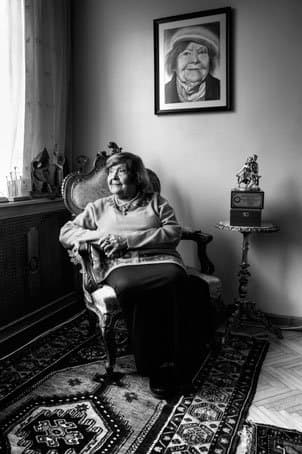
Turkish · Science · Activism
Muazzez İlmiye Çığ
June 20, 1914 – November 17, 2024
Early Life and Background
Muazzez İlmiye Çığ (née Muazzez İlmiye İtil) was born on 20 June 1914 in Bursa, then part of the Ottoman Empire, into a family of Crimean Tatar origin.[2][5][11] Her father’s family had immigrated from Crimea to Merzifon, and her mother’s family from Crimea to Bursa, placing her within the wider history of Crimean Tatar migration to Anatolia.[5][8] Her given middle name, İlmiye, meaning “learned” or “scholarly,” reflected her father’s wish that she become a scientist.[10] She spent part of her childhood in Çorum, where she completed primary education.[8]
Çığ’s formative years coincided with the final collapse of the Ottoman Empire, the First World War, and the emergence of the Turkish Republic. The new republic’s emphasis on secular, co-educational schooling opened pathways for girls that had previously been unavailable. She entered the Bursa Girls’ Teacher Training School (Bursa Kız Muallim Mektebi) in 1926 after passing a competitive examination and graduated in 1931, at age 17, from this institution that trained elementary school teachers.[3][5] The combination of her family’s migrant background and the republican reforms that expanded women’s access to education shaped her early worldview.
Education and Career Beginnings
After graduating from the teacher training school in 1931, Çığ worked for nearly five years as a primary school teacher in Eskişehir.[3][5][8] Teaching during this period gave her firsthand experience of the republic’s nation-building project through mass education. In 1936 she enrolled at Ankara University’s Faculty of Language, History and Geography (Dil ve Tarih-Coğrafya Fakültesi), in the Department of Hittitology–Sumerology.[3][8][10] At the faculty she studied Sumerian, Akkadian, and Hittite languages, together with Mesopotamian culture, learning from refugee professors who had fled Nazi Germany and other parts of the Third Reich.[8][10] This international academic environment introduced her to rigorous philological and historical methods.
Çığ graduated from the Faculty of Language, History and Geography in 1940 and was assigned to the Cuneiform Scripts Archive of the Ancient Orient section of the Istanbul Archaeological Museums (İstanbul Eski Şark Eserleri Müzesi Çiviyazılı Belgeler Arşivi) as a specialist.[1][2][10] The archive housed thousands of clay tablets inscribed in cuneiform, many from Anatolia and Mesopotamia. Her appointment placed her among the earliest professional staff members in this specialized archive, and she would remain there for more than three decades.
Work in the Istanbul Archaeological Museums
From 1940 until her retirement in 1972, Muazzez İlmiye Çığ worked in the Tablet Archive of the Istanbul Archaeological Museums, focusing on Sumerian, Akkadian, and Hittite texts.[1][2][5][10] She undertook the painstaking work of cleaning, conserving, and cataloguing thousands of cuneiform tablets. Over the course of her career, she helped establish an archive containing tens of thousands of documents and is credited with preparing copies of approximately 3,000 tablets and compiling a catalogue of 74 cuneiform tablet collections.[10] These tasks were essential for making the tablets accessible to researchers and for preserving them for future generations.
Her work contributed substantively to the decipherment and classification of texts from ancient Mesopotamia and Anatolia, including those related to Sumerian and Hittite civilizations.[2][6][9] In the context of Turkish archaeology and Assyriology, she became known as one of the country’s leading experts in Sumerian civilization and a key figure in the institutionalization of Sumerology. Multiple sources describe her as "Türkiye'nin ilk kadın Sümeroloğu" (Turkey’s first female Sumerologist), highlighting her pioneering status in a field then dominated by male scholars.[3][12]
Working within a museum rather than a university was central to her self-understanding. In a later interview with Anadolu Agency, given at age 108, she stated that choosing a museum career instead of an academic post "turned her life around," emphasizing the direct contact with artifacts and the opportunity to build systematic archives as decisive for her scholarly development.[8] Her museum-based research, combining philological skills with curatorial responsibilities, bridged disciplinary boundaries between archaeology, history, and library science.
Major Works, Discoveries, and Scholarly Contributions
Although much of Çığ’s scholarly impact derived from her long-term work with the tablet collections, she also wrote, translated, and co-authored numerous books aimed at both specialist and general audiences. Biographical accounts note that she wrote her first book at around age 80 and eventually produced more than twenty books on Sumerian, Hittite, and other ancient Near Eastern cultures.[9] Her publications helped popularize knowledge of Mesopotamian mythology, law, and daily life in Turkish.
One of her notable contributions was translating Samuel Noah Kramer’s classic work "History Begins at Sumer" into Turkish, published by the Turkish Historical Society (Türk Tarih Kurumu) around 1990 under the title "Tarih Sümer’de Başlar" or "Tarih Sümer’de Başlıyor".[10] Through this translation she made a cornerstone of Sumerian studies accessible to a wide Turkish readership, further integrating Sumerological research into the intellectual life of the republic.
In the 1990s she co-authored and published several popular works that introduced themes from Sumerian and Anatolian civilizations to non-specialists, though exact publication dates for many of these titles are not consistently documented.[1][9] These books often combined explanations of ancient texts with reflections on contemporary society, secularism, and women’s rights.
A particularly influential and controversial work appeared in 2005, commonly cited under the title "Kur’an, İncil ve Tevrat’ın Sümer’deki Kökeni" ("The Origins of the Quran, Bible and Torah in Sumer").[1][2][3][11] In this book, Çığ argued that certain narratives found in Abrahamic scriptures had antecedents in Sumerian myths and that religious practices, including the wearing of the headscarf, had pre-Islamic origins. She claimed, based on her reading of Sumerian sources, that five thousand years earlier head coverings were worn by Sumerian priests who initiated young men into sexual rites.[2][7][11] These arguments extended a long-standing scholarly tradition that traced Near Eastern religious motifs back to Mesopotamian mythology, but her popular presentation sparked intense public debate in Turkey.
Public Debate, Secularism, and Legal Proceedings
Following the publication of her 2005 book, Muazzez İlmiye Çığ became the focus of widespread media attention. In 2006, at the age of 92, she received global coverage in international media outlets, which highlighted her claims about the historical origins of the headscarf and her broader argument that certain Islamic practices had roots in pre-Islamic, Sumerian contexts.[2][7][11] Her comments intersected with heated debates in Turkey over secularism, religious expression, and the regulation of headscarves in public institutions.
That same year, she was prosecuted on charges related to "inciting hatred" or insulting religious values, in connection with her statements about the headscarf and religion.[1][2][3][12] Various sources report that she was eventually acquitted, though they do not provide precise dates for the trial or verdict.[1][2][3] Her case became a touchstone in discussions about freedom of expression, the role of historical criticism in religious matters, and the position of secular intellectuals in contemporary Turkey.
Çığ had long been recognized as a staunch defender of laiklik, the principle of secularism in the Turkish Republic, and as an advocate for women’s rights.[1][12] She frequently argued that historical research into ancient civilizations showed that many practices treated as timeless religious norms were, in fact, products of specific cultural contexts. This stance aligned her with other secular thinkers who sought to reframe debates about gender and religion through historical and philological analysis.
Awards, Honors, and Recognition
Over the course of her career, Çığ received various awards and honors from academic and cultural institutions, though many sources mention these primarily by year or in general terms rather than giving exact dates. She was frequently described as a "world-famous" Turkish Sumerologist in press coverage, emphasizing her international reputation.[3][8][12] Her participation in the Archaeology Congress in Philadelphia in 1988, noted in later biographical accounts, signaled recognition of her expertise beyond Turkey’s borders.[10]
Domestic recognition also came through media profiles, interviews, and tributes from scientific bodies such as TÜBİTAK’s "Bilim ve Teknik" magazine, which published a feature on her work and noted that she was fluent in multiple languages, including Sumerian, Akkadian, Hittite, German, English, and French.[9] Schools and cultural organizations invited her to speak or sent messages of appreciation; for example, a 2022–2023 school publication titled "Our Republic’s Old Hand" presented her life story and message to students, portraying her as a living symbol of the republic’s secular and scientific ideals.[10]
While specific award dates are often lacking, the pattern of recognition underscores her status as an important figure in the intellectual and cultural history of modern Turkey, particularly as a woman who succeeded in a specialized, male-dominated field.
Personal Life
In 1940, early in her career at the Istanbul Archaeological Museums, Muazzez İlmiye married Kemal Çığ, a chemist and engineer.[1][2][5] Following the marriage she took the surname Çığ, by which she would be known in her professional and public life. Biographical sources note the marriage but provide limited detail about her husband’s later career or about any children, suggesting that her public identity centered predominantly on her scholarly and civic roles.[1][2][5]
Throughout her life, Çığ chose to live and work in various parts of Turkey. After retirement she settled in Mersin, on the Mediterranean coast, where she continued to study, write, and engage with the public.[9][10] Accounts portray her as maintaining an active intellectual life in old age, participating in interviews and discussions well into her hundreds.
Later Life, Longevity, and Reflections
Muazzez İlmiye Çığ retired from her post at the Istanbul Archaeological Museums’ Tablet Archive in 1972 after more than thirty years of service.[1][2][4][10] Retirement did not end her involvement with scholarship: she continued writing, translating, and attending conferences. In 1988 she participated in the Archaeology Congress in Philadelphia, and in 1990 her translation of Kramer’s "History Begins at Sumer" was published by the Turkish Historical Society.[10]
Her later years were marked by increasing public visibility. In 2014, her 100th birthday was widely acknowledged in Turkish media and biographical summaries, which emphasized her contributions to Sumerology and her role as a defender of secularism and women’s rights.[11][12] A 2022 interview with Anadolu Agency conducted when she was 108 captured her reflections on key turning points in her life, including her decision to work in museums and her assessment of how secular reforms had enabled her career.[8][19]
International and domestic reports often remarked on her extraordinary longevity. Simple English and Spanish-language encyclopedic entries noted that at the time of her death she was 110 years and 150 days old and referred to her as the oldest verified person in Turkey, though this claim is marked as needing citation.[7][11] Regardless of formal verification, her age made her a supercentenarian whose life experiences encompassed two world wars, multiple Turkish coups, numerous economic crises, and many major earthquakes, as popular profiles have emphasized.[12]
Death and Burial
On 17 November 2024, Muazzez İlmiye Çığ died in Mersin at the age of 110 after a period of treatment in a hospital intensive care unit.[1][2][3][5][6][11] News outlets such as NTV reported her death, describing her as a "dünyaca ünlü Türk Sümerolog" (world-famous Turkish Sumerologist) who had made significant scientific contributions in Sumerology and had passed away while receiving care in hospital.[3][5]
Her death prompted obituaries and tributes in Turkish, English, French, Spanish, and other languages, all underscoring her pioneering role as a woman in archaeology and Sumerology and her public stance on secularism. Two days later, on 19 November 2024, she was buried in Akbelen Cemetery in Mersin, following funeral rites in the city.[1][6] Accounts of the funeral emphasized the respect she commanded and described her as a "çınar"—a plane tree—symbolizing the depth and endurance of her contributions.[12][17]
Legacy and Historical Impact
Muazzez İlmiye Çığ’s legacy spans several intertwined domains: the development of Sumerology and Assyriology in Turkey, the institutional history of the Istanbul Archaeological Museums, and the broader evolution of secular, historical criticism of religion and gender norms. As a long-serving specialist in the Tablet Archive, she played a central role in cleaning, cataloguing, and disseminating cuneiform tablets from Anatolia and Mesopotamia, thereby making primary sources accessible to scholars and enabling new lines of research.[2][6][10]
Her status as Turkey’s first female Sumerologist, widely noted in media and biographical profiles, positions her as a key figure in the history of women’s participation in specialized scientific and historical disciplines.[3][12] She entered university and professional work at a time when women faced significant barriers to higher education and academic careers; her success owes much to the early republican reforms that promoted secular education yet also reflects her own determination and talent.
Through her books and public interventions, particularly her 2005 work on the Sumerian origins of Abrahamic narratives and practices, Çığ helped bring scholarly debates about the ancient Near Eastern roots of religious myths into popular discourse.[1][2][11] Her arguments provoked controversy but also opened space for further discussion about the historical contingency of religious customs and the importance of critical scholarship in contemporary societies.
In addition, her long life and continued intellectual activity into her hundreds made her a symbolic figure in Turkish public culture. Schools and media projects that featured her story often presented her as "Our Republic’s Old Hand," a living embodiment of the republic’s commitment to secularism and science.[10] Her ability to connect detailed knowledge of ancient civilizations with contemporary concerns about women’s rights and secularism ensured that her work resonated far beyond specialist circles.
Today, Muazzez İlmiye Çığ is remembered not only for her technical contributions to tablet cataloguing and Sumerian philology, but also for her role in demonstrating that women could thrive in fields like archaeology and Assyriology and could speak forcefully about the intersection of history, religion, and gender. Her biography occupies a significant place in editorial almanacs of women’s history as an example of how one woman’s life can intersect with, and shape, the institutional and intellectual trajectories of an entire nation.
Dated achievements
5 indexed.
- Jun201914Science
Birth in Bursa
Muazzez İlmiye Çığ was born in Bursa, Ottoman Empire, on June 20, 1914.
View details Wikipedia page on Muazzez İlmiye Çığ - Jun202014Science
100th Birthday Celebration
Muazzez İlmiye Çığ celebrated her 100th birthday on June 20, 2014.
View details