← All women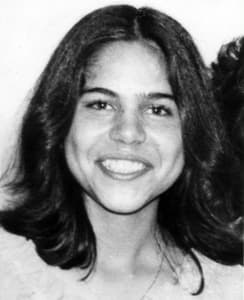
Iranian · Activism
Mona Mahmudnizhad
September 10, 1965 – June 18, 1983
Early Life and Background
Mona Mahmudnizhad (Persian: مونا محمودنژاد) was born on 10 September 1965, the second child of Yad’u’llah and Farkhundeh Mahmudnizhad, a devoted Bahá’í couple who had left Iran as religious pioneers to support the Bahá’í community in Yemen.[1][5][8][9][14][16][17] English‑language sources generally identify her birth in Yemen, with some specifying Aden, while others mention Sana’a; all agree on her birth date and on the family’s status as Iranian Bahá’í missionaries.[1][4][5][6][8][9][14][16]
Her parents’ move formed part of a broader Bahá’í pioneering movement, in which believers relocated to different countries to help establish and strengthen local communities.[1][9][14] In Yemen, Mona spent her earliest years in a household shaped by service and teaching work, as her parents assisted in building up the small Bahá’í community.[9][14] She grew up with an older brother and at least one younger sibling, in a family known among Bahá’ís for its dedication.[11][12][14]
Mona’s early childhood coincided with political turmoil in Yemen. In 1969 the government expelled foreign residents, forcing the Mahmudnizhad family to leave.[1][9][14][16] They returned to Iran and settled in the city of Shiraz, a place of deep religious significance to Bahá’ís as the birthplace of the Báb, the herald of the Bahá’í Faith.[9][14][16] This relocation brought Mona into the heart of Iranian Bahá’í life just as the country was heading toward the upheavals that would later endanger her community.
From a young age, Mona was described as intellectually bright, emotionally strong, and deeply attached to her parents.[6][9][11][14] Articles and memoir‑style accounts emphasize her love of reading, her beautiful singing voice, and her seriousness about spiritual matters.[6][9][11][14] The family’s home environment, combining music, study, and service to others, shaped her sense of identity as a Bahá’í and nurtured her inclination to care for vulnerable children.
Education and Formative Influences
Growing up in Shiraz, Mona attended local schools, where she is remembered as an excellent student.[5][6][9][11][14] Several narratives note that she wrote an essay on "Freedom" or themes of human rights for a high school assignment, articulating her belief in religious liberty and the equality of all people.[5][10][11][14] This essay reportedly brought her to the attention of school authorities, who disapproved of her outspoken defense of Bahá’í principles in an increasingly restrictive environment.
Her formative influences included the writings of Bahá’u’lláh and ‘Abdu’l‑Bahá, central figures of the Bahá’í Faith, and the example of her father, who served in various capacities in the local Bahá’í administration.[9][12][14][16] Yad’u’llah Mahmudnizhad became secretary of the Local Spiritual Assembly of Shiraz and was later appointed an Auxiliary Board Member, roles that placed him and his family in a visible position within the community at a time of growing hostility from state authorities.[16]
By her early teens, Mona had begun to express her faith through direct service. Accounts from Bahá’í and human rights sources report that she volunteered at an orphanage from about age twelve, helping to care for disadvantaged children.[6][10][14] She also took part in Bahá’í children’s classes—educational gatherings where young people learned moral principles, prayers, and stories from their religious tradition.[3][6][8][9][14] These activities, completely peaceful in character, later formed part of the accusations against her.
The broader context of Mona’s adolescence was the late 1970s in Iran, moving into the 1979 Islamic Revolution and the establishment of the Islamic Republic. During this period, Bahá’ís—whose religion is not recognized in Iran’s constitution—faced intensifying repression, including dismissal from jobs, expulsion from universities, and attacks on community leaders.[1][7][8][9][13][17] This climate of persecution shaped Mona’s worldview, reinforcing her commitment to the principles of unity and non‑violence taught by her faith, even as the risks of public identification as a Bahá’í increased.
Religious Service and Emerging Activism
Mona’s "career" in the sense relevant to her historical significance is best understood as religious service and moral activism rather than professional employment. Around age fifteen, she began systematically teaching Bahá’í children’s classes in Shiraz.[6][9][14] These classes were particularly important because many Bahá’í children had been expelled from state schools or faced discrimination, and community‑run classes helped provide basic education and spiritual support.[3][7][8][9][14]
She became known for her devotion to this work, preparing lessons and visiting families to encourage attendance.[6][9][14] A number of narratives describe her sitting with children, singing, and explaining spiritual themes in simple, accessible language.[6][9][11][14] Her teaching was entirely voluntary, reflecting a strong sense of responsibility for the younger generation’s moral and educational development.
This work, however, was interpreted very differently by the authorities. After the Islamic Revolution, Bahá’í institutions were formally banned, and even informal activities were monitored.[1][7][8][9][13] Mona’s participation in an informal Bahá’í Education Committee and her role as a children’s class teacher made her a target for surveillance.[15][16] Official charges later included "misleading children and youth" and accusations linked to "Zionism," based solely on the location of the Bahá’í World Centre in Israel.[1][3][7][8][14][17][18]
In this environment, Mona’s continued teaching and her willingness to write and speak publicly about freedom of belief show an emerging kind of activism. While she did not belong to a political organization, her conduct represented a principled stand for religious rights and the protection of children’s access to education. Her story has subsequently been interpreted by scholars and activists as an example of "speaking truth to power" through everyday acts of service.[9][17]
Persecution, Arrest, and Imprisonment
The decisive turning point in Mona’s life came in 1982, amid a new wave of arrests of Bahá’ís in Shiraz.[3][7][14][16][17] On 23 October 1982, Revolutionary Guards raided her family’s home and arrested Mona, her father, and other members of the Bahá’í Education Committee.[15][16] She was 17 years old. Her home was reportedly ransacked, and religious materials confiscated.[6][9][14]
Following her arrest, Mona was held in prison for approximately eight to nine months.[3][6][7][9][14][17] Human rights reports and Bahá’í accounts describe repeated interrogation sessions in which she was pressured to renounce her faith and identify other Bahá’ís.[3][6][7][9][14] She reportedly refused to do so, instead affirming her beliefs and arguing that her teaching activities harmed no one.[3][6][9][14][17]
Conditions in prison were harsh. Sources recount that Mona and her fellow Bahá’í prisoners—many of them women and teenage girls—were subjected to psychological abuse and, in some cases, physical mistreatment.[3][6][7][9][14] They were denied due process, with trials conducted in secret or with minimal legal representation.[7][8][17] Mona nonetheless sought to encourage her companions, leading prayers and singing to sustain morale.[6][9][11][14]
Her father, Yad’u’llah, faced parallel persecution and was executed earlier in 1983.[7][16] His death left Mona effectively orphaned while still behind bars, intensifying the emotional weight of her situation. Yet accounts consistently emphasize her calmness and resolve, portraying her as someone who accepted the possibility of martyrdom without bitterness, in keeping with Bahá’í teachings on non‑retaliation and forgiveness.[6][9][11][14]
Trial, Sentencing, and Execution
In 1983, Mona and nine other Bahá’í women from Shiraz were sentenced to death by hanging.[1][2][3][7][8][9][13][14][17][18] The exact date of sentencing is not consistently documented in the available sources, but all agree that the executions were carried out on the night of 18 June 1983.[1][2][3][7][8][9][13][14][17][18] The charges against them—"misleading children and youth," involvement in Bahá’í educational activities, and alleged "Zionism"—were directly related to their religious identity and peaceful community work.[1][3][7][8][14][17][18]
International concern grew as reports surfaced about the impending executions. Some governments and human rights organizations appealed to Iranian authorities to spare the women, and public statements were made highlighting the injustice of executing individuals for their religious beliefs.[7][8][9][17] Nonetheless, the sentences were not commuted.
On 18 June, the ten women were taken by bus to a field outside Shiraz and hanged one by one, while the others were forced to watch.[3][6][7][14] Bahá’í and human rights narratives emphasize the cruelty of this method, designed to break their spirits and induce recantation. Mona, the youngest, was reportedly hanged last. Several accounts relate that she placed the noose around her own neck, demonstrating composure and unwillingness to give the impression of fear or submission to injustice.[3][6][7][14]
The executions formed part of a broader pattern in which dozens of Bahá’ís were executed after the Revolution, often on vague charges and without fair trials.[1][7][8][9][13][17] However, the case of Mona and the nine other Shiraz women became one of the best‑known internationally, in part because of Mona’s youth and the explicitly gendered nature of the persecution.
Major Works, Writings, and Symbolic Impact
Unlike artists or scientists whose historical significance rests on a body of professional work, Mona’s "major works" are largely symbolic: her letters, her school essay on freedom, her teaching, and the narrative legacy of her martyrdom. Specific texts she wrote—such as letters defending religious liberty addressed to school authorities—are cited in secondary accounts as examples of her moral clarity and articulate expression.[5][11][14]
Her life story quickly became the subject of books, articles, songs, and plays. One notable work is the biography Our Friend Mona: The Remarkable Life of a Young Martyr, which recounts her childhood, service, and imprisonment and has been used in Bahá’í communities and beyond as an educational resource on courage and faith.[11] The song "Mona with the Children" and various dramatic productions, including scripts circulated by Bahá’í youth theatre groups, drew directly on eyewitness and documentary sources to dramatize her final months.[3][11][14]
Poems and essays published on Bahá’í teaching websites and human rights platforms further interpret her story as "speaking truth to power," highlighting how a teenager’s refusal to recant under threat of death challenges narratives that portray young women as passive victims.[9][15][17] In this way, Mona’s impact is less about what she produced in life and more about how others have taken up her example as a framework for discussing religious freedom, gender, and youth agency.
Awards, Honors, and Recognition
Mona did not receive official state honors; indeed, she was executed by the state that prosecuted her. Recognition of her historical significance comes instead from memorialization within the Bahá’í community, documentation by human rights organizations, and inclusion in scholarly and popular histories.
The Iran Human Rights Documentation Center and related memorial projects have published detailed accounts of her imprisonment and execution, placing her story within a broader record of abuses against Bahá’ís in Iran.[7] Academic and policy commentary, such as analyses hosted by research institutes, use her case to illustrate the dynamics of persecution and the shortcomings of international protection mechanisms.[17]
Within the Bahá’í world, Mona is honored as a modern martyr. Children’s and youth magazines, such as Brilliant Star, publish profiles presenting her as a "hero" who exemplified service, bravery, and kindness.[6] Her name appears in pedagogical materials that encourage young readers to reflect on issues of justice and to stand up for their beliefs in non‑violent ways.
Internationally, Mona has gained recognition as a symbol of the persecution of Bahá’ís in Iran. She is listed in biographical databases and projects on notable historical figures, where she is described as one of the best‑known individual victims of religious intolerance in late twentieth‑century Iran.[13] This form of recognition, while not formal award, marks her as a significant figure in global human rights narratives.
Personal Life
Mona’s personal life was brief and largely centered on her family and religious community. She was not married and had no children.[1][5][7][8][9] Accounts emphasize her close relationship with her parents, particularly her father, with whom she shared a deep bond rooted in faith and service.[6][9][11][14] Their joint arrest in 1982 and his execution in 1983 underscore the family’s collective experience of persecution.
Descriptions of Mona portray her as affectionate and joyful, with a strong sense of responsibility toward younger children.[6][9][11][14] Her volunteer work in an orphanage and her dedication to children’s classes reflect personality traits of empathy and leadership. She is also remembered for her singing, which she used both in community gatherings and in prison to uplift fellow detainees.[6][9][11][14]
Her interactions with school peers and teachers, as reported in secondary sources, reveal tension between her commitment to openly expressing her beliefs and the expectations of conformity in the post‑revolutionary educational system. By writing essays on freedom and defending religious diversity, she risked disciplinary measures, yet she continued to do so.[5][10][11][14]
Legacy and Historical Impact
The legacy of Mona Mahmudnizhad rests primarily on her role as a symbol of religious persecution and youthful courage. As one of ten Bahá’í women executed in Shiraz on 18 June 1983, she is frequently cited in scholarly and advocacy literature as an example of how gender and religion intersect in patterns of state violence.[1][2][3][7][8][9][13][17][18]
Within Bahá’í communities, Mona’s story has become a touchstone in discussions of steadfastness and non‑retaliation. Her refusal to recant or to denounce fellow believers under interrogation, coupled with her calm acceptance of execution, is interpreted as embodying Bahá’í teachings on perseverance in the face of injustice.[3][6][9][11][14] She is remembered alongside other modern martyrs in prayers, commemorations, and educational gatherings.
In the wider world, Mona’s case contributes to awareness of the systemic discrimination faced by Bahá’ís in Iran. Reports from human rights organizations and researchers use her story to illustrate the consequences of denying legal recognition to a religious minority and criminalizing its community life.[7][9][13][17] Her age—only 17 at the time of execution—adds particular resonance to debates on the rights of minors, the protection of young women, and the responsibilities of states under international human rights law.
Cultural works inspired by Mona, including songs, plays, poems, and biographies, have reached audiences far beyond the Bahá’í community. These works often frame her story as a universal narrative about conscience, courage, and the right to believe. In this way, Mona’s individual experience has been woven into broader discourses on freedom of religion or belief, making her a recurring reference point in human rights education.[3][6][9][11][14][15][17]
Later Life and Death
Mona did not live to adulthood; her "later life" consists of the months of imprisonment leading to her execution. During this period, she reportedly maintained a pattern of prayer, singing, and mutual support with fellow prisoners.[3][6][9][11][14] She faced repeated pressure to renounce her faith, which she consistently refused.
On 18 June 1983, Mona was hanged in Shiraz along with nine other Bahá’í women, becoming the youngest among them.[1][2][3][7][8][9][13][14][17][18] Her death marked the culmination of a sequence that began with her birth in a pioneer family, continued through service to children and outspoken advocacy for freedom, and ended in a state‑ordered killing for religious identity.
Today, Mona’s memory survives through written and oral testimonies, artistic works, and institutional documentation. She is frequently cited by name in timelines of Bahá’í persecution and in "on this day" commemorations that recall significant dates in the community’s history.[16][18] In these contexts, her story serves as a reminder of both the vulnerability and the resilience of young women living under regimes that deny basic rights to religious minorities.
Dated achievements
3 indexed.
- Sep101965Activism
Mona Mahmudnizhad's Birth
Mona Mahmudnizhad was born on 10 September 1965, possibly in Sana’a, Yemen.
View details Wikipedia: Mona Mahmudnizhad - Oct231982Activism
Mona's Arrest
On 23 October 1982, Mona was arrested at her home by Revolutionary Guards.
View details