← All women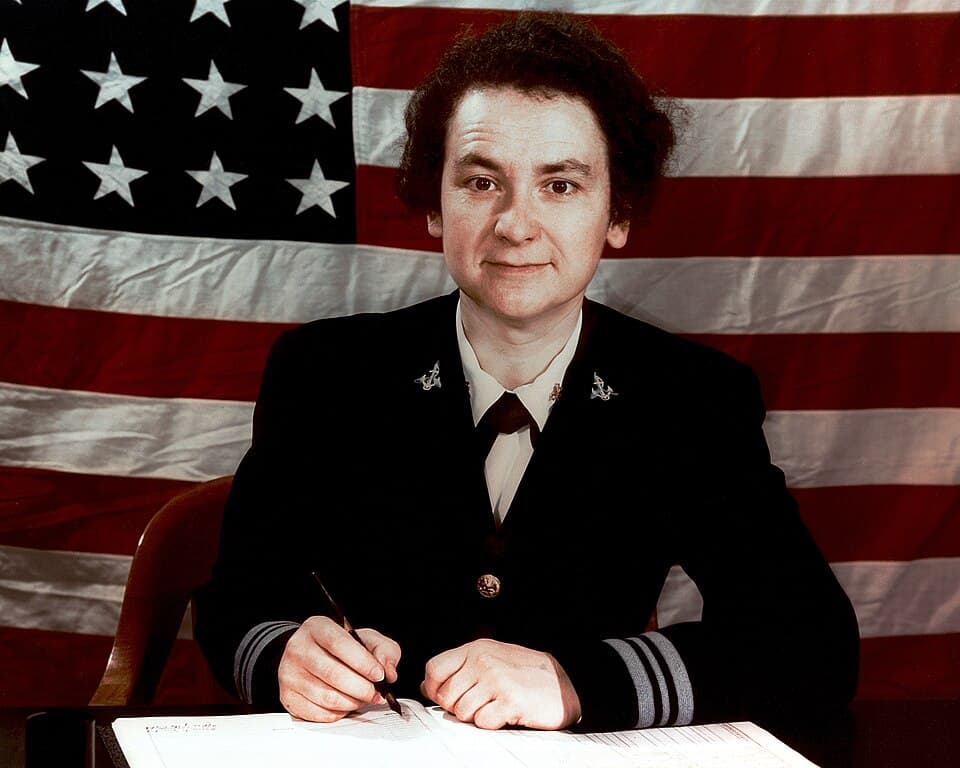
American · Activism · Politics
Mildred H. McAfee
May 12, 1900 – September 2, 1994
Early Life and Family Background
Mildred Helen McAfee was born on 12 May 1900 in Parkville, Missouri, on the campus of Park College, where her father, the Reverend Dr. Cleland Boyd McAfee, served as a Presbyterian minister, theologian, and educator.[1][2][4][13] Her mother, Harriet Brown McAfee, was deeply engaged in the intellectual and religious life of the small college community.[2] Growing up at Park College immersed Mildred in an environment where Christian faith, liberal arts education, and public service were closely intertwined.
The McAfee household emphasized scholarship and moral responsibility, and Mildred’s early exposure to college faculty, students, and church activities helped normalize higher education for women at a time when such paths were still relatively uncommon.[2] Her father’s reputation as a hymn‑writer and religious leader, together with the family’s academic surroundings, instilled in her a sense that intellectual achievement and social conscience could—and should—go together.
Mildred attended local schools before enrolling at Vassar College, one of the leading women’s colleges in the United States.[1][2][4][10] Vassar’s intellectually demanding curriculum and tradition of producing women leaders in public life reinforced her ambitions. She graduated in 1920, a milestone that coincided with the ratification of the Nineteenth Amendment granting women the right to vote in the United States.[1][4][10] The convergence of her college graduation and the expansion of women’s political rights framed her early adulthood in an era of growing—but still constrained—opportunities for women.
Education and Early Career
After Vassar, McAfee pursued graduate study at the University of Chicago, where she earned a Master of Arts degree in 1928.[4][13] The University of Chicago’s rigorous academic environment, known for its emphasis on research and critical inquiry, deepened her engagement with social and educational issues. Her training there helped prepare her for administrative and leadership roles in higher education.
In the 1920s and early 1930s, McAfee held teaching and administrative positions that built her reputation as an effective educator and organizational leader. She worked in college settings that required balancing the intellectual development of students with the practical challenges of institutional management during the lean years between the World Wars.[2][12] These experiences demonstrated her capacity to navigate financial constraints, evolving curriculum demands, and changing expectations for women’s education.
Her combination of academic credentials, practical administrative experience, and strong communication skills made her a compelling candidate for high‑level leadership positions at a relatively young age. By the mid‑1930s, she had become part of a small but visible group of women whose careers were expanding beyond classroom teaching into the governance of major institutions.
President of Wellesley College
In 1936, Wellesley College concluded an eighteen‑month search involving more than one hundred candidates by appointing the thirty‑six‑year‑old Mildred McAfee as its seventh president.[1][2][3][10][12] Wellesley, one of the most prestigious women’s colleges in the country, sought a leader who combined intellectual rigor with administrative skill and a sympathetic understanding of young women’s needs. Contemporary accounts praised McAfee’s "intellectual honesty, leadership, tolerance, savoir‑faire, sympathetic understanding of youth, vision, and a sense of humor."[2]
As president from 1936 to 1949, she guided Wellesley through the later years of the Great Depression and the turmoil of World War II
Her leadership style blended firmness with approachability, and she was noted for her ability to engage constructively with faculty, trustees, and students. Under her direction, Wellesley sustained its reputation for academic excellence and progressive approaches to women’s education, preparing graduates for roles in public life, science, government, and the professions at a time when women’s participation in these fields was still evolving.[1][2][12] McAfee’s most historically significant role emerged during World War II. In 1942, she took a leave of absence from the Wellesley presidency after being recruited by U.S. Navy officials to lead a new women’s component of the Naval Reserve.[1][4][7][11] President Franklin D. Roosevelt had signed legislation on 30 July 1942 authorizing the Women’s Reserve of the U.S. Naval Reserve.[11] The program, quickly nicknamed WAVES—"Women Accepted for Volunteer Emergency Service"—was designed to allow women to perform shore‑based duties so that more men could be assigned to sea and combat operations. On 3 August 1942, McAfee was commissioned as a lieutenant commander in the U.S. Naval Reserve, becoming the first female line officer and the first woman commissioned in the U.S. Naval Reserve.[1][4][6][7][10][11] She simultaneously assumed duty as the first director of WAVES, responsible for creating and overseeing the organization from its inception.[1][4][7] Naval officials valued her experience as a college president, believing that she could recruit, train, and manage large numbers of educated women for specialized roles. McAfee insisted that WAVES be an integrated, core part of the Navy rather than a peripheral auxiliary.[4][6][9][11][14] She argued that women should receive the same pay, allowances, and benefits as male personnel of equivalent rank, and campaigned vigorously for legislative and policy changes to secure this equality.[9][11][14] Her advocacy contributed to the passage of Public Law 183 in November 1943, which provided WAVES personnel with the allowances and benefits available to male members of the Naval Reserve.[4][11] Under her leadership, the WAVES grew rapidly. By the end of the war, more than 80,000 women served in the organization, taking on duties such as air traffic control, cryptology, translation, communications, clerical work, and technical support in aviation and logistics.[4][6][7][9] McAfee’s approach drew on her experience in higher education: recruitment favored women with solid educational backgrounds, and training programs emphasized both discipline and intellectual competency. In November 1943, after Congress authorized a captain’s billet for the Women’s Reserve, McAfee was promoted to the rank of captain, reflecting her expanding responsibilities within the Navy.[4][7][11][13] She remained the central figure representing the WAVES to the public and within military leadership circles, frequently appearing in the press as a symbol of women’s wartime service.[8] In August 1945, after the Allied victory in Europe and as the war in the Pacific was coming to a close, McAfee married the Reverend Dr. Douglas Horton, a prominent Congregational minister and ecumenical leader.[4][1] Following her marriage, she used the name Mildred McAfee Horton. The union reinforced her longstanding ties to Protestant church life and later provided additional avenues for leadership in religious organizations. She remained on active duty with the Navy until February 1946, concluding her formal role as director of the Women’s Reserve as the military began demobilization.[4][9][11] After leaving active service, she returned to Wellesley College and resumed full responsibilities as president, guiding the institution through the transition from wartime to peacetime higher education.[4][12] The postwar years brought an influx of students, curriculum adjustments to reflect changing global realities, and renewed attention to integrating international and civic engagement into women’s education. McAfee’s wartime experience strengthened her authority as an educational leader. She was now widely recognized not only as a college president but also as a senior military officer who had successfully managed a large, complex national organization. This combination of credentials helped position her for further national roles in the years ahead. For her service with the WAVES, McAfee received several significant military decorations. In 1945, she was awarded the American Campaign Medal and the World War II Victory Medal, recognizing her participation in the broader Allied war effort.[7][9][11] More notably, on 7 November 1945, she became the first woman to receive the U.S. Navy Distinguished Service Medal.[1][3][9][10] Secretary of the Navy James Forrestal presented the medal in acknowledgment of her "exceptionally meritorious service" as director of the Women’s Reserve.[9] The Distinguished Service Medal is one of the Navy’s highest non‑combat honors, awarded for extraordinary leadership and contributions to national security. McAfee’s receipt of the medal signaled official recognition that women’s command roles could have strategic importance equivalent to those of their male counterparts, and it set a precedent for subsequent awards to women in the armed forces.[1][9][11] Beyond military recognition, McAfee’s postwar career brought numerous honors and appointments. She served as a U.S. delegate to the United Nations Educational, Scientific and Cultural Organization (UNESCO), reflecting her interest in international education and cultural cooperation.[1][3] She also co‑chaired President John F. Kennedy’s Women’s Committee for Civil Rights, a role that placed her at the intersection of federal policy and the expanding movement for gender equality.[1][3] In the corporate and cultural sectors, McAfee became the first woman to serve on the boards of New York Life Insurance, the New York Public Library, and the Radio Corporation of America (RCA), opening high‑level governance positions in business and cultural institutions to women.[2][3][10] She also served on numerous other boards and councils, receiving honorary degrees and commendations that recognized her contributions to education, public service, and religious life.[2][3] McAfee’s heritage as the daughter of a Presbyterian minister and her marriage to Douglas Horton drew her deeply into Protestant and ecumenical institutions. During the mid‑twentieth century, she became the first woman chair of the Board of Trustees of the University of New Hampshire, extending her leadership beyond women’s colleges into broader public higher education governance.[2][3] She also broke new ground in mission and church bodies, serving as the first woman president of the American Board of Commissioners for Foreign Missions, one of the historic mission agencies of American Protestantism.[2][3] In addition, she was the first woman vice president of both the Federal Council of Churches and its successor, the National Council of Churches.[2][3] These roles placed her at the forefront of national conversations about ecumenism, social justice, and the place of women in church leadership. Through speeches, committee work, and board participation, McAfee advocated for an understanding of Christian commitment that included responsibility for educational access, international understanding, and civil rights. Her presence in these organizations challenged longstanding gender norms, demonstrating that women could provide strategic and theological leadership in structures historically dominated by men. McAfee’s personal life was closely intertwined with her professional commitments. Her marriage to Douglas Horton connected two prominent figures in religious and educational circles.[1][4] The couple’s shared interests in ecumenical dialogue, social ethics, and global affairs meant that their partnership reinforced, rather than competed with, McAfee’s public roles. While many women of her generation were expected to withdraw from public leadership after marriage, McAfee continued to hold influential positions, both in academia and in civic and religious organizations.[1][2] Her life thus offered an alternative model of marriage in which mutual support enabled both partners to pursue significant public responsibilities. In later years, she maintained close ties to New England communities, particularly in New Hampshire, where she eventually retired. Accounts from local sources describe her as an active community member, participating in church life and civic projects well into old age.[9] Her personal modesty contrasted with the scale of her achievements, and she was often remembered by colleagues and students as approachable and quietly humorous. Mildred McAfee’s legacy is multi‑dimensional, spanning higher education, military history, corporate governance, and religious leadership. In education, her presidency at Wellesley College from 1936 to 1949 helped solidify the institution’s reputation as a leading center for women’s scholarship during a period of profound national upheaval.[1][2][10][12] She demonstrated that women could successfully direct major academic institutions, manage complex budgets, and shape curricular priorities in ways that responded to global events. In military history, McAfee stands as a central figure in the integration of women into the U.S. armed forces. As the first woman commissioned in the U.S. Naval Reserve and the first female line officer, and as director of the WAVES, she oversaw a program that brought tens of thousands of women into roles essential to the war effort.[1][4][6][7][9][11][14] Her insistence on equal pay and benefits and on the professional status of women reservists helped establish principles that would influence later policies regarding women in the military. Her corporate and civic board service broke gender barriers in sectors that had rarely included women in top governance roles. By joining the boards of New York Life Insurance, the New York Public Library, and RCA, she provided a high‑visibility example of women’s capacity to participate in complex corporate and cultural decision‑making.[2][3][10] In religious life, her leadership in mission boards and ecumenical councils advanced both the cause of women’s participation and broader efforts toward interdenominational cooperation and social reform.[2][3] McAfee’s work with UNESCO and President Kennedy’s Women’s Committee for Civil Rights connected her to international and national policy frameworks that shaped debates over education and civil rights in the mid‑twentieth century.[1][3] Her career illustrates how women’s history intersects with institutional histories of universities, militaries, corporations, and churches, and how individual women leveraged education and wartime experience to attain long‑term influence. After stepping down as president of Wellesley College in 1949, McAfee continued to serve on boards and in advisory roles, maintaining a national profile in education, public service, and religious leadership.[1][2][3][10][12] Over subsequent decades, she remained involved with organizations that reflected her lifelong commitments: expanding educational opportunity, engaging international issues, and advancing ecumenical cooperation and civil rights. In retirement, McAfee lived in New Hampshire and remained active in local community and church life, reflecting the continuity of her early roots in small academic‑religious communities.[4][9] Her longevity allowed her to witness major changes in women’s status—from the world in which she was born, where women lacked the vote and were largely excluded from military and corporate leadership, to a late twentieth century in which women’s presence in these spheres was increasingly normalized. Mildred Helen McAfee Horton died on 2 September 1994 in Berlin, New Hampshire, at the age of ninety‑four.[1][3][4][13] She was later buried in Randolph, New Hampshire.[9] Her death marked the close of a career that had helped pioneer women’s leadership in multiple domains. Historians continue to cite her as a key figure in the history of women in the U.S. Navy and as an example of how women’s colleges contributed to broader societal transformations by educating and empowering women who would go on to reshape national institutions.[1][2][3][4][6][7][9][11]World War II: Founding Director of WAVES
Marriage, Wartime Service, and Return to Academia
Awards, Honors, and Recognition
Leadership in Religious and Civic Organizations
Personal Life
Legacy and Historical Impact
Later Life and Death
Dated achievements
4 indexed.
- May121900Activism
Birth of Mildred Helen McAfee
Mildred Helen McAfee was born in Parkville, Missouri, on 12 May 1900.
View details Mildred H. McAfee Horton Biography - U.S. Navy - Aug031942Politics
First female commissioned line officer and first director of WAVES
Mildred McAfee became the Navy's first female line officer and first director of WAVES on 3 August 1942.