← All women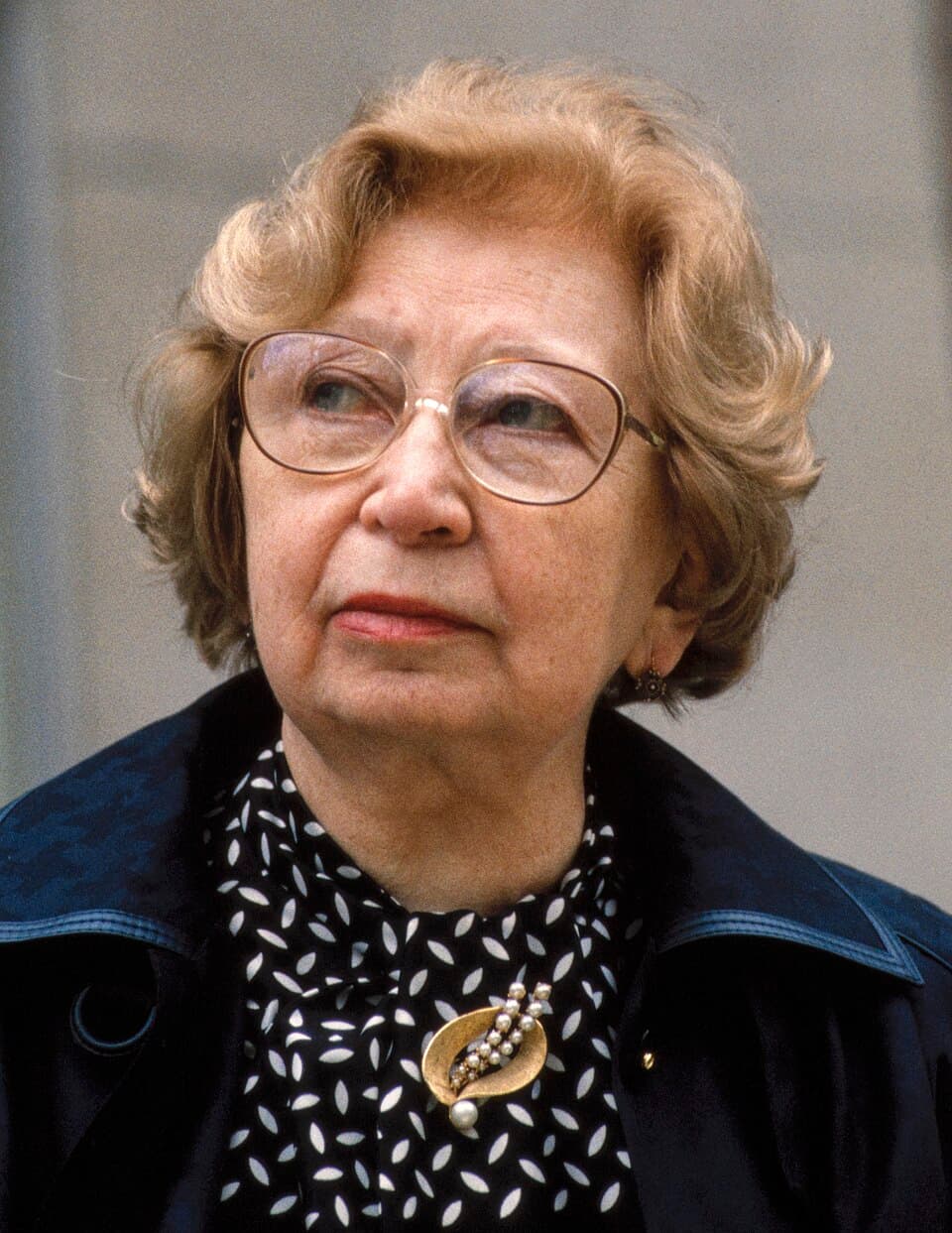
Dutch, Austrian · Activism · Literature
Miep Gies
February 15, 1909 – January 11, 2010
Early life and background
Hermine “Miep” Gies was born Hermine Santrouschitz on 15 February 1909 in Vienna, Austria, then part of the Austro-Hungarian Empire. Her family lived through the dislocations that followed World War I, and in 1920, when she was 11, she was sent to the Netherlands to live with a foster family in Leiden so that she could recover her health. That move changed the direction of her life: although she had been born in Austria, she grew up in the Netherlands and came to identify closely with Dutch society and language. The experience of being uprooted as a child, and of rebuilding a life in a new country, helped shape the quiet steadiness for which she later became known.
As a young woman, she worked in office and secretarial jobs in Amsterdam. The Netherlands in the interwar years offered opportunity, but it was also a society that would soon be transformed by the Nazi occupation. Gies’s early adulthood therefore unfolded in a period of relative normalcy that would be shattered by war. Her later decisions cannot be separated from the ordinary urban and professional world she inhabited before the occupation: she was not a political leader or public activist before the war, but a working woman whose sense of duty would prove decisive under extreme pressure.
Career beginnings and meeting Otto Frank
In 1933, Gies began working as a secretary for Otto Frank at his Amsterdam company, Opekta, which sold pectin for making jam. That job introduced her to the Frank family and to the network of relationships that would later become central to her wartime actions. Over time she became a trusted employee and household helper, known for her practical judgment and reliability. Her work at Opekta placed her inside the orbit of a German-Jewish family trying to build a life in exile after the rise of Nazism in Germany.
When Germany occupied the Netherlands in 1940, life for Jews in the country deteriorated rapidly under anti-Jewish laws, surveillance, and deportation. By 1942, Gies had married Jan Gies, and that same year she agreed to help Otto Frank hide his family in the concealed annex behind the company premises. She was not acting alone: several colleagues joined the effort, and together they created a lifeline of food, information, and emotional support for the people in hiding. The work required discretion, endurance, and daily improvisation under the risk of exposure and punishment.
Helping to hide the Secret Annex group
From 1942 to 1944, Gies and other helpers supported the eight Jews hidden in the Secret Annex: Anne Frank, her parents Otto and Edith, her sister Margot, Hermann and Auguste van Pels, their son Peter, and Fritz Pfeffer. Gies carried food, books, news, and other supplies into the annex while maintaining the appearance of ordinary business life below. In Nazi-occupied Amsterdam, such aid was dangerous. Assisting Jews could lead to arrest or imprisonment, and the helpers had to avoid detection not only by the German authorities but also by neighbors, employees, and anyone who might suspect what was happening in the building.
Her role was practical but indispensable. She became one of the main links between the hidden group and the outside world, helping to sustain the possibility of survival during a time when the annex residents were cut off from normal life. The support she provided was part of a broader civilian resistance to Nazi persecution, one carried out not through weapons or speeches but through logistics, discretion, and human solidarity. Her actions illustrate how rescue during the Holocaust often depended on sustained cooperation by ordinary people willing to accept extraordinary risk.
The arrest, Anne Frank’s diary, and preservation of memory
On 4 August 1944, the Secret Annex was raided by Nazi authorities. Gies last saw Anne Frank that day. In the aftermath of the arrest, Gies entered the ransacked hiding place and collected Anne’s diary notebooks and loose papers from the floor. She kept them safely in her desk drawer, intending to return them after the war. That decision became one of the most consequential acts in modern literary and Holocaust history. It preserved the raw materials of a testimony that would become one of the most widely read accounts of the Holocaust.
After the war, Gies learned that Anne Frank had died in Bergen-Belsen. When Otto Frank returned as the sole survivor of the Secret Annex group, Gies gave him Anne’s preserved diary and papers. He later edited and published them, first in Dutch in 1947 as Het Achterhuis (The Secret Annex). The diary’s publication transformed Anne Frank from a private diarist into a global witness to persecution, adolescence, and loss. Gies’s role was essential to that transformation. Without her instinct to save the papers, the world might never have read Anne’s voice in the form that made it so enduring.
Marriage, family life, and postwar years
Gies married Jan Gies in 1942. Their marriage became part of the same moral world that led them both to assist people in hiding. Jan shared the risks and responsibilities of wartime rescue and later stood alongside her in the recognition they received for that work. After the war, Gies continued to live in the Netherlands and remained connected to the memory of the Frank family and the broader history of the occupation. She often resisted being cast as a heroine, insisting that she had merely done what was necessary. That self-description, however, only sharpened public admiration for her courage.
She and Jan had a son, and Gies also became a public speaker and witness, using her experiences to teach younger generations about the consequences of prejudice and the importance of moral action. Her postwar life was marked by a tension familiar to many witnesses of atrocity: a desire for ordinary living alongside the burden of historical memory. She navigated that tension by speaking carefully, repeatedly, and with a strong emphasis on civic responsibility rather than personal glory.
Awards, honors, and public recognition
Over the decades after the war, Gies received a number of honors recognizing her wartime conduct and her role in preserving Anne Frank’s diary. On 8 March 1972, she and Jan Gies were recognized by Yad Vashem as Righteous Among the Nations. In later years she also received national and international honors, including distinctions from the Netherlands, Germany, and Austria, and in 1994 she was honored in connection with the Raoul Wallenberg Award and the University of Michigan’s Wallenberg Lecture. She also received the Jan Karski Courage to Care Award and other humanitarian recognitions during the 1990s.
In 1987, she published her memoir with Alison Leslie Gold, commonly known in English as Anne Frank Remembered. The book offered a first-person account of the rescue, the annex, the arrest, and the preservation of Anne’s writings. It reinforced her importance not only as a historical actor but also as a narrator of history. Her testimony helped readers understand that the survival of Anne Frank’s diary was not inevitable; it depended on deliberate human action under conditions of extreme danger.
Later public role and legacy
By the 1990s and 2000s, Gies had become one of the most recognizable living links to Anne Frank’s life. She gave lectures, interviews, and public talks in which she emphasized that she had been “just an ordinary woman.” That phrase became central to her legacy, because it framed rescue and moral courage as accessible human choices rather than as the exclusive province of exceptional figures. Her life challenged the idea that historical change comes only from famous leaders. Instead, she represented the power of sustained, quiet responsibility.
Her legacy extends in several directions. First, she is remembered as one of the key helpers who sustained the Secret Annex occupants from 1942 to 1944. Second, she preserved Anne Frank’s diary, making possible its publication and global influence. Third, she became an educator and moral witness whose example shaped Holocaust remembrance. Her story is now taught internationally in schools, museums, and survivor-history programs as a model of civil courage under dictatorship. The phrase “ordinary heroine” captures both the modesty with which she described herself and the extraordinary consequences of her choices.
Gies’s importance also lies in the way her actions connect private conscience to public memory. By saving the diary and speaking about her experiences, she helped ensure that Anne Frank’s voice would survive the war and reach generations far beyond the Netherlands. In that sense, her legacy is not only one of rescue but also of mediation between the historical event and its remembrance.
Death
Miep Gies died on 11 January 2010 in Hoorn, the Netherlands, at the age of 100. Her death prompted international tributes to a woman whose wartime conduct had helped define modern Holocaust memory. She was mourned not merely as a helper of Anne Frank, but as a symbol of what conscience can accomplish under totalitarian rule. Her life continues to stand as a reminder that acts of preservation—of people, of papers, of truth—can have historical consequences far beyond the moment in which they occur.
Dated achievements
5 indexed.
- Feb151909Activism
Birth of Miep Gies
Born on February 15, 1909, in Vienna, Austria.
View details Anne Frank House - Miep Gies - Aug041944Activism
Last Meeting with Anne Frank
On August 4, 1944, the Secret Annex was raided; last time Miep saw Anne.
View details