← All women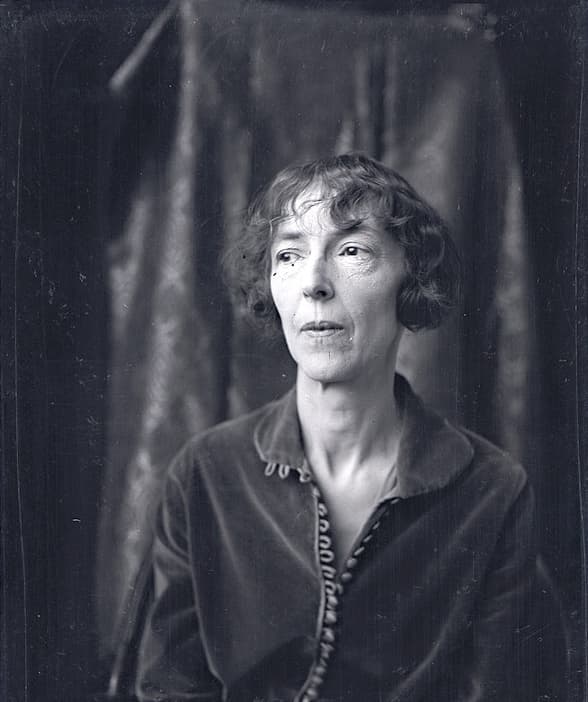
Canadian · Literature
Mazo de la Roche
January 15, 1879 – July 12, 1961
Early Life and Background
Mazo de la Roche was born on January 15, 1879, in Newmarket, Ontario, Canada, to William Roche, a newspaperman, and Alberta Lundy Roche. Her early family life was marked by frequent moves due to financial instability. Mazo's upbringing in Ontario's rural landscapes significantly influenced her imaginative faculties, providing a fertile ground for the fictional world she would later create. Despite educational challenges and intermittent schooling, she was a voracious reader and began writing at an early age, drawing inspiration from classic literature and the serene Canadian backdrops.
Career Beginnings and Development
De la Roche’s literary career officially took off in the early 20th century when she began publishing short stories. Her early works reflected an affinity for pastoral settings and intricate character studies. Mazo first achieved critical acclaim with the release of her novel Explorers of the Dawn in 1922. However, it was the publication of Jalna in 1927 that catapulted her to international fame. Winning the Atlantic Monthly prize, the novel depicted the sprawling saga of the Whiteoak family, a narrative that resonated deeply with readers globally.
Major Works and Accomplishments
Jalna became the cornerstone of a 16-novel series, tracing 100 years of the Whiteoak family history. The series was known for its detailed character development, narrative breadth, and exploration of familial and societal themes. Beyond the literary acclaim, Mazo’s Jalna series was adapted for stage and television, underscoring her stories' versatility and enduring popularity. Her work contributed significantly to Canadian literature's development, securing her as a staple figure in the literary community.
Awards and Recognition
Mazo de la Roche was not only esteemed by readers but also lauded with numerous literary awards. The Atlantic Monthly prize propelled her into the literary spotlight, allowing her creative endeavors to flourish in the globally competitive market. Furthermore, the enduring popularity of her novels ensured a lasting legacy, perpetuating scholarly and public interest in her life and works.
Personal Life
Mazo lived a reclusive life with her cousin, Caroline Clement, with whom she shared a lifelong companionship. The two women managed to maintain a private, almost enigmatic lifestyle, a rare treasure chest of personal anecdotes that scholars and biographers have long sought to unlock.
Legacy and Historical Impact
Mazo de la Roche's impact on Canadian literature is considerable, particularly in terms of international exposure and the development of a distinct Canadian narrative voice. Her work continues to be studied for its thematic depth and has inspired adaptations and literary continuity through new editions and retrospectives. As a woman in literature during the early 20th century, her success also challenges the preconceptions of what women could achieve in the literary domain.
Later Life and Death
Mazo continued to write until her death, contributing to the Jalna series and creating other works of fiction that further enriched her oeuvre. She passed away on July 12, 1961, leaving behind a legacy of narrative brilliance and a canon of work that continues to resonate with readers worldwide.
Dated achievements
3 indexed.
- Jan151879Science
Birth of Mazo de la Roche in Newmarket, Ontario
Mazo de la Roche was born in Newmarket, Ontario, Canada, on January 15, 1879 (some sources cite 1885 due to her own obfuscation of her age).
View details The Canadian Encyclopedia: Mazo de la Roche - Jun011927Literature
Jalna wins the Atlantic Monthly novel prize
De la Roche's novel 'Jalna' won a $10,000 prize from the Atlantic Monthly Press, launching her to international literary fame.