← All women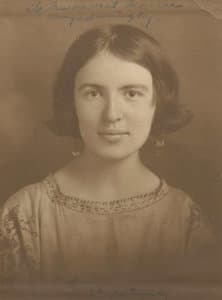
American, Ukrainian-born · Literature
Marya Zaturenska
September 12, 1902 – January 19, 1982
Early Life and Immigration
Marya Alexandrovna Zaturenska was born on September 12, 1902, in Kyiv, then part of the Russian Empire (present-day Ukraine), into a Jewish family. The early twentieth century was a period of significant hardship and danger for Jewish communities in the Russian Empire, marked by pogroms, discriminatory laws, and widespread poverty. Seeking safety and opportunity, the Zaturenska family emigrated to the United States in 1909, when Marya was approximately seven years old, settling in New York City.
Life in America did not immediately bring prosperity. The family lived in poverty on the Lower East Side of Manhattan, and young Marya was compelled to work in garment factories as a child to help support the household, a common circumstance for immigrant families of the era. Despite these hardships, she developed a deep love of language and literature, teaching herself English largely through independent reading at public libraries. This autodidactic period was crucial in shaping her literary sensibility and her lifelong devotion to the written word.
Zaturenska's determination to pursue education against considerable odds led her to attend Valparaiso University in Indiana for a time, and she later enrolled at the University of Wisconsin–Madison, where she earned a library science degree in 1925. Her studies in library science reflected both a practical need to support herself and a natural affinity for books, archives, and the literary tradition she would soon contribute to as a poet.
Career Beginnings and Literary Development
Zaturenska began publishing poetry in the 1920s, and her work quickly attracted attention for its lyrical intensity, formal grace, and romantic sensibility, drawing comparisons to nineteenth-century lyric traditions even as her contemporaries increasingly embraced modernist experimentation. Her first major collection, Threshold and Hearth (1934), established her reputation as a poet concerned with intimate, often melancholic themes: love, beauty, mortality, and the passage of time, rendered in carefully crafted traditional forms such as sonnets and other metrical verse.
In 1925, Zaturenska married the poet and literary critic Horace Gregory, whom she had met in Wisconsin. Their marriage became a defining creative partnership; both continued to write and publish independently while also collaborating on scholarly projects. The couple settled in New York and later in Palisades, New York, and had two children together. Gregory and Zaturenska were part of a wider circle of American poets and critics active in the interwar literary scene, and their household became something of a hub for literary discussion and correspondence.
The Pulitzer Prize and Major Works
Zaturenska's most celebrated achievement came in 1938, when she was awarded the Pulitzer Prize for Poetry for her 1937 collection Cold Morning Sky. This recognition was a landmark moment, both for Zaturenska personally—an immigrant woman who had risen from factory work to the pinnacle of American literary recognition—and for the broader landscape of American poetry, in which women poets, though present and influential, often struggled for the same institutional recognition afforded to their male peers.
Cold Morning Sky was praised for its controlled, musical lyricism and its unfashionable but skillfully executed embrace of traditional poetic forms at a time when free verse and modernist fragmentation dominated much critical discourse. Critics noted her affinity with the English Romantic and Victorian lyric traditions, as well as echoes of Christina Rossetti and Emily Dickinson, poets whose intense, private emotional landscapes Zaturenska's own work seemed to inherit and extend.
Following her Pulitzer win, Zaturenska continued to publish steadily. Her subsequent poetry collections included The Listening Landscape (1941), The Golden Mirror (1944), Selected Poems (1954), Terraces of Light (1960), and The Hidden Waterfall (1974), among others. Across these works, she maintained her commitment to formal precision and emotional intensity, even as literary fashions shifted dramatically around her over the decades.
In addition to her own poetry, Zaturenska undertook significant work as an editor and literary historian. Together with her husband Horace Gregory, she co-authored A History of American Poetry, 1900–1940 (1946), an ambitious critical survey that helped shape the academic understanding of modern American poetry for a generation of students and scholars. She also edited anthologies and wrote critical essays, and produced a biography of the poet Christina Rossetti, Christina Rossetti: A Portrait with Background (1949), reflecting her deep affinity with the Victorian lyric tradition.
Awards, Honors, and Recognition
Beyond the Pulitzer Prize, Zaturenska received numerous honors during her long career, including a Guggenheim Fellowship, which supported her continued writing and research. She was elected a fellow of organizations dedicated to the advancement of poetry, and her work appeared regularly in prestigious literary journals and anthologies throughout the mid-twentieth century. Her poems were included in major anthologies of American verse, ensuring her continued presence in the American literary canon even as newer generations of poets came to prominence.
Personal Life
Zaturenska's marriage to Horace Gregory was central to her personal and professional life. The couple's shared devotion to poetry created a household steeped in literary culture; they read each other's work, corresponded with major literary figures of the day, and together raised two children, Patrick and Joanna Gregory. The family eventually settled in Palisades, New York, a small community along the Hudson River that attracted a number of writers and artists.
Zaturenska kept detailed diaries throughout much of her adult life, particularly during the years 1938 to 1944—the period immediately surrounding and following her Pulitzer Prize win. These diaries, published posthumously by Syracuse University Press as The Diaries of Marya Zaturenska, 1938–1944, provide an intimate, often candid record of her inner life, her anxieties about creative work and motherhood, and her observations of the literary personalities and cultural currents of her time. They have become a valuable primary source for scholars studying American literary culture of the era, as well as the particular challenges faced by women writers balancing domestic responsibilities with artistic ambition.
Later Life and Death
Zaturenska continued to write and publish poetry well into her later years, remaining active in literary circles even as her earlier lyric style fell somewhat out of critical fashion amid the rise of confessional and later postmodern poetics. She and Gregory remained in Palisades, New York, for much of their later life together.
Marya Zaturenska died on January 19, 1982, in New Milford, Connecticut, at the age of 79. Her death was noted in major publications, including a detailed obituary in the New York Times, which recalled her as a "lyric poet" and highlighted her Pulitzer Prize as the defining achievement of a long and productive literary career.
Legacy
Marya Zaturenska's legacy rests on her contributions as one of the notable lyric poets of early-to-mid twentieth-century America, her scholarly collaborations with Horace Gregory in shaping the historical narrative of modern American poetry, and her personal story as an immigrant woman who overcame poverty and displacement to achieve the highest recognition in American letters. Her insistence on formal lyric beauty at a time of rapid modernist change offers a valuable counterpoint in the history of American poetry, and her diaries continue to provide scholars with rich insight into the literary and domestic life of a woman writer navigating a male-dominated literary establishment. Her papers and correspondence are preserved in several university archives, ensuring continued scholarly access to her work and life.
Dated achievements
3 indexed.
- Sep121902Literature
Born in Kyiv, Russian Empire
Marya Zaturenska was born in Kyiv (then part of the Russian Empire, now Ukraine) on September 12, 1902.
View details Marya Zaturenska - Wikipedia - May021938Literature
Awarded the Pulitzer Prize for Poetry for 'Cold Morning Sky'
Zaturenska received the 1938 Pulitzer Prize for Poetry for her collection 'Cold Morning Sky,' cementing her reputation as a major American lyric poet.